

MIIT Releases Three-Year Action Plan for AI Development Targeting Autonomous Driving, Medical Imaging, and Core Technologies
Abstract: On December 14, VCBeat learned that the Ministry of Industry and Information Technology (MIIT) issued the “Three-Year Action Plan for Promoting the Development of New-Generation Artificial Intelligence Industry (2018–2020).” The notice outlines multiple specific plans for the future development of artificial intelligence, covering areas such as healthcare, autonomous driving, and core technologies.
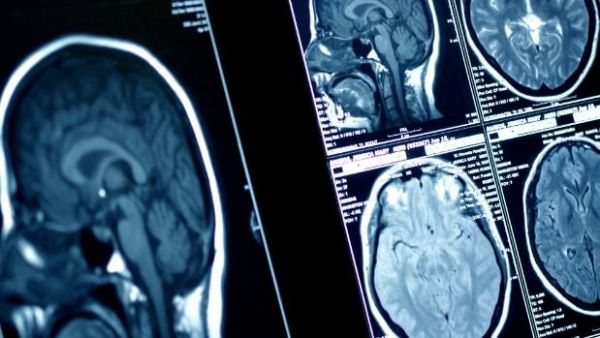
The notice sets specific targets for the currently popular AI-assisted medical imaging diagnostic systems:Promote the standardization and normalization of medical imaging data collection, support the research and development of computer-aided diagnostic technologies for medical imaging in typical disease areas such as brain, lung, eye, bone, cardiovascular and cerebrovascular diseases, and breast, and accelerate the productization and clinical auxiliary application of medical imaging computer-aided diagnostic systems. By 2020, domestically advanced multi-modal medical imaging computer-aided diagnostic systems shall achieve a detection rate of over 95%, a false negative rate of less than 1%, and a false positive rate of less than 5% for the aforementioned typical diseases.。
Compared with the "Development Plan for New Generation Artificial Intelligence" issued in July this year, the notice released by the Ministry of Industry and Information Technology has made specific plans for the development of artificial intelligence in the next three years.
(1) Key artificial intelligence products have achieved large-scale development; the technological level of intelligent connected vehicles has significantly improved; intelligent service robots have realized large-scale application; products such as intelligent drones possess strong global competitiveness; clinical application of medical imaging computer-aided diagnosis systems has expanded; and products including video image recognition, intelligent speech, and intelligent translation have reached internationally advanced levels.
In 2017, more than 20 Chinese startups developing AI-assisted medical imaging diagnostic systems secured Series A or B funding. Tech giants Alibaba and Tencent also entered the field, launching their own products. At the 2017 RSNA Annual Meeting, China’s AI-assisted medical imaging diagnostic systems were already comparable to the world’s most advanced products, with research directions ranking among the top globally.
However, it is worth noting that in the development goals, the section on medical design only mentions AI-assisted diagnostic and treatment systems for medical imaging, and does not mention AI-assisted diagnostic systems based on natural language processing (NLP) or expert systems.
(2) The overall core foundational capabilities of artificial intelligence have been significantly enhanced. Breakthroughs have been achieved in intelligent sensor technology and products; design, foundry, and packaging and testing technologies have reached international standards; neural network chips have achieved mass production and large-scale application in key sectors; and open-source development platforms have initially acquired the capacity to support the rapid growth of the industry.
(3) Deepened development of intelligent manufacturing, with accelerated integration and application of artificial intelligence technologies—such as complex environment recognition and novel human-computer interaction—into key technical equipment. The adoption level of new models, including intelligent production, large-scale personalized customization, and predictive maintenance, has significantly improved. The level of intelligence in key industrial sectors has markedly increased.
(4) The support system for the artificial intelligence industry has been basically established. High-quality annotated data repositories and standard test datasets of a certain scale have been built and opened to the public. The frameworks for the AI standard system, testing and evaluation system, and security assurance system have been preliminarily established. The intelligent network infrastructure system is gradually taking shape, and the industrial development environment has become more robust.
The notice requires that, driven by market demand, efforts be made to actively cultivate innovative AI products and services, and specifies eight major product categories along with their respective requirements.
(1) Intelligent Connected Vehicles. Support the research and development of key technologies and products, including the architectural framework of vehicle intelligent computing platforms, onboard intelligent chips, autonomous driving operating systems, and vehicle intelligent algorithms, to build an integrated vehicle intelligence platform combining software, hardware, and algorithms. By 2020, establish a reliable, secure, and highly real-time intelligent platform for intelligent connected vehicles, formulate relevant platform standards, and support Highly Automated (HA-level) autonomous driving.
(II) Intelligent Service Robots. Support the research and development of key technologies such as intelligent interaction, intelligent operation, and multi-robot collaboration; enhance the intelligence level of household service robots for cleaning, elderly companionship, rehabilitation, disability assistance, and children’s education; and promote the innovative application of public service robots (e.g., for inspection and guidance) as well as fire rescue robots.
Develop key technologies such as 3D imaging-based localization, intelligent precision and safe manipulation, and human-robot collaboration interfaces; support the R&D of surgical robot operating systems; and promote the clinical application of surgical robots.。
By 2020, breakthroughs were achieved in key technologies for intelligent service robots, including environmental perception, natural interaction, autonomous learning, and human-robot collaboration. Intelligent home service robots and intelligent public service robots achieved mass production and application. Prototypes of robots for medical rehabilitation, elderly and disability assistance, and fire and disaster rescue were developed, completing technical and functional validation, with more than 20 application demonstrations implemented.
Under this requirement, surgical robots, precision surgical navigation systems, service robots, assistive robots, and rehabilitation robots have all become key areas of development. Overall, robotic applications in healthcare have become mainstream.。
(3) Intelligent Unmanned Aerial Vehicles (UAVs). Support the research, development, and application of key technologies such as intelligent obstacle avoidance, automatic cruising, autonomous flight in complex environments, and swarm operations. Promote the application of next-generation communication and positioning/navigation technologies in UAV data transmission, link control, and monitoring management. Carry out the development of key components such as intelligent flight control systems and highly integrated specialized chips. By 2020, the accuracy of the three-axis mechanical stabilization gimbal for intelligent consumer-grade UAVs shall reach 0.005 degrees, achieving 360-degree omnidirectional sensing and obstacle avoidance, and enabling automatic and mandatory avoidance of air traffic control zones.
(4)Medical Imaging Computer-Aided Diagnosis System. Promote the standardization and normalization of medical imaging data acquisition, support the research and development of computer-aided diagnosis technologies for medical imaging in typical disease areas such as brain, lung, eye, bone, cardiovascular and cerebrovascular diseases, and breast, and accelerate the productization and clinical auxiliary application of medical imaging computer-aided diagnosis systems. By 2020, domestically advanced multi-modal medical imaging computer-aided diagnosis systems shall achieve a detection rate exceeding 95%, a false negative rate below 1%, and a false positive rate below 5% for the aforementioned typical diseases.
The national policy statement is indeed accurate, as this document sets specific standards for detection rate, false-negative rate, and false-positive rate. Following the introduction of these standards, they will become the development targets for many enterprises.
These three metrics will be the top priorities for companies and will become the focal points of future R&D efforts.。
(5) Video and Image Identity Recognition Systems. Support technological innovations in biometric recognition, video understanding, and cross-media fusion; develop typical applications such as integrated person-ID verification, video surveillance, image search, and video summarization; and expand applications in key sectors including public security and finance. By 2020, the effective detection rate for face recognition in complex and dynamic scenarios shall exceed 97%, the correct recognition rate shall exceed 90%, and the system shall support facial feature recognition across different regions.
(6) Intelligent Voice Interaction System. Support innovative applications of technologies such as new-generation speech recognition frameworks, colloquial speech recognition, personalized speech recognition, intelligent dialogue, audio-video integration, and speech synthesis, and promote their adoption in key sectors including smart manufacturing and smart homes. By 2020, achieve an average Chinese speech recognition accuracy rate of 96% across multiple scenarios, a far-field (5-meter) recognition rate exceeding 92%, and a user intent recognition accuracy rate exceeding 90%.
(7) Intelligent Translation System. By 2020, significant breakthroughs had been achieved in multilingual intelligent mutual translation, with the translation accuracy of products exceeding 85% in Chinese-to-English and English-to-Chinese scenarios, and a marked improvement in the accuracy of intelligent mutual translation between minority languages and Chinese.
(8) Smart Home Products. By 2020, the range of smart home product categories had expanded significantly, with the market penetration rate of smart TVs exceeding 90%, and the level of intelligence in security products markedly improved.
To address the R&D needs of key products and industry application demands, we will support the development and opening of various types of large-scale AI training resource libraries, standard test datasets, and cloud service platforms. We will establish and improve the AI standards and testing evaluation system, build service platforms for intellectual property rights, accelerate the construction of an intelligent infrastructure system, and establish a cybersecurity assurance system for artificial intelligence. Priority breakthroughs will be made in the following areas:
(1) Industry Training Resource Repository. Targeting foundational domains such as speech recognition, computer vision, and natural language processing, as well as industry-specific sectors including industrial manufacturing, healthcare, finance, and transportation, this initiative supports the development of high-quality AI training resource repositories and standardized test datasets, while promoting their sharing. It also encourages the establishment of open cloud platforms that provide common services such as knowledge graph construction, algorithm training, and product optimization.
By 2020, the volume of public training data for basic speech, video and image recognition, and text-based dialogue had increased significantly. A certain scale of industry-specific application data was aggregated in sectors such as industry, healthcare, finance, and transportation to support entrepreneurship and innovation.。
The establishment of standardized databases will lay the foundation for the development of artificial intelligence, lower industry barriers and startup costs, and encourage more entrepreneurs to enter the field of medical AI. Standardized databases will also, in turn, promote the standardization of hospital data and accelerate the deployment of medical AI products.。
(II) Standard Testing and Intellectual Property Service Platform. Develop a standard and regulatory framework for the artificial intelligence industry, establish and improve technical standards in areas such as foundational commonalities, interoperability, security and privacy, and industry applications, and encourage active participation by the industry in international standardization efforts. Build an evaluation and assessment system for AI products to assess the intelligence level, reliability, and security of key intelligent products and services, thereby enhancing the quality of AI products and services.
Establish a mechanism for the collaborative utilization of artificial intelligence technology patents, and support the development of patent collaborative operation platforms and intellectual property service platforms.
By 2020, preliminarily establish a standard system for the artificial intelligence industry, build third-party pilot testing platforms, and provide evaluation and assessment services; in fields such as pattern recognition, semantic understanding, autonomous driving, and intelligent robotics, establish intellectual property service platforms with foundational support capabilities.
The establishment of industry standards will accelerate the market entry of artificial intelligence products. In particular, since medical products almost universally require certification from the China Food and Drug Administration (CFDA) for market access, the development of such standards will play a pivotal role in advancing medical AI. This will help companies overcome growth bottlenecks, achieve substantial revenue, and enter a virtuous cycle of development.
(III) Intelligent Network Infrastructure. By 2020, broadband access speeds and latency in over 90% of regions across China will meet the requirements for AI industry applications; more than 10 key enterprises will have implemented industrial internet demonstration projects covering the entire production process; and network infrastructure for vehicle-to-everything (V2X) communications will be initially established in key areas.
(4) Cybersecurity Assurance System. By 2020, the industrial layout for AI cybersecurity will be improved, a framework for AI security prevention and control will be established, and a security assurance platform with basic capabilities—including AI security situational awareness, testing and evaluation, threat intelligence sharing, and emergency response—will be initially built.