

How to Build a New-Generation Clinic? Insights from Yu Ying, Tian Min of Yuanjing Capital, and Gao Ping of Weiaikang Medical at the 2017 Future Healthcare 100 Forum
“2017 Top 100 Future Healthcare” Forum, themed “The Era of Species Explosion,” was held at the Beijing Marriott Hotel from December 15 to 17, 2017.
At the New Clinic Parallel Forum on the morning of December 16, guests including Tian Min, Partner at Yuanjing Capital; Gao Ping, Co-founder of Weiai Kang Medical; and Yu Ying, CEO of Beijing Shui’an Youlin Clinic, attended the event.
Panelists engaged in in-depth discussions on primary care clinics from an investor’s perspective, case studies of clinic operations, strategies for building next-generation community-based clinic chains (scaling from 1 to 20 outlets), development strategies for integrated medical-nursing-care consortia, and the transformation and innovation pathways for new-type clinics in China. VCBeat (WeChat ID: vcbeat) has compiled the guests’ viewpoints.
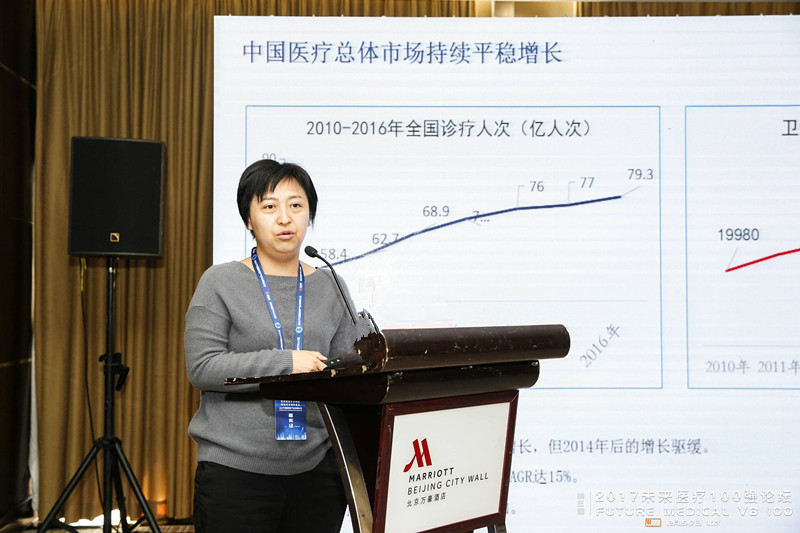
Tian Min, Partner at Yuanjing Capital
According to Tian Min, in terms of the overall trends in the healthcare market, China’s aging population is intensifying and medical demand continues to rise, yet healthcare services are far from keeping pace with the nation’s medical needs.
In terms of policy, the state has issued guidance on multi-site practice, advancing the construction of a tiered diagnosis and treatment system, and traditional Chinese medicine, aiming to encourage clinics and private medical institutions to assume a significant role in society.
In recent years, the healthcare sector has experienced structural growth. Based on outpatient visits and discharges across hospitals at all levels, private medical institutions are now seeing greater growth in patient volume than Grade 3A hospitals or other large facilities. This trend is driven partly by policy guidance and partly by increased investments in both software and hardware infrastructure at these institutions over the past few years. For investment firms, this structural growth represents a key area of focus and investment.
In terms of the total number of primary healthcare institutions in China, although there are 920,000 such facilities, they face numerous challenges. These include uneven distribution of medical resources, suboptimal working conditions for physicians, and a lack of public trust in these institutions.
In accordance with policy requirements, primary healthcare plays a critical role as the backbone of the entire healthcare system and is poised to assume an increasingly significant position within the future medical ecosystem.
Taking tertiary hospitals as an example, their function is to diagnose and treat complex and rare diseases, while primary healthcare institutions serve as the entry point for patients with severe conditions. Patients with stable conditions are gradually referred down to lower-level facilities according to hospital tiering, where they receive rehabilitative and nursing care.
Currently, the primary care clinic sector is mainly divided into two segments. The first consists of self-built clinics, most of which are single-entity chains, although the trend toward small-scale chain operations is increasing. Most chain operators have fewer than 50 locations, and there is no absolute market monopolist. Industry pioneers are evolving from single-specialty practices toward multi-specialty models, covering internal medicine, pediatrics, gynecology, dentistry, ophthalmology, traditional Chinese medicine (TCM), dermatology, proctology, and medical imaging.
Second are community clinics within the government system, including urban community health service centers and village clinics.
From the perspective of clinic operators, the landscape is primarily dominated by four major players: government-affiliated community clinics, chain operators, offline extensions of internet healthcare companies, and independent private clinics.
It also faces many challenges, as detailed below:
1. The overall profitability of clinics is relatively low; while they can achieve profitability with ease, their revenue potential is limited.
2. Limited range of diagnostic and treatment services; primary revenue sources are registration fees and basic pharmaceuticals.
3. Compared with public tertiary Grade A hospitals, there is a lack of patient traffic.
4. Issues Regarding the Integration of Private Clinics with Medical Insurance Systems.
5. Talent: Single clinics or small-scale clinic chains may encounter bottlenecks in cultivating physician pipelines, thereby hindering the recruitment of high-quality medical professionals.
6. The advantages of the chain model remain to be seen: Given the regional characteristics of diagnosis and treatment, the front-end brand effect generated by chaining is weak, while the back-end supply chain demands are high. If scaled store expansion cannot be achieved and front-end patient traffic is constrained, the scale economies available to the supply chain will be limited.
Tian Min believes that the future trend of primary healthcare is for it to serve as an extension of medical services. With advancements in internet technology, more emerging models similar to Medical Mall will emerge, empowering and assisting clinics in delivering services such as laboratory testing, medical imaging, supply chain management, and administrative tools.
Yuanjing Capital’s current footprint in primary healthcare includes investments in Yunhu Technology, Weimai, and Anxin Doctor. Yunhu Technology entered the market through third-party laboratory testing, connecting hundreds of primary care clinics to provide medical testing and logistics services. Weimai operates on a city-by-city basis and can be viewed as a localized version of WeDoctor; while WeDoctor focuses primarily on connecting hospitals across China, Weimai delivers localized, one-stop medical services. Anxin Doctor is the largest online platform for pediatric and obstetric/gynecological consultations and has also begun expanding into offline clinics this year.
“Our medical team has always placed great emphasis on primary healthcare, believing it to be the major direction for the future. Therefore, we will continue to closely monitor the operators of the primary care clinics just mentioned, as well as entrepreneurs who play supportive and enabling roles in strengthening primary healthcare within the entire ecosystem. Thank you all.”
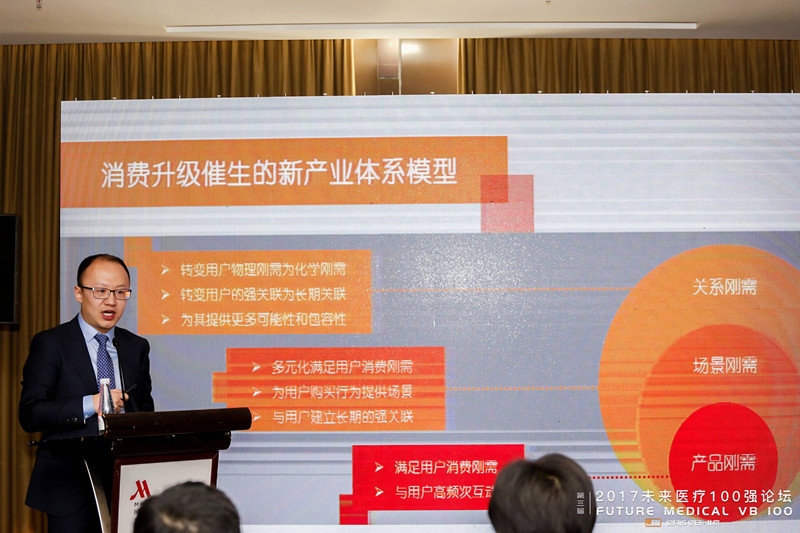
Gao Ping, Co-founder of Weiai Kang Medical
Currently, the healthcare industry is characterized by overcrowding at the top tier and underutilization at the grassroots level, resulting in a “pyramid” resource structure and an “inverted pyramid” demand structure.
As rising consumer demands drive industrial development, the human definition of health has evolved; people are no longer content with merely seeking medical treatment and have placed higher expectations on community healthcare.
Technological advancements have made it possible to provide health services throughout the entire human life cycle, a model that requires support from a dense network of service points;
Meanwhile, the new industrial system model spurred by consumption upgrading has altered the structure of rigid demands in terms of relationships, scenarios, and products.
The essential need for relationships is mainly reflected in transforming users' physical necessities into chemical necessities, and turning users' strong connections into long-term associations, thereby providing greater possibilities and inclusivity.
The essential requirement for scenarios is to diversely meet users’ consumption demands, provide contextual settings for their purchasing behaviors, fulfill their indispensable consumption needs, and engage in high-frequency interactions with them.
The state has reallocated limited medical resources through a tiered diagnosis and treatment system, while vigorously advancing healthcare reform through a series of policies. This has created substantial growth opportunities for community-based healthcare, turning it into a key channel for patient inflow.
Standardized chain community hospitals represent the sole breakthrough point for primary healthcare, addressing the limitations of traditional community medical institutions that operate as standalone entities, lack unified brand support, exhibit significant variability across locations, and convey an unprofessional impression.
In recent years, the State Council’s “Outline of the ‘Healthy China 2030’ Planning” and the report to the 19th National Congress of the Communist Party of China have both emphasized the importance of primary healthcare. However, if the overall operational model of primary healthcare fails to innovate, there will still be limited room for substantial growth.
Therefore, Weikang Medical was the first in China to propose and implement the concept of standardized chain community hospitals. By adopting a standardized management model for chain operations, enhancing competitiveness through a combination of basic general practice and specialized care, leveraging expert resources from within and outside the province to improve diagnostic and treatment capabilities, and deeply exploring the healthcare needs of 100,000 residents within a 5-kilometer radius around each hospital, it provides full-lifecycle healthcare services. This approach truly addresses the challenges of difficult and expensive access to medical care for residents, while simultaneously resolving the traditional community hospitals’ weaknesses in management and patient shortage.
The new content of full-lifecycle healthcare mentioned here mainly includes the front-end, mid-end, and back-end. The front-end focuses on intervention, management, and prevention; the mid-end utilizes an online family doctor platform to provide users with services such as care, treatment, and referral; the back-end leverages the offline Weiai Kang Community Hospital Sports Park Campus to deliver rehabilitation, caregiving, and maintenance services to users.
This is Henan’s first community hospital operated under a public-private partnership model. Designed in accordance with the “integrated medical and elderly care” standards and featuring Traditional Chinese Medicine (TCM) as its specialty, the hospital leverages the high-quality medical resources of Grade A tertiary hospitals such as Zhengzhou Hospital of Traditional Chinese Medicine. It offers departments including Internal Medicine, Pediatrics, Gynecology, Rehabilitation, Stomatology, Dermatology, Planned Immunization, and Perinatal Healthcare. By integrating services spanning disease prevention, medical treatment, healthcare, rehabilitation, elderly care, health education, and health consultation, the hospital has innovatively addressed the full-lifecycle health needs of 100,000 residents within a 5-kilometer radius, covering front-end health management, mid-stage diagnosis and treatment, and back-end rehabilitation and elderly care.
Currently, the Sports Park Campus of Weiai Kang Community Hospital sees approximately 120 outpatient visits per day. The campus has enrolled over 13,000 residents in its family doctor service program within the surrounding communities. By establishing health records for community residents and monitoring their health status in real time, the hospital has reduced disease risks and improved the quality of life and health outcomes.
Meanwhile, public health safeguards are provided to residents through high-frequency community free clinics, home-based medical consultations, and health education lectures. By leveraging family doctor contract services and addressing the healthcare needs of “five-member households,” a series of specialized family health protection service products have been developed. These initiatives deliver comprehensive, in-depth health services to residents on an ongoing basis, building a chain community healthcare brand with industry-wide influence and truly fulfilling the role of “gatekeepers” of resident health.
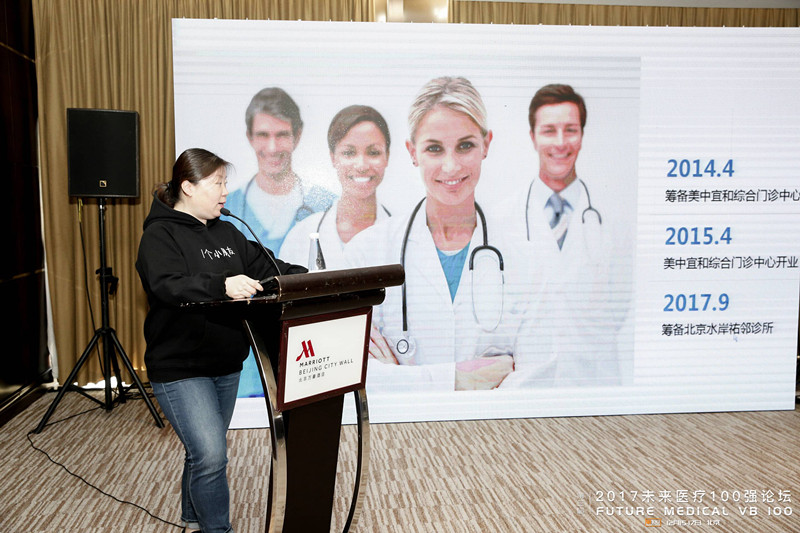
Yu Ying, CEO of Beijing Shui'an Youlin Clinic
To kick things off, Yu Ying stated, “After today’s sharing session, I’ll be heading straight to the construction site where our clinic is being built. We expect to open for business in March next year.”
She resigned from Peking Union Medical College Hospital in June 2013, began preparing for the Amcare General Outpatient Center in April 2014, and the center officially opened in April 2015. The clinic occupies an area of 2,000 square meters, spans three floors, houses 12 departments, features independent operating rooms, and functions similarly to the general outpatient department of a Grade 3A hospital.
After three years in operations, Yu Ying left Amcare. “The reason was simple: I found community healthcare increasingly intriguing.” Thus, in September 2017, she formally departed from Amcare General Outpatient Clinic and began preparing for the establishment of Beijing Shui’an Youlin Clinic. This first offline clinic under the Shui’an Youlin brand is currently undergoing renovation and is expected to open in March next year.
"Opening a clinic is a major contest of physical stamina, mental resilience, IQ, and EQ." This is how Yu Ying summarizes her emotional journey in establishing her clinic.
Although new national policies have begun to strongly support primary healthcare by allowing physicians to establish individual general practice clinics, the approval procedures have become increasingly complex. Nevertheless, there remains substantial demand in the primary healthcare market, as the growing public aspiration for a better quality of life is currently mismatched with the medical services available.
Why? When the general public seeks high-quality services, who is the payer? Everyone desires a family doctor, so again, who is the payer? A distinctive feature of Chinese society is its emphasis on personal relationships (guanxi). Moreover, most people’s consumption mindset is to spend money on solutions only when having children or after being diagnosed with major tumors; few are willing to invest in home-based elderly care.
Take health management, for example. The notion that ordinary people pay doctors an annual fee to manage their health is also a false premise. This is one of the reasons why so many chronic disease management companies and apps have failed in the market.
Returning to the process of opening a clinic, every stage—from taking possession of the property and handover to design and renovation—is a significant test of physical stamina, mental energy, and emotional intelligence. As shown in the figure:
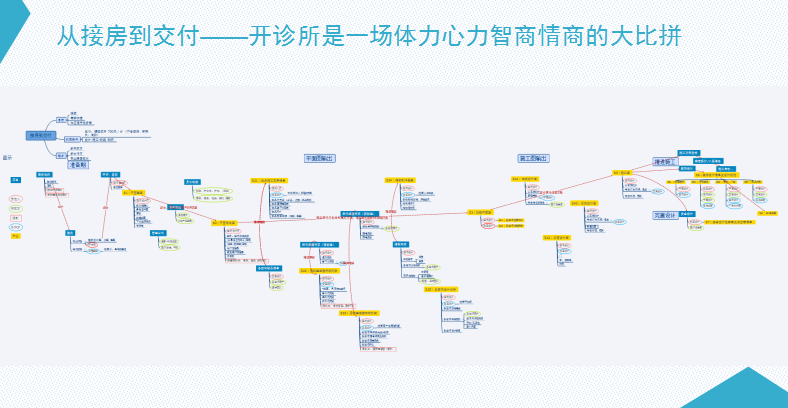
This is the fishbone diagram drawn by Yu Ying. The yellow sections indicate no restrictions; this pertains only to the launch and does not include operational processes.
The clinic is set up, but where will the patients come from? Will they be acquired through advertising, channel partnerships, word-of-mouth, influencer traffic, or event marketing?
Every customer acquisition method has its pros and cons; the key lies in maximizing the benefits while mitigating the drawbacks. Yu Ying believes that word-of-mouth marketing is the most reliable approach, as it reflects patients’ trust in their physicians—the most difficult yet weakest link to establish in community healthcare.
Yu Ying believes that you should interact with every patient visiting the clinic as if they were a true friend. When a patient points out shortcomings in the clinic, you must listen patiently and never dismiss their feedback. Such criticism serves as a powerful driver for the clinic’s growth and may even lead to a complete transformation of your service processes.
Thus, dissemination is a double-edged sword; both positive and negative comments can become focal points for spread. In particular, if you heed her advice and make improvements, she will promote your clinic with even greater effort.
How can a newly established clinic attract patients? For instance, by offering a membership card priced at 100 or 200 yuan that provides a 30% discount on consultation fees.
The key lies in designing products that customers are willing to pay for. For example, establishing family health records with regular follow-ups by family doctors; or facilitating referrals to Grade 3A hospitals, offering a 40% discount on medication costs and a 50% discount on laboratory test fees.
In summary, a patient-centered approach not only helps patients resolve their issues but also demonstrates empathy and creates a pleasant service experience, thereby fostering psychological identification with the clinic.
“Finally, we will also build a chain of clinics in the future,” said Yu Ying.
One reason is the low cost, as it is very expensive for the same management team to manage a single clinic;
The second reason is that chain operations can reduce procurement costs;
The third reason is the standardization of all processes, including the standardization of medical services and talent training; only after these aspects are properly implemented can true standardization be achieved.
The growth path for clinic chains is built on standardized SaaS, leveraging the compounding value of continuous physician training and development, sustained personalized engagement, effective integration and utilization of new technologies, and more efficient monetization of patient traffic—this is the prevailing trend.