

Dr. Zhang Qiang: The Rise of Physician Groups Will Reshape the Healthcare Industry Landscape | Top 100 Future Healthcare Companies 2017
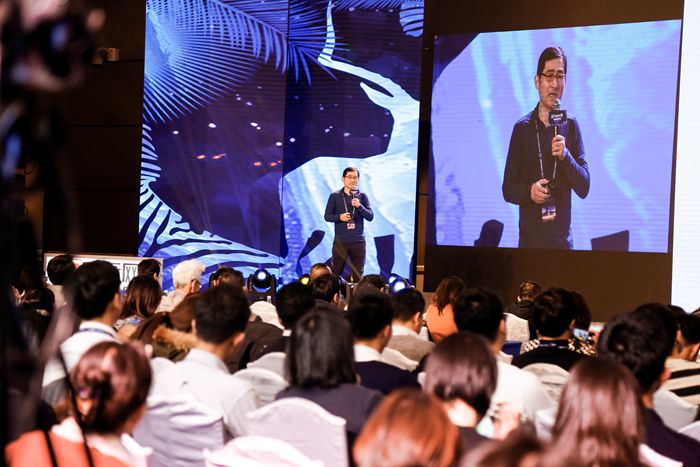
The Long March of the Camel, the Energy of the Cheetah, the Trail of the Wildebeest, the Turn of the Elephant, and the Strike of the Giant Crocodile—these animals, seemingly worlds apart from the healthcare industry, are closely intertwined with the keynote addresses at this forum.
In the session titled “The Camel’s Long March: Transforming the Healthcare Service System,” one of the featured guests is a physician who began his medical journey at the age of five. Four years ago, he left a top-tier (Grade A tertiary) hospital to establish China’s first physician group, which has since evolved into an industrialized enterprise.
He is Zhang Qiang, the pioneer who drove the development of physician groups in China. His presentation was titled “The Industrialization Path of Physician Groups.” VCBeat (WeChat: vcbeat) has compiled the guest’s viewpoints.
Guest Introduction
Zhang Qiang, Chief Physician, Professor, and Master’s Supervisor. A renowned vascular surgery expert in China and a representative figure of independent medical practice among Chinese physicians. Founder of China’s first physician group and the Chinese Vascular Surgery Physician Group; inaugural Chairman and Permanent Honorary Chairman of the Chinese Physician Group Alliance. Deputy Director of the Medical and Health Committee of the Shanghai Municipal Committee of the China Democratic National Construction Association; recipient of the May Fourth Youth Medal.
Speech Content
The Doctor Group: From Scratch to Establishment
Dr. Zhang Qiang joked that he has been practicing medicine for “over 40 years.” With both his paternal and maternal grandfathers being physicians, he began studying anatomy books at the age of five. While other children were still playing in the mud, he already knew the precise locations of human organs such as the liver and heart. What left the deepest impression was an incident from his childhood when he suffered from tinea cruris (jock itch). After seeing a doctor without any improvement, he consulted medical books on his own, obtained the appropriate medication from a local health center, and achieved a complete cure after topical application.
Regarding today’s topic sharing, he frankly admitted to feeling immense pressure. In the past, physicians focused solely on treating diseases and saving lives, without giving thought to entrepreneurship or capital; whenever these subjects were raised, doctors considered them troublesome. Nowadays, however, many physicians within the public healthcare system frequently warn him never to be led by capital, describing it as bloodthirsty and profit-driven.
However, upon closer analysis, if tertiary hospitals lacked capital, how would they purchase CT scanners? Who would build the diagnostic and treatment buildings? Doctors at that time were akin to workers on an assembly line: patients were conveyed before them, and once treated, the patients departed. The doctors had no knowledge of where their patients came from or where they went afterward, let alone where the CT scanners were procured. They were entirely unaware of such matters, not to mention any understanding of capital operations.
Now he has successfully transitioned from a physician to an entrepreneur of a physician group, and the Zhang Qiang Doctor Group he founded has achieved industrialization. So-called industrialization refers to a serialized and branded mode of operation and organizational form that, under market economy conditions, is guided by industry demand, aims at achieving economic benefits, and relies on professional services and quality management.
So, what is a physician group?
In fact, within China’s medical community today, although 90% of people are familiar with the term “physician group,” another 90% do not truly understand what physician groups actually do. Even many media reports present a vague concept. Many people raise questions such as: Are physician groups merely intermediary agencies? Are they platforms that enable physicians to perform “fly-by” surgeries (i.e., traveling to other hospitals for procedures)? Could pharmaceutical companies also establish physician groups to have these doctors prescribe their medications? In reality, none of these assumptions are correct.
Zhang Qiang believes that physician groups generally have several characteristics:
First, physician-led. It is physician-led, which is a very important prerequisite, meaning that physicians must hold the dominant position in decision-making and equity ownership. If it is pharmaceutical vendor-led, organizing a group of physicians to prescribe medications for the vendor, then these physicians do not constitute a physician group but are merely drug peddlers. If they act as intermediaries facilitating "flying knife" procedures (visiting specialist surgeries) and collecting commissions, they are scalpers or brokers, having even less to do with a genuine physician group.
Second, revenue is primarily derived from medical services. Its income mainly comes from the provision of medical services. If I were to introduce doctors to perform surgeries elsewhere in exchange for commissions, that would constitute brokerage or scalping, having nothing to do with physician groups. Therefore, it must generate revenue from providing medical services; this is a very important characteristic. In the United States, more than 70% of physician groups’ revenue comes from medical services.
Third, it must be an independent legal entity. It is required to be an independent legal entity; a physician group cannot be established merely by proclaiming a slogan. For a period, physician groups were highly popular. It seemed that whenever medical school classmates gathered for dinners and drank excessively, they would establish a physician group simply because they were all physicians. However, this is insufficient; it must constitute an independent legal entity.
The English equivalent of “医生集团” is “Medical Group.” The term “Group” was adopted by Zhang Qiang, as it carries multiple connotations, such as a small organization or team. “I felt that this meaning did not align with our long-term vision, so we extended its interpretation to ‘Group’ in the sense of a larger consortium.” When Dr. Zhang Qiang’s Medical Group was first established, it consisted of only three members. The decision of these three individuals to identify themselves as a “Medical Group” drew considerable skepticism. However, the team rapidly expanded shortly thereafter.
It was not until last year that the State Council officially incorporated “independent practice” and “physician groups” into its National Health Outline, thereby granting government recognition to the term “physician groups.”
The Industrialization Path of Dr. Zhang Qiang's Medical Group: PHP and Self-Built Clinics
So, what is the operational model of Dr. Zhang Qiang Doctor Group?
According to Zhang Qiang, a physician group is, first and foremost, a team of full-time specialist physicians; secondly, it is the physicians who recruit the operations and management team. This reverses the traditional model seen in public Grade A tertiary hospitals or private hospitals, where hospital owners hire operations teams to manage physicians. Now, the dynamic has been completely inverted: the physician team recruits the operations and management team, while the owner provides support services. In this new structure, the physician team takes the lead.
Finally, the physician’s practice remains integrated with their self-built practice platform, resulting in two forms of practice. One is the self-built professional platform (Hangzhou Sijun Surgical Clinic). Three additional surgical clinics are scheduled to open this year; two have already opened, and one is located in Kunming.
Another approach is the PHP model. What does the PHP model entail? It refers to the Physician-Hospital Partnership model. Many people question how Zhang Qiang Doctor Group’s collaboration with hospitals differs from the Putian system’s practice of contracting hospital departments. In fact, the distinction is substantial. As this represents an unprecedented innovation, it has been quite challenging to communicate and explain this concept to hospitals and other stakeholders on each occasion.
At one annual conference for hospital presidents, attendees discussed the Public-Private Partnership (PPP) model. As PPP refers to corporate joint ventures—specifically relationships between hospital administrators—it has no direct relevance to physicians. Consequently, Zhang Qiang coined a new term: “PHP.” He introduced this concept at the following year’s annual conference for hospital presidents, and it has since gained unanimous recognition within the academic community, including among researchers. Henceforth, this equitable collaboration model, characterized by physicians’ free practice and partnerships between doctors and hospitals, is referred to as the PHP model.
Brand- and Technology-Led Operating Model
In terms of operational model, Zhang Qiang prioritizes brand and technology. While typical investments in the healthcare industry often focus on capital and platform infrastructure, one key reason his physician group has survived to this day is its emphasis on brand and technical expertise. Specifically, it aims to achieve technical proficiency in specialized fields that surpasses even Tier 3 Grade A hospitals.
If a physician joins the Zhang Qiang Doctor Group, they will be asked this question: “After leaving your hospital, if you are still using the same clinical techniques as those in tertiary Grade A hospitals, why would patients choose to consult you?” Therefore, to survive, physicians who leave their hospitals must provide services that significantly exceed those offered by tertiary Grade A hospitals, such as adopting new technologies or offering cross-specialty care.
Currently, the Zhang Qiang Doctor Group has four specialties and has expanded to Beijing, Shanghai, Zhejiang, and Yunnan. Next year, it will continue to select key cities for further expansion.
This year, the first clinic of Dr. Zhang Qiang’s Doctor Group has also opened in Hangzhou.There are a total of 12 consultation rooms, covering an area of approximately 1,000 square meters.
What Are the Benefits for Physicians Investing in Clinics? It is not merely about establishing a clinic. The Physician-Hospital Partnership (PHP) model of Dr. Zhang Qiang’s Medical Group has established three vein centers in Zhejiang Province through collaborations with various hospitals, located in eastern, northern, and central Zhejiang, respectively. Additionally, two other hospitals serve as our partners. In effect, Dr. Zhang Qiang’s Medical Group has leveraged a single clinic to build an internal medical consortium across Zhejiang Province, functioning as a de facto medical alliance.
What are its advantages? First, the brand recognition of Dr. Zhang Qiang’s Doctor Group is even higher than that of most Grade A tertiary hospitals. Second, it operates on an asset-light model. Patients were already making appointments before the clinic even opened its doors—this is the power of branding.
This differs fundamentally from the customer acquisition strategies employed by private hospitals and clinics, which typically follow a sequence of constructing facilities first, then recruiting physicians, launching advertising campaigns, and finally accepting patients. In contrast, the operational model of physician groups prioritizes establishing brand identity, securing a patient base, and assembling a team of physicians before building their own platform. This represents a classic asset-light business model.
Furthermore, physicians within a physician group must possess the capacity for technological innovation. Without such innovation, a physician group cannot sustain its operations. Lacking differentiated competition against private hospitals—and even more so against public hospitals—it would inevitably fail. Therefore, technological innovation is imperative.
Furthermore, it is essential to establish independent academic standing and training systems. These are areas of significant concern for physicians leaving the public healthcare system, and they are also aspects often disparaged by vested interests within the public sector toward physician groups and private hospitals. Therefore, physician groups must address and strengthen these weaknesses.
The Zhang Qiang Doctor Group also established a Medical Research Institute in 2017 to provide comprehensive retraining for physicians who have left the public healthcare system, focusing on leadership, innovation, and operational management capabilities.
Or this may also break the monopoly of public hospitals on high-quality physician resources. Why?
Take Zhang Qiang as an example. Four years ago, when he first resigned, everyone said, “Dr. Zhang, you are excellent; please don’t leave.” Now, he feels that he is truly not good enough. Therefore, he believes that when physicians in the public healthcare system “step out,” they are merely semi-finished products of excellence and must relearn their craft. They need to reacquire skills within a different system—one where patients vote with their feet—including service orientation, mindset, and innovative clinical techniques.
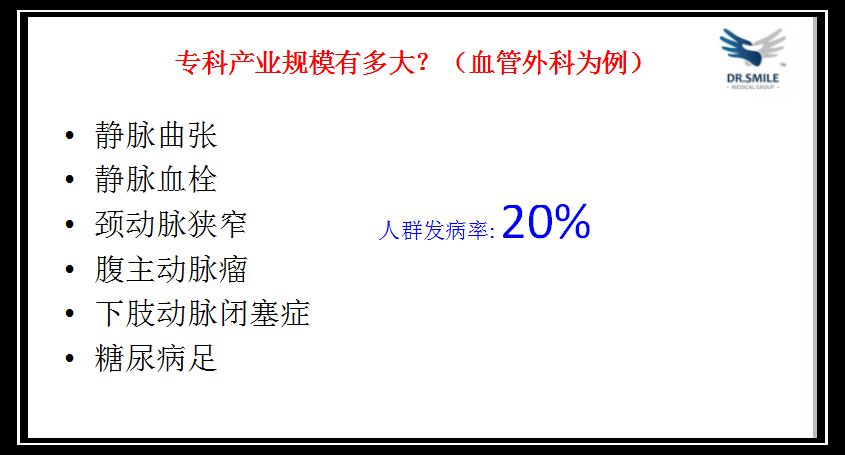
Since the Zhang Qiang Doctor Group has chosen the path of industrialization, how large is this industry? Take vascular surgery as an example (see figure).
In addition to medical services, Zhang Qiang will also initiate the construction of ambulatory surgery centers in the future. By leveraging his brand and technical expertise, he will collaborate with hospitals to establish specialty hospitals under his own brand through equity investments or controlling stakes.
Colleagues, the Zhang Qiang Doctor Group has a presence in every sector. For instance, it is involved in the R&D of medical devices, artificial intelligence, VR companies, and simulation training centers for medical equipment. It even purchased China’s first individual professional liability insurance policy for physicians, with a coverage amount of RMB 1 million.
In the future, he believes that the rise of physicians will reshape the landscape of the healthcare industry. Particularly against the backdrop of the new healthcare reforms, changes in sectors such as pharmaceuticals and hospitals are gradually unfolding.