

2017 Future Healthcare 100 Summit: Industry Titans Share Insights on AI, Genomics, and Ecosystem Innovation

The “2017 Top 100 Future Healthcare Companies” Forum, themed “The Era of Species Explosion,” was held at the Beijing Marriott Hotel from December 15 to 17, 2017.
The camel’s long march, the cheetah’s energy, the wildebeest’s trail, the elephant’s turn, and the crocodile’s strike—these animals, seemingly worlds apart from the healthcare industry, are closely intertwined with the keynote addresses of this forum.
In the era of explosive growth across diverse sectors, various specialized fields within healthcare are unleashing new vitality. On the afternoon of the 15th, VCBeat categorized these emerging elements into five major themes. Natural selection and survival of the fittest—the five sharp and highly targeted conference themes transformed the “2017 Top 100 Future Healthcare Companies” forum into a dialogue on survival in the natural world. The passionate presentations by 11 leading figures in the medical industry made this intellectual exchange particularly compelling...
The Camel’s Long March: Transforming the Healthcare Service System
Healthcare service models are gradually being implemented with increasing clarity on the path ahead; practitioners, like camels on a long march, move forward steadily under heavy burdens.
Fan Shaofei of Ping An Wanjia Medical: Building New Standardized Clinics Through Information Technology
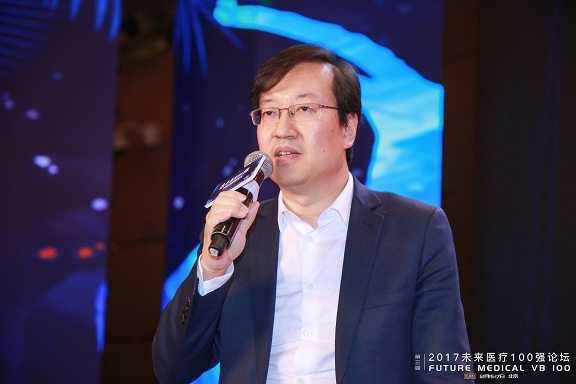
Fan Shaofei | Chairman and CEO of Ping An Wanjia Medical
The future of healthcare will undoubtedly be built upon platforms and ecosystems anchored by major traffic gateways.
On the server side, Ping An has deployed third-party imaging and laboratory testing services, thereby establishing an entry point from the service provider end.
On the payment side, Ping An owns Ping An Health Insurance, which includes coverage for medical insurance payments.
In the healthcare services industry, Ping An Wanjia Medical possesses three key strengths: first, the capability to provide professional technical expertise; second, the core driving force behind its operations; and third, the pressure exerted through evaluation, supervision, and control.
Driven by demand-side momentum, payment-side pressure, and capabilities in core technologies and services, enterprises are certain to identify their unique positioning and distinct development paths.
Zhang Qiang: The Industrialization Journey of Dr. Zhang Qiang Group
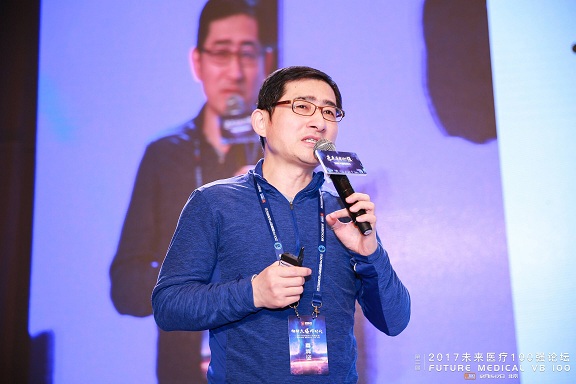
Zhang Qiang | Founder of Zhang Qiang Doctor Group
Regarding the characteristics of physician groups, they should exhibit several key features:
1. A physician group should be led by physicians, meaning that physicians must hold a dominant position in decision-making and equity ownership;
2. Physician groups should derive their primary revenue from medical services;
3. A physician group must be an independent legal entity;
4. The operational model of physician groups should be cross-regional and multi-specialty.
After physicians transition to freelance practice, their equitable collaborative arrangements with hospitals are referred to as the PHP model. The Zhang Qiang Doctor Group established a province-wide internal medical consortium in Zhejiang Province using a single clinic.
Cheetah: The Deep Evolution of Medical Technology Driven by Energy and Capital
Those medical technology companies, which had long lain in wait like cheetahs, are beginning to show their prowess under the impetus of capital, drawing closer to the core forces of the healthcare industry.
Berry Genomics’ Zhou Daixing: The First Year of IPOs for Gene Companies and the First Year of Delistings for Genetic Diseases
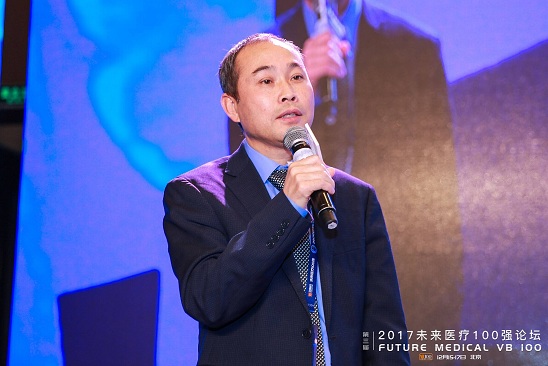
Zhou Daixing | General Manager of Berry Genomics
In 2010, Berry Genomics could only test for three diseases; this later expanded to seven. Currently, screening for 16 diseases has become widespread in Taiwan and Hong Kong. Our goal is whole-genome sequencing, aiming to cover more than 7,000 genetic diseases.
Last year, Berry Genomics achieved a technological breakthrough, enabling the monitoring of information across the entire genome.
Obtaining such information requires in-depth interpretation; therefore, Berry Genomics chose to collaborate with Alibaba to analyze 130,000 Chinese genomic samples. The resulting database encompasses the frequency distribution of all genetic mutation loci in the Chinese population.
In the future, genetic diseases in humans will be fully treatable, and most such conditions will not even appear in the next generation.
Yitu Healthcare’s Zheng Yongsheng: Artificial Intelligence Expands New Frontiers in Healthcare
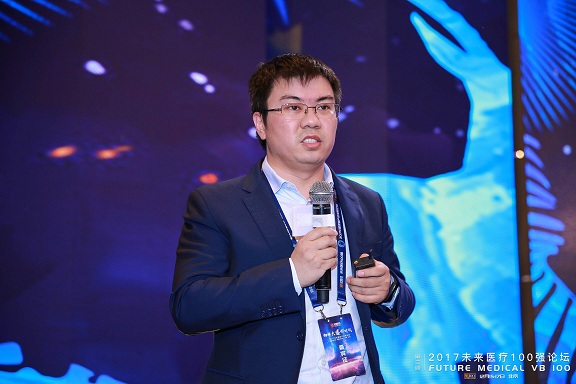
Zheng Yongsheng | Vice President, Yitu Healthcare
In the fields of artificial intelligence and medical AI, one issue that can never be avoided is standards.
Under a unified model and standard, the healthcare industry urgently needs to address industry-wide standards, data standards, and standardized clinical workflows.
Meanwhile, as an application of medical artificial intelligence, what evaluation metrics and standards should be used to measure it? As a regulatory authority, it is also necessary to explore in confusion how to evaluate the application of medical artificial intelligence.
"This should not be a process of independent deliberation by regulatory authorities, but rather one of collaborative engagement and exploration between regulators and the industry."
Lu Xiaoliang, iFlytek Healthcare: A New Era of Artificial Intelligence, Co-Creating a New Age of Smart Healthcare
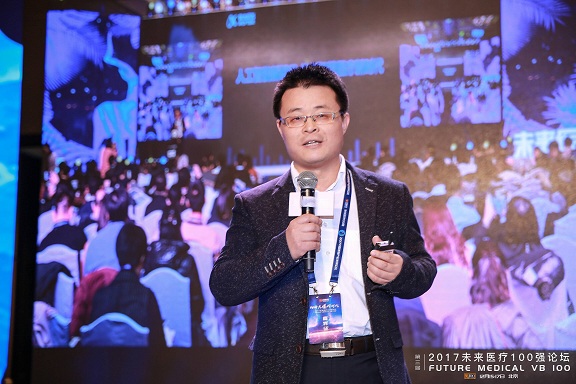
Lu Xiaoliang | Executive Deputy General Manager, iFlytek Medical Information Technology Co., Ltd.
The integration of artificial intelligence with healthcare is a highly serious endeavor. It is simply impossible for enterprises to transform this industry solely by relying on algorithms.
Take image and medical imaging recognition, for example; it encompasses three dimensions:
First, there are modalities: you can have various types such as CT scans, X-rays, and electrocardiograms (ECGs).
Second, different anatomical sites;
Third, different disease types.
Multiplying these three dimensions results in a massive workload; it is by no means the case that pulmonary nodules can be immediately applied in clinical practice to assist physicians.
Enterprises must have patience and the resilience to endure years of obscurity. If you expect to make money in this industry within one or two years, you might as well give it up.
The Trail of the Wildebeest: The New Competitive Landscape of Healthcare Traffic Entry Points
The rapid shift in traffic within the healthcare industry reflects the unstoppable momentum of new medical forces, akin to the great wildebeest migration.
Meinian Onehealth’s Yu Rong: Building a Health Platform and Constructing a Medical-Health Ecosystem
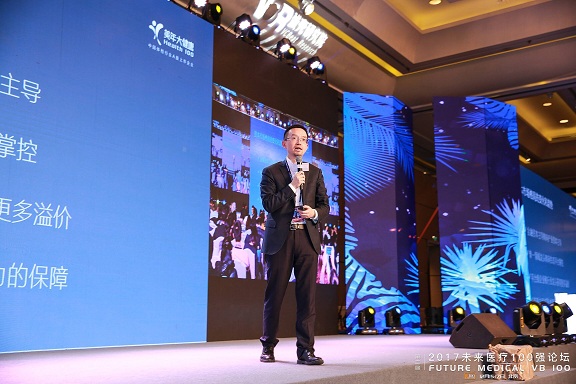
Yu Rong | Chairman of Meinian Onehealth Healthcare Group, Chairman of Tianyi Investment Group
Meinian Onehealth aims to build a closed-loop model, encompassing the collection, resolution, and payment of medical needs.
If there is an opportunity to create a closed-loop system in the healthcare industry, it must be pursued—either independently or in collaboration with partners to form a joint closed loop. Such a system offers greater security.
If an open-ended operational model is adopted, you will find that it either drives away traffic-based customers or fails to capture the most valuable segment.
There is an inelastic demand for medical services at the primary care level.
In China’s lower-tier regions, particularly third- and fourth-tier cities, there is a broader and more substantial mass base.
The rise in consumer awareness and the aspiration for a high-quality, healthy life transcend urban boundaries.
Commercial health insurance has experienced explosive growth over the past two years. In the future, health-related insurance products will increasingly occupy a mainstream position among all insurance offerings.
Changes in payment methods will directly impact the ecosystem of the healthcare industry.
The Elephant’s Turn: The New Normal Driven by Pharmaceutical Industrial Policy
The innovative transformation of the traditional pharmaceutical and medical device sectors under the new policies resembles an elephant poised for a graceful turn.
Yixintang Chairman and General Manager Ruan Hongxian: New Changes in the Application of Offline Pharmaceutical Traffic
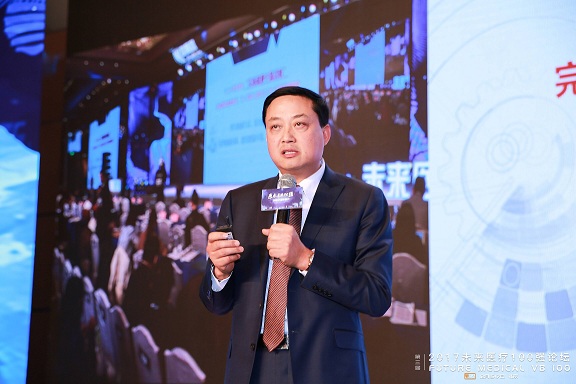
Ruan Hongxian | Chairman and General Manager of Yixintang
Preventive Care, Early Intervention, and Self-Medication: Issues Everyone Should Pay Attention To.
In developed countries, hospital-based medication accounts for only 25% of the total, while pharmacy sales constitute 75%; however, the situation in China is reversed.
It is the inherent social responsibility of Chinese citizens to perpetuate the cultural essence of Traditional Chinese Medicine (TCM) and herbal medicine through the broader health and wellness sector.
A company cannot remain healthy if it detaches itself from the market and its customers, and vice versa.
Thus, through such a cyclical and step-by-step progression, the broader health sector holds immense promise.
Yuheng Pharmaceutical’s Li Guochun: 2017 China’s Innovative Drug R&D: Past, Present, and Historical Opportunities
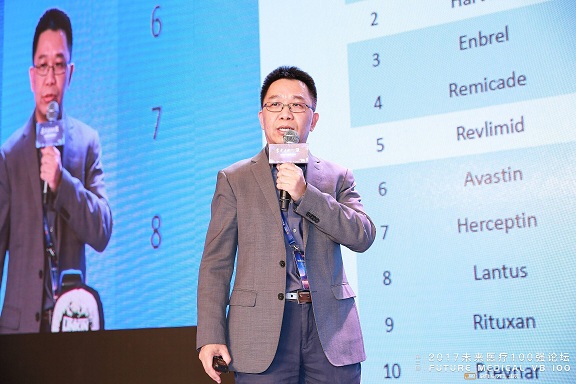
Li Guochun | Director, Vice President, and Chief Scientist of Harbin Glory Health Industry Co., Ltd.
Regarding the internationalization of China’s innovative drugs, it is not merely about importing products from overseas; in fact, some Chinese products have already entered the global market, being exported abroad and competing with their foreign counterparts.
In the field of biologics, Yuheng Pharmaceutical has engaged in close collaboration with WuXi Biologics, jointly developing the revolutionary drug PD-1.
In the genetic industry, Yugengene has launched the “Ark Project” for ten thousand tumor patients, enabling more precise and personalized cancer treatment in synergy with innovative drugs.
The Advance of the Giant Crocodile: Cross-Border Collaboration and Integrated Growth in the Healthcare Industry
Real estate developers are making significant inroads into healthcare, insurance companies are deepening their exploration of commercial health insurance, and IT giants are further transforming healthcare through technology. Like leviathans on the advance, these cross-industry titans are gradually breaking down the barriers of the healthcare sector.
Alibaba Health's Fan Yi: From “Internet + Healthcare” to “Data Intelligence + Healthcare”
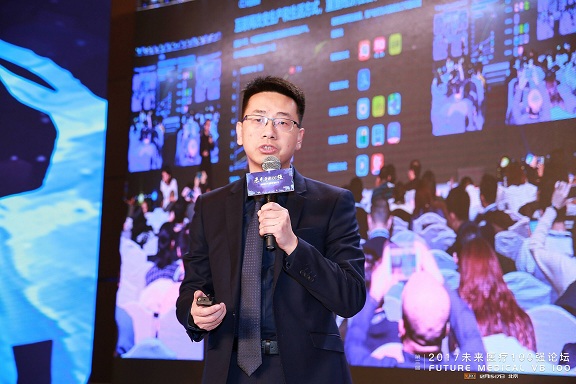
Fan Yi | Director, Alibaba Health AI Lab
The most pressing issue in the healthcare industry today is scarcity. The only way to address supply-side scarcity is through AI. Therefore, without breakthroughs in AI, the pool of high-quality medical resources will remain limited, and no amount of business model innovation can generate new supply capacity.
The healthcare process is highly comprehensive, with hospitals, patients, and various service providers forming a complete closed-loop ecosystem.
Merely changing a single point is far from sufficient; you must transform the entire closed-loop system.
The service efficiency and ecosystem advantages of the internet are crucial strategic assets, which underpin Alibaba Health’s “AI + Healthcare + Internet” strategy.
Tencent Miying’s Wu Mingzhu: Artificial Intelligence and Internet+ Healthcare
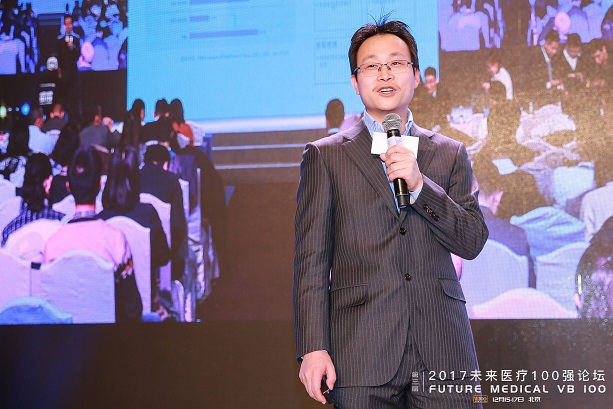
Wu Mingzhu | Director, Tencent Miying Application Center
After being selected for the National Open Innovation Platform for AI in Medical Imaging, Tencent Miying’s primary focus has been to deeply integrate Tencent’s accumulated artificial intelligence and image recognition technologies with the medical field. This integration enables rapid identification of lesion information in medical images, helping healthcare institutions detect such abnormalities more efficiently and accurately.
In the healthcare sector, Tencent is not only opening up its artificial intelligence capabilities but also its internet capabilities.
The first is the traffic entry point, or the capability for user reach;
Second is the ability to pay;
Third is the capability of backend data support;
Fourth is healthcare ecosystem capability.
This ecosystem currently encompasses 380 million users, 110 million monthly active users, over 60,000 pharmacies, and more than 2,000 hospitals.
Wanda Health’s Sun Yongping: Foreign Companies’ Perspectives on Healthcare in China
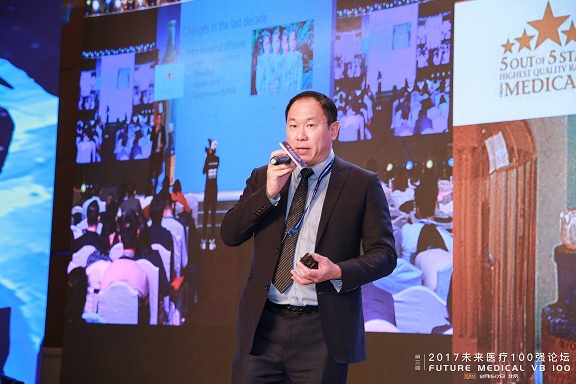
Sun Yongping | Vice President, Wanda Health
In a relatively mature healthcare system, with relatively favorable medical indicators—such as top-tier hospitals, high-quality medications, and excellent services—the ultimate beneficiaries are the patients.
Even with the best possible internet connectivity, if patients do not ultimately benefit, the so-called convenience does not constitute true effectiveness.