

Cai Daqing of Legend Capital: Investing in iFlytek and Berry Genomics Driven by Focus on Technology—New Technologies as the Core Catalyst for Healthcare Reform
“2017 Future Healthcare Top 100” Forum, themed “The Era of Species Explosion,” was held at the Beijing Marriott Hotel from December 15 to 17, 2017.
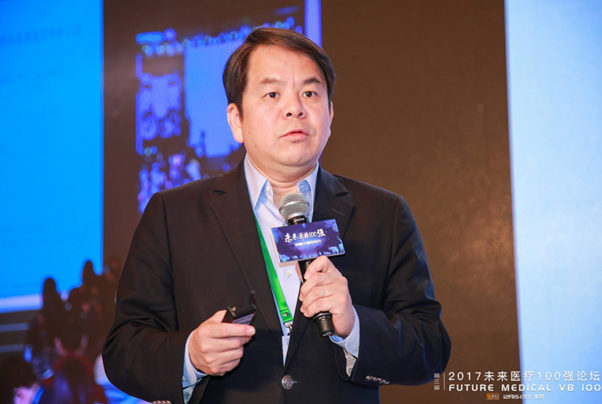
Cai Daqing, Managing Director at Legend Capital
The camel’s long march, the cheetah’s energy, the wildebeest’s trail, the elephant’s turn, and the crocodile’s strike—these animals, seemingly worlds apart from the healthcare industry, are closely intertwined with the keynote addresses of this forum.
During the morning session on December 15, Cai Daqing, Managing Director of Legend Capital, delivered an insightful speech titled “My Understanding of New Technologies—The Core Driving Force in the New Healthcare Reform.” The following is a curated report by VCBeat.
Cai Daqing graduated from the University of Science and Technology of China, later earned a Ph.D. from the University of California, Berkeley, and obtained an MBA degree from Yale University.
Cai Daqing joined Legend Capital, the predecessor of Legend Capital (now known as Junlian Capital), in May 2011 as an Investment Director. Currently, he serves as a Managing Director at Junlian Capital, focusing on investments in the healthcare and medical industries. The projects he has led or participated in include Berry Genomics, Ustar Biotechnologies, Shenogen, Cardia, BioHuis, BioNano, Hemei, and PegBio, among others.
Prior to joining Legend Capital, Cai Daqing served as Managing Director at SBI-BDJB Investment (Jade Bird SBI Investment), a joint venture between SoftBank Investment Group (SBI Group) and Peking University Jade Bird. Mr. Cai has previously held senior executive positions at Sinchem (Hong Kong) and Booz Allen Hamilton in the United States, and has also served as a Director and Chief Financial Officer (CFO) at BGI Genomics.
I am delighted that VCBeat has invited me to share my insights on emerging technologies. Datao (Li Datao, founder of VCBeat) just presented a wealth of valuable information; I will now discuss some topics that are more closely aligned with practical applications.
Let me start by introducing what we do. Legend Capital is a venture capital investment firm within the Lenovo Holdings family, established over a decade ago. In the healthcare sector, we have invested nearly $1 billion in approximately 60 to 70 leading companies in the industry.
A defining characteristic of Legend Capital is its focus on technology. As many are aware, iFlytek was the first company we invested in when Legend Capital was still known as Lenovo Investment. At that time, iFlytek’s team consisted of just over a dozen members, primarily graduate students and undergraduates. Today, iFlytek has grown into an enterprise with a market capitalization exceeding RMB 100 billion.
There is also Berry Genomics (Berry & Kang), a company well-known in the medical investment community. When we first engaged with this enterprise, its team consisted of only a dozen or so people; today, the company’s market capitalization has exceeded RMB 20 billion.
New Technologies Are Emerging in an Explosive Manner, Bringing New Hope to Healthcare
We have a strong enthusiasm for new technologies. After decades of accumulation, technological achievements in the biopharmaceutical sector are beginning to emerge at an accelerated pace, particularly in recent years, with some describing this trend as an explosive surge.
These new technologies have also brought significant disruption to healthcare, addressing many previously unmet medical needs.
For example, there is a type of leukemia called acute lymphoblastic leukemia (ALL). This disease previously required bone marrow transplantation, and patients had to undergo various forms of chemotherapy. The emergence of CAR-T therapy has brought new hope for the treatment of this condition.
We have invested in a company specializing in CAR-T therapy, many of whose patients are children. Most of these children had undergone multiple prior treatments, including one or two bone marrow transplants, yet ultimately experienced relapse. Bone marrow transplantation is considerably complex and costly, and once relapse occurs, conventional therapies offer no further viable treatment options.
Currently, the company’s technology can achieve a 95% cure rate (at least in the short term). The hospital stated that these children had only a few weeks left to live, but after receiving treatment, they nearly made a full recovery.
Beyond CAR-T therapy, numerous previously unheard-of immunotherapies have emerged in recent years. The five-year survival rate for cancer patients, which once stood at merely 10–20%, can now sometimes exceed 60–70%, a feat once considered unimaginable. Such breakthroughs have proliferated in recent years, offering hope to patients afflicted with tumors—once deemed “incurable” diseases.
The Advent of the Biotechnology Era: Technological Advancement Has Become the Dominant Force Driving Industry Development
Thirty years ago, when I was still in university, people were already saying that the era of biotechnology was just around the corner. Over the next decade or two, biotech companies struggled significantly, and graduates with backgrounds in biotechnology found it difficult to secure employment. However, university admissions told a different story: biology departments consistently attracted applicants with the highest entrance exam scores. During my time at university, seven or eight classmates in my cohort were top scorers in their respective provincial college entrance examinations. This group laid substantial groundwork for the early development of the biotechnology era.
After numerous false alarms, the era of biotechnology is finally upon us. New drug development and gene technology are gradually emerging as prominent forces in the medical sector, with companies in these fields frequently encountering a severe shortage of top-tier talent during recruitment.
In addition to the explosive emergence of new technologies, cross-disciplinary synergies among various emerging technologies have given rise to a new wave of achievements. A case in point is cell therapy and gene technology: novel discoveries in gene technology have accelerated the rapid development of cytology, while advances in cell research have, in turn, driven progress in gene technology.
We are investing in emerging technologies that will yield results within the next three to five years, while strategically positioning ourselves for the five-to-seven-year and seven-to-ten-year horizons.
In China, we believe that technological progress has become one of the leading forces driving industry development—and this is still a modest assessment. Ten to fifteen years ago, many industries were actually driven primarily by policy and market dynamics. To some extent, the influence of policy and market factors during that period outweighed the changes brought about by new technologies.
The domestic market in China is vast, so even subpar products can gain traction. Through various maneuvering within the market, these companies may even go public. Conversely, if policies do not permit it, even superior technology will be left on the sidelines. In contrast, the situation abroad is quite different, with European and American countries maintaining a relative technological lead.
Finding Opportunities Between Supply and Demand
When making investments, we must fully consider the relationship between supply and demand. Of course, demand and supply do not entirely align with the definitions of supply and demand curves in economics, but they basically correspond to the current demand-side and supply-side dynamics.
Medical needs require little explanation. Many of these are essential demands, typically determined by epidemiology. Every year, individuals develop various cancers and genetic disorders. These constitute inelastic demand that cannot be controlled by human will. Additionally, there is consumer-tier demand; when conditions permit, patients may opt to avoid overcrowded hospitals with substandard facilities, representing a consumption upgrade.
At the level of healthcare supply, new technologies constitute a significant component. To use an analogy, I frequently travel between China and the United States. My personal need is to be able to fly from Beijing to San Francisco in three to four hours. While many people share this demand, the underlying technology and its supporting infrastructure are not yet mature, and the cost remains prohibitively high. Therefore, I believe that the corresponding supply has not yet arrived.
Therefore, although this represents a rigid demand for me as well, the geographical distance is too great; from an investment perspective, it is not our target at this stage. Our investment targets are precisely those areas where intense collisions occur at the interface of supply and demand.
Identifying High-Potential New Technologies Through Three-Dimensional Relationships
Just now, Da Tao approached the issue from a different perspective, using a triangle to illustrate his point; whereas I am examining it through the lens of regulatory policy and the interplay between supply and demand. If policy changes can more effectively disrupt the supply-demand dynamics, they will undoubtedly create numerous opportunities, such as in new drug development. This sector has recently witnessed significant policy shifts, which have substantially unleashed productivity and generated a wealth of investment opportunities.
The horizontal axis is broadly delineated according to the disease spectrum, which aligns closely with hospital departmental structures. As technology evolves, the disease spectrum undergoes corresponding changes. The other dimension follows the stages of the disease course, from diagnosis and treatment to rehabilitation. While the earliest opportunities emerged in diagnosis and treatment, significant opportunities now also exist in prevention and rehabilitation. Another layer encompasses pharmaceuticals, medical devices, and healthcare services.
This is a three-dimensional relationship. Each technological shift illuminates the intersection points within this three-dimensional framework, bringing forth distinct opportunities.
From chemistry to monoclonal antibodies, nucleic acid technologies, and gene technologies, new innovations have sparked several waves over the past few decades. For instance, the advent of monoclonal antibodies has illuminated every aspect—from diagnosis to treatment—across multiple specialties, including cardiology, oncology, neurosurgery, and neurology. This field undoubtedly presents enormous industrial opportunities, which is precisely why we decisively chose to make substantial investments in Innovent Biologics at that time.
Another area is genomics. This technology first entered the field of obstetrics and gynecology and will soon be applied in oncology for tumor detection via liquid biopsy. Undoubtedly, genomics has reignited advances in cancer diagnosis. Similarly, genetic technologies will also create numerous new opportunities for the diagnosis of cardiovascular, neurological, and nervous system diseases.
In terms of treatment, gene technology also possesses tremendous explosive potential, advancing like a tsunami in the fields of genetic disorders and oncology. It is precisely such powerful new technologies that we are seeking.
Next, let’s continue discussing molecular-level technologies. While gene sequencing, gene editing, and monoclonal antibodies are relatively familiar to most audiences, nucleic acid therapeutics represent a different dimension and are less frequently discussed.
There is a U.S. company that specializes in the conceptual research and development of mRNA vaccines, with one of its drug candidates already advanced to the clinical stage. Even before the drug entered clinical trials, the company’s valuation had reached $5 billion. The company raised over $1 billion in financing, yet it has utilized only a small portion of these funds. Why? Because major pharmaceutical companies have already provided nearly $1 billion in R&D funding to support its development.
Advances in cell-level immunotherapy techniques have been rapid, yet our understanding of the immune microenvironment remains limited, making research in this field critically important. Invasive species such as Spartina alterniflora (common cordgrass) have had minimal ecological impact abroad but have become harmful plants in China. Similarly, carp, a common freshwater fish in China, have caused significant negative effects on the ecosystem of the Great Lakes in the United States, with their jumping behavior even posing a physical hazard to humans.
To some extent, the human immune microenvironment operates in a similar manner. The human body frequently harbors cells that have undergone genetic mutations. Under normal circumstances, immune cells eliminate these mutated cells; failure to do so may lead to health complications. Historically, research focused exclusively on tumor cells, but it has since been recognized that the interplay between the microenvironment and tumor cells warrants investigation. Consequently, a vast array of microenvironment-related research and diagnostic technologies remains to be explored.
A number of drugs targeting the microenvironment have already been launched with excellent efficacy, such as PD-1 and PD-L1 inhibitors.
Growth in conventional chemical drugs is slowing, while certain traditional Chinese medicines and biologics are experiencing the most rapid growth. In previous years, China’s pharmaceutical market was regulated according to standards for developing countries, but this year’s policy shifts are steering it toward internationalization.
Compared with chemical drugs, biologics remain a relatively small sector. However, chemical drugs are ceding market share to biologics, potentially freeing up tens of billions of yuan in the next couple of years. This trend will create substantial market opportunities for innovative drugs.
Over the past two years, the China Food and Drug Administration (CFDA) has implemented numerous policy changes, establishing a regulatory environment that truly fosters “good money driving out bad.” Previously, due to various factors, the market was characterized by “bad money driving out good.” We believe that the continued implementation of current policies will reverse this trend.
In the realm of biotechnology and emerging technologies, precision medicine has become a global consensus, with rapid advancement. We can observe significant progress across various key technologies, tools, and policies. Sequencing technologies (whether PCR, semiconductor, nanopore, or single-molecule), cell therapy, gene editing, and gene therapy have all reached a tipping point of breakthrough.
China’s market is relatively well-capitalized; substantial funds flow in as soon as nascent technological trends emerge. This resembles the dot-com bubble of the past, which actually represents good news for entrepreneurs. Bubbles are sometimes an inevitable phenomenon in a market economy; if an industry possesses inherent vitality, it will rebound and thrive after the bubble bursts.
Additionally, we frequently visit tech hubs such as Boston, Silicon Valley, Los Angeles, and San Diego to engage with scientists and entrepreneurial teams there, gaining insights into the latest technological advancements in this field, becauseThe era when China relied solely on market-based approaches has passed.。
Our belief is that innovation is the primary driving force behind the sustained growth of China’s pharmaceutical market in the future.In the days to come, new technologies will become an increasingly important dominant force.