

2017 Future Healthcare 100: AI Medical Imaging Leaders Share Insights — Huiying Imaging, DeepWise, Hisense Heterostructure, Hangzhou CVIC
"Top 100 Future Healthcare Companies 2017" Forum, themed "The Era of Species Explosion," was held at the Beijing Marriott Hotel from December 15 to 17, 2017.
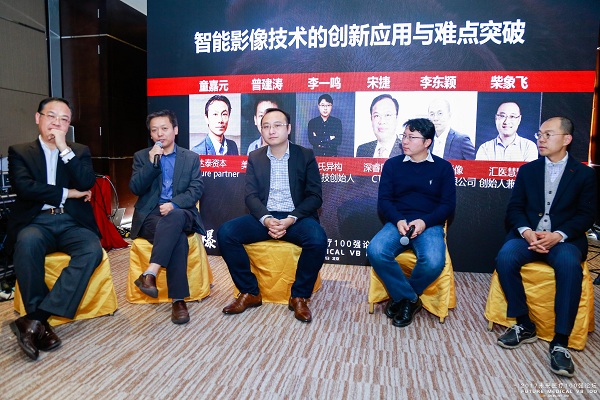
At the Intelligent Medical Imaging Sub-forum on December 16, Associate Professor Jiantao Pu from the University of Pittsburgh, Xiangfei Chai, Founder and CEO of Huiyi Huiying, Yiming Li, CTO of Deepwise Medical, Jie Song, Founder of Xi Shi Yi Gou Medical Technology, Dongying Li, CEO of Hangzhou Heart Imaging Intelligent Technology Co., Ltd., and Xuechen Wen, Chief Analyst for the Computer and Internet Industry at Northeast Securities, attended the event and delivered insightful speeches. Jiayuan Tong, Investment Partner at Data Capital, served as the moderator for the roundtable discussion.
Guests delivered speeches and engaged in spirited discussions on AI’s innovative breakthroughs, current applications, future development, and key essentials. VCBeat has curated the highlights.
Pu Jiantao: Intelligent Imaging Genomics: The Cornerstone of Precision Medicine
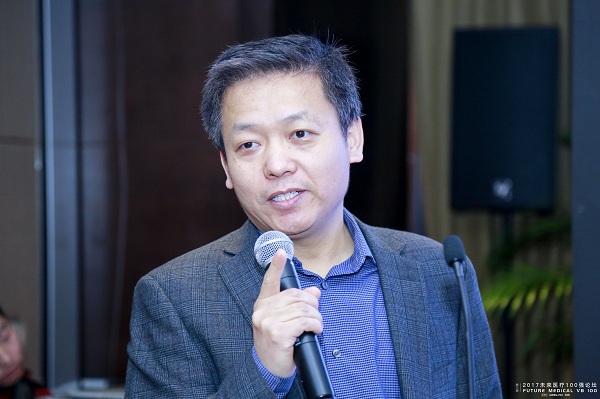
Jiantao Pu, Associate Professor at the University of Pittsburgh
Precision medicine is the true goal of healthcare, while artificial intelligence is merely a technological means to achieve it.
Imagenomics refers to the field of imagenomics. By studying electronic medical records, radiological images, genomic data, and other information, these data are integrated to form quantified insights, thereby enabling intelligent medicine.
Quantitative Imaging Is Critical to Genomics for Two Primary Reasons:
First,The relationship between imaging, disease occurrence, and associated genes is highly complex.. The same disease may result from different genes or their complex combinations acting together. Experts have stated that 2% of human genes are associated with lung cancer; given that humans have approximately 27,000 genes, this indicates that more than 600 genes are related to lung cancer.
Furthermore, the large number of genes and the numerous confounding factors in the analysis process increase the difficulty of analysis.
Second,Imaging possesses certain unique advantages. Imaging supports non-invasive quantitative analysis from multiple perspectives (density, shape, and size), providing highly intuitive visual evidence that is convenient for physicians to interpret, with its phenotypic features serving as an effective complement to genotypic data.
Although radiogenomics offers significant advantages, the sheer volume of data exceeds the capacity of human experts to integrate information, a challenge that has been effectively addressed by advances in artificial intelligence technology.
Chai Xiangfei: The Application of Artificial Intelligence in Medical Imaging
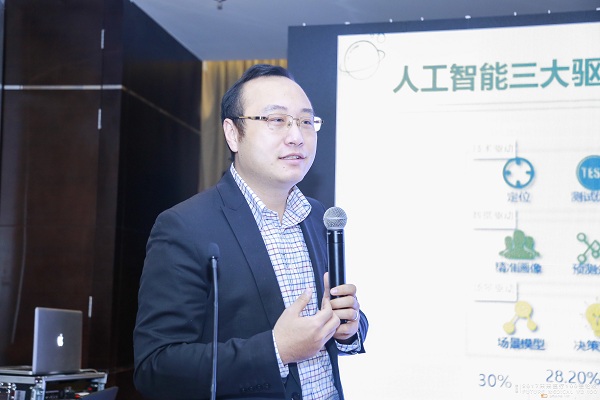
Chai Xiangfei, Founder and CEO of Huiyi Huiying
The global medical imaging market has reached RMB 33 trillion, with intelligent image analysis representing a blue ocean opportunity.
Medical imaging serves as the core diagnostic basis for a variety of major, high-incidence diseases.
The continuous enrichment and maturation of medical imaging technologies have elevated them from adjunctive diagnostic tools to the most critical methods for diagnosis and differential diagnosis, primarily manifested in three aspects:
I. Evolution from single-modality morphological imaging equipment to integrated "morphology + function" imaging;
2. Transitioning from large-scale equipment to compact, user-friendly bedside devices, with applications in intensive care, home healthcare, and preventive health services;
III. The integration of modern medical imaging technology with radiation therapy enables the unification of diagnosis and treatment.
The Diagnostic Value of Medical Imaging Is Immense:Data shows that 70% of clinical diagnoses rely on professional medical imaging, indicating that clinical practice will become increasingly dependent on imaging examinations.
The Economic Value of Imaging Examinations Is Substantial:Imaging examination revenue accounts for approximately 20% of the total revenue of public hospitals, second only to pharmaceuticals.
Finally, Chai Xiangfei proposed that image diagnosis should be divided into three stages:
The first stage is manual diagnosis.Use traditional methods;
The Second Phase Utilizes AI Methods. Based on and driven by large volumes of images, the brute-force computational approach of AI primarily yields results in target object detection, such as detecting pulmonary nodules and cerebral hemorrhage; however, these applications can only replace physicians in performing tedious tasks;
Phase 3 is Intelligent Diagnosis 2.0.Integrate and compute imaging data with multidimensional medical data, including genomic, pathological, and clinical data, while also incorporating longitudinal time-series data for integrated analysis.
Only in this way can the computational power of such a system surpass human capabilities and the proficiency of ordinary physicians, thereby achieving more precise quantitative diagnostics.
Li Yiming: Intelligent Applications of AI in Healthcare
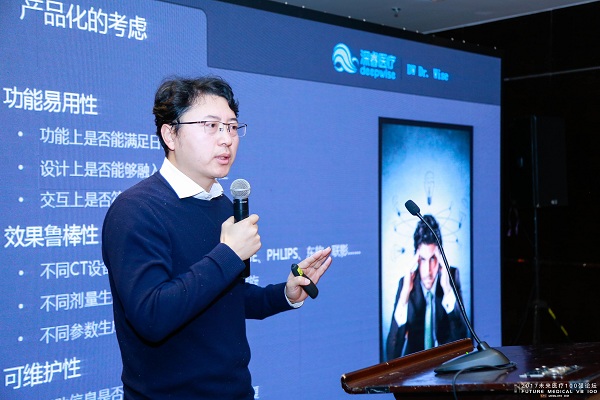
Li Yiming, CTO of Deepwise Medical
Deepwise Medical firmly believes that machine learning is the only practical and viable approach to building AI systems capable of operating in complex, real-world environments.
The widespread application of deep learning technology is primarily attributed to its elimination of the need for feature engineering, as it directly learns high-level features from data. Its performance improves with increasing data volume, and its end-to-end approach delivers superior performance and higher efficiency.
In the field of medicine, imaging represents the most significant area of application. The application of deep learning in the broader domain of medical imaging includes image classification and object detection, both of which have seen substantial advancements since the advent of deep learning. For instance, performance in benchmarks such as the PASCAL VOC challenge has improved dramatically from previously poor results to exceptionally high standards, thereby enabling widespread applications across various fields.
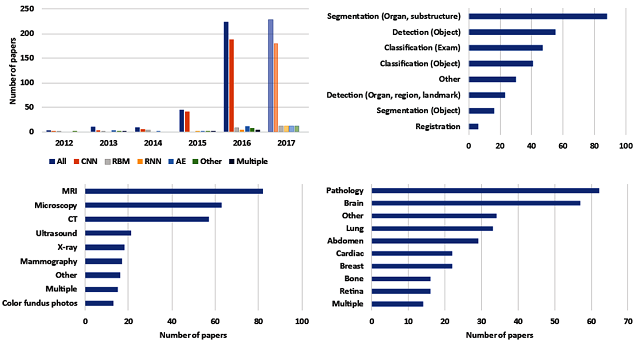
Number and Distribution of Literature in the Field of Medical Imaging
Li Yiming also stated that when researching medical AI products, three key issues should be prioritized:
Ease of Use:Does the system’s functionality meet the needs of daily diagnostic practice? Is its design capable of integrating into clinical diagnostic pathways? Does its interaction align with physicians’ usage habits?
Effect Robustness:The product is inevitably destined for deployment across multiple hospitals, primarily at the primary care level. Given the significant heterogeneity in imaging data and quality among these institutions, we must leverage technical solutions to ensure that the imaging data entering the system meets controllable quality standards, thereby guaranteeing consistent and reliable performance outcomes.
Maintainability:Is the help information complete and easily accessible? Can the system perform self-diagnosis and even self-recovery when issues arise?
Song Jie: The Future of Medical Artificial Intelligence
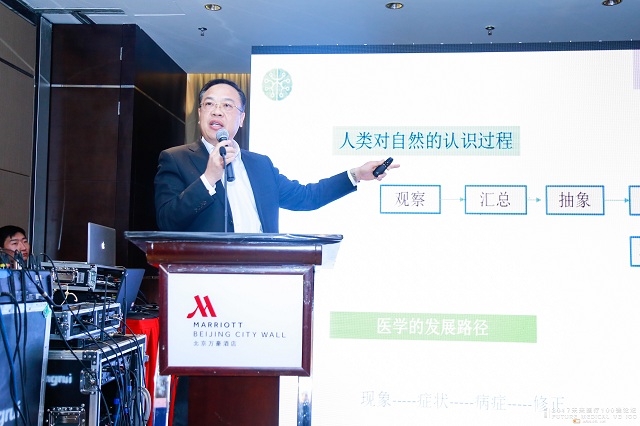
Song Jie, Founder of Xishi Isomer Medical Technology
If the various “manifestations” of human diseases are objectively presented before us, then what truly constrains the advancement of medicine is our capacity and efficiency in discerning the intrinsic connections among these disease “manifestations”—namely, human cognitive power.
There are many effective technologies that can enhance healthcare efficiency, but they are not necessarily AI.
AI addresses the efficiency of humanity’s exploration of medical mysteries and access to healthcare interventions, augmenting human cognitive capabilities. Merely replicating human abilities is but a byproduct of AI development, not its objective, as AI can perform these tasks more effectively.
Viewing AI’s impact on healthcare solely from a technical and product perspective is one-sided; AI can reshape the future of healthcare.
The true mountain behind the mist is the reshaping of the healthcare sector; once the barriers are broken, tremendous opportunities will emerge.
Li Dongying: Innovative Model of Third-Party Imaging Centers Based on Cloud Technology
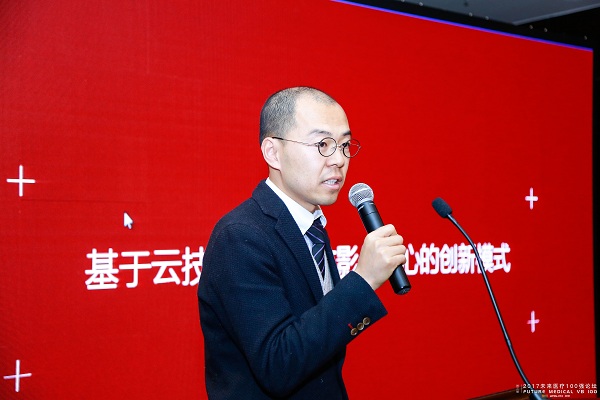
Li Dongying, CEO of Hangzhou Xin Yingxiang Intelligent Technology Co., Ltd.
Compared to other specialized third-party imaging centers, cardiac imaging has a higher technical barrier.
CVIC Heart Image International Medical Imaging was established in 2009, with its first center located in Tokyo, Japan. Professor Masahiro Terashima, the founder, serves as the Chief Medical Officer.
CVIC primarily offers cardiac imaging diagnostic services, providing full-cycle imaging diagnostics to assist cardiologists in achieving more precise diagnoses. Additionally, CVIC provides early precision screening for healthy and subclinical populations, as well as postoperative follow-up observations.
CVIC’s technical advantage lies in cardiac magnetic resonance imaging (MRI). Cardiac MRI is the world’s only non-invasive, radiation-free, and repeatable imaging diagnostic method for the heart that causes no harm to the body, enabling one-stop scanning.
Meanwhile, Hangzhou Xin Yingxiang has established a cloud platform. On one hand, all offline examination data are uploaded to the cloud platform, where post-processing 3D analysis and processing, as well as diagnostic reports from international experts, are completed. All these tasks are accomplished through links on the cloud platform.
Furthermore, the platform is linked to Huayi Xincheng, currently the largest cardiovascular care group in China. Should any issues arise requiring consultation with renowned specialists or further precise diagnosis and treatment, CVIC provides comprehensive one-stop services.
Wen Xuechen: Investment Logic in the Intelligent Medical Imaging Industry
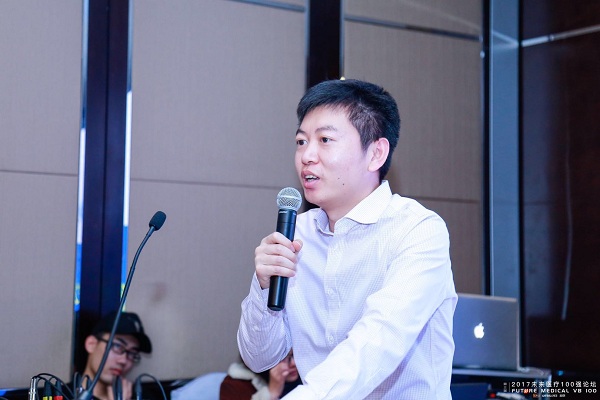
Wen Xuechen, Chief Analyst of the Computer and Internet Industry at Northeast Securities
Within the healthcare informatics and health tech industries, hospitals represent a core resource and a key strategic focus. In the era of artificial intelligence, as technology becomes increasingly open-source, it will no longer serve as a competitive advantage for companies. Instead, channel resources and application scenarios will be the decisive factors shaping their future growth prospects.
The team from Northeast Securities visited a large number of tech startups, such as those in cloud computing, blockchain, and AI, and found that technology could have a revolutionary impact on B2C businesses.
Technological shifts have a profound impact on industries; however, for B2B businesses, while technology is important, it is not the most critical factor.
Two Core Factors Influencing B2B Companies: First, a deep understanding of the industry; second, building superior business operations within that industry.