

Top 10 Breakthroughs in Healthcare Blockchain Technology in 2017: A Surge of Disruptive Innovations

“Blockchain” is undoubtedly one of the hottest conceptual technologies in today’s world. As a secure and reliable decentralized technology, blockchain has reaped significant rewards in its second major arena—healthcare—after sweeping through the financial sector.
Currently, medical data security and patient privacy protection remain core issues in the healthcare industry. Blockchain has emerged as the optimal solution for medical data custody due to its high redundancy, immutability, low cost, and capability to manage complex multi-signature access controls.
In 2017, numerous companies and institutions joined the ranks of those leveraging blockchain technology to develop more secure and efficient healthcare platforms or applications. Let’s take a look with VCBeat at the major blockchain-related developments in the healthcare sector that year!
In April 2017, Patientory, a provider of blockchain solutions for healthcare, announced the launch of its token sale project. On May 31, the company officially commenced the token sale, marking the first cryptocurrency token in the healthcare sector.
Patientory’s vision is to create a token—known as the PTY token—that enables healthcare organizations not only to lease health information storage space and execute smart contract payments and transactions tailored to the healthcare sector, but also to receive corresponding rewards through compensation models that incentivize improvements in care quality.
Patientory’s network is a secure, closed-loop distributed ledger system that connects stakeholders across the healthcare ecosystem, enabling seamless exchange of health data on a highly secure, blockchain-enabled Health Information Exchange (HIE) platform. The PTY token serves as “fuel,” powering the network.
It is reported that tokenization will incentivize care facilities to deliver high-quality nursing services and provide effective compensation rewards to healthcare institutions, thereby improving the quality of care while reducing care costs.
By leveraging blockchain technology, Patientory can encrypt patient information from hospitals and insurance companies, transforming it from centralized data into distributed data, thereby complying with the security rules of the Health Insurance Portability and Accountability Act (HIPAA).
Coordinating patient care through blockchain-based Health Information Exchange (HIE) fundamentally reduces unnecessary services and duplicate tests, lowers costs, and improves the continuity of the care cycle. The emergence and adoption of PTY tokens are expected to facilitate the healthcare industry’s transition from volume-based to value-based payment models, thereby accelerating the sector’s development.
PokitDok is a company that develops APIs (application programming interfaces) for the healthcare sector. In October 2016, it launched its blockchain, named DokChain, described as “a distributed network spanning the healthcare industry and operating on financial and clinical data transactions.”
In May 2017, PokitDok announced a partnership with Intel to jointly develop the Dokchain healthcare blockchain solution, which incorporates Intel’s open-source Sawtooth Hyperledger as the underlying ledger and leverages Intel chips to process blockchain transaction requests.
With the support of Intel’s open-source blockchain platform, Sawtooth, as well as Intel chips and SGX technology, PokitDok can enhance the scalability, privacy, and security of DokChain. By leveraging Intel chips to process blockchain transaction requests, DokChain achieves an unprecedented level of security, which is critical for the healthcare sector.
In addition, multiple companies, including GIS Strategic Ventures, the strategic investment arm of The Guardian Life Insurance Company of America, have made strategic investments in PokitDok.
Forging extensive partnerships around Dokchain to expand the reach of PokitDok API solutions, streamline patient registration, automate health insurance management, estimate out-of-pocket expenses, and simplify redundant medical processes such as payments and reimbursements. This enables patients to save significant time and effort, enjoy a better healthcare experience, and reduce both costs and time commitments.
Because the Dokchain system establishes operational standards, it represents a revolutionary step in medical blockchain. Therefore, Ted Tanner, CTO and co-founder of PokitDok, calls it “the singularity in healthcare.”
In August 2017, the State of Illinois partnered with Hashed Healthcare to launch a medical pilot project based on distributed ledger and blockchain technologies. The project aims to optimize the sharing of medical credential data and smart contracts, helping to automate relevant licensing workflows within Illinois and across state lines.
Illinois has been committed to promoting distributed ledger technology. Through this pilot project, it will propose effective solutions to address current practical issues.
The blockchain framework employed in this project enables the identification of healthcare service providers in a secure, verifiable, and scalable manner. Accreditation bodies can review and certify credentials, while healthcare service providers can verify and maintain individual records. All participants can trust that the records in the central repository are valid, certified, and unique.
“Blockchain and distributed ledger technology can bring revolutionary changes to public and private services, redefining the relationship between government and citizens from the perspectives of data transparency and trust, thereby making significant contributions to Illinois’ digital transformation,” said John Bass, CEO of Hashed Healthcare.
In August 2017, digital health startup doc.ai Incorporated (“doc.ai”) announced the launch of a blockchain-based natural language processing (NLP) platform for quantified biology.
doc.ai uses blockchain to timestamp its datasets and leverages artificial intelligence to analyze and process large volumes of medical data, thereby providing users with personalized health feedback.
Currently, doc.ai has raised $2.3 million to build this new blockchain-based NLP platform. Patients can access their health information at any time by conversing with artificial intelligence, enabling direct face-to-face interaction with “robot doctors.”
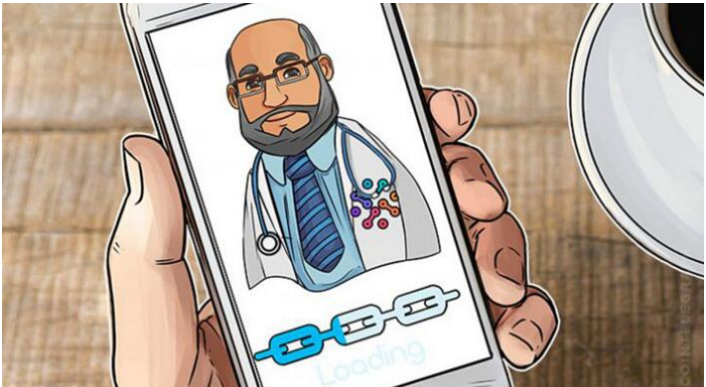
Subsequently, doc.ai plans to launch three AI-based natural language processing modules for healthcare providers and payers. These include a robotic genomics platform that enhances the understanding of genetic data and provides decision support for users; a robotic hematology platform capable of answering over 400 questions about blood biomarkers based on users’ age, gender, and medical history; and a robotic anatomy platform that leverages state-of-the-art deep neural networks and optimization techniques to predict various anatomical traits, such as height, weight, and gender, from facial images.
With these platforms, patients can consult AI-powered physicians about their health concerns—such as “How can I lower my cholesterol over the next three weeks?” or “I have iron deficiency; what should my optimal ferritin level be?”—instead of visiting hospitals to see doctors. The AI provides answers and additional context for each query, derived from the analysis of personal medical data stored on decentralized blockchain networks.
From this perspective, Doc.ai’s NLP-powered quantitative biology platform will largely address the current shortage of physicians, bringing greater convenience to patients seeking medical care and treatment.
In September 2017, Change Healthcare announced the launch of the first blockchain solution for enterprise-level healthcare. The new blockchain solution will enable consumers and service providers to improve revenue cycle efficiency, enhance real-time analytics, reduce costs, and improve services.
Change Healthcare will adopt Hyperledger Fabric 1.0, an open-source blockchain architecture initiated by the Linux Foundation, to create a distributed ledger, thereby making claims processing and secure payment transactions between payers and providers more efficient.
As one of the largest independent healthcare IT companies in the United States, Change Healthcare provides customers with comprehensive healthcare services, processing 12 billion healthcare-related transactions through its intelligent healthcare network and handling over $2.0 trillion in claims annually.
Change Healthcare plans to enable its Change Healthcare Intelligent Healthcare Network to support blockchain transactions by the end of 2017, so that customers and vendors will no longer need to develop new code, interfaces, or data formats.
Change Healthcare introduced blockchain technology for the first time to create a distributed ledger. All healthcare stakeholders are able to process claims more efficiently and conduct secure payment transactions.
This technology will enable numerous enterprise-level healthcare organizations to avoid a multitude of claims and payment issues, thereby improving the efficiency of medical services and revenue cycle management.
In September 2017, Florence, a company that leverages software to facilitate clinical research, and Verady, a blockchain asset collateralization firm, announced a partnership to co-develop a medical blockchain application, jointly advancing healthcare and clinical research.
As a partner, Verady’s application programming interface (API) will provide an easy-to-use, standardized Representational State Transfer (REST) interface to reduce blockchain complexity for Florence’s customers. Florence and Verady will collaborate with several pharmaceutical companies to jointly develop an open-source blockchain application for managing patient and clinical trial data.
Florence is the fastest-growing workflow tool in clinical research, managing patient and trial data for thousands of clinical researchers and study sponsors, while Verady develops technology that leverages blockchain to ensure asset security.
Andres Garcia, Chief Technology Officer of Florence, stated, “The partnership between Florence and Verady enables research institutions and enterprises to better manage patient data through blockchain. By leveraging patient and clinical trial data managed via the Verady API, research teams can utilize terabytes of patient data while respecting patients’ rights.”
In October 2017, telecommunications giant Nokia and OP Financial Group, one of Finland’s largest financial services groups, jointly launched a new pilot project for medical blockchain.
This medical blockchain pilot project will focus on empowering consumers to securely control their personal health data, including the sharing, access, and use of such data through blockchain technology.
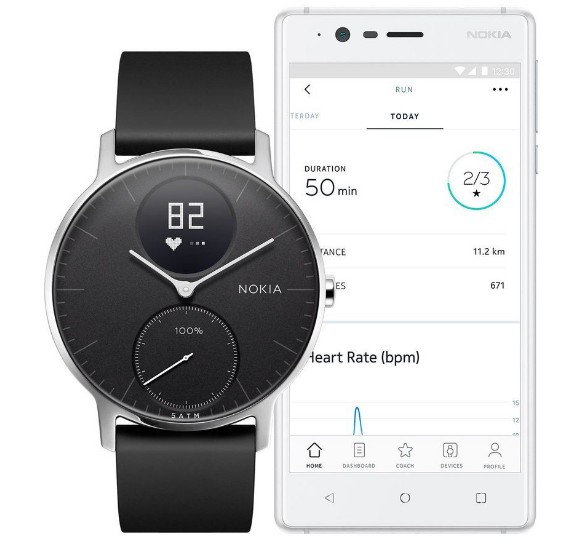
This blockchain pilot project will select 100 participants to share their daily step counts and sleep duration via the Nokia Steel HR wearable smart monitoring watch, with the relevant data stored on the blockchain. The blockchain will encrypt the data shared through the application, ensuring that it can only be accessed by OP Financial Group. Furthermore, the company will compare users’ performance against their fitness goals and award points to those who achieve their targets.
This pilot program aims to establish an incentive model for health insurance and medical services, thereby encouraging customers to pursue healthy lifestyles.
Nokia stated that, by gaining user trust, the pilot program can aggregate data on global health issues. The collaboration with OP Financial Group marks Nokia’s commitment to building a global digital health ecosystem.
In today's world, electronic health records (EHRs) face challenges such as data breaches, scalability, interoperability, and data integration.
Furthermore, users’ lack of knowledge about electronic medical records has enabled companies to reap excessive profits from the sale and trading of personal medical records. As consumer awareness rises, expectations have grown accordingly. Consumers now expect to take control of their health data and access their health information anytime, anywhere.
In response to this situation, in November 2017, Health Wizz announced the launch of a mobile platform that leverages blockchain, mobile technology, and data management solutions to help patients organize their medical records, enabling secure access to their personal health databases anytime and anywhere.
Furthermore, certain organizations can use cryptocurrencies to incentivize patients to contribute their health data for medical research. This currency is OmCoin, a digital ether token issued by Health Wizz, which allows users to securely and reliably exchange their health information via blockchain.
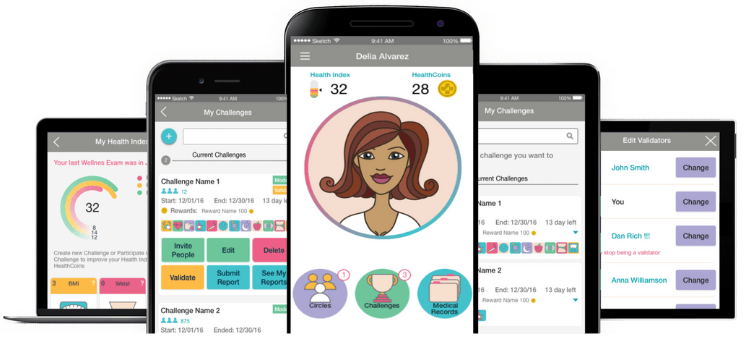
The Health Wizz mobile platform leverages blockchain technology to provide consumers with the tools needed for stakeholders—including research institutions and pharmaceutical companies—to collectively pool, manage, and share medical data. This approach ensures data integrity and protects patient privacy, truly returning ownership of personal healthcare information to patients themselves.
BurstIQ is a HIPAA-compliant company specializing in the integration and security of blockchain-based medical data records. In November 2017, it entered into a strategic partnership with Unified Signal, jointly launching the world’s first blockchain-encrypted wallet bundled with mobile phone services.
This auto-updating encrypted wallet has been integrated into United Signal’s mobile network. With this digital wallet, users can make purchases via their smartphones at any retail store that supports Android and iPhone mobile payments.
Currently, it already supports certain payment scenarios for institutions such as hospitals, care providers, insurance companies, biotechnology firms, digital health companies, value-added service providers, and government agencies.
This collaboration will expand BurstIQ’s reach in mobile services, handheld devices, and the consumer market.
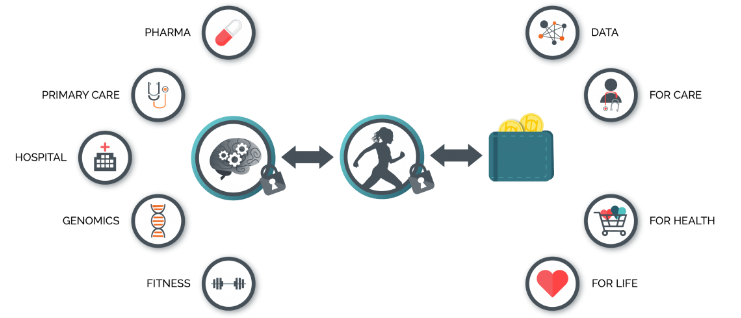
Users will be able to use Bitcoin, Ethereum, and BurstIQ’s proprietary digital currency to pay for everyday items via a blockchain-secured mobile wallet on their smartphones, offering convenience comparable to Alipay and WeChat Pay, which are widely used in China. The beta version of the new encrypted wallet is scheduled for release on Android and iOS in early 2018.
In the current U.S. healthcare market, nearly one-third of payments are made through novel payment models. A growing number of healthcare institutions and enterprises have recognized the reliability, security, and convenience that blockchain technology offers in areas such as medical data preservation, healthcare payments, and reimbursements; Curisium is one such company.
Curisium is a healthcare technology and services company headquartered in Manhattan, California, USA. In December 2017, Curisium announced that it had raised $3.5 million in seed funding from investors including Flare Capital Partners, New Enterprise Associates (NEA), and Shuttle Fund.
Curisium leverages medical blockchain to provide tailored solutions for consumers, suppliers, and life sciences companies, building patient-centered, value-based innovative contracts.
Curisium aims to transform the current healthcare landscape by breaking existing frameworks, enabling every patient to have scalable, value-based care contracts. Traditional healthcare contracts are largely population-based, whereas Curisium adopts an individual-patient approach. By leveraging blockchain technology, it converts sparse, event-driven data into compact representations of patient health status, thereby simplifying contracts and enabling the inference of new insights from incomplete data.
Bill Geary, co-founder of Flare Capital Partners, stated that by validating disease outcomes at the individual level, blockchain technology will become the foundation for more innovative contracts in the future.
As an increasing number of healthcare companies focus their research on blockchain, it is evident that blockchain technology is transforming the global healthcare industry. VCBeat believes that it will not be long before more patients and healthcare service providers benefit from the conveniences brought by blockchain technology.
References
1. http://hitconsultant.net/2017/04/26/patientory-healthcares-crypto-token/
2. http://hitconsultant.net/2017/03/10/guardian-investment-pokitdok/
https://www.businesswire.com/news/home/20170510006122/en/PokitDok-Advances-Healthcare-Smart-Contracts-Intel%C2%AE-Blockchain
3. http://hitconsultant.net/2017/08/09/illinois-hashed-healthcare-pilot-program/
4. http://hitconsultant.net/2017/08/25/doc-ai-nlp-technology/
5.http://hitconsultant.net/2017/09/25/change-healthcare-enterprise-blockchain-healthcare/
6. http://hitconsultant.net/2017/09/25/healthcare-blockchain-apps-partnership/
7. http://hitconsultant.net/2017/12/08/nokia-healthcare-blockchain-pilot/
8. http://hitconsultant.net/2017/12/01/health-wizz-blockchain-platform/
9. http://hitconsultant.net/2017/11/10/burstiq-unified-signal-partnership/
10. http://hitconsultant.net/2017/12/15/healthcare-blockchain-startup-curisium/