

Penguin Doctor Founder Wang Shirui: Penguin Clinics Are Not Just Clinics—They’re Offline Traffic Entrances, Connectors, and Continuous Data Collectors | Future Healthcare 100 Forum 2017
“2017 Top 100 Future Healthcare Companies” Forum, themed “The Era of Species Explosion,” was held at the Beijing Marriott Hotel from December 15 to 17, 2017.
At the Health Management Parallel Forum on the afternoon of December 16, Wang Shirui, Founder and CEO of Medlinker and Penguin Doctors, delivered a speech titled “Penguin Clinic Is Not a ‘Clinic’.”VCBeat (WeChat: vcbeat)Guest Perspectives Summarized.
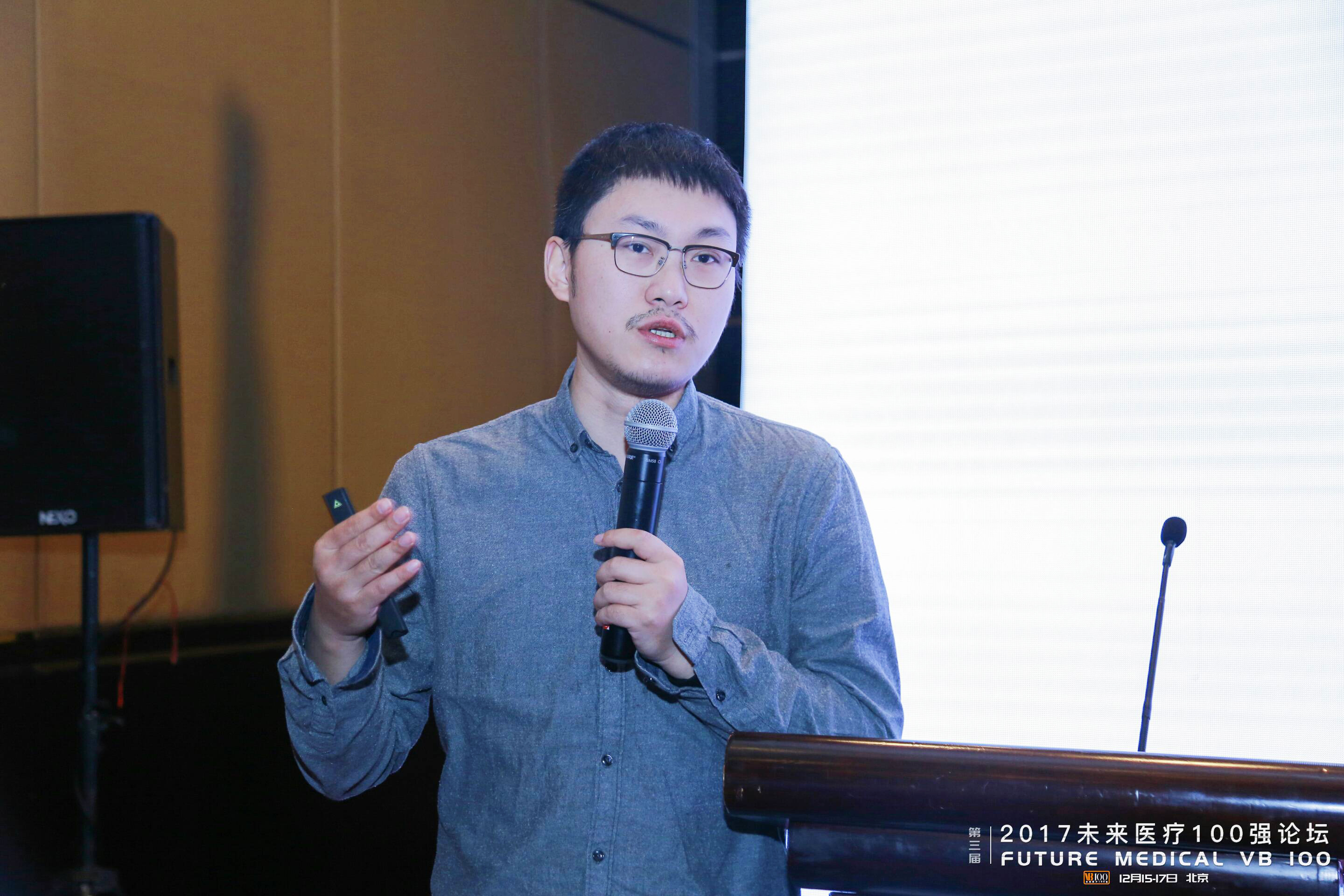
Guest Introduction
Wang Shirui graduated from the West China School of Stomatology, Sichuan University, and served as a visiting scholar at Harvard University. Upon returning to China, he founded Medlinker and established Penguin Doctor in May 2016. In February 2016, he was named to the Forbes Asia “30 Under 30” list; in December 2016, he was selected for Fortune (Chinese Edition)’s list of “China’s 40 Business Elites Under 40” in 2016.
Speech Content
I. Scaling is the commercial essence of Penguin Clinic, with time being the greatest cost
Penguin Doctor, which belongs to the Tencent ecosystem like Mobike, seemed destined from the outset to share many “similar approaches.” Rather than saying their ideas were alike, it is more accurate to say that both captured the core of the market: demand.
Mobike does not position itself as a bicycle company, but rather as a platform for last-mile mobility solutions. If Penguin Doctor Clinic is not a clinic, then what exactly is it?Wang Shirui prefers to define Penguin Doctor as a standardized platform for shared medical services, serving as an “offline entry point,” a “connector,” and also an “acquirer of continuous data.”
Penguin Doctor quietly opened three general practice clinics in Beijing, Shenzhen, and Chengdu over the course of a year, located in Sanlitun, Binhai, and Chengdu’s CBD, respectively. Each clinic ranges from 800 to 2,000 square meters in size, with an investment of tens of millions of yuan per facility.Although it has the appearance of a clinic, the core of Penguin Doctor lies in “openness” and “connectivity.”
In Wang Shirui’s initial vision, Penguin Doctor aimed to emulate the “Starbucks” model by establishing 100 clinics in China, following the template of certain high-end overseas clinics. However, after conducting a cost analysis, Wang Shirui found that time constituted the most significant cost factor. A comparison between opening 100 clinics over five years versus launching them within six months revealed that the five-year approach would consume six times more resources than the six-month one. Consequently, he concluded that rather than expanding gradually, it would be more effective to make a substantial upfront investment—specifically, allocating RMB 1 billion to rapidly establish 300 clinics within two years.
Through the initial practice of three clinics, Penguin Doctor has also been experimenting to determine the maximum cost tolerance. Wang Shirui believes that scalability is the essence of Penguin Doctor’s business model. While it is feasible for Penguin Doctor to open five or ten high-quality clinics with areas ranging from 1,000 to 5,000 square meters, focusing solely on clinic operations over a five-year period would be unnecessary.
Tencent’s strategy in the healthcare sector is to build a “connector.” If Penguin Doctor were to establish clinics, it would undoubtedly do so at the largest possible scale, as this aligns closely with Tencent’s overarching corporate strategy.Therefore, in its later-stage planning, Wang Shirui presented a set of figures: Penguin Doctor plans to rapidly expand its primarily offline entry points by building 300 self-operated clinics, establishing a clinic alliance with a scale of 3,000 members, and deploying 30,000 shared medical testing devices.
II. As the dividend of online traffic fades, opening offline channels is not only more precise but also cost-effective.
Wang Shirui and his team discovered a paradoxical phenomenon in online operations: for instance, converting WeChat users—screened from Moments or other traffic sources—into stable, long-term paying health members requires significant time and cost at each step of the funnel.
During the experience of unmanned shelves and new retail, Penguin Doctor will discoverRather than layer-by-layer online screening to identify precise users through search methods or extensive software and hardware operations, it is more effective to directly establish an offline clinic as an entry point for delivering health services and engaging users.For example, the business logic of Mobike involves acquiring precise users by deploying Mobike bicycles offline.
As the dividends of online traffic fade, offline channels have instead become an effective means of attracting users.For instance, converting WeChat users from Moments or other traffic sources into paying customers incurs an average cost of approximately RMB 500. The time and cost required for these users to subscribe and become stable, long-term health membership clients are even higher.
Wang Shirui stated candidly that Penguin Doctor had achieved favorable operational metrics within a little over a year, demonstrating that the proportion of users converted through offline channels is significantly higher than that of paying users acquired via online traffic generation.Using clinics as an entry point not only generates revenue from registration fees, medication costs, and health management services, but also establishes a sales channel for health supplements. Therefore, from this perspective, offline channels serve as the entry point.
III. Three Major Pathways to Establish Offline Access Channels: Shared Clinics Enable Asset-Light Operations
Wang Shirui’s envisioned offline entry points are realized through three channels:
The first is self-built clinics.Establish proprietary benchmark high-quality clinics to serve core user segments in key regions, thereby projecting brand image and quality standards;
Second, build a high-quality clinic alliance.The high-quality clinic alliance system, selected according to Penguin Clinic’s standards, scales up clinic access points and effectively expands user coverage. Regarding clinic scale, Wang Shirui stated that Penguin Doctor would not open clinics one by one on its own; instead, it collaborates with clinics by providing them with systems and management services, thereby becoming part of the clinic alliance.
Third, creating an entry point for health services.Shared Clinics. Creating an entry point for users to access their health data, and providing the most convenient access to health services through the deployment of shared testing devices.
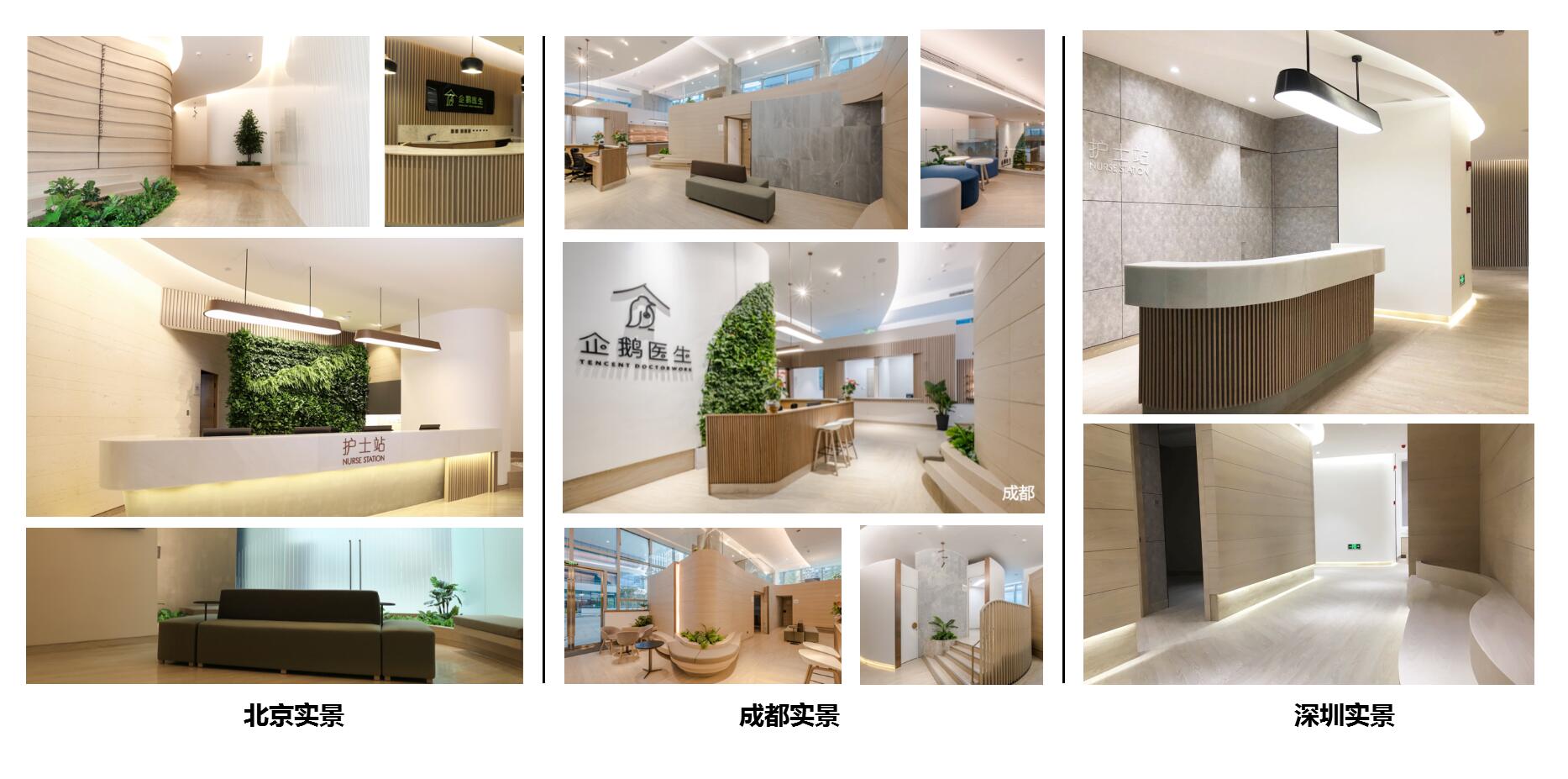
Interior View of Penguin Doctor
In the interior photos of operational Penguin Doctor clinics he displayed, there was a distinct sense of high-end residential decor. He stated that Penguin Doctor clinics deliberately look less like traditional medical facilities, aiming to subvert the stereotypical image of conventional clinics. Penguin Doctor aims to evolve toward health management services, expanding into pre- and post-consultation care, thereby serving as a complement to critical care and specialized medical services.
Clinic sharing is the key area Wang Shirui and his team aim to breakthrough. He believes that the operational assets of standalone clinics are too heavy, thus necessitating the unbundling and fragmentation of clinic operations.In response, the team has given considerable thought to various strategies. For instance, could clinics adopt a shared model for diagnostic and testing equipment, thereby replacing the need for each clinic to own its own instruments? Furthermore, could deployment sites include offices, restrooms, public squares, or areas adjacent to shared KTV booths?
To validate this model, Penguin Doctor discreetly installed urinalysis devices in restrooms. These external testing tools are used by customers daily and can directly replace routine hospital urinalysis. By leveraging image recognition to automatically generate reports, the service costs only a few yuan, eliminates the hassle of waiting in line, and delivers results within two minutes.
From Wang Shirui’s perspective, such testing will become highly prevalent, with increased frequency of use by consumers. This approach can be applied to a variety of devices, including those for bodily fluid analysis, temperature monitoring, and genetic testing. It represents one model for unbundling clinic services.
In the future, Penguin Doctor aims to implement six major sharing models, including but not limited to medical care sharing, data sharing, resource sharing, service sharing, training sharing, and supply chain sharing.
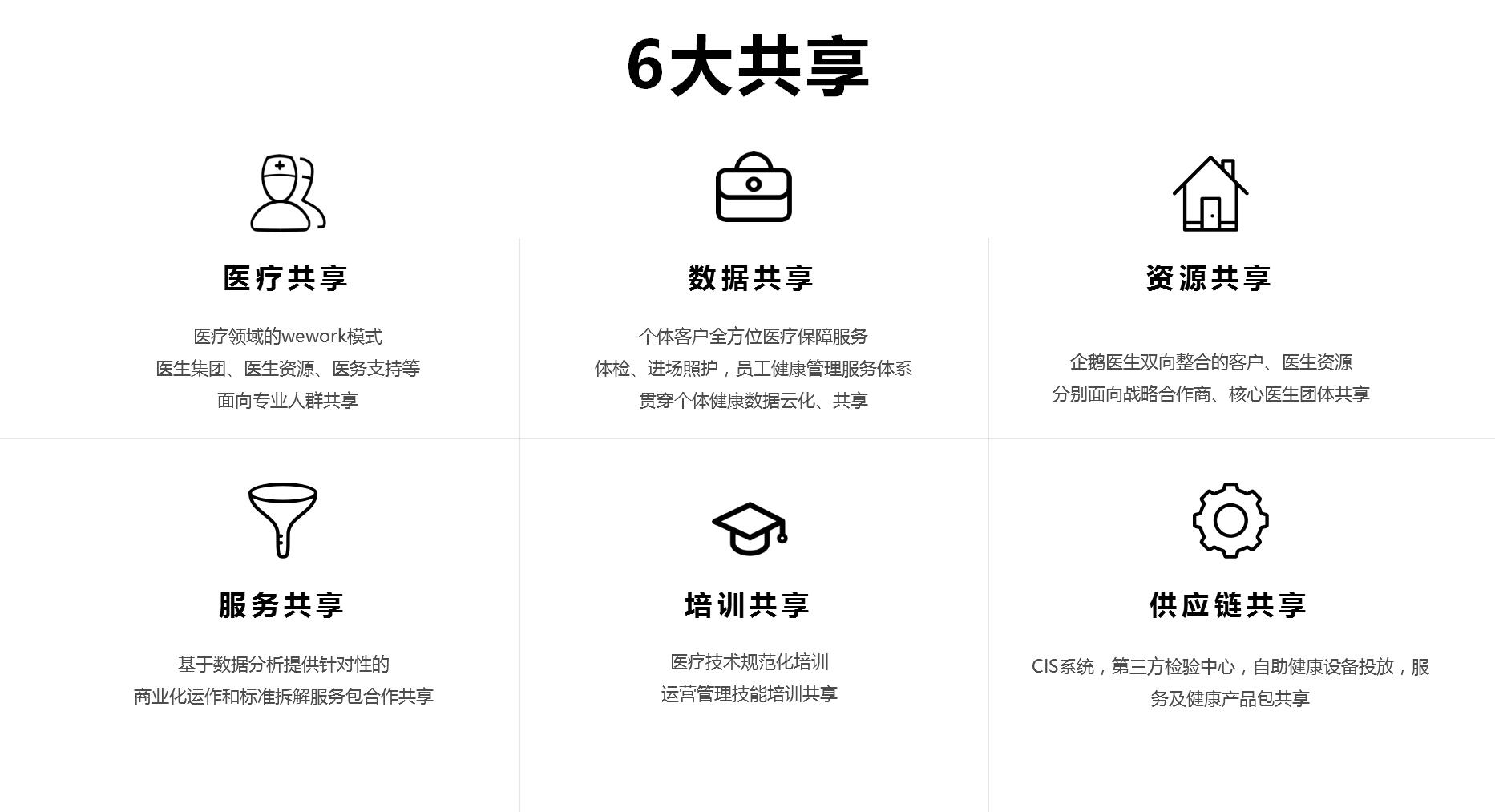
IV. Penguin Doctor provides shared spaces, with its “connector” positioning linking six major sectors
Wang Shirui stated that Penguin Doctor essentially provides a venue, and future clinics will not be operated as traditional clinics.The clinic will be fully opened to the public. This facility is equipped with diagnostic devices, hosts shared physicians, and collaborates with numerous insurance companies. After developing an offline membership base, it can also jointly manage patients with other health management companies and medical institutions.
Penguin Doctor’s membership management system encompasses health management, single-disease management, and age-stratified management. It employs diverse management approaches across various scenarios, including family-based care, clinic-based care, online-offline integration, tertiary hospitals, and overseas medical services. The company collaborates with high-quality partners to jointly build a comprehensive membership management platform.
Regarding one of the positioning concepts of Penguin Doctor as a “connector,” Wang Shirui summarized it in three aspects:
First, the integration of online and offline channels.Connect online users with clinics, integrate online and offline resources, adopt the WeWork model for physicians, and provide health services.
The second is the connection between offline and online.Tencent possesses substantial online traffic. In the future, not only Tencent but also its entire internet ecosystem partners will be able to refer patients under their management to offline platforms for care coordination.
Third, the integration of tiered diagnosis and treatment with medical consortia.In addition to visiting clinics, patients may seek care at tertiary hospitals on a very infrequent basis, or even opt for overseas medical services. Acting as a connector, Penguin Doctor provides initial screening and tiered diagnosis and treatment services, facilitating two-way referrals within traditional medical consortia. To date, it has received invitations from nearly a dozen tertiary hospitals.
Specifically, Penguin Doctor integrates six key domains: information, services, products, data, technology, and finance.
1. Connection Information.Provide C-end user members with curated medical and health information and health solution content; supply content sections to media companies.
2. Connect to services.Provide health management services, build a medical care service chain, and innovate medical services. This includes services for home settings, online consultations, and clinic scenarios;
3. Connect the product.Including smart wearable devices, pharmaceuticals, and health foods. Penguin Doctor has processes for importing and purchasing medications from overseas, necessitating connectivity with pharmaceuticals, health supplements, and related products.
4. Connect data.Including hospital data, clinic data, and personal data.
5. Connection Technology.Current AI is still in the early stages of field data acquisition, performing basic data cleaning and structuring, and identifying application scenarios. However, within five years, there will certainly be highly effective solutions implemented in real-world settings.
6. Connected Finance.By integrating insurance product resources, we have launched HMO-style cost-containment medical insurance financial solutions tailored to Penguin Doctor’s customer base. At the level of medical finance solutions, Penguin Doctor also provides patients with mutual aid services and medical installment payment options, alleviating short-term financial strain.
V. The Future Competition Lies in the Acquisition of Continuous Data
Penguin Doctor’s precise understanding of continuous data refers to bidirectional continuous data spanning the pre-consultation, intra-consultation, and post-consultation phases.Regarding this concept, Wang Shirui emphasized that even if we obtain data from Grade 3A hospitals—allowing us to access patients’ disease histories, medication records, attending physicians, and even personal information such as phone numbers—it is still insufficient. This is because 80% of a true user’s healthcare consumption behavior occurs before and after clinical consultations, specifically in prevention and rehabilitation. Therefore, diagnostic and treatment data from Grade 3A hospitals alone are inadequate, making pre- and post-consultation data even more critical for Penguin Doctor. Given the challenges in collecting post-consultation data, the team has had to persuade members to wear corresponding wearable devices during their medical visits to upload all relevant data.
Furthermore, regarding the requirements for data,Penguin Doctor not only collects continuous data but specifically seeks “bidirectional” continuous data. The core of the “bidirectional” concept lies in the ability to identify the number of users experiencing data fluctuations when such variations are detected, thereby enabling appropriate follow-up actions. Furthermore, these subsequent interventions should lead to measurable changes in the users’ data.
Regarding the currently popular AI, Wang Shirui believes that although AI is a key area of capital investment at present, people’s attitude toward it is relatively calm; they do not regard AI as exceptionally remarkable, nor will they view it as particularly detrimental in five years.
A cohort of outstanding AI companies began to emerge in 2016 and 2017. However, we find that the truly leading AI firms in China—or those poised for substantial growth over the next five years—will invariably be the ones most adept at acquiring continuous, bidirectional data. The AI companies that dominate the future market will be those capable of securing fresh, schedulable, structured, and re-adjustable data. This is also the rationale behind Tencent’s strategic shift. In operating its data center platform, Tencent has focused on building capabilities for data acquisition. Its underlying data algorithms and image recognition technologies are already relatively mature; the future battleground lies in the acquisition of continuous data.
He candidly admitted that the current scale of Penguin Doctor’s platform infrastructure is still insufficient. If it can achieve a layout encompassing hundreds to thousands of offline clinics, the channels and methods for data acquisition will become more comprehensive.Wang Shirui stated that Penguin Doctor will also open up its future AI R&D capabilities. Given the extensive applications in the broader health sector, it is impossible for a single entity to address them all. We encourage all stakeholders to leverage the Penguin Doctor platform as a foundation for collecting bidirectional, continuous data. This market will be developed through collaborative AI research and development efforts.