

Yu Rong of Meinian Health: Sharing Our Industry Insights and Strategic Roadmap | 2017 Future Healthcare 100
health 100
Medical Examination Service Provider
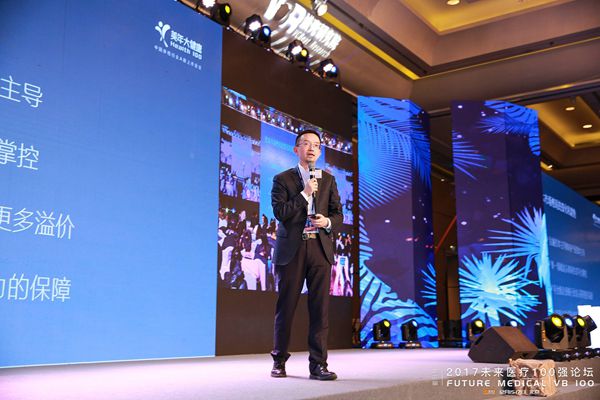
"Top 100 Future Healthcare Companies 2017" Forum, themed "The Era of Species Explosion," was held at the Beijing Marriott Hotel from December 15 to 17, 2017.
In the era of explosive growth across species, various specialized sectors of healthcare are unleashing new vitality. During the session titled “Tracing the Wildebeest: The New Landscape of Healthcare Traffic Gateways,” Mr. Yu Rong, Chairman of Meinian Onehealth Healthcare Holdings Co., Ltd. and Chairman of Tianyi Investment (Group) Co., Ltd., delivered a speech on the theme “Building a Health Platform to Construct a Medical and Healthcare Ecosystem.” VCBeat (WeChat ID: vcbeat) has compiled the guest’s insights.
Guest Introduction:
Yu Rong, a graduate of Shanghai Jiao Tong University and holder of a Ph.D. from the China Academy of Chinese Medical Sciences, serves as Chairman of Meinian Onehealth Healthcare Holdings Co., Ltd. and Chairman of Tianyi Investment (Group) Co., Ltd.
Meinian Onehealth Healthcare Holdings Co., Ltd. is China's largest health examination and medical services group, a constituent of the CSI 300 Index, and ranks first in market capitalization among listed companies in the health service industry. It owns professional health examination and medical brands such as "Health 100," "Ciming," "Ciming Aoya," and "Meizhao."
Currently, it operates nearly 400 medical and health examination centers in over 200 core cities across China, making it the world’s largest preventive medicine platform and primary gateway for health services. In 2017, Meinian Onehealth provided professional health services to nearly 20 million individuals, with projections indicating that annual service volume would exceed 100 million by 2021.
Presentation Content:
I would like to report on some recent reflections from the following aspects:
First, our perspectives on the industry and our understanding of future trends;
Second, introduce the preliminary practices and future plans of Meinian Onehealth;
Finally, let us explore some future trends.
Today’s theme is “Building a Healthy Traffic Gateway.” When it comes to traffic, we inevitably associate it with the internet industry. In reality, traffic is not exclusive to the internet sector; the education industry is also involved.
We hope to engage with outstanding entrepreneurs from various industries. Recently, I interacted with professionals in the education sector and discovered commonalities between the healthcare and education industries. Both are essential services subject to stringent external regulations. The key difference may lie in frequency: healthcare services are typically low-frequency, whereas education, despite having some low-frequency components, generally exhibits a high-frequency pattern.
The healthcare industry is leveraging certain advantages of the internet, but it needs to consider the underlying logic, observe industry changes, and judge future trends.
One trend is particularly evident: in the coming years, emerging technologies—including big data, the Internet of Things (IoT), and artificial intelligence—will spur explosive growth among companies in the health sector. Over the next three to five years, we will witness that even the medical industry, traditionally conservative and resistant to change, will undergo, or at least experience in certain segments, profound transformations.
In a highly regulated and conservative industry, innovation is no easy feat. With the advent of the technological wave, we finally have the opportunity to leverage big data processing, AI, and other technologies to address—even if only partially—the bloated segments and pain points within the healthcare industry. Technological transformation has already reshaped the industrial landscape.
What are the pain points in the healthcare industry? Here are a few key examples: High-quality medical resources are scarce, yet demand is massive and growing. Aging populations, the widespread prevalence of chronic diseases, and an increasing incidence of severe conditions are evident, but public health systems and fiscal healthcare burdens are becoming increasingly heavy. There is a surge in consumption upgrades and demand for healthy lifestyles, yet the tendency to prioritize treatment and medication over prevention and wellness remains prevalent.
These pain points and hot-button issues existed a decade ago and will persist for another ten years. Why have they not seen significant improvement or resolution? This is because the healthcare industry possesses inherent resilience and stubborn blind spots, making it exceedingly difficult to promote many new technologies, novel drugs, and innovative medical devices within public hospitals.
Even though we already have more cost-effective solutions to change the status quo, promoting them is not easy. This is why, while serving as a preventive care entry point, Meinian Onehealth aims to build a new platform that allows outstanding entrepreneurs, products, and services to bypass traditional systems, models, and practices, venturing into an uncharted territory for experimentation. Once these initiatives have matured externally, they can return to the mainstream market to prove their worth; alternatively, they may first demonstrate their value on our own platform before showcasing themselves on a broader stage. This is what we plan to do in the future.
As for the major opportunities across the entire industry in the future, I would also like to outline them in light of current policy trends and guidance. There are mainly the following four points:
First, in the medical profession—whether concerning devices, pharmaceuticals, or services—there is a distinct shift toward upstream engagement and front-loaded intervention, with a clear trend toward precision prevention. The underlying logic is tied to broader socio-economic structures; simply put, neither national budgets nor global government coffers can sustain the rising costs associated with increasing human longevity, thereby compelling the industry to move proactively in this direction.
Second, improve healthcare efficiency from the perspectives of data, standards, and intelligence. Digitization, standardization, and intelligentization have been hot topics in recent years;
Third, in terms of medical services, we are optimistic about breakthroughs in specialized care and the integration of medical and elderly care. Regarding medical services, the prospects are promising for the next 5–10 years, particularly for non-public hospital enterprises achieving breakthroughs in specialized fields.
Finally, we observe certain drivers brought about by market-oriented reforms and policy changes, such as the marketization of physicians and the platformization of healthcare institutions.
Key Elements of Innovation and Entrepreneurship in the Health and Medical Sector: I Have Distilled Several Keywords—Closed Loop, Data, Primary Care, and Finance.
First is the closed loop; only with a closed loop can an ecosystem exist. The model we aim to build spans from the collection of medical needs and solution provision to payment assurance—these are key areas we intend to expand into in the future. If there is an opportunity to create a closed loop in the healthcare industry, it must be pursued, either independently or in collaboration with partners to form a joint closed loop, as such a system offers greater security. With open-ended operations, you will find that either traffic and customers are lost, or you fail to capture the most valuable segment of the value chain. This is what makes the healthcare industry particularly intriguing.
Second is data, covering fields such as telemedicine, intelligent diagnostics, pharmaceutical e-commerce, and internet hospitals. We must act as producers rather than mere porters, and integrate online and offline operations. The power of data is self-evident. Just a few days ago, the Political Bureau of the CPC Central Committee held a dedicated meeting, where General Secretary Xi Jinping emphasized the critical role of the big data industry in China’s future economic development and transformation.
Third is the primary care sector. We emphasize the critical importance of essential medical services at the grassroots level, encompassing general practice, specialized care, health screenings, and comprehensive services. As a branch of the healthcare service industry, health experience services actually have a broader mass base in China’s third- and fourth-tier cities. The rise in consumer awareness and health consciousness, along with the aspiration for a high-quality healthy lifestyle, transcends the boundaries between first-, second-, third-, and fourth-tier cities. This logic mirrors the strategy that propelled OPPO and vivo to industry leadership.
Fourth is finance. When we discuss healthcare, we often focus narrowly on the immediate issues—technology, services, policy, and reform—while rarely addressing finance. In fact, over the next 5–10 years, financial support will be essential, including backing for related industries derived from financial mechanisms.
I believe that financial catalysts will have a significant impact on the transformation of the healthcare industry. We have already witnessed an explosive growth in commercial health insurance over the past two years. In the future, health-related insurance products will increasingly occupy a mainstream position among all insurance offerings. Changes in payment models will directly affect the ecosystem of the healthcare industry; at no point should the critical role of finance be overlooked.
The eight characters and four terms mentioned above—closed loop, data, grassroots, and finance—represent our fundamental thinking on future business models.
As you can observe from the shifts in the capital market, this year’s landscape for the health industry has been particularly noteworthy. Visible trends include a transition from financial capital dominance to industrial capital leadership, a shift from single-sector leaders to ecosystem platform control, greater valuation premiums for platform-level enterprises and industry leaders, and the recognition that resource-based or technology-driven models are essential safeguards of competitiveness.
Specifically, we observe that a significant number of pharmaceutical companies were listed on the A-share market in 2017, exhibiting several notable characteristics worthy of close attention.
From the perspective of the existing market, the logic is the same as that of Moutai and Ping An: the phenomenon of "the strong getting stronger" is very evident. For instance, Hengrui Medicine’s market capitalization has risen from over RMB 100 billion at the beginning of the year to RMB 200 billion. However, the valuation of a large number of small- and mid-cap pharmaceutical companies in the capital markets is gradually declining, a trend that is also clearly reflected in other consumer sectors.
Therefore, our emphasis today on the importance of traffic and platforms is aimed at understanding how to emerge as a market leader amidst these clear industry trends. For healthcare-related companies, maintaining strong resilience and sustained growth during their post-IPO journey is of paramount importance.
Another notable feature is that the value growth of health promotion companies has outpaced that of companies focused on treatment and pure medical services. For instance, apart from Hengrui Medicine, many pharmaceutical companies have seen their market capitalization decline or experience limited growth. In contrast, companies related to traditional Chinese medicine (TCM) and health supplements have achieved remarkable progress and growth. Notable examples include Yunnan Baiyao, Pien Tze Huang, Dong-E-E-Jiao, and Guangyuyuan, all of which have delivered strong performance.
When examining the healthcare sector in the future, we must not overlook the impact of consumption upgrades on the market end, while also considering insights reflected from the financial and capital markets, which may offer valuable inspiration for our entrepreneurial pathways.
In the upcoming year of 2018, these industries remain my primary focus. First, health big data, telemedicine, and intelligent diagnostics will see major breakthroughs. Second, the medical service industry, particularly specialized and value-added healthcare, will experience explosive growth. Third, the traditional Chinese medicine (TCM) industry will undergo significant reshuffling, presenting substantial opportunities. Fourth, precision prevention, genetic testing, early diagnosis, and cell therapy will continue to garner intense interest.
In other words, I am highly optimistic about future industries stemming from data-driven and precision prevention entry points, as well as those related to health promotion and prevention. Of course, other outstanding sectors, such as advanced medical devices and new drug development, also present many excellent opportunities.
From the perspective of the service sector, we remain bullish on the potential of specialized medical service chains. I believe that the explosive growth potential of China’s healthcare services industry is still underestimated by many. In fields such as dentistry and ophthalmology, even in specific regions, provinces, and cities, unicorn companies have emerged. Despite intense competition from industry giants, these players continue to thrive. This is due to the inherent characteristics of the healthcare services sector, such as its regional nature and strong customer stickiness within local consumption radii, which are not significantly influenced by national brands.
Therefore, in the future healthcare services industry, the winners may not necessarily be dominant brands; it is also possible that an alliance of a dozen or so brands will achieve ultimate victory. There is no imperative for a single entity to monopolize the entire market, as consumer awareness varies across different demographic groups, regions, and geographic radii within the healthcare services sector.
I would also like to remind everyone that whether we are launching startups or conducting research, we must continuously monitor policy changes. For instance, General Secretary Xi Jinping recently emphasized the value of the big data industry. Moving forward, we should further explore how health data can take root and flourish within the healthcare industry, playing a more significant role, as data has been firmly established as a core component of national competitiveness. By aligning with policy trends, we can target specific niche segments in medical healthcare. The healthcare industry has never been purely market-driven; at times, a single policy shift can severely disrupt or even terminate an otherwise promising business model.
Regulatory oversight of the industry is unlikely to ease in the future; however, policies will continue to encourage innovation. Essentially, the interplay between these two approaches will shape the future policy landscape. The state will encourage innovation and support market-oriented mechanisms while simultaneously strengthening regulation, as these objectives are not mutually exclusive.
Let us revisit the key policy terms: prevention first, big data, inheritance and development of Traditional Chinese Medicine (TCM), tiered diagnosis and treatment, third-party services, and health promotion.
“Prevention first”—these four words were emphasized in the 19th National Congress report this year. There is no need to elaborate further on big data, as there are already numerous practitioners in this field. Regarding the inheritance and development of Traditional Chinese Medicine (TCM), it should not be regarded as a highly traditional industry lacking innovation awareness and potential. In fact, TCM may be the area where medical AI achieves breakthroughs first. Recently, many innovative teams have been developing AI-powered intelligent services for TCM, sharing the excellent knowledge and experience of our ancestors with the public.
Tiered diagnosis and treatment, third-party services, and health promotion are all key directions that future policies will require stakeholders to strive for and advance. The future healthcare market must closely align with policy guidance, a premise of paramount importance.
Having discussed front-end policies, I would now like to share Health 100’s practices and strategic plans.
The market for health checkups has also benefited from the rising health-consciousness among consumers. In the past two years, the market has grown at a remarkably rapid pace. Although we have been expanding quickly, our growth rate still lags behind that of the overall market. The total market size is expected to reach nearly RMB 200 billion by 2020.
The connotation of health checkups has undergone significant and intriguing changes. From the basic, package-style screenings for blood glucose, blood lipids, and blood pressure common over a decade ago, the field has evolved toward personalized, precise, and technology-driven methods and tools for precision prevention. This transformation encompasses precise health prevention strategies and individualized solutions, with its scope and implications extending far beyond the boundaries of traditional health checkups.
Although Meinian’s overall scale is quite substantial, the trend we foresee for the future is that technology-driven growth will gradually replace scale-driven expansion. Personalized customization, innovative testing methods, telemedicine, intelligent assessments, and tools for precision prevention will all bring about significant technological changes.
Therefore, we observe that the path selection and development pattern of the health checkup industry exhibit several new characteristics: evolving from initial scale-driven growth to technology-driven advancement, and ultimately forming a brand-driven force in consumer healthcare through the accumulation of trust and reputation. Finally, we strongly advocate for an ecosystem-driven model, as the future development and continued expansion of Meinian Onehealth rely on its ecosystem partners. The successive propulsion by these four dynamics has made the health checkup industry a distinctive force within China’s health sector.
Let me provide another update on the data: Meinian served approximately 20 million people in 2017, and this figure is expected to reach 40 million by 2019. We aim to serve 100 million professional health check-up visits by 2021, thereby establishing a large-scale platform.
The physical infrastructure of health examination centers has transcended its original function of merely conducting check-ups, evolving into a vital third-party service platform that encompasses laboratory testing, medical imaging, diagnostics, and general practice. This transformation enables more professional teams and advanced operational models to leverage the existing infrastructure of health examinations, which is a key objective for the future. Consequently, the resulting composite productivity, including data assets, will generate greater value for the entire industry.
As for data, the volume of personal health data is already immense. How to unlock the value of this data is a task that we must urgently implement and research in the future, accomplishing it together with outstanding partners across all industries.
Most importantly, we will establish the Meinian platform as a critical gateway, leveraging its traffic and precise data to help outstanding enterprises grow rapidly on this platform. We already have several highly successful cases, with our capsule robot partnership serving as a prime example of a highly successful collaboration.
In terms of innovation, we have found that business model development, traffic growth, academic advancement, and the enhancement of the substantive value of health checkups can be achieved simultaneously. Logically, it is challenging to meet the diverse needs of all stakeholders; however, by establishing a robust platform, we can create a sustained positive feedback loop that benefits all parties. This is the direction we pursue: ensuring that all participants in the platform’s ecosystem derive value, which constitutes our true core worth.
Certainly, we will continue to focus on our core business in the future, as there is still much potential to be explored in health checkups. On this basis, we will gradually build up our ecosystem. In specialized fields such as chronic disease management, genetic testing, big data, and insurance, Meinian has already established a preliminary framework. We need to further solidify our foundation with all our partners, leveraging existing channel traffic to provide better and higher-quality services. By forming a closed loop within the ecosystem, we can work together, share warmth, and distribute value across the industry chain.
At the 2016 Global Health Promotion Conference, we pioneered the concept of “Precision Prevention,” which I would like to further elucidate here. Precision medicine has been a long-standing topic; from data acquisition and analysis to product development, it represents the direction we aim to pursue in the future. We intend to focus our core logic through the lens of precision prevention, and we invite partners and entrepreneurs in the precision prevention sector to join us in this endeavor.
We will not elaborate on specific collaboration cases. We have already partnered with numerous experts to develop extended service tracks in specialized fields, including diabetes and respiratory care, where many creative opportunities exist. Leveraging Health 100’s precise traffic entry points, your extensive service systems and networks, and support from the capital ecosystem, we aim to become a key incubation platform for innovation in the healthcare sector.
By establishing these high-quality tracks and strengthening M&A integration, we aim to bring everyone together to consolidate greater strength in the future. We aspire to play a facilitating role as a supporting actor, leaving the spotlight to outstanding platforms and entrepreneurs.
Leveraging traffic, data, offline resources, and channel influence, we will continue to amplify our role as a platform and traffic gateway in the future. Below is an overview of our strategic layout across selected sectors.
Elephant Doctor, a chain specialty telemedicine platform. You Health serves as a key carrier for our health data on the data end. Additionally, fields such as genetic testing, dentistry, and traditional Chinese medicinal materials are closely aligned with our ecosystem. From examination and diagnosis to final solutions, these offerings align with our closed-loop strategy.
We aim to bring together more outstanding enterprises, including those in the financial sector such as insurance and third-party payment, by providing channel platforms and traffic entry points. This allows everyone to focus on core technologies, products, and business models, as well as product enhancement, rather than expending excessive energy on acquiring traffic. Together, we empower each other and grow collectively.
This also represents a crucial logic for the future of the sharing economy: minimizing unnecessary resources and waste. Therefore, the true value of Meinian Onehealth in the future lies in helping its partners grow. We have also given considerable thought to the industry, including initiatives such as the Belt and Road Initiative and artificial intelligence. The healthcare sector offers immense potential, with no defined boundaries or fixed scope. Entering a new market may mean venturing into uncharted territory, providing ample opportunities for exploration and development.
Meinian Onehealth’s original mission is to excel in medical prevention, serve as the frontline guardian of health, provide a vital platform for national public health and scientific research statistics, and help entrepreneurs grow together. We hope to continue working along this path with all our partners.
Note: VCBeat has made additions and deletions without altering the original intent of the speakers.