

Hua Tuo Project - Clinical Engineering Initiative and Belt and Road Medical-Engineering Outreach Successfully Held in Shihezi, Xinjiang
On December 22, the “Huatuo Project” Clinical Engineering Initiative and the “Belt and Road” Medical-Engineering Collaboration Event (Xinjiang Production and Construction Corps Stop) was successfully held at the First Affiliated Hospital of Shihezi University School of Medicine. The event was hosted by the Clinical Engineering and Health Industry Branch of the China International Exchange and Promotive Association for Medical and Health Care (hereinafter referred to as “China MEPHA”) and the Medical Association of the Xinjiang Production and Construction Corps, and organized by Union Hospital, Tongji Medical College, Huazhong University of Science and Technology, and the First Affiliated Hospital of Shihezi University School of Medicine.
More than 100 medical engineering professionals from the National Health and Family Planning Commission, the China Medical Promotion Association and its Branch of Clinical Engineering and Health Industry, the Medical Association of the Xinjiang Production and Construction Corps, the Corps Charity Federation, the Medical Engineering Branch of the Xinjiang Medical Association, and primary comprehensive healthcare institutions in Xinjiang attended the conference.
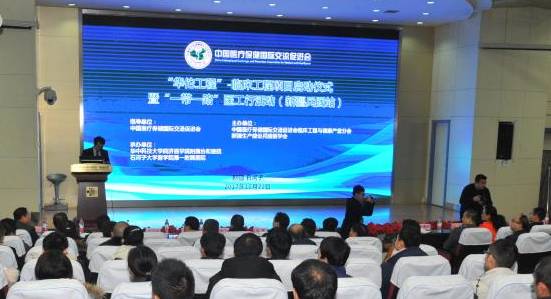
The conference was moderated by Liu Shenglin, Secretary-General of the Clinical Engineering and Health Industry Branch of the China Association for Promotion of International Exchange of Medicine (CAPIM), Standing Committee Member of the Medical Engineering Branch of the Chinese Medical Association, and Chairman of the Medical Engineering Branch of the Hubei Medical Association. Opening remarks were delivered in succession by Shi Chenhui, President of the First Affiliated Hospital of Shihezi University School of Medicine; Chen Jie, Director of the “Huatuo Project” Office of CAPIM; Bai Yue, Deputy Director of the Poverty Alleviation Office under the Department of Finance of the National Health and Family Planning Commission; Zhang Qiang, Chairman of the Clinical Engineering and Health Industry Branch of CAPIM and Vice President of Union Hospital affiliated with Tongji Medical College of Huazhong University of Science and Technology; and Yin Taiping, Division Chief of the Health Bureau of the Xinjiang Production and Construction Corps.
Chen Jie, Director of the Office of the “Huatuo Project” under the China Association for Promotion of International Medical Care (CAPIMC), stated: “The ‘Huatuo Project’ is a public welfare initiative implemented in accordance with the ‘Healthy China 2030’ strategy issued by the CPC Central Committee and the State Council. Led by the government, guided by academic expertise, and involving broad social participation, the project is jointly undertaken by CAPIMC, academic societies, renowned hospitals, public welfare organizations, and socially responsible enterprises. It aims to shift high-quality national medical resources toward grassroots levels, enhance the capacity and quality of primary healthcare services through technical and equipment support, innovate people-centered health service models, and promote the integration of urban and rural health services as a specialized medical assistance program.”
Bai Yue, Deputy Director of the Poverty Alleviation Office under the Department of Finance of the National Health and Family Planning Commission, stated that the China International Exchange and Promotion Association for Medical and Healthcare, as a social organization, has actively implemented the strategic arrangements outlined in the “Healthy China 2030” Planning Outline. It is working to advance the relevant requirements set forth by the CPC Central Committee, the State Council, and the National Health and Family Planning Commission regarding the Healthy China development strategy. By leveraging its own advantages and integrating high-quality national medical and health resources, the association has launched the “Huatuo Project,” which provides targeted assistance to county-level medical institutions. This initiative holds significant importance for supporting work in Xinjiang and implementing the health-focused poverty alleviation program.
Meanwhile, Bai Yue also put forward several feasible suggestions for the “Clinical Engineering Projects” of the Branch of Clinical Engineering and Health Industry:
First, project work must closely align with the Healthy China Strategy, the decision-making and deployment for deepening healthcare reform, and the key tasks of the Health Poverty Alleviation Project. It should involve precise design and targeted implementation, leverage high-quality academic resource advantages to carry out pilot initiatives, and explore, summarize, and promote models and best practices;
Second, leverage the advantages of think tank resources to enhance the quality and efficiency of assistance. The “Hua Tuo Project” is inherently self-sufficient by virtue of its high-quality medical resource advantages, providing robust support in areas such as talent assistance, technological upgrading, and information sharing, thereby serving as a premium “think tank.”
Third, strengthen publicity and exchange, carry out extensive social mobilization, and call on more social organizations and individuals to participate in clinical engineering projects and health poverty alleviation work.
Zhang Qiang, Vice President of Union Hospital Affiliated to Tongji Medical College of Huazhong University of Science and Technology, stated that under the guidance of national competent authorities, efforts will be made over the next three to five years to develop and establish a group of “Clinical Engineering Construction Bases” in representative cities, prefectures, and districts across China, aligned with the national “Belt and Road” strategic plan, and to implement a proven set of operational and management mechanisms.
By leveraging these bases to extend their reach to surrounding primary healthcare institutions, we will gradually establish and improve functional universal health records. This will ultimately implement a comprehensive, all-encompassing national health organizational management system and build a scientific, intelligent medical and healthcare service network. The final goal is to achieve interoperability of medical data and facilitate the transfer of high-quality medical resources to underdeveloped regions, thereby contributing to the national health strategy.
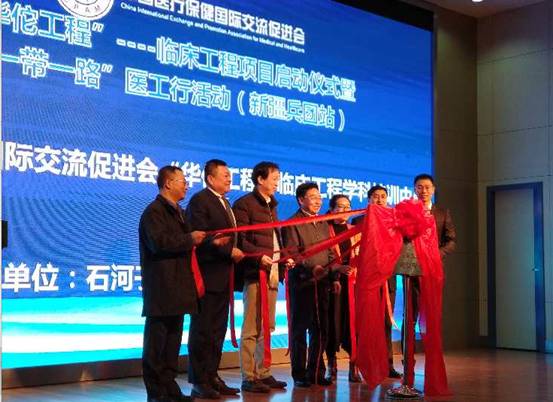
The unveiling ceremony for the “Clinical Engineering Discipline Training Center of the Huatuo Project under the China International Exchange and Promotion Association for Medical and Healthcare” was also held during the conference.
Following the opening and launch ceremonies, a series of insightful academic presentations commenced. Professor Peng Mingchen, Director of the Clinical Engineering Department at the Hospital Management Institute of the National Health and Family Planning Commission, delivered a compelling lecture titled “Quality and Safety in the Use of Medical Devices under New Regulations.” Wang Xin, Vice President of Xinjiang Cancer Hospital; Zhang Yuping, Director of the Asset and Equipment Office at Xiangya Hospital of Central South University; and Liu Shenglin, Deputy Director of the Biomedical Engineering Research Laboratory at Union Hospital affiliated with Tongji Medical College of Huazhong University of Science and Technology, respectively presented on “Quality Control of Medical Equipment,” “Standardized Management of Medical Devices,” and “Informatization Construction in Medical Engineering.” Wei Jianxin, Director of the Medical Engineering Department at the First Affiliated Hospital of Shihezi University School of Medicine, engaged the audience in a discussion on “Current Status and Development Strategies of Medical Engineering in the Xinjiang Production and Construction Corps.” These sessions not only enhanced scholars’ understanding of the management of medical equipment usage but also prompted deep reflection on the development of the medical engineering discipline.
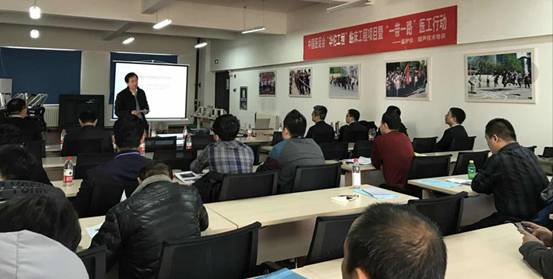
In the afternoon, hands-on training for patient monitors and ultrasound equipment was also in full swing, with more than 20 engineers from hospitals across the Xinjiang Production and Construction Corps participating in the training and drills.
In recent years, with the increasing number of medical charitable organizations and public welfare activities, more and more enterprises have been actively participating in medical philanthropy.
This initiative received donation support from companies including Bard Medical Technology (Shanghai) Co., Ltd., Philips (China) Investment Co., Ltd., Shanghai TMI Robotics Technology Co., Ltd., Hubei Health Road Health Technology Co., Ltd., Puhua Xinlian (Wuhan) Technology Co., Ltd., Yixing Medical Group, Beijing Zhuyitai Technology Co., Ltd., Suzhou Huamo Information Technology Co., Ltd., Shenzhen Mindray Bio-Medical Electronics Co., Ltd., Fluke Test Instruments (Shanghai) Co., Ltd., Shandong Weigao Group Medical Polymer Products Co., Ltd., and Jointown Medical Device Group Co., Ltd. The total value of supported medical equipment and software platforms amounted to RMB 4.43 million, public welfare training totaled 85 credit hours, various services for instruments and equipment accumulated to six months, and 15 clinical engineering experts participated in providing service support.