

Apple's 2017 Healthcare Moves: Advancing EKG-Based Cardiac Monitoring on Apple Watch

Beddit
Sleep Tracker Provider
Recently, VCBeat (WeChat ID: vcbeat) learned from Bloomberg that Apple is developing an advanced cardiac monitoring feature for its smartwatch products, marking a key step in its plan to transform the Apple Watch from a fashion accessory into a serious medical device.
Unlike the Apple Watch worn on the wrist, sources familiar with the matter say that the prototype Apple is testing requires users to pinch the bezel of the Apple Watch with two fingers, after which the device sends imperceptibly subtle electrical currents through the user’s chest to track cardiac signals and detect abnormalities such as irregular heart rate.
According to data from the U.S. Centers for Disease Control and Prevention (CDC), heart rate abnormalities increase the risk of stroke or heart failure in patients. Approximately one in four individuals aged 40 years and older is affected by this condition. Through electrocardiography (ECG/EKG—conventional or surface electrocardiogram), sensors can detect changes in electrical signals within the skin caused by variations in heart rhythm.
Apple’s move suggests that future Apple Watch models may feature a sensor capable of continuous electrocardiogram (ECG) monitoring, enabling better detection of serious heart conditions.
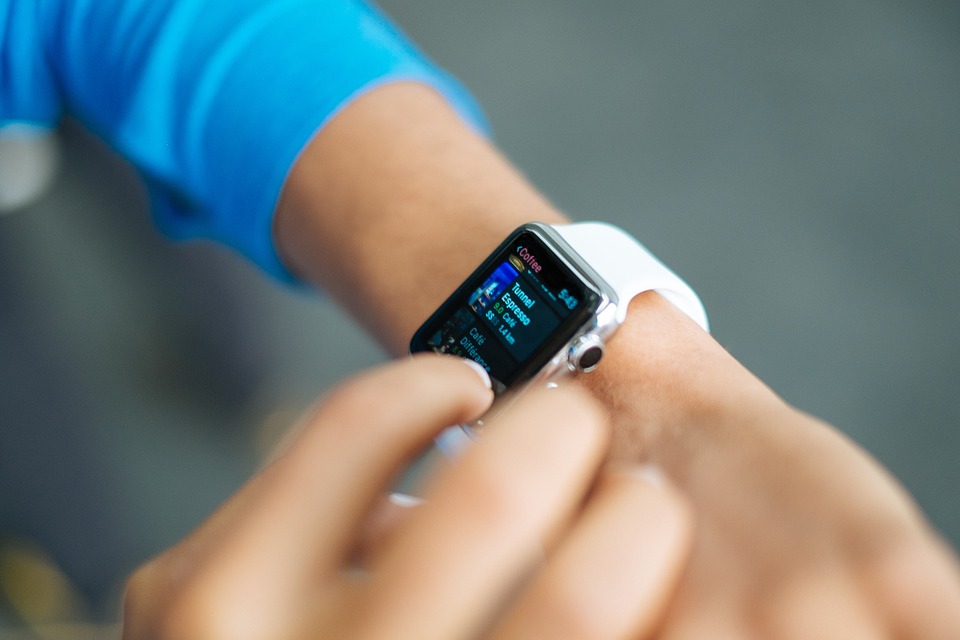
The ECG Sensor in the Apple Watch App: An Uncertain Future
Professional cardiac testing devices, such as EKG machines, are common in hospitals, ambulances, and doctors' offices. However, because they only capture short-term snapshots of a patient's cardiac activity, they fail to serve the purposes of daily prevention and early problem detection. Although wearable devices like Holter monitors are available on the market, they can only track cardiac data for a few days and are incapable of long-term monitoring.
According to data from the "2017 National Survey on Public Awareness of Sudden Cardiac Death," 80% of sudden cardiac deaths in China are currently caused by tachycardia, ventricular fibrillation, or cardiac arrest. Therefore, paying attention to heart rate and heart rhythm is particularly important. Many people have realized the need to protect their hearts; however, occasional arrhythmias are often overlooked by the general public. Few individuals seek medical attention for infrequent episodes of abnormal heart acceleration, as visiting a hospital is considered too troublesome for most people.
Ethan Weiss, a cardiologist at the University of California, San Francisco, stated, “We can see that wearable EKGs have become a relatively common adjunctive tool for diagnosing cardiac arrhythmias.”
The Apple Watch smartwatch features basic heart rate monitoring capabilities, but Apple aims to leverage more advanced sensors for professional medical purposes rather than merely collecting physiological data. Electrocardiograms (ECGs) can intuitively reflect a user’s cardiac health and help detect early-stage heart conditions.
Although the U.S. Food and Drug Administration (FDA) approved KardiaBand, the first Apple Watch accessory with FDA clearance, in December this year, allowing this wearable hardware to be marketed as a medical device, Apple CEO Tim Cook had previously maintained that he “did not want the watch to go through the FDA process... because it would hinder our innovation.”
Therefore, the insider revealed that although the project is already in development, Apple has not yet decided whether to apply this technology to future products.
Apple Has Long Been Working on Developing EKG (Electrocardiogram) Features
Currently, heart rate monitoring solutions in wearable devices are mainly categorized into PPG (optical sensing) and ECG/EKG (electrocardiogram).
Note: In the medical field, ECG is the abbreviation for the English term electrocardiogram. It is also referred to as a standard electrocardiogram or surface electrocardiogram. EKG is the German abbreviation and is used interchangeably with ECG.
Among these, the PPG solution is the mainstream approach for wearable devices on the market, represented by the Xiaomi Mi Band. It primarily uses red and green light to illuminate blood vessels and detects blood flow velocity to indirectly obtain heart rate. In contrast, the EKG solution leverages the minute electrical changes generated on the body surface during heartbeats; by capturing these electrical variations and applying algorithms, it can reconstruct the heart rate frequency. The former allows for real-time monitoring but has relatively lower accuracy and is susceptible to interference from factors such as movement and sweat. The latter offers high detection accuracy but requires a longer duration, with the measurement process typically taking one to two minutes.
Although an Apple spokesperson declined to comment on reports that the next-generation Apple Watch will feature a new ECG sensor, public information indicates that Apple has long been working on developing ECG functionality.
In November, Apple Inc. collaborated with Stanford University School of Medicine on a study of irregular heart rhythms and released an app called “Apple Heart Study,” which utilizes third-party bands to monitor users’ heart rate and rhythm. After downloading the app, users can employ AliveCor bands equipped with EKG functionality to check whether their heart rate and rhythm are normal. If any abnormalities are detected, users can seek free video consultations with physicians from American Well Corp., a telehealth service provider.
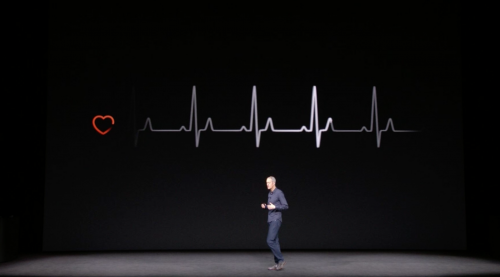
Regarding the reasons for Apple’s use of third-party watch bands, the issue remains tied to the time-consuming process of filing with the U.S. Food and Drug Administration (FDA). For instance, it took AliveCor, which provides EKG detection functionality for the Apple Watch, a full two years to obtain FDA clearance.
Given Apple’s various moves in the wearables sector, the FDA approval process has consistently remained a major hurdle in its transition from consumer-grade to medical-grade electronics.
Notably, Apple is also leveraging data from third-party watch bands to build a cardiac health database, which is being used to develop heart health data management tools supporting EKG technology. This series of moves appears to confirm that Apple’s next-generation smartwatch will not only integrate an EKG sensor but is also likely to establish a dedicated heart rate database for users, thereby providing more comprehensive assistance in monitoring their physical condition.
Apple's Moves in the Healthcare Sector in 2017
Apple CEO Tim Cook has publicly stated on multiple occasions that the healthcare market represents a “huge” opportunity for Apple, and he has increasingly discussed the company’s interests in the healthcare sector. Previously, in an interview with Fortune magazine in the fall of 2016, Cook noted that Apple’s interest in healthcare was driven by the industry’s prospects. He also indicated that the company would take further steps, potentially exploring areas that lack clear business models but can benefit people, to identify pathways to profitability.
Interestingly, during an interview, Cook cryptically remarked to the journalist at the time, “Apple has many more moves in the health sector, but I can’t disclose too much. We are working hard on it; some initiatives are clearly commercial, while others are non-commercial. We are exploring all of them.”
According to relevant overseas reports, VCBeat has translated and compiled an overview of Apple’s developments in the healthcare sector in 2017:
February 16: Apple, through its Potential Mobile Partners Program, has connected the telehealth and patient engagement platform of UK-based Physitrack with drchrono, a mobile EHR (Electronic Health Record) manufacturer. The two companies have joined forces to integrate Physitrack’s home exercise programs into drchrono’s EHR system across web, iPad, iPhone, and Apple Watch platforms. This integration enables all drchrono provider customers—including physician teams and healthcare institutions—to access the Physitrack platform and utilize it in conjunction with their EHR accounts for patient care.
April 12: CNBC, the global financial cable and satellite news network under NBCUniversal, revealed in April that Apple’s team is working on a non-invasive glucose sensing project. However, as of now, this exclusive report has not received any response or public acknowledgment from Apple. MobiHealthNews believes that if Apple can achieve a breakthrough in this area, it would be an interesting and ambitious move.
May 10: Apple acquired sleep-tracking company Beddit for an undisclosed amount. Reports indicate that Apple will acquire Beddit’s team, technology, and patents, which may suggest that Apple is reevaluating the sleep-tracking capabilities of the Apple Watch and further corroborates its long-standing interest in sleep management. Interestingly, sleep expert Roy JEM Raymann also departed from the company around the same time; however, he stated that this was merely a coincidence, noting that he left at an opportune moment, nothing more.
May 17: Apple’s other acquisition—the purchase of AI company Lattice Data—is also somewhat related to healthcare. Strictly speaking, Lattice is a dark data analytics company that leverages artificial intelligence to transform unstructured, unusable “dark data” into structured, usable data. Lattice’s core competency lies in data analysis and processing technologies; by adopting deep learning approaches, it significantly enhances usability, enabling training, inference, and prediction. The company’s DeepDive system has a wide range of application scenarios, including formulating international policies, combating crime, conducting medical research, and assisting paleontological studies. Furthermore, it can help AI systems access more available data sources, thereby supporting AI research.
May 23: After being removed in late 2016, Withings’ healthcare apps have returned to the Apple App Store following a patent lawsuit settlement between Apple and Nokia, Withings’ parent company. MobiHealthNews suggests that this development signals potential collaboration between the two companies on digital health initiatives, helping to restore their relationship.
June 5: At Apple’s annual Worldwide Developers Conference (WWDC), in addition to fixing compatibility bugs for older Apple Watch models, the company introduced a new feature available across its entire product lineup—GymKit. GymKit establishes a new data connection between the Apple Watch and fitness equipment. Through GymKit, users can sync daily fitness metrics, such as heart rate data, with compatible exercise machines. The entire syncing process requires no iPhone setup or chest-worn heart rate monitors; users simply need to open the app and pair with GymKit-enabled equipment via NFC. This capability to share data with gym equipment marks another significant step by Apple in the realm of sports and health.
June 7: On the third day of WWDC, Apple announced updates to its three health- and medical-focused frameworks: CareKit, ResearchKit, and HealthKit. In addition to audio-visual enhancements and an improved user interface for developers and research participants, Apple added new active task features to ResearchKit and introduced new trackable fields to HealthKit, most notably insulin delivery. Apple also created a prototype tool to make CareKit more accessible to non-developers and enhanced the CareKit UI, aiming to facilitate easier integration of CareKit apps with hospital backend systems.
June 13: Apple Inc. has quietly hired Dr. Sumbul Desai, a Clinical Associate Professor at Stanford University. Dr. Desai now holds a senior position within Apple’s growing healthcare team and continues to serve in her previous clinical role at Stanford, diagnosing patients.
August 14: The United States Patent and Trademark Office (USPTO) granted Apple a new patent detailing how the iPhone itself can function as a health sensor to detect health metrics such as blood pressure indices, body fat percentage, oxygen saturation, pulse rate, perfusion index, electrocardiogram (ECG), and photoplethysmography (PPG). These data can be collected via the front-facing camera, ambient light sensor, proximity sensor, or specialized electrodes embedded within the device.
August 16: According to a CNBC report, Apple and Aetna are expanding a plan during secret meetings to market the Apple Watch to Aetna’s insured members. This move comes amid a significant decline in wearable device sales in the broader market, as insurance customers represent a more precisely targeted consumer segment for wearables. U.S. media outlet Axios confirmed this news in November.
September 12: Apple Inc. announced that the Apple Watch would be used in its first-ever clinical study—a large-scale remote trial conducted in collaboration with Stanford University—to determine whether the device’s heart rate sensor can reliably detect atrial fibrillation and potentially help prevent life-threatening strokes.
September 26: Apple was one of nine companies included in the new pre-certification program announced by the FDA in September. The program will make it easier for Apple to release certain types of health devices in the future.
November 30: The Stanford University study launched in November, with Apple revealing two additional participating companies: US-based Well will provide telemedicine consultation services, while BioTelemetry will supply EKG patches to patients potentially at risk of atrial fibrillation.
Apple’s initiatives in the healthcare sector can be described as a step-by-step progression, with increasing activity and more frequent disclosures across various channels. However, consistent with its longstanding culture of strict confidentiality, Apple has remained tight-lipped about its specific strategic direction in health and medicine, choosing instead to continuously explore the field through acquisitions and research efforts.
Therefore, VCBeat believes that Apple’s key areas of focus in the healthcare sector include sleep management, cardiac monitoring, and fitness management. Most of these features are enabled by biometric sensors and system sensors integrated into wearable devices. Looking back at 2017, from the numerous health-related apps and feature updates for the Apple Watch to clinical studies, as well as various healthcare talent initiatives and acquisition plans, Apple has continued to demonstrate its transition toward becoming a healthcare service provider, even though it originally started as a consumer electronics manufacturer.
References:
http://www.mobihealthnews.com/content/timeline-apples-2017-digital-health
http://tech.qq.com/a/20171222/021251.htm