

2017 China High-End Medical Industry Development Forum Successfully Held in Shanghai
The “2017 China High-End Healthcare Industry Development Forum,” hosted by the Belgian Noben Group, was successfully held at the Grand Mercure Shanghai Zhenda Hotel on December 14–15, 2017. Nearly 140 leaders and experts attended the forum, including representatives from the Shanghai Municipal Health and Family Planning Commission, renowned domestic private high-end hospitals, Grade A tertiary hospitals, high-end healthcare investment firms, and leading medical equipment suppliers.
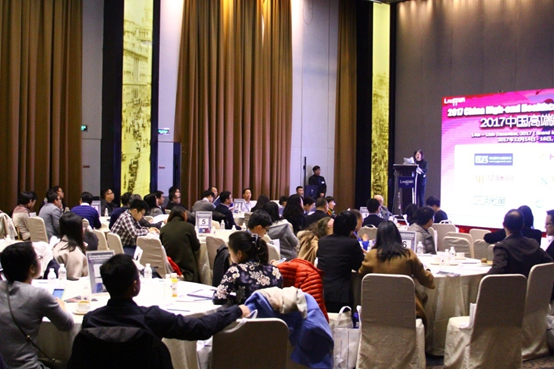
This forum provides a platform for technical exchange among industry professionals. It features insights on the development of high-end healthcare from expert leaders at renowned domestic and international hospitals, as well as practical case studies shared by premium equipment technology providers and solution vendors. Participants jointly examine hot topics of concern within the industry, while also building bridges for enterprises seeking collaboration to achieve mutual benefit and win-win outcomes, thereby collectively promoting the long-term development of China’s high-end healthcare sector.
Wu Hong, Director of the Medical Administration and Hospital Management Division of the Shanghai Municipal Health and Family Planning Commission, delivered a keynote speech titled “Policies on High-End Healthcare and the Current Status in Shanghai,” sharing insights from two perspectives: macro-level management concepts for high-end medical services and practical experiences in Shanghai’s high-end healthcare sector.
Dating back to the 1980s, Shanghai began providing medical services to expatriates, which can be regarded as the nascent form of high-end healthcare services. To date, more than 90 public medical institutions at secondary and tertiary levels in Shanghai have been offering high-end healthcare services through special-needs outpatient clinics or designated wards. In the course of developing high-end healthcare services, Shanghai has incorporated the development of the health industry as a key task and indicator into the "Healthy Shanghai 2030" Planning Outline. The city has improved policies to promote the development of privately run medical institutions, optimized the approval environment, and encouraged high-end private healthcare through measures such as establishing professional associations and conducting star-rated evaluations for social medical institutions. Furthermore, Shanghai is advancing high-end healthcare services by building international medical parks, improving the service environment for high-end healthcare, and developing the traditional Chinese medicine (TCM) health service industry. These efforts aim to foster integration among industry, academia, research, and application, promote the development of the high-end medical technology and equipment industry, and facilitate positive interaction among medical and health institutions, medical research organizations, and pharmaceutical enterprises.
Director Wu pointed out that in advancing “Healthy Shanghai 2030”: In its next phase, Shanghai’s medical development will prioritize high-end healthcare, health management, medical elderly care, mobile health, and medical tourism, with the aim of building a world-class medical hub in Asia.
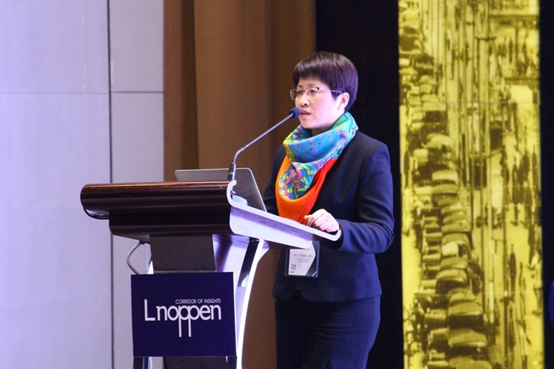
Gu Jingwen, Director of the International Medical Center at Huashan Hospital Affiliated to Fudan University, delivered a speech titled “Cooperation Between International Healthcare and Commercial Insurance.”From the perspective of healthcare professionals, this article shares the current state and advantages of premium medical services, and demonstrates the integration between premium healthcare and commercial insurance through real-world case studies.
As China’s population ages at an accelerating pace and urbanization advances, demand for medical care continues to grow, exhibiting multi-tiered and diversified development trends. Consequently, the market size for high-end medical services holds considerable promise. Currently, Shanghai’s internationalized high-end medical service providers include more than 20 Sino-foreign joint venture or cooperative hospitals and special-needs service departments in 34 public hospitals. Domestic Grade A tertiary hospitals hold advantages in specialized care, management of critical and complex cases, as well as teaching and research, whereas foreign-funded hospitals boast relatively advanced offerings in humanistic care environments, management processes, systems, marketing, and commercial insurance services. If these two sectors can achieve resource sharing, they will be able to maximize their capacity to meet the demand for high-end medical services in Shanghai.
Director Gu shared insights on the successful collaboration between Huashan Hospital and commercial insurance companies through two real-world case studies. Huashan Hospital is currently taking the lead in developing online insurance claims processing services. By leveraging the cloud-based integrated medical insurance service platform, the hospital has achieved electronic transmission of claims, significantly reducing the workload associated with bill reconciliation and shortening the payment collection cycle.
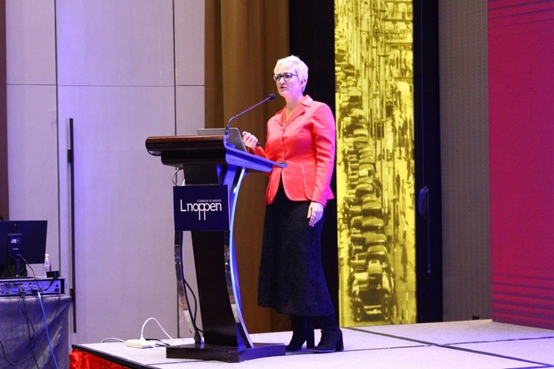
Ms. Heather Smith, General Manager of Shanghai United Family Healthcare, introduced the organization to the audience, covering its core values, medical innovation, social responsibility initiatives, and patient feedback systems.United Family Healthcare“ICARE” serves as the organization’s core values, representing Innovation, Excellence, Care, Respect, and Responsibility.
Providing general practice medical services is one of United Family Healthcare’s distinguishing features, enabling the delivery of preventive care, diagnostic services, and comprehensive health management. Meanwhile, United Family Healthcare places strong emphasis on talent development; its experienced general practitioners have received specialized training in the medical field and are equipped to provide comprehensive disease treatment and healthcare for children, adults, and the elderly.
In creating its hospital environment, United Family Healthcare advocates for maximizing the use of natural light to facilitate patient treatment and recovery. The circular lighting fixtures and décor also reflect a design philosophy centered on the cycle of life. Furthermore, United Family Healthcare maintains a comprehensive patient feedback system, actively listening to patients’ concerns and addressing them in a timely manner.
In addition, United Family Healthcare established the China Foundation in 2002. Each year, it donates medical services equivalent to 1% of its annual revenue to provide healthcare for orphaned and disabled children as well as disadvantaged adults in need, while also collaborating with other charitable organizations to give back to society.
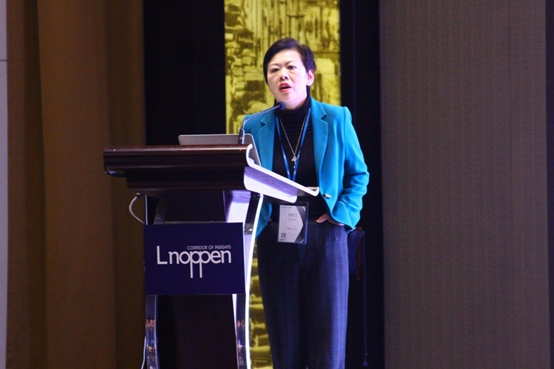
Ms. Liu Jilan, Vice President of HIMSS and Executive President for Greater China, as well as Chief Advisor of JCI and Director of Consulting for Greater China, delivered a presentation titled “International Standards and Chinese Practices.”Shared with everyone the work content of JCI standards and HIMSS standards in China, asand the notable initiatives undertaken by Chinese hospitals in integrating these two international standards.
She pointed out that the foundational concept of JCI standards is rooted in risk management. Therefore, JCI accreditation criteria are independent of hospital size, classification, technical complexity, or institutional facilities; instead, they adhere to the principle of being patient-centered and promoting continuous improvement in healthcare quality and patient safety. The primary assessment method employed by JCI is the tracer methodology, which conducts comprehensive tracking and inspection of all stages of the medical process. By adopting a perspective-taking approach, surveyors assume the role of a standardized patient, evaluating hospital quality and safety with patient empathy.
Additionally, Ms. Liu Jilan shared insights on the HIMSS Electronic Medical Record (EMR) Adoption Model and demonstrated its application through real-world cases. The HIMSS EMR Adoption Model comprises eight levels, ranging from Stage 0 to Stage 7. It enables hospitals to evaluate the implementation and utilization of information technology. Stage 7 represents an advanced EMR environment, embodying the integration of digital hospitals and smart hospitals.
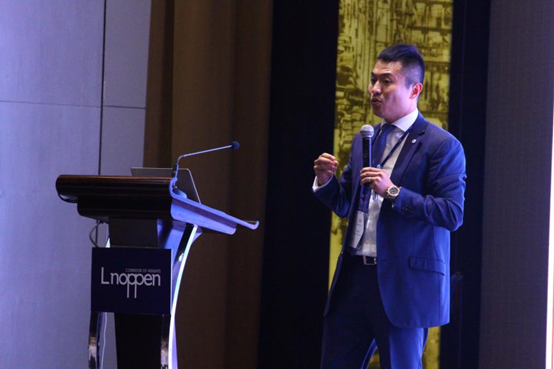
Dr. Sun Jing, Head of the Healthcare Industry at Johnson Controls (China) Investment Co., Ltd., shared insights on how BWSI empowers the development of “IoT-enabled operations and maintenance” for smart hospitals. He discussed how Johnson Controls leverages the BWSI whole-building lifecycle delivery model to ensure hospital safety, comfort, and sustainability from three perspectives: function-oriented, demand-oriented, and customer-oriented.
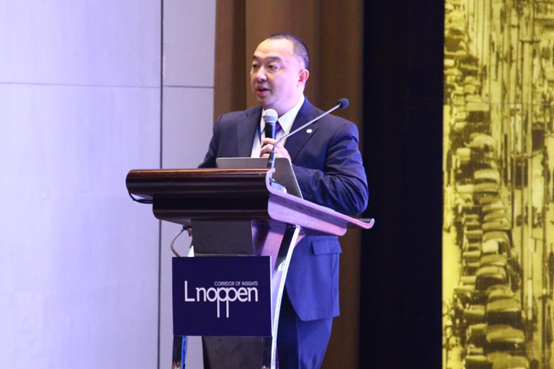
Zhang Xiao, Global Vice President and President of Greater China at Varian Medical Systems, discussed the evolution of precision radiation oncology. He analyzed the advantages of radiotherapy technologies from three perspectives: physical precision, biological precision, and AI-guided treatment, while sharing Varian’s achievements in cancer radiotherapy and specific product application cases.
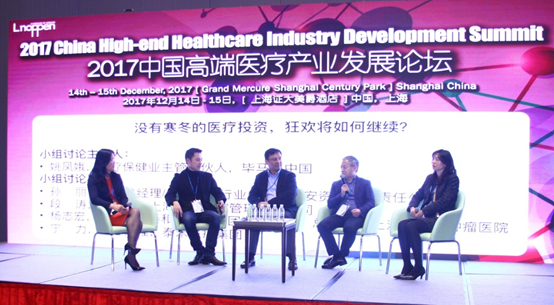
On the first day, the forum concluded with a panel discussion titled “Healthcare Investment Without a Winter: How Will the Fervor Continue?” Moderated by Ms. Yao Feng’e, Healthcare Industry Leader Partner at KPMG China, the session featured active participation from Sun Li, Managing Director and Head of Healthcare at Ping An Capital Co., Ltd.; Duan Tao, Founder of Shanghai Chuntian Hospital Management Co., Ltd.; Yang Zhihong, Vice President of CCMed Group and General Manager of Shanghai CCMed Cancer Hospital; and Ning Li, Deputy General Manager of Taihe Medical Group. The panelists shared their insights on the development trends and challenges in high-end healthcare from the perspectives of investors and operators, and explored the future trajectory of investment in the high-end healthcare sector.
Guests widely noted that the scarcity of investment targets in the future high-end healthcare market may, to some extent, embolden target companies to drive up prices, leading to market fragmentation. However, overall investment is expected to become more rational. Institutions should leverage their unique strengths and deepen their expertise in niche sectors to build a robust high-end healthcare ecosystem.
Regarding the challenges facing healthcare investment, Duan Tao pointed out that healthcare is a long-term investment process requiring significant time costs and patience; real estate developers and investors new to the healthcare industry may struggle to adapt in the short term. Meanwhile, Ning Li emphasized the importance of balancing brand positioning with market entry points from the perspective of healthcare institution operations.
The panelists unanimously agreed that future investments in China’s high-end healthcare sector will primarily focus on medical aesthetics, women’s and children’s health, and post-hospital rehabilitation, with differentiated positioning being crucial.
In addition to the aforementioned guests, Mr. Zhang Xiaopeng, Executive Director and CEO of Honghe Renai Medical Group, delivered an insightful presentation titled “Navigating the Path of Social Capital in Healthcare: Exploration and Practice of the Honghe Renai Model’s Innovative Approach.”
Mr. Jin Chunlin, Director of the Shanghai Health and Health Development Research Center, presented on “Linkage Development between Public Hospital Reform and the High-End Medical Services Industry,” focusing on an analysis of the current status and obstacles facing the high-end medical services industry, as well as policy designs for fostering synergistic development between public hospital reform and this sector.
Mr. Chen Pei, CEO and Founder of Beijing United Family Hospital, shared his insights on “Shaping a Patient-Centered Healing Environment.”
Ms. Yue Mengyuan, Advisor to the General Manager of Rich Healthcare’s Clinic Chain Division, shared “Shared Healthcare: Experience in Building a Physician Platform for Rich Healthcare’s Chain Clinics.”
Wang Chunming, Director of the Office for External Medical Affairs Development at Renji Hospital, Shanghai Jiao Tong University School of Medicine, delivered a keynote address titled “Internationalization of Public Hospitals: Opportunities and Challenges.”
Dr. Zhai Xiaowen, Deputy Director of Children’s Hospital of Fudan University, delivered a presentation titled “JCI and High-End Pediatric Medical Services,” sharing the hospital’s experience in providing high-end pediatric care and its management model developed during the process of implementing JCI international standards.
The title of the presentation shared by Zhan Xi, Chairman of Kunru Mary Hospital Group, was “Reflections on China’s High-End Healthcare: Insights from the Establishment of a High-Quality Women’s and Children’s Hospital.”
Mr. Wang Yongchun, Chief Expert of Plastic Surgery at Dr. Zhang Qiang’s Medical Group and Director of the Shanghai Clinical Center, delivered a keynote speech titled “Innovation and High-Quality Healthcare.”
In addition, leaders and experts from Shanghai East Hospital, Shanghai Changzheng Hospital, Shanghai Ninth People’s Hospital, Shanghai Seventh People’s Hospital, Shanghai General Hospital, Shanghai Children’s Medical Center, Shanghai First Maternity and Infant Health Hospital, Shanghai Public Health Clinical Center, Shanghai International Medical Center, Shanghai Dongfang International Hospital, Shanghai Tiantan Puhua Hospital, Shanghai DeltaHealth Hospital, Shanghai Deji Hospital, Shanghai Yuanda Cardiovascular Hospital, Usmile Medical, Shanghai Word Medical Center, Ruishi Eye Hospital, China Resources Group, Rongqiao Group, Bain Capital Advisors (China) Ltd., Honghe Renai Medical Group, Taikang Community Investment Co., Ltd., Capital Medical Healthcare Industry Group Co., Ltd., and Ping An Health Insurance Company of China attended the conference as distinguished guests. The two-day forum concluded successfully in a warm and enthusiastic atmosphere.
With this, all of Noben Group’s 2017 forums have concluded. We look forward to more exciting summits that Noben will bring to you in 2018.
Conference Preview
May 2018 The 8th China Smart Healthcare Industry Development Forum Shanghai
August 2018, The 9th China High-End Medical Industry Development Forum, Beijing
About Noben Group
Noben Group is a globally leading organization dedicated to promoting investment and trade, committed to fostering international investment and trade between developed economies in Europe and America and emerging developing economies, as well as facilitating the exchange of advanced technologies across various fields. Since entering the Chinese market in 1998, with the support of government agencies, research institutions, industry associations, and Fortune 500 companies, Noben has successfully hosted over 40 international investment and trade development summits annually in China. It has become an effective bridge for cooperation and communication between the continuously growing Chinese market and international advanced technologies and high-quality capital, establishing itself as one of the largest and most influential investment and trade promotion organizations in China. For more information about Noben Group, please visit
For more details, please contact:
Shanghai Nuoben Exhibition Service Co., Ltd.
Julian Huang
+86 21 60851000
+86 139 1696 6664