

WeDoctor's Smart Health Terminal 'WeDoctorTong' Surpasses 600,000 Pre-orders in First Month, Emerging as Key Entry Point for Future Household Health Consumption
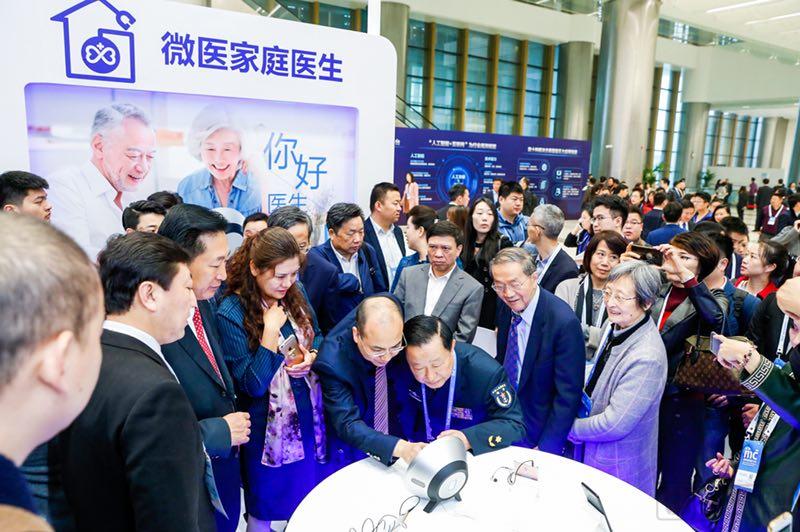
By the end of 2017, internet healthcare finally found a viable path to implementation. Reportedly, Weiyi Tong, China’s first smart home health terminal developed by WeDoctor, secured 600,000 orders in its first month on the market.
Samsung, the world’s leading smartphone vendor, recorded first-month sales of 300,000 units for its 2017 flagship model, the Galaxy S8. The DingDong smart speaker, launched through a multi-platform collaboration between iFlytek and JD.com, achieved annual sales of 100,000 units in the year following its release. In contrast, a certain health terminal device garnered over 600,000 orders in its first month alone, underscoring the vast latent consumer demand behind it.
In 2016, the total number of outpatient visits at medical and health institutions across China reached 7.93 billion. If the queues formed by these patients were linked end to end, they would circle the Earth 336 times. Meanwhile, there were only 29,000 hospitals in the country (including 1,308 Grade A tertiary hospitals), far insufficient to meet patients’ healthcare demands.
After 2010, internet healthcare continued to gain momentum, raising high hopes for alleviating the difficulty of accessing medical care. However, practice has shown that simple online “light consultations” can only provide services such as online advice, failing to meet users’ diverse needs for physician selection, consultation, diagnostic testing, and medication purchase. In particular, for family users with frequent medical needs, such as the elderly and children, the overly lengthy user journey within apps has significantly limited adoption among these groups. Consequently, after a period of rapid growth, internet healthcare has gradually entered a bottleneck phase in its development.
In this context, it is hardly surprising that intelligent health terminals capable of providing “online + offline” and “general practice + specialty care” services have been highly sought after since their launch. According to VCBeat (WeChat ID: vcbeat), users can summon their dedicated family doctor with a single click through Weiyitong. Via voice and video interactions, they can access services such as video consultations for common ailments, e-prescriptions, and online medication purchases; in some regions, direct online payment via medical insurance is also available. For patients with urgent or severe conditions, family doctors can assist with appointments to facilitate convenient in-person treatment at nearby service bases.
Weiyitong provides every family and individual with a professional tool, enabling one-stop completion of the entire process—including intelligent monitoring, health management, online consultations, remote consultations, and online medication purchases—serving as users’ “health steward.”
Professionals state that while Weiyitong is an intelligent health terminal, its core value lies in the medical services behind the device. Weiyitong leverages the national medical service resources cultivated by WeDoctor over the past eight years, connecting more than 2,400 key hospitals across 30 provinces and municipalities in China, 70% of which are Grade A tertiary hospitals. It has also co-established over 100 internet-based medical consortia with renowned national hospitals such as Beijing Tiantan Hospital and Shanghai Huashan Hospital, and linked to 18,000 pharmacies nationwide. To address the shortage of primary care general practitioners, WeDoctor has independently established six General Practice Centers and a General Practice Academy to tackle the challenge of insufficient general practitioners in China.
The emergence of Weiyitong has provided a direct channel to users for WeDoctor’s “online + offline, general practice + specialty” medical service network, enabling the network to achieve full on-the-ground implementation and closed-loop operations. Clearly, this is the true driver behind the more than 600,000 orders.
It is foreseeable that as Weiyitong scales up and enters households across the nation, a novel “H2H2C (Hospital to Hospital to Customers)” medical service model will gradually take shape, spanning from large hospitals to primary healthcare institutions and finally to homes. Through terminal devices, users can engage in face-to-face online consultations with their family doctors at home, enabling convenient access to medical care for common and frequently occurring diseases without visiting large hospitals. When medication is needed, prescriptions can be issued online and delivered directly to their doorstep. For offline examinations or initial diagnoses, patients may first visit Weiyi General Practice Bases or designated service reception points. Should referral to a large hospital be necessary, appointments can be scheduled and registered via the terminal.
In the future, nearly 50% of diagnoses and treatments for common diseases can be completed at home, 35% of diseases can be addressed at primary healthcare institutions, and 15% of complex and refractory cases will be handled by large hospitals and leading specialists.
In fact, the new home-based medical service model built on the “base–outpost–endpoint” framework disrupts the traditional D2C model of internet healthcare. This model not only provides users, especially households, with comprehensive, continuous, and proactive healthcare services, but also reshapes the conventional care-seeking process. It enables leading specialists and major hospitals to refocus on scientific research, teaching, and the diagnosis and treatment of complex and rare diseases, while bringing internet healthcare from a purely virtual realm into tangible, on-the-ground practice.
More importantly, family doctors at primary healthcare institutions can also serve families through terminal-based contract services. The family doctor contracting service established via smart terminals enables better health management and health monitoring interventions, thereby improving service satisfaction and contracting efficiency among household users, and truly facilitating the transition from passive medical care to proactive health management.
Just as Amazon Echo ignited the smart speaker market, the emergence of Weiyitong is set to unleash the vast potential of “home healthcare,” driving upgrades across health-related consumer goods, health insurance, and pharmaceutical and wellness product industries. However, it is foreseeable that, much like Amazon’s victory in the smart speaker wars through its “content–service–smart device” ecosystem, competition for smart health terminals as entry points will ultimately hinge on the underlying medical service support. Without this foundation, hardware remains merely a sandcastle, destined to vanish beneath the tide.