

Standardized Terminology-Based Electronic Medical Record System Successfully Implemented, Nationwide Rollout Imminent!
“Yao Fu did not love composing poetry for its own sake; the poem was written when autumn ended in Tianjin.” Although early winter in Binhai, Tianjin, brought a chill, more than 50 stakeholders—including Chinese government officials overseeing medical big data, healthcare industry experts, scholars and representatives from social organizations, and leaders of domestic and international enterprises—gathered in this knowledge- and technology-intensive high-tech industrial development zone to discuss the development of China’s medical big data industry. Recently, the “Advanced Seminar on Medical Big Data Applications and Standard System Development,” organized by the Wu Jieping Medical Foundation and the Beijing-Tianjin-Hebei Medical Big Data Promotion Association, and supported by the People’s Government of Binhai New Area, Tianjin, and the Tianjin Municipal Health and Family Planning Commission, was successfully held in Binhai, Tianjin.
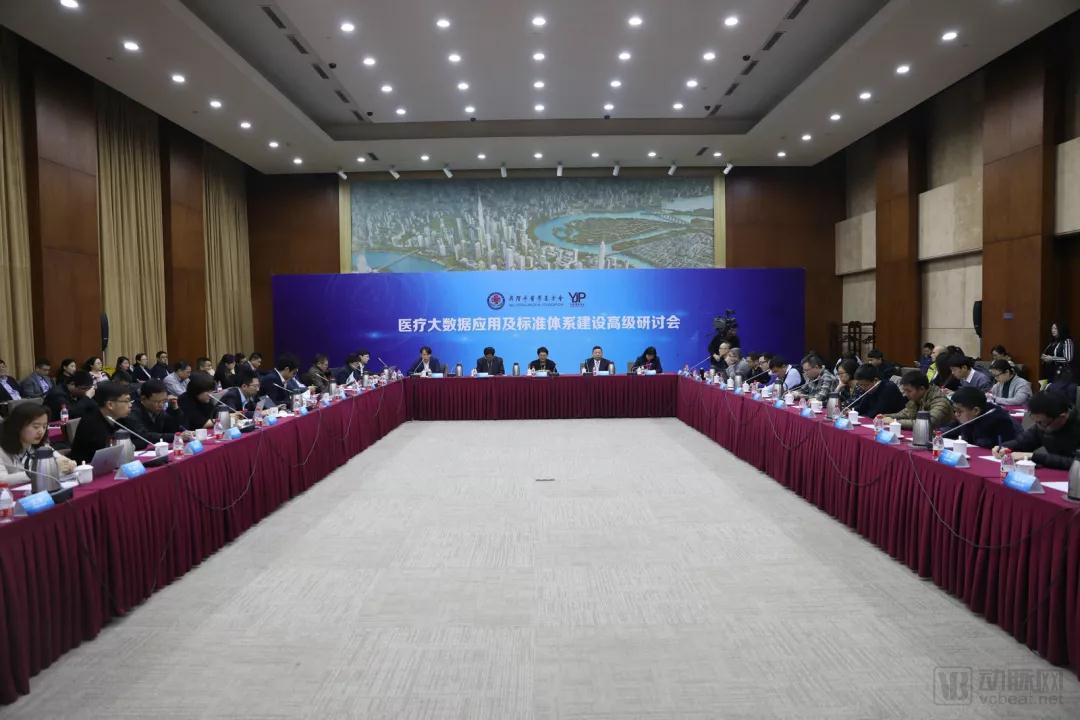
▲ On-site of the Advanced Seminar on Medical Big Data Applications and Standard System Development
The symposium brought together more than 50 distinguished guests, including government officials, leaders in health and pharmaceutical administration, healthcare industry experts, scholars from medical associations, and representatives from renowned domestic and international pharmaceutical companies. Participants engaged in in-depth discussions on topics such as the establishment and application of standards for medical big data, innovative payment models and health insurance design, the construction of clinical standard data platforms, and patient-centric standard data management. The aim was to fully leverage China’s vast medical big data resources, explore the application environment and standardization framework for medical big data, and ultimately enhance the level and quality of healthcare services in China.
Currently, China’s health and medical big data primarily consist of three major components: hospital clinical data, public health data, and mobile health data. With the extensive collection of public health and mobile health data, issues such as diverse data sources, complex data structures, and inconsistent standards have become significant barriers to the application of big data. At present, the National Health and Family Planning Commission is developing and refining a series of relevant standards and regulations, including the Measures for the Management of Data Resource Services of the National Health and Family Planning Commission and the Administrative Measures for Internet Medical Services. These efforts aim to promote the application of big data in population health informatization industry governance, clinical and research healthcare, and risk warning and decision-making for population health information. However, interpreting the provisions of new policies, continuously improving medical big data standards, and stimulating the motivation and vitality of market entities to participate in innovative development remain challenging issues in the field of medical big data.
As early as April this year in Binhai, the Wu Jieping Medical Foundation, in collaboration with the Tianjin Municipal Health and Family Planning Commission and the People’s Government of Tianjin Binhai New Area, hosted the “Medical Big Data Development and Application Conference,” themed “Sharing, Interconnectivity, and Building a Community for Healthcare Big Data.” The conference conducted in-depth discussions on exploring the development potential of medical big data, focusing on breaking down industry and regional barriers to data sharing, revitalizing regional data resources through interconnectivity, complementary advantages, and collaborative efforts, and achieving optimized allocation of healthcare resources.
After an interval of nearly eight months, the Binhai New Area once again hosted a major academic symposium on medical big data at the end of 2017. The event aimed to promote the development and refinement of standard systems through in-depth discussions on the application of medical big data and the construction of its standardization framework, thereby further advancing the growth of medical big data.
The symposium was moderated by Yang Wenlin, Deputy Chair and Secretary-General of the Oncology Medical Division of the Wu Jieping Medical Foundation. Chairman Xiao Meng of the Wu Jieping Medical Foundation delivered opening remarks. Chairman Xiao Meng stated that the development and application of big data in health and healthcare would bring about profound changes to healthcare models. However, China currently faces a serious “information silo” problem in health and medical big data: health data across different regions and hospitals are not interconnected, nor do they adhere to unified standards. These isolated, non-standardized information systems severely constrain the improvement of efficiency in the health and medical big data industry, preventing the full realization of the value of medical data.
In the new era of rapid scientific and technological advancement, progress in medical diagnostics is no longer confined to a single discipline but has surged forward alongside the broader societal trend of information openness. For many years, the Wu Jieping Medical Foundation has been committed to encouraging and supporting creativity and innovation in the field of medical science and technology. To promote the development of healthcare big data, the Foundation has undertaken numerous initiatives and established the “Wu Jieping Medical Foundation Special Fund for Healthcare Big Data Development and Application,” aiming to keep China at the forefront of international efforts in the development and application of healthcare big data. The Wu Jieping Medical Foundation hopes to join forces with experts and colleagues across China’s healthcare big data sector to improve the application and standardization system of healthcare big data in China, thereby fostering comprehensive development in public health and the medical industry.
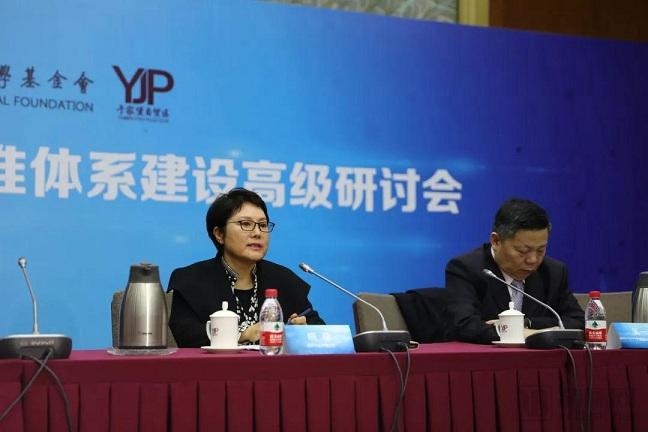
▲ Chairman of the Board, Wu Jieping Medical Foundation
Yang Dehong, Deputy Director of the Central Business District in Binhai New Area, Tianjin, noted that the report to the 19th National Congress of the Communist Party of China stated that “the principal contradiction facing Chinese society in the new era is that between unbalanced and inadequate development and the people’s ever-growing needs for a better life.” Within this context, imbalances and inadequacies in the medical field, along with the mismatch of resources, constitute one of the key issues. Starting this year, the Central Business District of Binhai New Area has launched the Gazelle Plan and the Unicorn Plan, with all government efforts focused on cultivating industrial systems, developing the economy, and supporting enterprise growth as primary tasks. In the new round of economic development, the Central Business District will continue to concentrate its policy framework, address pain points for businesses, and accelerate their rapid development.
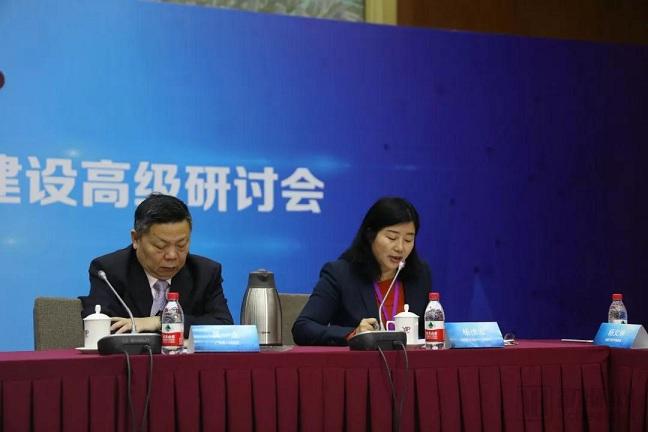
▲ Yang Dehong, Deputy Director of the Central Business District, Binhai New Area, Tianjin (first from the right)
Mr. Yang Guangming, Director of the Information Management Division of the Tianjin Municipal Health and Family Planning Commission, stated: “In recent years, the State Council has successively issued multiple policy guidelines, including the Guiding Opinions on Promoting and Standardizing the Application and Development of Health and Medical Big Data and the Outline of the ‘Healthy China 2030’ Plan, to continuously improve the national health system. In recent years, the Tianjin Municipal Health and Family Planning Commission has undertaken extensive work in the development of health and medical big data, prioritizing the layout of big data and informatization within the healthcare system, and standardizing and promoting the integration, sharing, open access, and application of health and medical big data in our city.”
In the future, the Tianjin Municipal Health and Family Planning Commission will further intensify efforts to accelerate the development of a comprehensive health information-sharing platform, promote the interconnectivity of data across healthcare services, medical insurance, and pharmaceuticals, and establish rules, procedures, and management measures for data openness and sharing. This will gradually form an application system framework for big data in health and medicine based on “tiered authorization, categorized application, and alignment of authority with responsibility.” Moving forward, we aim to foster extensive and in-depth discussions with industry experts and scholars to expedite the establishment and broader adoption of a standardized system for health and medical big data, thereby empowering the development of the healthcare and pharmaceutical industries through the robust leverage of medical big data.
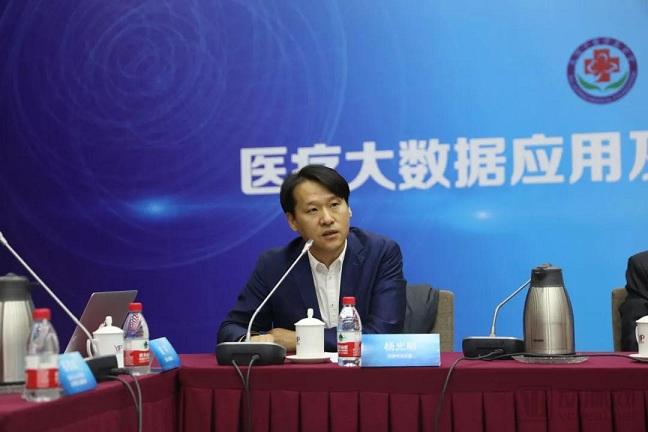
▲Yang Guangming, Director of the Information Management Division, Tianjin Municipal Health and Family Planning Commission
Professor Wu Yilong, Chairman of the Oncology Committee of the Wu Jieping Medical Foundation, believes that medical big data has demonstrated immense application prospects. Big data on disease bioinformatics will profoundly transform every aspect of medicine, with the sharing of disease bioinformatics big data and clinical data being key. Currently, standardizing disease bioinformatics big data—from ethical considerations to practical applications—is an urgent priority.
Currently, medical data in China faces significant deficiencies in data quality, standards, and dimensions. Failure to adequately address these issues will constrain the development and application of healthcare big data. In the near future, Professor Wu Yilong and his team, under the auspices of the Wu Jieping Medical Foundation, will release standards and guidelines for Real-World Study (RWS) data frameworks. These guidelines aim to establish principles for conducting real-world studies, vigorously promote standardization in the quality, standards, and dimensions of medical data, and enable China’s healthcare big data to truly transform from real-world clinical data into robust evidence.
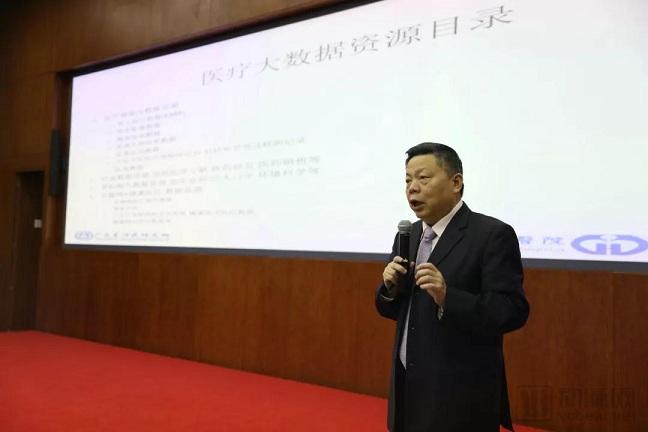
▲ Professor Wu Yilong, Chairman of the Oncology Committee, Wu Jieping Medical Foundation
Zhao Cen, Deputy Secretary of the Party Committee at Tsinghua University’s PBC School of Finance, noted in his presentation on “Innovative Payment Methods and Considerations for Health Insurance Design” that in recent years, health insurance has witnessed innovations in payment methods, evolution in product forms, and shifts in risk management trends. Technologies such as machine learning, artificial intelligence, and big data are playing an increasingly important role in health management, particularly in the field of health insurance. With the further advancement of health insurance and the pilot implementation of long-term care insurance, favorable policies will drive China’s health insurance market to become a significant growth opportunity in the future. Moreover, the inadequacy of aging-related social security in the Chinese market indicates substantial room for commercial health insurance, while the drive from new technologies based on medical big data and artificial intelligence makes this trend even more promising.
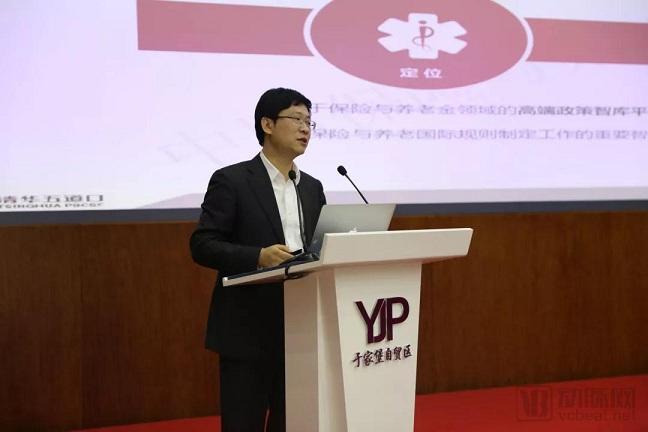
▲ Zhao Cen, Deputy Secretary of the Party Committee of PBC School of Finance, Tsinghua University
Professor Zhang Xun, Chairman of the Oncology Medicine Committee of the Wu Jieping Medical Foundation and Director of the Department of Thoracic Surgery at Tianjin Chest Hospital, pointed out during his introduction to the construction of a standardized data platform for thoracic surgery that clinical terminology across various specialties currently lacks standardization, with the same disease often referred to by different names. The standardization of terminology and the structuring of electronic medical records (EMRs) constitute the most fundamental yet challenging aspect of building a robust database. By standardizing diagnostic and treatment terminology and structuring EMRs, hospitals can embed standardized datasets into their EMR systems. This allows physicians to document medical records through simple selections, significantly saving time while generating structured, standardized data points. This process not only standardizes and structures medical records but also lays a solid foundation for the enhanced utilization and development of data in subsequent stages.
This standardized terminology set has been successfully implemented in electronic medical record (EMR) systems. The next step is to gradually promote its adoption across China, helping Chinese physicians alleviate the burden of extensive medical documentation, accelerating the formation of standardized terminology sets across numerous domestic medical disciplines, and thereby laying a stronger foundation for medical big data initiatives.
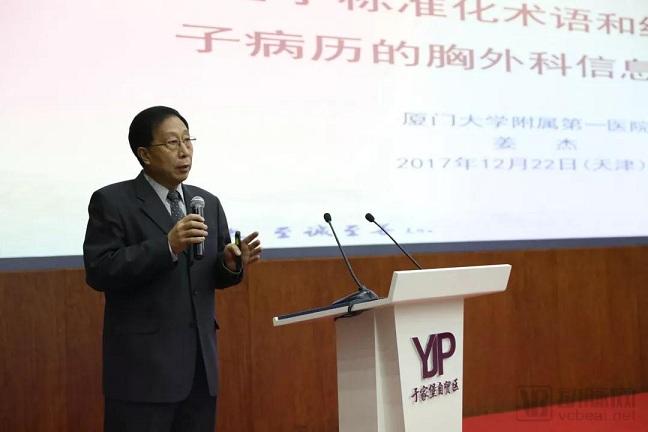
▲ Professor Zhang Xun, Chairman of the Oncology Department of the Wu Jieping Medical Foundation
LinkDoc Technology currently leverages big data in oncology as its core engine to explore patient-centric, precision management across the entire care continuum, including clinical diagnosis and treatment, medication safety, insurance reimbursement, and postoperative rehabilitation. Zhang Tianze, CEO of LinkDoc Technology, argues that while “big data” has been a recurring theme over the past three years, the call for data to enter its “2.0 era” hinges on one central question: how to translate data into academic insights that benefit patients, and how to deliver services that improve patient outcomes. This focus serves as both the starting point for the data industry and the sole, most critical criterion for assessing its value creation.
The extraction and mining of medical data are akin to the smelting and processing of raw materials; data processing constitutes the initial phase, while analytical mining and value realization represent the ultimate objectives. By generating research-grade data, the healthcare industry will reap substantial benefits across various domains, including drug development and evaluation, pharmaceutical marketing and distribution, commercial health insurance, computer-aided diagnosis and treatment, and genomic data assembly and analysis.
Lingke Technology leverages data standardization and extensive patient follow-up, while effectively integrating clinical data with guidelines through artificial intelligence. By employing a full-process patient service model supported by big data, it assists clinical experts in better utilizing clinical data to help patients achieve disease recovery.

▲ LinkDoc Technology CEO Zhang Tianze
Based on this, LinkDoc Technology and AstraZeneca jointly launched the “Jointly Building a Big Data-Supported End-to-End Patient Service Platform” project.