

Top 10 Breakthroughs in U.S. Telemedicine in 2017: Innovations, Partnerships, and Policy Advances
With the rapid development of internet connectivity, the widespread adoption of smartphones, and the evolving guidelines in the insurance industry, an increasing number of healthcare providers are leveraging electronic communication devices to carry out their work.
According to statistics from the American Telemedicine Association, more than 15 million Americans received some form of telemedicine services in 2016. The organization predicts that this figure will grow by 30% in 2017.
With growing public acceptance and legal support, major companies and institutions have flocked to the sector. In 2017, new concepts and collaborative models in telemedicine emerged in rapid succession. Let’s take a closer look with VCBeat at the major breakthroughs achieved by U.S. telemedicine in 2017!

In December 2017, Walgreens, a major U.S. chain pharmacy operator, reached an agreement with the NewYork-Presbyterian (NYP) healthcare system to provide non-urgent telemedicine services at its Duane Reade retail pharmacy locations. This collaboration primarily takes place in pharmacies across New York City, starting with the Wall Street branch and planning to gradually expand to locations in Manhattan, Brooklyn, and Queens in 2018.
NewYork-Presbyterian Immediate Urgent Care services, offered at pharmacy service kiosks, enable patients to conduct video consultations with board-certified emergency physicians via the Walgreens website. Patients can connect with an emergency physician simply by pressing a button. Following an examination, the physician can prescribe medication and electronically transmit the prescription to the patient’s preferred pharmacy.
The in-store kiosks are equipped with internet-connected medical devices provided by Walgreens’ partner, American Well. These include forehead thermometers, blood pressure cuffs, and pulse oximeters for measuring blood oxygen levels. Additionally, a skin examination device is available to help capture high-resolution images of the skin; this equipment is supplied by Walgreens’ partner, Iagnosis. This remote dermatology service is known as DermatologistOnCall. The devices provide physicians with critical patient physiological data during telehealth consultations.
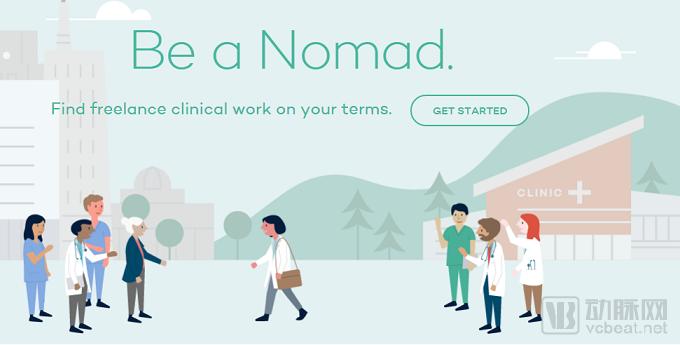
In November 2017, Nomad Health, a U.S.-based platform for healthcare freelancers, launched a telemedicine division, directly connecting physicians with telemedicine employers. This initiative established it as the first online marketplace dedicated to telemedicine jobs. Through this platform, physicians in the United States can apply for telemedicine positions, while innovative American telemedicine companies can identify and recruit top-tier physicians to deliver remote care services to patients. As a result, physicians are able to conduct clinical work directly from their homes.
Nomad Health has currently partnered with more than ten leading telehealth providers across the United States, including American Well and First Stop Health. The volume of work on its platform is also growing rapidly, with current openings spanning remote urgent care, telemedicine, and telepsychiatry.
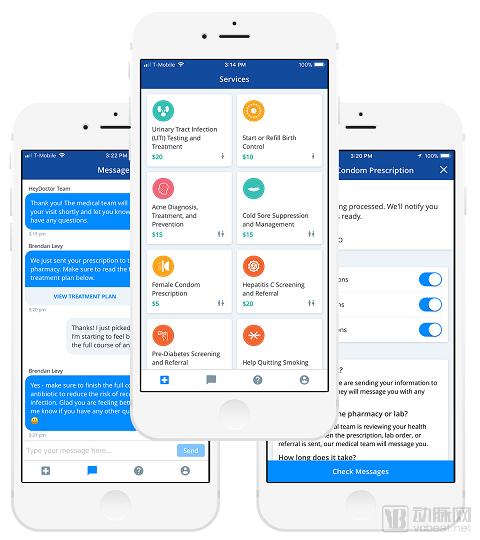
In November 2017, Sappira, a telemedicine company based in San Francisco, USA, launched a new telemedicine app called HeyDoctor, which enables physicians to prescribe medications for certain conditions via text message. The app was jointly developed by Brendan Levy, a Doctor of Family Medicine, attorney Rohit Malhotra, and the company’s development team.
HeyDoctor does not require patients to have health insurance and offers a wide range of primary care services, including STD testing, treatment for UTIs, acne, smoking cessation, cold sores, and more. Most HeyDoctor consultations cost less than $20.
Additionally, HeyDoctor offers individual and group membership options with corresponding discounts. All consultations are handled by physicians licensed in the United States. Once a prescription is issued, medications can be purchased at local pharmacies or delivered directly to patients via mail.
HeyDoctor is currently available in most regions of the United States, with plans to expand to additional areas in the future, aiming to cover 80% of the U.S. population.
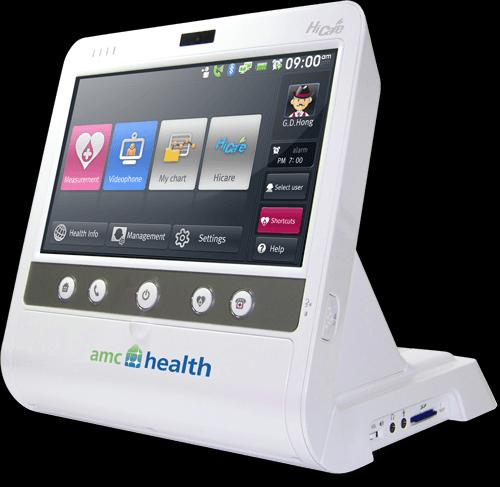
In November 2017, AMC Health, a provider of real-time virtual care solutions, was selected as the remote monitoring device supplier for Hyperlink, a hypertension research project by HealthPartners Institute.
Recently, HealthPartners secured $6 million to expand this research project, aiming to determine whether telemedicine can improve patient health outcomes. In the second phase of the study, AMC Health and HealthPartners will collaborate with healthcare providers to jointly monitor patients’ blood pressure.
The monitoring devices automatically transmit patients' physiological data to HealthPartners' Epic electronic health records (EHR) via the AMC CareConsole clinical platform. As part of the care team, physicians review and analyze these physiological parameters and implement therapeutic interventions to manage patients' hypertension.
HealthPartners Institute is part of HealthPartners, the largest consumer-governed nonprofit healthcare organization in the United States, dedicated to working with members, patients, and communities to improve human health and well-being.
In October 2017, the Texas Tech University Health Sciences Center (TTUHSC), SwyMed, a provider of video telemedicine solutions, and the Texas Emergency Communications Committee collaborated to launch a telemedicine pilot project. Funded by Texas House Bill 479, the project aims to improve patient outcomes by leveraging telemedicine technology to bring trauma surgeon diagnostic services into ambulances for assessment and treatment guidance.
This new telemedicine initiative focuses on trauma, stroke, and cardiac emergencies, providing physicians with tools to assess accident scenes and injuries in real time to initiate immediate treatment and facilitate patient transport to the most appropriate care facility via the optimal route.
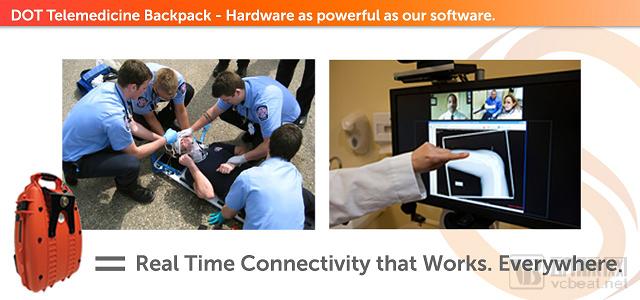
It is reported that medical personnel have installed SwyMed’s telemedicine equipment, including the DOT Telemedicine Backpack, on ambulances. Using this system, physicians can control the camera to zoom in and out, assess patients’ injuries and real-time vital signs, guide paramedics in patient care, and initiate treatment prior to the patient’s arrival at the emergency department.
DOT Telemedicine Backpack is equipped with a rugged tablet computer, whose high-resolution camera and screen remain clearly visible even under intense sunlight.
Additionally, the backpack is equipped with two modems and four built-in antennas as a backup solution to maximize signal transmission and reception range. The two digital oscilloscopes inside the backpack allow physicians to perform basic remote examinations of patients, and their built-in batteries provide approximately 15 hours of continuous operation.
In terms of software, the built-in software of the DOT Telemedicine Backpack provides encrypted connections to safeguard the privacy of physicians and patients. Additionally, it is compatible with various hospital systems, such as EMR and PACS.
In October 2017, Medtronic and American Well announced that they would jointly develop a more comprehensive telemedicine solution.
This solution focuses on patients with complex chronic diseases, aiming to attract more patients to adopt the solution while providing clinicians with critical clinical information to support care decisions. This approach seeks to reduce care costs for the chronic disease population and improve their treatment outcomes.
This collaboration involves integrating American Well’s telehealth services into the video platform of Medtronic’s Clinical Management Services (MCMS) business, thereby enabling bidirectional data flow between both parties.
In August 2017, Indica MD, a digital health startup headquartered in Pasadena, California, launched a HIPAA-compliant telemedicine platform for medical cannabis in California and New York. The platform provides patients with secure, complementary and alternative cannabis evaluation options.
Licensed physicians in California and New York can issue medical marijuana cards to patients through online cannabis doctor services, enabling them to use medical cannabis within their respective jurisdictions.
Patients can register on the website and complete evaluations via mobile phone, tablet, or computer. Patients will have a video consultation with a physician; upon approval, they will receive an email containing either a California medical marijuana license or a New York medical marijuana certification.
Upon approval, patients will receive pharmacy information for each region. All patient information is confidential and protected under HIPAA. Patients are required to pay the appropriate fees only after obtaining approval.
Note: Indica MD lists the qualifying conditions for medical marijuana use in compliance with California and New York laws. Conditions eligible for medical marijuana treatment include inflammatory bowel disease, cancer, multiple sclerosis, Parkinson’s disease, spinal cord injury, psychiatric disorders, epilepsy, and chronic pain. In California, medical marijuana may also be used for arthritis, fibromyalgia, glaucoma, and migraines.
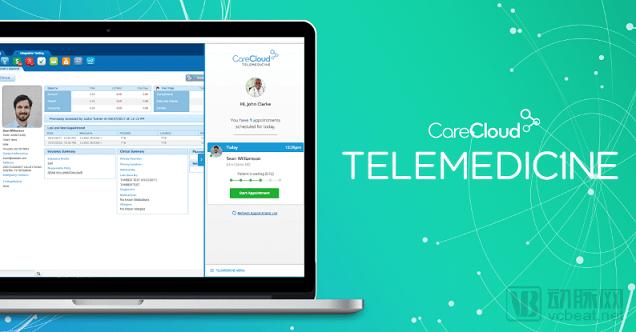
CareCloud, based in Miami, USA, is a medical software service provider. It primarily offers doctors and patients a social network-based medical practice management system.
In June 2017, the company announced the launch of a brand-new pay-per-use telemedicine solution. This solution features built-in insurance eligibility verification and planning tools, adopts a unique pay-per-use pricing model, and can be activated with a single click.
This telemedicine solution aims to streamline clinical workflows by leveraging efficient clinical management through secure access to documents recorded in the EHR.
CareCloud Telemedicine Key Features Include: Rapid Setup, with Patient Visits Available Within 14 Days; Pay-Per-Use Pricing, Offering Greater Cost Savings Compared to Standardized Monthly Subscriptions; Automated Insurance Eligibility Verification, Patient Co-Pay Collection, and RCM Billing Services; HIPAA-Compliant Private Video Connections for Patients.
In May 2017, Texas Senate Bill 1107 was officially drafted; once signed into law, Texas would become the national leader in the field of telemedicine.
Telemedicine provider Teladoc is expanding its telehealth offerings in Texas, which also indirectly reflects the gradual implementation of the legislation.
Under Senate Bill 1107, patients and physicians may interact without in-person visits, thereby safeguarding all forms of telemedicine. In addition to preserving the right to provide telemedicine services, the bill establishes regulatory policies that lay the groundwork for further enhancing healthcare experiences in the future.
For years, Texas has faced numerous barriers to healthcare access, such as distant hospitals, long wait times, and shortages of physicians and primary care resources. In Texas, 35 counties lack family physicians. The emergence of telemedicine can significantly improve the current healthcare landscape.
In April 2017, Zoom, a provider of enterprise video and network communication technologies based in San Jose, California, launched a cloud-based video telemedicine platform integrated with Epic EHR, named “Zoom for Health.”
This platform is designed to provide healthcare enterprises and providers with a standardized suite of telehealth capabilities, enabling reliable, HIPAA-compliant communication between care teams and patients.
Epic EHR integrates Zoom with Epic’s documentation and communication workflows, leveraging context-aware technology to initiate video calls directly with patients or healthcare providers within telehealth workflows. This approach streamlines workflows for both parties. Similar workflows are also available in Epic MyChart and Haiku.
Epic: A renowned U.S. electronic health record (EHR) vendor, Epic enables its 315 large healthcare system clients to exchange EHR data across 2,000 hospitals and more than 25,000 clinics. MyChart: The company has partnered with health-tracking device manufacturers Fitbit and Withings to integrate their data into Epic’s patient-facing electronic health record application. Haiku: An application developed by the company that allows physicians to conveniently access patient medical records.
1. http://hitconsultant.net/2017/12/12/newyork-presbyterian-walgreens-in-store-telemedicine-kiosks/
2. http://hitconsultant.net/2017/11/14/nomad-health-telemedicine-job-marketplace/
3. http://hitconsultant.net/2017/11/10/heydoctors-telemedicine-text-app/
4. http://hitconsultant.net/2017/11/02/healthpartners-taps-amc-health-hypertension-study/
5. http://hitconsultant.net/2017/10/25/texas-tech-university-launches-telemedicine-pilot-project-rural-west-texas/
6. http://hitconsultant.net/2017/10/16/medtronic-american-well-integrate-telehealh-services/
7. http://hitconsultant.net/2017/08/28/indica-md-medical-marijuana-telehealth-platform/
8. http://hitconsultant.net/2017/06/29/carecloud-ppv-telemedicine-solution/
9. http://hitconsultant.net/2017/05/19/teladoc-texas-expansion/
10. http://hitconsultant.net/2017/04/21/38393/