

Shukun Technology Files IPO Prospectus: Pioneer of China's First Fully Automated Coronary Heart Disease AI Diagnostic System
As early as July 2017, Shukun Technology secured RMB 22 million in angel-round investment from Yuanyi Capital. In the following months, the team devoted all its efforts to refining and implementing its products. As the company’s CEO and founder, Ma Chun’e had not granted any exclusive media interviews prior to this one with VCBeat.

Ma Chun'e, CEO of Shukun Technology
“At the very beginning, we had nothing. Yuan Yi Capital’s investment was primarily based on their confidence in our team.”
It is understood that the founding team members of Shukun Technology all come from well-known enterprises or world-leading research institutions such as IBM, Alibaba, and GE Healthcare. They have previously been engaged in the research, development, and sales of products including IBM Watson, cloud platforms, autonomous driving, life sciences, and medical services, possessing extensive experience in artificial intelligence product development and medical service sales.
CHD-AI: China's First Fully Automated AI-Assisted Diagnostic Product for Coronary Heart Disease
Unlike most medical AI companies, Shukun Technology’s first product targeted the cardiovascular field, developing a fully automated intelligent auxiliary diagnostic system for coronary heart disease, Coronary Heart Disease AI (hereinafter referred to as CHD-AI).
According to Ma Chun’e, China has 200 to 300 million cardiovascular patients annually, and nearly 20 million people worldwide die from cardiovascular diseases. Unlike lung cancer and pulmonary nodules, the diagnostic process for heart disease is more complex. CT images require sophisticated three-dimensional reconstruction to assess the origin and course of blood vessels, plaque on vessel walls, luminal stenosis, and other conditions.
In the past, physicians needed to spend 20 to 30 minutes performing three-dimensional image reconstruction on a CT post-processing workstation before completing the diagnostic report based on the reconstructed images. According to international SCCT guidelines, 13 vessels and 18 segments must be described individually for each segment. Physicians typically spent approximately 15 to 20 minutes on report writing, resulting in a total time exceeding 40 minutes per case.
Shukun Technology’s CHD-AI can automatically generate intelligent structured reports compliant with SCCT standards from patients’ raw CTA images, completing the entire process in just one minute.
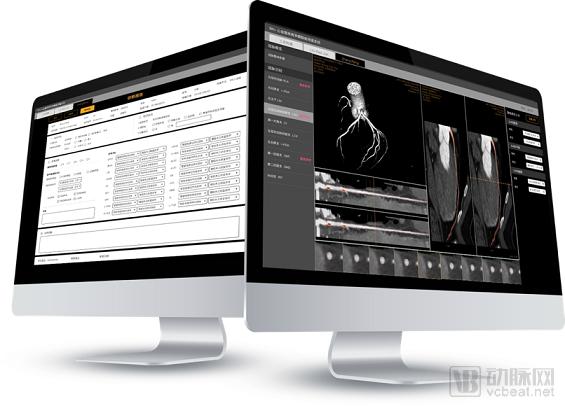
CHD-AI
According to Ma Chun’e, CHD-AI is a clinically oriented AI product jointly developed by Shukun Technology and major cardiovascular specialty hospitals and large comprehensive Grade 3A hospitals, including Beijing Anzhen Hospital, Peking University First Hospital, and Beijing Friendship Hospital. It is also the first AI product in the industry capable of fully automated diagnosis of coronary heart disease.
At Beijing Friendship Hospital, Shukun Technology has integrated CHD-AI into clinical workflows, achieving interoperability with CT scanners, PACS, RIS, and other systems. Once a patient completes a CTA scan, the images are automatically transmitted to the CHD-AI server for immediate 3D reconstruction, and an intelligent structured report compliant with SCCT guidelines is generated automatically.
Physicians need only open the generated 3D reconstruction images and reports for final confirmation, which significantly improves the efficiency of clinical report documentation.
When processing retrospective cases, if discrepancies arise between CHD-AI results and hospital reports, Shukun Technology’s team will engage in repeated deliberations with hospital experts to determine the correct outcome, thereby ensuring data accuracy and compliance with clinical standards.
Furthermore, CHD-AI incorporates a confidence mechanism. If a report’s confidence level reaches or exceeds 95%, it indicates that minimal manual revision by physicians is required, and the report can be issued after a final review.
“With good image quality and no severe calcification, Shukun Technology’s CHD-AI has achieved an 80% rate of medical records with 95% confidence in naturally distributed cases. If the image quality is good and there are no pathological findings, the proportion of medical records with 95% confidence exceeds 90%,” Ma Chun’e told VCBeat.
For medical records with low confidence scores, CHD-AI will provide feedback to physicians, prompting them to re-annotate errors or omissions to generate ground truth (correct annotations). This process creates a new dataset for model retraining and iteration, repeating in a continuous cycle.
The number of new medical records required for model iteration is closely related to algorithmic complexity. Taking the vessel origin determination algorithm as an example, just 10 new medical records can yield improvements; however, for segmentation algorithms (such as coronary artery tree extraction algorithms), due to their high complexity, more than 50 new medical records are needed to achieve measurable improvements.
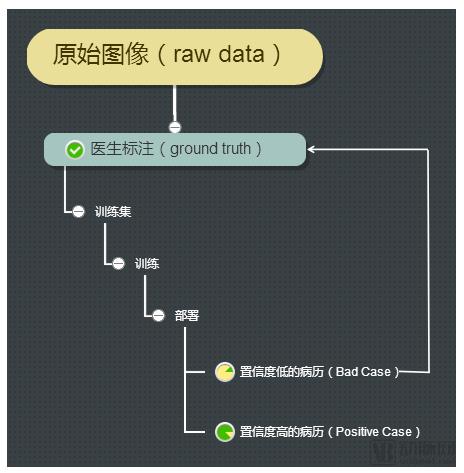
Data Iteration Process of CHD-AI
According to VCBeat, the primary cause of bad cases is that CHD-AI’s current processing capabilities still need improvement. Taking diffuse severe calcification as an example, it is a condition that poses significant diagnostic challenges in cardiovascular disease, as calcification artifacts can substantially impair physicians’ assessment of the degree of vascular stenosis.
To enhance CHD-AI’s capability in handling this condition and enable the algorithm to truly become “well-versed through extensive exposure,” Shukun Technology has collaborated with dozens of hospitals across major regions including Beijing, North China, Northwest China, Central China, East China, and South China. This initiative aims to comprehensively collect relevant clinical cases, thereby improving the algorithm’s robustness and generalization ability.
Undoubtedly, this is a process of continuous refinement and evolution.
During this process, both image processing and deep learning algorithms place extremely high demands on distributed systems and high-performance computing. To address these needs, Shukun Technology’s data centers and cloud computing platform provide robust assurance, delivering high-performance, high-availability platform-level support.
Shukun Technology’s team comprises a large number of cloud computing experts, including senior platform architects and core developers from IBM Cloud, as well as core contributors to the open-source PaaS standards community. They remain at the forefront of distributed technologies, containerization, and service mesh, making Shukun one of the leading cloud computing teams both in China and globally.
As an AI-powered product for coronary heart disease, CHD-AI can provide nearly comprehensive anatomical assessments, including automatic extraction of the coronary tree based on deep learning methods, automatic segmentation and naming of blood vessels, identification of coronary artery origins, qualitative and quantitative plaque analysis, determination of circulation patterns, and evaluation of the lumen and vessel wall.
In addition to anatomical indicators, functional evaluation metrics also provide significant clinical guidance for diagnosis and treatment.
Functional metrics include the coronary artery calcium (CAC) score, fractional flow reserve (FFR), and others. When combined with traditional risk factor scoring systems, such as the Framingham Risk Score (FRS), CAC demonstrates significant superiority in predicting future cardiac events and survival rates.
Meanwhile, CAC can reclassify individuals at intermediate risk into lower- and higher-risk groups. In the higher-risk group, such as patients with diabetes, a high CAC score indicates an elevated short-term risk of cardiovascular events, whereas those with a coronary artery calcium score of zero experience cardiovascular events as rarely as non-diabetic individuals.
In the UK National Institute for Health and Care Excellence (NICE) clinical guidelines, a coronary artery calcium score of zero can serve as a criterion for determining whether patients presenting to the emergency department with chest pain require further observation. Meanwhile, the fractional flow reserve (FFR) value indicates whether the degree of vascular stenosis is causing myocardial ischemia. A higher FFR value suggests that the stenosis does not significantly impair myocardial blood supply, meaning that interventions such as stent placement may not be necessary.
Adoption rates for CHD-AI vary across different scenarios. For medical records of patients without disease and with high-quality images, the physician adoption rate exceeds 80%. In cases where patients have mild cardiovascular calcification, the general adoption rate for CHD-AI is 60%, whereas in cases of severe calcification, the general adoption rate drops to 20%.
In October 2017, Shukun Technology’s CHD-AI formally submitted a Class III medical device application to the China Food and Drug Administration (CFDA) (as approval standards were pending development and refinement, no company had yet obtained approval).
“In the future, we hope to leverage our research in cardiovascular disease and, through transfer learning and reinforcement learning, gradually expand into related vascular disease fields such as cerebrovascular disorders,” said Ma Chun’e.
In addition to coronary heart disease, Shukun Technology has also launched a product in the field of breast cancer called the Intelligent Auxiliary Screening and Diagnostic System for Breast Cancer, Mammary Cancer AI (hereinafter referred to as: MC-AI).
Currently, Shukun Technology has collaborated with multiple cancer hospitals across China to build a multi-center, multimodal breast database, encompassing ultrasound, mammography, MRI, pathology, and clinical data. MC-AI enables comprehensive lifecycle management for breast cancer, covering prevention, screening, diagnosis, treatment, and prognosis, and is currently undergoing the application process with the China Food and Drug Administration (CFDA).
Physicians' Research Tool: Deep Learning Research Platform
Shukun Technology’s deep learning platform is an artificial intelligence tool that delivers deep learning capabilities to physicians.
By simply uploading data, physicians can obtain assessment results through the deep learning model (the "Disease Brain" model), including internationally recognized evaluation metrics such as sensitivity and specificity, as well as comparative results of segmented images. For medical image cases involving the cardiovascular system, breast, and abdominopelvic region, physicians can leverage the Disease Brain model on the medical data cloud to conduct scientific research.
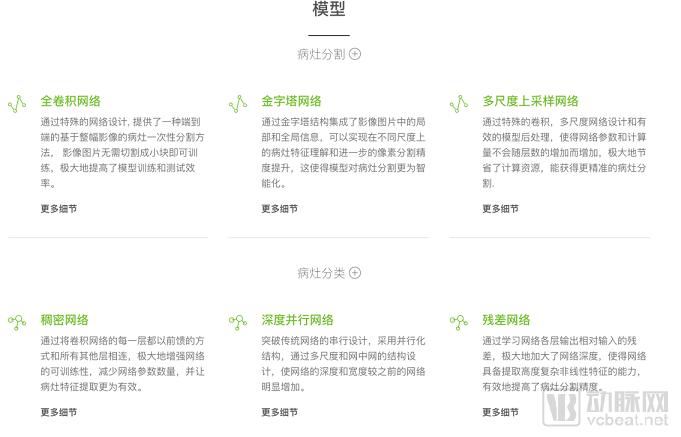
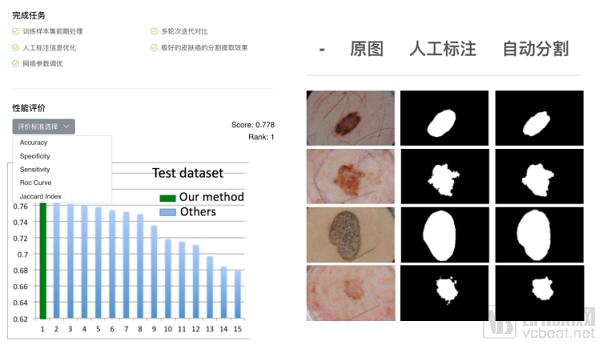
Shukun Technology's Deep Learning Platform
Top-Tier Algorithm Scientists + Top-Tier Medical Experts = Clinically Deployable Machine Intelligence
Machine intelligence must ultimately serve humanity, deriving social value only by assisting human experts in working faster and better. Human-machine collaborative intelligence has enabled a progressively deeper understanding of diseases. Therefore, the development of AI products that can be successfully implemented in clinical practice requires the joint efforts of algorithm experts and medical professionals.
In response, Shukun Technology has adopted a disease-centric approach by establishing Disease Expert Committees composed of algorithm scientists and industry medical experts, such as the Cardiovascular Expert Committee and the Breast Cancer Expert Committee.
Currently, the Cardiovascular Expert Committee comprises nearly 20 chief physicians specializing in cardiovascular medicine from top-tier hospitals across China. Together with Shukun Technology’s technical team, both parties are jointly engaged in specific application scenarios.
The responsibilities of the Expert Committee mainly encompass four major aspects:
1. Define clinically relevant questions.
2. Develop data specifications, annotation standards, and acceptance criteria.
3. Clinical Refinement to Improve Algorithmic Clinical Metrics
4. Integration into clinical workflows, with further improvement in algorithm metrics
“We do not engage in research for research’s sake. Many companies train models on public datasets, but these do not constitute genuine clinical data; models developed from such data are fundamentally impractical for real-world implementation. Defining clinically valuable problems by the expert committee is our core mission.”
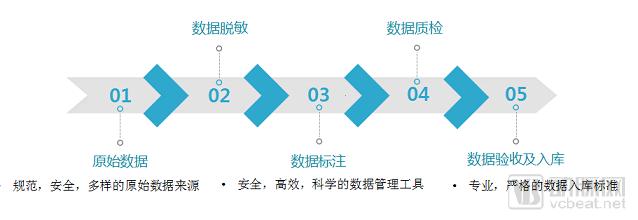
Processing of Raw Data
Prior to obtaining de-identified data, Shukun Technology must first obtain approval from the hospital’s Ethics Committee. Generally, after such approval is granted, physicians copy the de-identified raw data onto a hospital hard drive and then submit it to Shukun Technology staff. The staff then upload the data from the hard drive to a cloud computing platform for subsequent data processing.
Personnel involved in data annotation and quality control are all attending physicians or higher-level doctors who have passed Shukun Technology’s qualification and real-name authentication, with the entire process conducted in a fully anonymized manner. Data acceptance and storage are handled by members of Shukun Technology’s algorithm team.
In the areas of data annotation and quality control, Shukun Technology collaborates with more than 30 hospitals and over 100 physicians. Physicians participating in annotation or quality control tasks receive compensation commensurate with the type and complexity of the tasks.
According to Ma Chun’e, “After obtaining the raw data, the entire iteration cycle—from processing to storage—takes approximately three days. We release crowdsourcing tasks on Monday morning, the data is processed by Tuesday, the system runs algorithms on Tuesday evening, and the new model is trained by Wednesday morning.”
Business Model: Under Exploration, but with Promising Prospects
In terms of its business model, Shukun Technology engages in scientific research collaborations with hospital physicians to achieve clinical benchmarks, facilitates the translation of these results into practical applications, and subsequently applies for certification from the China Food and Drug Administration (CFDA). Additionally, Shukun Technology plans to assist the government in establishing an artificial intelligence medical industrial park.
Leveraging the expertise of its medical device team, Shukun Technology has established strategic partnerships with major medical equipment manufacturers such as GE and Philips, paving the way for future upstream-downstream integration across its product ecosystem.
“At present, the entire industry is still in a relatively nascent stage and requires greater involvement from both medical experts and artificial intelligence specialists to drive its development. As an entrepreneur with a background in computer science, I have purchased a large number of medical textbooks and read them whenever I have time. The more I learn, the clearer it becomes where Shukun Technology can deliver clinical value,” said Ma Chun’e.