

Zhou Che of International Hospitals Group China: Urban Development Drives Upgraded Medical Services—How Can Real Estate and Healthcare Form High-Quality Synergy?
The “Top 100 Future Healthcare Companies 2017” Forum, themed “The Era of Species Explosion,” was held at the Beijing Marriott Hotel from December 15 to 17, 2017. Concurrently, at the “2017 China Rehabilitation Industry Development Forum” organized by the China Association for the Promotion of Rehabilitation Technology Translation and Development, real estate healthcare—a hot topic of the year—sparked intense discussion and was brilliantly presented through a parallel forum titled “Forum on Empowering Urban Development with the Healthcare Industry.”
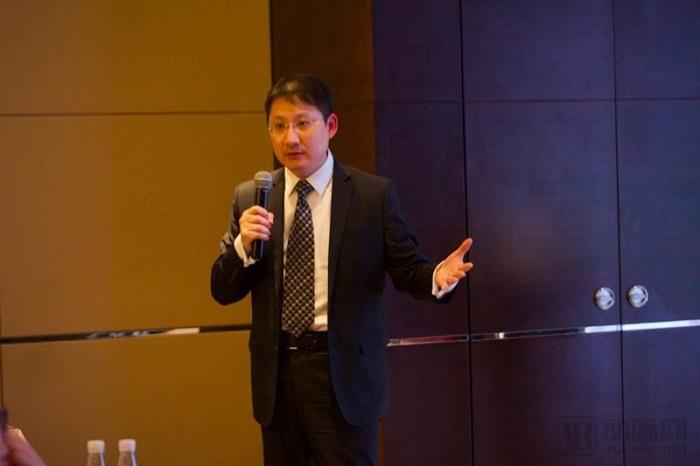
At the parallel forum on empowering urban development through the healthcare industry held on December 17, the Business Development Director of Yingci Medical (International Hospitals Group China), the Chinese brand under International Hospitals Group (IHG)Zhou Che, thenYingci Medical’s Reflections on Supporting Healthcare Industry Infrastructure in New Urban DistrictsDelivered a speech. VCBeat (WeChat: vcbeat) has compiled the guests’ viewpoints.
Guest and Company Introduction
Zhou Che graduated from Peking University Health Science Center and studied management overseas. Over the past decade, he has worked in hospital development and operations at New Century Healthcare, United Family Healthcare, and Shanghai American Women’s and Children’s Hospital. He joined Yingci Medical—the Chinese brand under the UK-based International Healthcare Group (IHG)—at the end of last year.
International Hospitals Group (IHG), established in 1978 and headquartered in the United Kingdom, is the world’s most experienced healthcare management services company. In 2015, IHG entered the Chinese market by launching its local brand, Yingci Healthcare. To date, it has partnered with leading real estate enterprises such as Wanda Group, Country Garden, and Hongkong Land, as well as various government entities. Its service offerings include strategic development planning, functional planning and design, construction and project management, medical equipment installation, trial operation management, operational management and training, and accreditation and quality assurance programs.
Speech Content
Background: The Proliferation of Industrial New Cities Drives Upgrades in Healthcare Service Infrastructure
Today, we will share our strategies and reflections on how to equip industrial new towns or characteristic towns with medical institutions. Much of this experience stems from two collaborative projects: one involved providing strategic consulting services for the Nanjing Jiangbei International Health City, and the other entailed partnering with the Hangzhou Qianjiang Industrial New Town to develop an industry-supporting hospital.
First and foremost, the state’s support for new areas and new cities is evident at the government level. From Shanghai’s Pudong New Area in 1992 to the Xiong’an New Area in 2017, a total of 19 new areas have been established or are currently under planning. Most of these rapidly emerging new areas are located in coastal regions or in central cities such as Chengdu and Chongqing. In contrast, national-level characteristic towns are predominantly concentrated in eastern China.
New Areas and Characteristic Towns share a commonality in that both represent initiatives for new urban district development and urbanization driven by the integration of industry and city functions. Their differences are primarily reflected in scale: generally, national-level industrial new areas are larger in size, involve greater investment, cover tens to hundreds of square kilometers, and are strongly government-led; whereas characteristic towns typically encompass an area of 1–3 square kilometers with an expected population of 10,000–30,000. Although the strategic positioning of these two models differs to some extent, their overarching common feature is that industrial development drives population influx, which in turn fosters further growth.
Supporting amenities such as commercial services, educational resources, and medical resources form the foundation of industrial new city development. Investors take into account factors such as employees’ housing, consumption, education, and healthcare when making decisions. From this perspective, well-developed medical service infrastructure plays a significant role in promoting both industrial new cities and characteristic towns; without these resources, the value of such new cities or characteristic towns would be constrained.
Healthcare support facilities are increasingly becoming a key value driver for new cities and characteristic towns. It can be observed that 4% of the towns in the second batch of national characteristic towns have adopted health as their thematic entry point.
Two Approaches: Supporting Medical Services Mindset vs. Holistic Medical Project Mindset
Generally, there are two different approaches to establishing medical institutions in industrial new cities or characteristic towns:
The first type is the mindset of supporting medical services.. We provide supporting medical services or related health services to tens of thousands, even hundreds of thousands of individuals, thereby establishing the healthcare sector as a new growth engine and profit driver for this region. This represents a dimensional shift from fulfilling functional needs to delivering value-based needs.
The second is a holistic mindset for medical services.. We treat each new district or town as a specific project, assessing factors such as population density within every two-square-kilometer geographic area to determine whether to establish outpatient clinics, ambulatory surgery centers, or hospitals. From a holistic perspective, positioning healthcare and the broader health industry as core business formats entails diverse considerations across different dimensions and quadrants.
Key: Strategic Planning for Real Estate to Embrace Healthcare Investment
Investors in new city development often possess extensive experience and hold distinct advantages in healthcare sector investments, such as government resources, capital, land reserves, and access to community demographics. However, there is a significant divergence in mindset between real estate development and healthcare operations. Evaluating the return on investment of a healthcare project through the lens of real estate development typically leads to disappointing outcomes.
Currently, real estate investment in the healthcare and wellness industry is still in its early stages, with investors lacking a sufficient grasp of the industry’s operational dynamics. Their relative weakness lies even more in the scarcity of professional medical resources, including physicians, nursing staff, and healthcare management talent. Furthermore, new development zones or characteristic towns face the challenge of selecting appropriate types of medical institutions—ranging from clinics and outpatient departments to medical retail complexes, small specialized for-profit hospitals, and large-scale healthcare complexes. Determining how best to align these options with local demand requires guidance based on substantial experience.
Let us first examine the example of Quancheng Medical’s “Medical Mall” to illustrate how real estate can be efficiently integrated with healthcare institutions. In China, medical clinics typically locate in core urban areas or commercial centers, with considerations including rent affordability, proximity to communities, layout planning for different types of clinics, and the disposal of wastewater and medical waste. Regarding resource utilization, Quancheng Medical’s shared-care model offers valuable insights: not all tenants in the medical mall need to meet the full facility standards required for independent clinics; instead, investment returns can be enhanced by sharing resources such as consultation rooms and operating theaters.
Therefore, when considering the construction of for-profit hospitals in new districts or characteristic towns, it is essential to conduct a detailed analysis of medical demands across general practice, health check-ups, geriatric care, obstetrics, and pediatrics to determine the appropriate scale and whether to establish a general or specialized hospital. In some large-scale industrial new districts, we also consider introducing major hospitals; however, the challenge lies in the high investment intensity, requiring careful consideration of multi-year expenditures ranging from human capital to medical consumables.
Healthcare Service Planning Strategies Are Divided into Several Aspects:
First, atInfrastructure InvestmentStrategic planning should be scientifically designed, preferably with phased development, and implemented gradually in alignment with the development pace of new districts or industrial towns;
Then atProduct PortfolioAbove, it must align with actual needs—determining which specialties are required, whether continuous services can be provided, and whether the majority of the new district’s population can have their healthcare needs met or gain access to appropriate green channels for medical care;
Next isValue Systemabove, whether the payment system is reasonable, whether the payment method is social insurance, commercial insurance, or self-payment, and the level of long-term financial feasibility;
Lastly,Business ModelThis approach embodies a “big-picture” accounting perspective. Although a hospital may require an investment of hundreds of millions of yuan and fail to recoup its costs for over a decade—making it appear economically unviable at first glance—it can generate greater value for an industrial new city. Take Taikang as an example: while its senior living communities may not be profitable in isolation, they significantly drive growth in insurance services. This strategy underscores the importance of evaluating comprehensive returns through a holistic, big-picture lens.
One more point: a perspective I largely agree with is,Given the current landscape dominated by public hospitals, the healthcare industry is by no means a blue ocean when viewed in isolation; therefore, the rationality of investment and return must be carefully considered.Furthermore, establishing medical institutions involves heavy asset investment and high barriers to entry, which will further increase market concentration in the future. Whether public or private, new large-scale medical institutions face numerous challenges, including talent acquisition, management teams, and market penetration.The miniaturization and specialization of hospitals are pathways more worthy of our exploration.。
Healthcare is a legacy endeavor, not something to be achieved overnight or pursued for quick profit; thank you all for your collective efforts.
Note: VCBeat has made additions and deletions without altering the original intent of the guest speaker.