

Five Industry Leaders Unanimously Agree: AI Is the New Battleground for Healthcare IT Enterprises
Before reading this article, we believe it is necessary to clarify the following three points:
1. If you are in the healthcare IT industry, thenYou Should Keep Reading;
2. If you want to understand the strategic approaches of the giants in the healthcare IT industry in 2017, you should keep reading;
3. If you wish to learn about the development trends in the healthcare informatics industry in 2018,We strongly recommend that you continue reading.。
As healthcare system reforms deepen, new technologies such as artificial intelligence and big data continue to emerge, and the demands of healthcare institutions upgrade, healthcare informatics products are undergoing a thorough transformation.
Amid the industrial transformation driven by the evolution of service mechanisms and technology, there is an urgent need to understand how healthcare IT enterprises will respond. Through discussions with senior executives from five leading companies—Winning Health, Chuangye Software, Jiuyuan Yinhai, PKU Healthcare IT, and Kingdee Medical—VCBeat has gained insights into their respective strategic approaches.

Sun Jiaming, Senior Vice President of Winning Health Technology Group Co., Ltd.
With extensive experience in the planning and development of government informatization projects, particularly within the healthcare and pharmaceutical sector, I possess substantial expertise in market expansion, strategic consulting, product R&D, and project implementation. I contributed to the overall planning and architectural design of the Shanghai Health Information Network Project and the Shanghai Medical Consortium Project, which were awarded the First Prize of the Shanghai Science and Technology Progress Award in 2011.
Summary of 2017
In 2017, Winning Health prioritized the development of its products by leveraging artificial intelligence technologies to drive innovation in healthcare services.
Artificial intelligence technologies have been integrated into products spanning clinical care, operations, management, services, and IT infrastructure, thereby further enhancing product capabilities and delivering greater value and an improved user experience. To this end, Winning Health has made substantial investments and practical advancements in the field of artificial intelligence.
This is specifically reflected in three aspects:
First, Winning Health established an Artificial Intelligence Laboratory in 2017 to conduct research on technologies such as artificial intelligence and big data, helping the company identify the integration points between AI and the healthcare industry. To this end, we appointed Dr. Chen Xu, an AI expert, as the Director and Chief Scientist of Winning Health’s Artificial Intelligence Laboratory.
Dr. Chen Xu holds a Ph.D. in Biomedical Engineering and Medical Informatics. He has worked in Europe for many years on healthcare IT standards, information modeling, big data mining, and medical artificial intelligence. He was involved in the research, development, formulation, and project management of the European Electronic Health Record Information Standard (ISO 13606).
Currently, the Winning Health AI Laboratory employs more than 10 full-time researchers, including doctoral and master’s graduates from top-tier institutions both in China and abroad, such as Tsinghua University, Shanghai Jiao Tong University, Tongji University, and universities in the United Kingdom and Germany. Additionally, the external collaboration team comprises more than 40 members.
Second, we have established strategic partnerships with top-tier universities. Recognizing that relying solely on corporate resources would slow the advancement of medical artificial intelligence, we jointly established the “Shanghai Jiao Tong University–Winning Health Joint Laboratory” with Shanghai Jiao Tong University. This laboratory primarily conducts research in artificial intelligence, big data infrastructure, and technical architecture.
Furthermore, as artificial intelligence algorithms rely on fundamental mathematical research findings, we have entered into a strategic partnership with the School of Mathematical Sciences at Fudan University.
Meanwhile, we have jointly established the Healthcare Management Center with Hefei University of Technology, the First Affiliated Hospital of Anhui Medical University, and the University of Chinese Academy of Sciences. The research center designates the First Affiliated Hospital of Anhui Medical University as its practical base, enabling the implementation of Winning Health’s artificial intelligence research achievements within hospital settings.
Third, Winning Health partnered with Shanghai Children's Hospital to jointly develop a pediatric bone age assessment system. This system enables clinical experts to automatically analyze bone age in children from X-ray images. Currently, its accuracy has reached the level of clinical experts.
In addition, Winning Health has performed extensive post-structural processing of electronic medical records (EMRs). By leveraging natural language processing (NLP) technology to analyze similar cases, the company uncovers the intrinsic value of data, thereby supporting physicians’ scientific research.
In the realm of speech recognition, Winning Health aims to identify truly valuable applications rather than merely creating a novelty. Our analysis has revealed viable use cases for speech recognition in emergency care settings.
For example, after 120 emergency medical services transport a patient to the hospital, numerous emergency response procedures are initiated. For emergency physicians, if they could use voice input to record the patient’s vital signs into the system during this process, and the system then evaluates and analyzes the data, it would generate significant value.
Outlook for 2018
From the perspective of industry development, I believe 2018 will be the year when next-generation healthcare IT products are incubated and launched. Industry-leading companies will successively introduce next-generation healthcare information products. There are three reasons for this:
First, changes in macroeconomic policies. Key terms such as “Internet Plus” and “artificial intelligence” have been incorporated into the Outline of China’s 13th Five-Year Plan, which will inevitably drive transformations in healthcare informatics products.
Second, at the technical level. The hospital’s internal production systems have been progressively implemented, accumulating substantial operational data. Coupled with the increasing maturity of big data and AI technologies, the convergence of these elements has laid a solid foundation for enterprises to develop next-generation products.
Third, the ecological environment. Practitioners have become aware of the need for in-depth application of new technologies, and the development of the health industry requires support from new information technologies. With both sides ready, the time is ripe for the next generation of information technology products.
For its 2018 product strategy, Winning Health has identified two major directions:
First, in the hospital sector, formulate a product development plan for “building smart hospitals based on intelligent platforms.”
Second, in the field of regional public health, formulate a product development plan for “Regional Health 3.0 to Support the New Healthcare Reform.”
Both product lines adhere to the philosophy of platform-based architecture, data-centricity, and AI-driven engines.
Next-generation hospital informatics products go beyond merely addressing hospital business processes, as traditional solutions do; instead, they tackle cross-institutional health information interoperability and facilitate the application of artificial intelligence in clinical decision-making and hospital management. The ultimate goal is to enable information systems to respond more rapidly to market demands.

Ye Fei, Vice President of Technology at B-Soft Co., Ltd.
A returnee from Germany, he has long been engaged in research on medical information systems and data technologies. He has led 12 major projects, including key government scientific and technological breakthrough initiatives, National Natural Science Foundation projects, and National Innovation Fund projects. He holds seven invention patents and has published more than 40 academic papers and monographs. His honors include the First Prize for Scientific and Technological Progress awarded by the former Ministry of Health, the Zhejiang Province Youth Science and Technology Award, and recognition as a Leading Talent under the National High-Tech Zone “5050” Program.
Summary of 2017
I have always believed that the development of the healthcare informatics industry is a gradual process. Although the rise of internet and AI technologies has created periodic waves, for the highly unique and complex modern healthcare service sector, it acts like a system with an enormous damping coefficient, where external vibrations are rapidly attenuated as they pass through. Therefore, the healthcare industry cannot undergo abrupt transformations like other industries.
In 2017, B-Soft’s core strategic focus in the healthcare informatics industry was on internet and IoT technologies and products for multidisciplinary collaborative diagnosis. The most significant breakthrough achieved that year was the successful implementation and effective operation of GDPcloud, a diagnostic-grade, cross-platform multidisciplinary internet-based collaborative diagnosis platform.
“GDPcloud Multidisciplinary Remote Diagnosis Platform” is a specialized remote diagnosis platform designed for the tiered diagnosis and treatment system within medical consortia. Centered on regional high-end medical institutions, it integrates collaborative partners and third-party premium medical service resources to establish an online multidisciplinary team (MDT) remote consultation platform.
It breaks through the geographical and spatiotemporal limitations of traditional multidisciplinary teams (MDT), representing a diagnostic-grade medical software business actively expanded by B-Soft, as well as a breakthrough product for the company to cultivate new profit growth points.
Outlook for 2018
The bubble surrounding single-mode medical AI startups (such as those focused solely on AI-based diagnostic imaging) will gradually begin to burst. This is because AI systems classified as Class III medical devices face significant hurdles in passing rigorous industry inspections and gaining ethical acceptance. Nevertheless, medical AI represents a transformative shift in future healthcare productivity and warrants serious attention.
Meanwhile, blockchain technology, which represents the decentralized internet credit system, is poised to play a significant role in the future.
If I were to choose a keyword for 2018, it would be “Medical Consortium.” The medical consortium represents a trend in which changes in healthcare production relations drive the development of productivity. It has created diverse opportunities for healthcare IT vendors, but the future winners may not necessarily be traditional IT vendors.
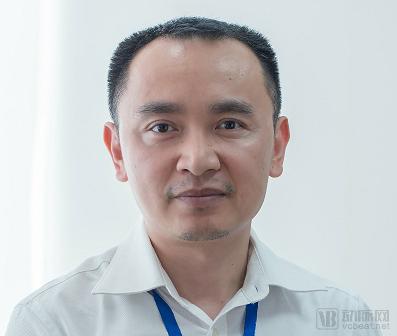
Jian Kaiming, Deputy General Manager of Sichuan Jiuyuan Yinhai Software Co., Ltd.
Senior Engineer. With over twenty years of experience in business design, software development, and project implementation in the fields of public welfare informatization and general health, long-term responsibility for consulting analysis, product management, and industry application innovation.
A Look Back at 2017
In 2017, Jiuyuan Yinhai focused its efforts on two key areas: first, health and medical big data, primarily providing services to the government while also extending capabilities to external partners.
On the other hand, it revolves around tiered diagnosis and treatment and family doctor contracting, namely primary healthcare services.
In 2016, Jiuyuan Yinhai undertook the construction of the National Platform for Direct Settlement of Cross-Provincial Medical Expenses. According to the sixth batch of designated medical institutions for cross-provincial basic medical insurance released by the Ministry of Human Resources and Social Security, as of October 15, 2017, on the basis that all provincial platforms and all pooling regions across China had achieved connectivity with the national platform for direct settlement of cross-provincial medical expenses, the number of designated medical institutions for cross-provincial care nationwide increased to 7,443. More than 80% of counties and districts had at least one designated medical institution capable of providing direct settlement services for inpatient medical expenses incurred from cross-provincial healthcare.
Among them, approximately 97.4% of tertiary designated medical institutions are connected to the network; about 45.5% of secondary hospitals are connected; around 15.8% of primary hospitals are connected; and only about 0.7% of ungraded hospitals are connected.
In addition to covering individuals settled or residing in other regions, the national system for cross-regional medical expense settlement also addresses issues related to patient transfers. Consequently, patients tend to concentrate in areas with relatively superior medical resources, resulting in a higher participation rate among tertiary hospitals.
Furthermore, the National Platform for Cross-Regional Medical Expense Settlement primarily interfaces with the cross-regional settlement platforms of individual provinces. The main challenge in this integration process lies in the varying interpretations and operational compatibility across provinces when implementing the unified standards set by the Ministry of Human Resources and Social Security, which creates difficulties in system integration and joint debugging and testing.
The medical insurance system developed by Jiuyuan Yinhai can be integrated with the national platform without requiring any rectification, as exemplified by Sichuan Province’s cross-province medical expense settlement system. In contrast, systems built by other IT companies tend to involve more complex integration processes; however, since the Ministry of Human Resources and Social Security has established standardized interface specifications for cross-province medical expense settlement systems, the technical challenges are not significant.
Throughout 2017, the policy that had the most significant impact on Jiuyuan Yinhai was the “Guiding Opinions of the General Office of the State Council on Further Deepening the Reform of Basic Medical Insurance Payment Methods.” In response to this policy, we carried out work in two areas:
First, risk control management for the operation of the existing payment system, in which we have made significant investments and achieved favorable results in actual implementation; second, a big data platform that covers human resources and social security big data, health big data, medical payment management and DRGs, as well as products such as government affairs big data and social governance.
Outlook for 2018
The keyword for 2018, in my view, should be AI in healthcare. Three changes may emerge in the field of health informatics:
First, reforms to the medical insurance payment system will directly impact the management of hospitals and medical insurance funds, thereby promoting the enhancement of informatics support capabilities;
Second, the reform of the health insurance payment system will drive the upgrading of the health insurance governance framework and further enhance hospitals’ governance capabilities;
Third, application scenarios for AI in healthcare will continue to emerge.

Chen Zhongyang, CEO of Peking University Health Information
Ph.D. in Computer and Electrical Engineering from Johns Hopkins University, USA. Possesses extensive cross-disciplinary operational experience in the fields of IT, finance, strategic research, investment and financing, and mergers and acquisitions. Has published multiple articles in international journals. The “New Generation Smart HIT Architecture” proposed by him holds significant importance for breaking down data silos and fostering a harmonious, mutually beneficial ecosystem within the Health Information Technology (HIT) industry.
>>>> A Look Back at 2017
Peking University Medical Information’s current business architecture follows a “3+1” model, where “3” refers to in-hospital services, district-level health services, and “Healthcare + Internet” services, while “1” denotes data analytics and utilization. This strategy was established as early as three years ago. In 2017, Peking University Medical Information also focused its efforts on these key business areas.
Taking hospitals as an example, most of their existing business systems are built on architectures that are over a decade old. At that time, hospitals had relatively modest requirements for informatization or Hospital Information Systems (HIS). From the perspective of performance support, the product architectures of that era were sufficient to meet past needs. However, with the development of the healthcare industry, hospitals now have increasingly higher demands for their level of informatization, and hospital information systems have reached a critical juncture for upgrading and replacement.
In 2014, PKU Healthcare IT formulated a plan to reconstruct its HIS product. In 2017, the prototype of this product was successfully developed and piloted in multiple hospitals. IIH is the codename for this product, comprising three English letters: Intelligent & Integrated Healthcare.
IIH can be hailed as a landmark product of PKU Healthcare IT. It underwent a nearly three-year R&D cycle and passed evaluations by industry experts as well as customer validation.
In 2017, another key focus for Peking University Medical Information was the analysis and utilization of big data.
In that year, Peking University Health Information’s research project, the “Beijing Cardiovascular Disease Prevention and Control Data Platform,” was selected for inclusion in the Ministry of Industry and Information Technology’s *Case Collection of Outstanding Big Data Products, Services, and Application Solutions*.
Meanwhile, PKU Healthcare IT has joined forces with the Beijing Big Data Research Institute to establish a joint laboratory, actively participating in the strategic development and industrial implementation of health and medical big data at Peking University. The company is deeply engaged in tackling key technical challenges in the integration, analysis, and utilization of medical data. By introducing international standards, it is researching technologies for constructing medical knowledge graphs based on clinical data, thereby linking medical data with medical knowledge and integrating these assets into its business operations.
2017 was also a year of rapid development for Peking University Medical Information’s “Healthcare + Internet” business. In March, after obtaining the qualifications for an internet hospital, Peking University Medical Information successively launched two products: the Peking University Healthcare Internet Hospital and online medical services, which effectively helped many patients who faced difficulties in securing appointments with specialists and accessing medical care.
Currently, Peking University Medical Information's mobile healthcare products have been deployed in over 3,000 medical and health institutions across China.
>>>>Outlook for 2018
Intelligence and integration represent the future development trends of healthcare informatization. If one keyword were to define 2018, I believe it would be “intelligent” and “integrated.” In the future, we also hope that our IIH products will embody the direction of intelligence and integration.
IIH centers on diagnosis and treatment, adopting mainstream technologies and design philosophies from the post-enterprise computing and internet eras in its development. It ensures a system lifecycle of over 10 years, with high flexibility and modular design. Business processes, functions, and interfaces are autonomously configurable, supporting cutting-edge new technologies such as mobile internet, big data, and cloud computing.
Meanwhile, IIH adopts industry standards to ensure future data interoperability, offering extensive scalability and supporting convenient, high-quality expansion development.
In terms of intelligence, hospitals can freely build personalized workbenches through IIH. By leveraging big data analytics and artificial intelligence applications, these workbenches can flexibly perceive physicians’ workflow scenarios. Integrating knowledge bases, patient historical data, and clinical medical rules, they automatically push relevant data and information to physicians, thereby assisting them in completing tasks quickly and accurately while providing clinical decision support.
In terms of integration, IIH encompasses a comprehensive information system covering the entire hospital business workflow, including patient management, visit processes, clinical diagnosis and treatment, electronic medical records (EMR), order execution, and billing.
From a usage scenario perspective, the fact that physicians must open one system to enter medical orders and another to document medical records—requiring different systems for different tasks—creates significant inconvenience. In contrast, IIH enables physicians to perform nearly all hospital-related operations within a single interface.

Li Chaoming, Deputy General Manager of Kingdee Medical and General Manager of the R&D Center
With over 15 years of experience in computer software R&D and technical management, he previously worked at Sina. In 2009, he joined Kingdee Medical to engage in research on healthcare informatization, where he organized and led teams to successfully develop three major product lines: Digital Hospital, Mobile Internet Hospital, and Cloud Hospital. He specializes in the R&D technology and management of internet products and enterprise-level software.
Review of 2017
Kingdee Healthcare has always focused on hospital informatization. From 2014 to 2016, we facilitated hospitals' transition from informatization to internet-based operations. In 2017, building upon this internet foundation, we began assisting hospitals in their cloud migration and infrastructure development.
In the cloud era, the model of hospital business management will also undergo corresponding changes. We call this new product Kingdee Cloud Hospital.
Kingdee Cloud Hospital is the third-generation hospital information system, newly developed based on Kingdee Medical’s first two generations of products: the Digital Hospital and the Mobile Internet Hospital. Centered on the openness and sharing capabilities of cloud computing, this product enables online-to-offline service models for hospitals through a “cloud + terminal” architecture and achieves refined management through full-process closed-loop operations, thereby helping hospitals transform and upgrade their service and management models in the cloud era.
Kingdee Medical Cloud Hospital connects patients, doctors, nurses, administrative staff, financial personnel, and hospital leadership into a closed loop. The system provides various business applications to support medical quality control, performance management, operational management, and real-time assisted diagnosis and treatment. It also supports clinical research and management decision-making, enabling clinical and operational collaboration between the hospital and external entities.
In March 2017, Kingdee Cloud Hospital was officially launched. From a positioning perspective, it is still in the validation phase this year. We have conducted cloud hospital validations with nearly 10 medical institutions, including public hospitals, private hospitals, and physician groups, to understand whether they can accept the cloud service model or have R&D demands, and we validated these using the Kingdee Cloud Hospital model. For instance, in the public hospital sector, we have already completed the cloud migration of the information system for one hospital.
Public hospitals, especially large-scale public hospitals, still harbor many concerns regarding cloud adoption. Therefore, achieving comprehensive cloud migration in healthcare institutions still requires market validation.
Outlook for 2018
In 2018, I believed that artificial intelligence would become a keyword in the healthcare informatization industry. The integration of AI and medical big data would undoubtedly enhance hospitals’ capabilities in clinical decision-making. Previously, healthcare IT support for hospitals focused more on digitization rather than providing substantial clinical assistance. Therefore, I anticipated that tangible outcomes would emerge in this area in 2018.
Another change is the evolution of business models, such as telemedicine and medical consortia, which will drive the migration of hospital information systems to the cloud.
From the moves of these five industry giants, we can draw the following conclusions:
1. After years of incubation, hospital information systems have reached a critical juncture for upgrading and replacement, with healthcare institutions demonstrating strong willingness to modernize;
2. The changes in the business models of medical institutions brought about by medical consortia have created significant market opportunities for health IT companies;
3. New-generation information products with higher levels of integration, unification, intelligence, and connectivity will become the focal point of hospital informatization upgrades;
4. The field of artificial intelligence is becoming a fiercely contested battleground for healthcare IT companies, with some firms already taking an early lead. In 2018, AI-driven products are poised to experience a concentrated surge among healthcare IT companies.
2017 was more like the calm before the storm. It seemed as though everyone maintained a tacit understanding, honing their products in a state of dormancy to accumulate energy for the imminent industry boom. With the arrival of a new turning point, VCBeat has reason to believe that the healthcare IT industry in 2018 will be truly spectacular.