Weekly Report: Private Hospitals in China — Only 2% Are Tier-3; Genecast Secures RMB 210 Million Funding!

1
Trending Topics This Week
# Report on the Current Development Status of Private Hospitals #
As an important component of China’s healthcare service system, private hospitals have played a significant role in actively promoting the advancement of the country’s healthcare sector.
Compared with public hospitals, private hospitals have more flexible management systems and operational mechanisms. The government implements market-regulated pricing for private hospitals, allowing them to set prices independently based on market supply and demand as well as service costs, which helps them gain the initiative in market competition.
By collecting and analyzing data on the scale, healthcare workforce, and operational performance of private hospitals in recent years, this study examines their development status and challenges, proposes targeted recommendations, and promotes their healthy and sustainable growth.
Perspective:
1Policy Support: Increasingly Detailed Year by Year, with Greater Operability
Government support policies for non-public medical institutions have become increasingly operational, ranging from planning to specific guidance, thereby propelling the development of private hospitals in China from a phase of slow progress into one of rapid growth.
In particular, the promulgation of the “Outline of the ‘Healthy China 2030’ Planning” in 2016 ended the differential treatment of private and public hospitals, removed barriers to social capital investment in healthcare, and accelerated the pace of private and foreign investment in the construction of private hospitals. The number of private hospitals reached 16,432, exceeding the number of public hospitals by 3,724.
Fusion.
2. Private hospitals enter a period of rapid development, characterized by large quantity but limited strength
The number of private hospitals is increasing year by year, while the number of public hospitals is decreasing year by year.In 2015, the number of private hospitals surpassed that of public hospitals. This indicates that social capital actively participated in the development of private hospitals as policy barriers were gradually lowered.
In the fields of general hospitals, specialized hospitals, integrated traditional Chinese and Western medicine hospitals, and nursing homes, private institutions hold a clear advantage; in the fields of traditional Chinese medicine hospitals and ethnic medicine hospitals, public institutions dominate.
Obstetrics and gynecology hospitals are the most numerous, as consumption upgrades drive residents to spend more on ensuring the safety of both mothers and infants.
The penetration rate of children’s hospitals remains low. With the gradual implementation of the universal two-child policy, the shortages of pediatricians and specialized pediatric hospitals will become increasingly pronounced. In the future, children’s hospitals hold significant development potential.
Geographic Distribution: Sichuan has the highest number, while Tibet has the lowest; only three provinces exceed 1,000 private hospitals. Sichuan, Shandong, and Jiangsu each have more than 1,000 private hospitals, driven by their large populations and substantial healthcare demand. Coastal provinces demonstrate a clear numerical advantage: their high level of economic development has created a favorable environment for the establishment of private hospitals. In contrast, northwestern provinces have relatively few private hospitals: sparse population and lagging economic development in these regions have constrained the growth of the private hospital sector.
3. Gradual Increase in Income Levels, Operational Risks Warrant Attention
Compared with public hospitals, private hospitals have a higher asset-liability ratio, resulting in weaker debt-servicing capacity.
This is primarily because private hospitals receive far less fiscal support than public hospitals, necessitating large-scale bank loans and social borrowing to meet their financing needs. This has led to high debt levels in private hospitals, underscoring the need for strengthened fiscal support and optimized financing structures to mitigate debt risks.
In terms of patient visits, there is a significant gap compared to public hospitals, but the growth rate is higher than that of public hospitals.
Due to their absolute advantage in the number of hospital beds, medical personnel, and equipment, public hospitals possess strong overall medical service capabilities and can accommodate more patients; therefore, their patient visit volumes are significantly higher than those of private hospitals.
However, with the development of private hospitals, their number has surpassed that of public hospitals, and their coverage has become more extensive. Meanwhile, continuous improvements in medical talent and facilities have driven a rapid increase in patient visits, with a growth rate significantly higher than that of public hospitals.
Report:
Report on the Current Status of Private Hospital Development: Obstetrics and Gynecology Hospitals Are the Most Numerous, with Tertiary Hospitals Accounting for Only 2%
2
This Week's Headlines

3
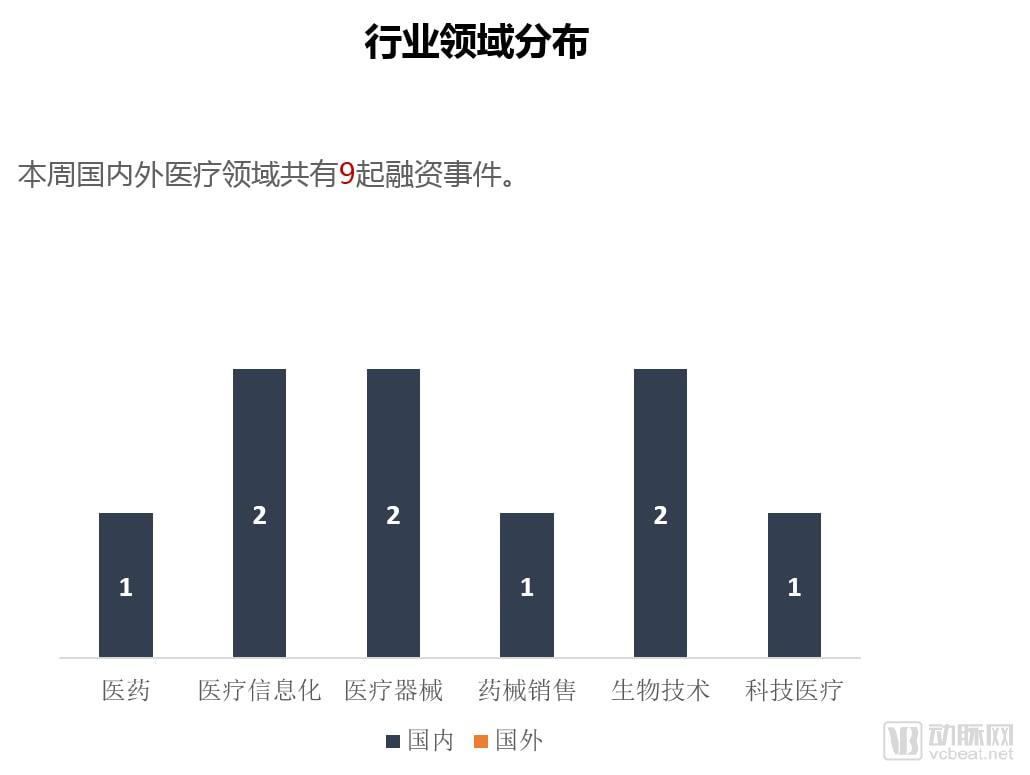
This Week’s Financing Deals in the Healthcare Sector

4
Upcoming Events in the Healthcare Sector

5
# Industry Updates This Week

6
This Week's In-Depth Report

For more content, please refer to the VCBeat Knowledge Base!