

Zhejiang's 'Internet + Traditional Chinese Medicine' Model Serves Over 550,000 Grassroots Patients with Nearly 1.8 Million Prescriptions
Traditional Chinese Medicine (TCM) Enters a Golden Age. Strong policy support is evident, with the formal implementation of the TCM Law, the introduction of a filing system for TCM clinics, and the launch of the “Belt and Road” initiative for TCM; capital is flowing vigorously, with industry financing exceeding RMB 1 billion in 2017, and new technologies accelerating their integration with the industry...
Against this backdrop, Zhejiang Province has actively advanced the development of “Internet + Traditional Chinese Medicine (TCM),” pioneering a “Zhejiang Model” for TCM advancement. This model encompasses optimizing TCM diagnosis and treatment workflows with new technologies, upgrading TCM healthcare institutions, enhancing residents’ access to medical care, building a “TCM Cloud” platform, and exploring “Smart TCM” initiatives. It charts a course for the modernization, standardization, and regulation of TCM, thereby benefiting local residents.
Recently, VCBeat (WeChat ID: vcbeat) conducted on-site research into the Zhejiang model of “Internet + Traditional Chinese Medicine (TCM),” visiting WeDoctor’s Wuzhen Internet TCM Clinic, Jiaxing Hospital of Traditional Chinese Medicine, and the Mishixiang Community Health Service Center in Gongshu District, Hangzhou, to gain a detailed understanding of the implementation of the Zhejiang model for “Internet + TCM.”
Wuzhen Internet TCM Clinic: A Model for the Modernization of Traditional Chinese Medicine
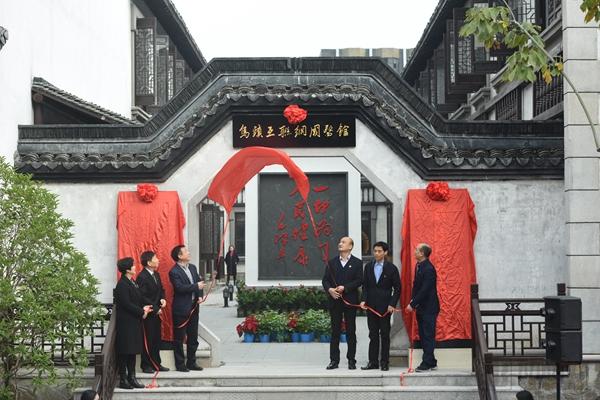
Opening Ceremony of the Wuzhen Internet Traditional Chinese Medicine Clinic
In November 2017, under the guidance of the National Administration of Traditional Chinese Medicine, WeDoctor, in collaboration with the Tongxiang Municipal Government and numerous traditional Chinese medicine (TCM) universities and hospitals across China, jointly established the nation’s first internet-based TCM clinic—the Wuzhen Internet TCM Clinic.
Wuzhen Internet Traditional Chinese Medicine (TCM) Clinic, located on Hongqiao Road in Wuzhen, covers a total area of 4,500 square meters. Centered on the innovative theme of “TCM + Internet + Artificial Intelligence,” it features four service experience zones: “National Physicians, National Medicines, National Techniques, and National Gifts.” The clinic offers services including online TCM diagnosis and treatment, digital constitution identification, intelligent pharmaceutical distribution, modern preparation of herbal pastes, and remote TCM education. It serves as a comprehensive showcase for TCM culture, the inheritance of TCM schools, authentic medicinal herbs from various provinces and cities, innovative smart TCM applications, and the international cultural outreach of TCM under the Belt and Road Initiative.
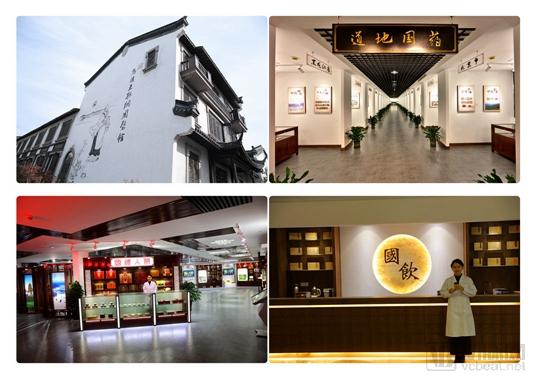
Exterior and Interior Views of Wuzhen Internet Traditional Chinese Medicine Clinic
Dr. Ni Rong, the chief architect and project lead for the Wuzhen Internet Traditional Chinese Medicine (TCM) Clinic, provided a detailed account to the media present of his experience in fostering innovation within the TCM sector, as well as the development journey of the clinic and its underlying technological platform—spanning from Xuanhutai to Huatuo Cloud.
Dr. Ni Rong has been engaged in health informatization since the mid-to-late 1990s and possesses extensive experience in this field. In terms of the inheritance and development of Traditional Chinese Medicine (TCM), he has spearheaded the establishment of community TCM clinics, TCM cultural districts, and national TCM halls. He has also conducted years of research on the development of primary-care TCM services and the modernization of TCM.
“Traditional Chinese Medicine (TCM) should be integrated into primary care, and primary healthcare services should incorporate TCM practices. The foundation for the inheritance, innovation, and development of TCM firmly lies at the grassroots level. Currently, the most critical step in advancing primary TCM services is to integrate them with artificial intelligence and the Internet, leveraging digitalization to enable more people to access high-quality TCM health services that are simple, convenient, proven, affordable, and effective,” stated Dr. Ni Rong.
Consequently, since 2016, Ni Rong has founded “Lianxin Health” and spearheaded the development of the “Xuanhutai TCM Intelligent Diagnosis and Treatment System.” This system integrates 1,441 TCM syndrome patterns, 2,463 prescriptions, and tens of thousands of TCM knowledge entries, providing users with functionalities such as constitution identification for preventive care, electronic medical records, prescription assistance, and a knowledge base.
Dr. Ni Rong introduced that Xuanhutai is a traditional Chinese medicine (TCM) application platform developed based on big data and artificial intelligence technologies. Centered on the core principle of syndrome differentiation and treatment, it consolidates syndrome types, drug contraindications, classical prescriptions, and tens of thousands of knowledge entries into a cloud-based solution covering disease syndromes, therapeutic methods, body constitutions, prescriptions, and herbal compatibility. With this system, every primary-care TCM practitioner has access to the guidance of a wise and erudite renowned TCM expert, integrating the collective experience of countless TCM masters throughout history. The system assists in prescription formulation and enables personalized modifications based on individual patient conditions.
Following its launch, Xuanhutai was implemented at the Mishixiang Community Health Service Center in Gongshu District, Hangzhou. The system has significantly enhanced the center’s capacity to provide traditional Chinese medicine (TCM) services. The proportion of service fees attributable to TCM herbal decoction pieces and non-pharmacological therapies rose from initially less than 30% to nearly 50%, earning high praise from local residents.
In 2017, “Lianxin Health” entered into a comprehensive strategic partnership with WeDoctor. Ni Rong was also invited to serve concurrently as the chief architect of WeDoctor Cloud, the technical support platform of WeDoctor. He aims to leverage the extensive platform of WeDoctor to connect and drive more primary healthcare institutions and traditional Chinese medicine (TCM) entities to adopt this system, thereby enhancing the TCM service capacity at the primary care level.
To this end, in conjunction with the upgrade of the “Xuanhutai TCM Intelligent Diagnosis and Treatment System,” the “Internet + Traditional Chinese Medicine” platform known as “Huatuo Cloud”—a key component of WeDoctor Cloud and exemplified by the completed “Wuzhen Internet National Medical Hall”—was launched.
As of now, the Huatuo Cloud Platform has been adopted by more than 310 traditional Chinese medicine (TCM) clinics across China, cumulatively assisting in the issuance of nearly 1.8 million prescriptions and serving over 550,000 primary-care patients.
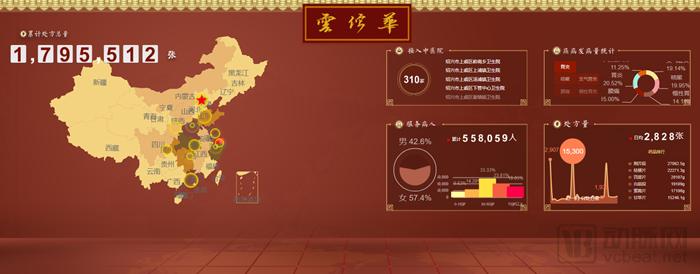
Huatuo Cloud Operations Data Wall
Wuzhen Internet Traditional Chinese Medicine (TCM) Clinic is itself a fully equipped medical institution, where local residents and tourists can receive systematic TCM diagnosis and treatment. Furthermore, through the remote consultation system of Wuzhen Internet Hospital, patients can engage in remote consultations with renowned senior TCM practitioners across China.
It is also worth noting that, in addition to innovations in diagnosis and treatment, the National Medical Hall has adopted an innovative approach to medication dispensing. The intelligent TCM pharmacy at the National Medical Hall offers more modernized TCM granule formulations, measured by an intelligent dispensing system, which ensures accurate dosing while maintaining cleanliness and hygiene.
At the Wuzhen Internet Traditional Chinese Medicine Clinic, the distinctive features and functionalities of “cloud” technology are evident everywhere. Here, we observed a range of intelligent health terminals launched by WeDoctor. These devices offer services such as one-click consultations, appointment scheduling, recommendations for renowned specialists, and personal health records for individual and family users. Without leaving home, users can simply press a single button to engage in face-to-face communication with their family doctors, thereby accessing proactive, immediate, and convenient medical and healthcare services.
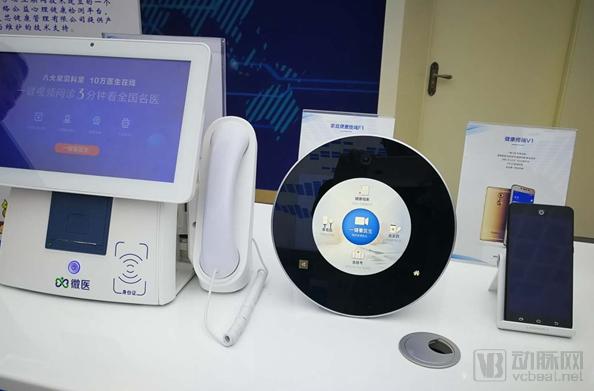
WeDoctor Smart Health Terminal
Overall, the Wuzhen Internet Traditional Chinese Medicine (TCM) Clinic serves as an exemplary model for the modernization of TCM, centrally showcasing TCM culture, the inheritance of TCM schools, and innovative applications of intelligent TCM. Behind this initiative, Huatuo Cloud provides a channel for exporting the clinic’s operational experience, enabling healthcare institutions across China to integrate modernization capabilities into their TCM practices.
“Delivering tangible benefits to the public, enhancing efficiency for physicians, generating profits for partners, and winning public support for policymakers.” This is how Dr. Ni Rong, designer of the Wuzhen Internet Traditional Chinese Medicine Clinic, summarizes the value proposition of the clinic and the Huatuo Cloud platform.
Jiaxing Traditional Chinese Medicine Hospital: The Regional Leader in TCM
Following our visit to the Wuzhen Internet Traditional Chinese Medicine (TCM) Clinic, we proceeded to the Jiaxing Hospital of Traditional Chinese Medicine to gain insights into its information technology infrastructure and its exploratory initiatives in integrating TCM with internet-based applications.
Shen Ruilin, President of Jiaxing Traditional Chinese Medicine Hospital, told VCBeat that the hospital was established in 1959 and is a Grade III Class A TCM hospital with prominent advantages in traditional Chinese medicine (TCM) and comprehensive medical services. The hospital covers an area of approximately 60 mu and has 850 open beds. It currently employs more than 1,200 staff members. The hospital has 33 specialized departments and 18 wards. Its Ophthalmology Department is designated as a National Key Clinical Specialty by the National Health Commission. The Proctology Department and the Preventive Healthcare Department are key specialties under construction and cultivation during the “12th Five-Year Plan” period by the National Administration of Traditional Chinese Medicine. The Departments of Integrated Traditional Chinese and Western Medicine for Gynecology, Pediatrics, Ophthalmology, and Acupuncture and Tuina are provincial-level key specialties.
In recent years, Jiaxing Hospital of Traditional Chinese Medicine has adhered to the “Internet Plus” mindset in its informatization initiatives. Centering on the goal of facilitating medical access, the hospital has piloted and implemented solutions in areas such as point-of-care settlement, mobile healthcare, self-service kiosks, and mobile payment for medical insurance, thereby providing patients with a convenient and considerate healthcare experience. Meanwhile, the hospital has boldly introduced the innovative “TCM + Internet” model, collaborating with internet and artificial intelligence platforms such as WeDoctor. It is exploring the application of the “TCM Cloud” platform and developing regional smart TCM projects to establish a regional TCM medical consortium, vigorously advancing internet-based applications that offer greater convenience and more comprehensive coverage for regional TCM medical services.
President Shen Ruilin introduced that the measures taken by Jiaxing Hospital of Traditional Chinese Medicine in terms of informatization transformation include:
1. Offer multi-channel appointment services for precise medical access without queuing. Currently, the hospital’s appointment registration channels include on-site clinic appointments and self-service kiosk appointments, as well as online, telephone, and mobile phone appointments, covering all available slots for general outpatient, specialist outpatient, and special-needs outpatient clinics.
2. Enhancing Self-Service and Improving Efficiency Through Automation. Since 2016, the hospital has established a centralized self-service area in the outpatient lobby and installed self-service kiosks on each floor. In 2017, it pioneered the introduction of an in-clinic self-service registration and payment system, installing over 80 electronic screens for registration and settlement at the entrances of all outpatient consultation rooms. Currently, the hospital has completely eliminated manual registration counters in the outpatient lobby, significantly improving service efficiency. As of June 15, 533,000 patients have used self-service kiosks for registration and consultations, accounting for 79.1% of total visits, while 755,000 patient visits utilized self-service kiosks for payments, representing 70.51% of all transactions.
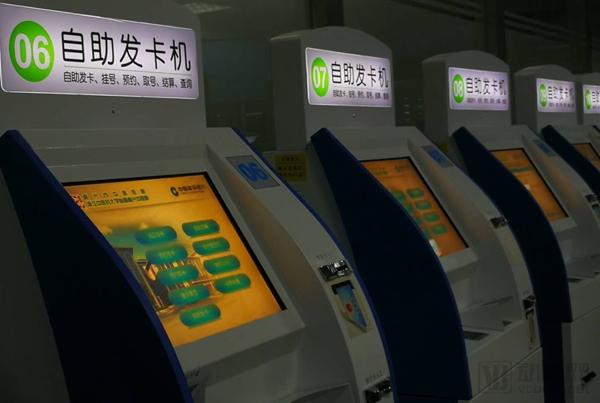
Jiaxing Hospital of Traditional Chinese Medicine Self-Service Terminal
3. Enhancing Mobile Services to Keep Medical Care Up to Date. The hospital has partnered with WeChat and Alipay to develop a suite of mobile medical services, enabling self-service appointment scheduling, same-day registration, queue management and number calling, self-service payment, information inquiries, and express delivery of traditional Chinese medicine prescriptions via these platforms. Additionally, it pioneered the mobile payment service for medical insurance through Alipay, becoming the first hospital in Zhejiang Province to implement this feature.
4. Enhance settlement services to achieve diversification of payment models. First, pioneer point-of-care settlement services, enabling "payment during consultation," eliminating the need to queue at payment windows, and significantly reducing visit time. Second, develop a QR code scanning payment function via Alipay on guidance slips; after treating self-pay patients, physicians directly print the guidance slip, allowing patients to pay via Alipay by scanning the QR code on the slip.
5. Enhancing Pharmaceutical Services to Streamline Medication Pickup. Upon payment completion, the pharmacy simultaneously receives the electronic prescription and begins dispensing, thereby reducing the number of visits and waiting time for patients at the traditional Chinese medicine (TCM) pharmacy. A TCM medication delivery service is also implemented; patients who face inconvenience can opt for courier delivery by completing a delivery form, eliminating the need to queue at the pharmacy counter or make return trips to the hospital for medication pickup.
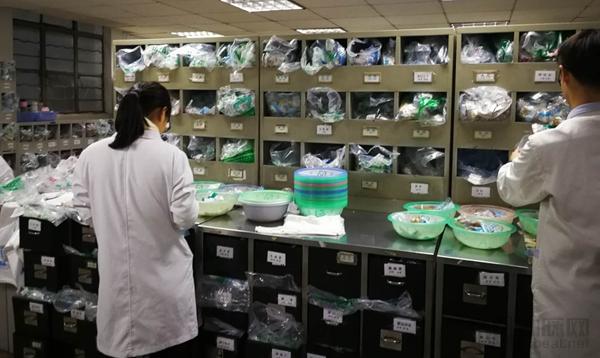
Jiaxing Traditional Chinese Medicine Hospital Smart Pharmacy
“By leveraging information technology to optimize service processes, our hospital has achieved ‘two reductions’ and ‘two improvements’: reduced patient queue times and waiting times, and enhanced medical efficiency and patient care experience,” stated President Shen Ruilin.
In addition to information technology upgrades, Jiaxing Hospital of Traditional Chinese Medicine has also made proactive efforts in the application of "Traditional Chinese Medicine + Internet."
Director Shen told VCBeat that in October 2017, the Jiaxing Municipal Health and Family Planning Commission launched the Jiaxing Traditional Chinese Medicine (TCM) Cloud Platform. As the technical support provider, Huatuo Cloud conducted innovative architectural explorations in platform construction, system operations and maintenance, particularly in integrating the TCM syndrome differentiation and treatment system with hospital HIS systems. Currently, Jiaxing Hospital of Traditional Chinese Medicine has effectively implemented the TCM Cloud Platform, assuming a regional leadership and guidance role.
Next, Jiaxing Hospital of Traditional Chinese Medicine will explore the development of a regional smart TCM initiative, establishing a TCM medical consortium covering 24 primary healthcare institutions within its jurisdiction to provide remote TCM medical and educational services, enhance primary-level TCM service capacity, and facilitate residents’ access to medical care. Additionally, it will establish a “Regional TCM Decoction Pieces Distribution Service Center” to improve dispensing efficiency, reduce medication dispensing errors and loss rates, and standardize and regulate drug quality.
Mishi Lane Community Health Service Center: A Practitioner of Traditional Chinese Medicine at the Grassroots Level
The final stop was the Mishixiang Community Health Service Center. As an early adopter of the “Xuanhutai TCM Intelligent Diagnosis and Treatment System,” the center boasts a strong foundation in traditional Chinese medicine (TCM) and has achieved remarkable results after vigorously developing “TCM + Internet” services.
Yang Jiaqi, Director of the Mishixiang Community Health Service Center, introduced the basic profile of the center. The center provides primary medical services to 48,700 permanent residents within its jurisdiction, among whom individuals aged 65 and above account for 16.76%, and children under three years old account for 2.88%.
The center has a building area of 3,300 square meters and features departments including General Practice, Gynecology, Child Health Care, Traditional Chinese Medicine (TCM) Rehabilitation, and a Community TCM Clinic, with an approved capacity of 30 beds. It oversees four community health service stations.
The center currently employs 104 staff members, including 92 health technical personnel. Among them, there are 31 general practitioners, 18 licensed traditional Chinese medicine (TCM) physicians, and 12 TCM general practitioners. Licensed TCM physicians account for 58.06% of clinical physicians, and TCM general practitioners account for 38.71% of general practitioners.
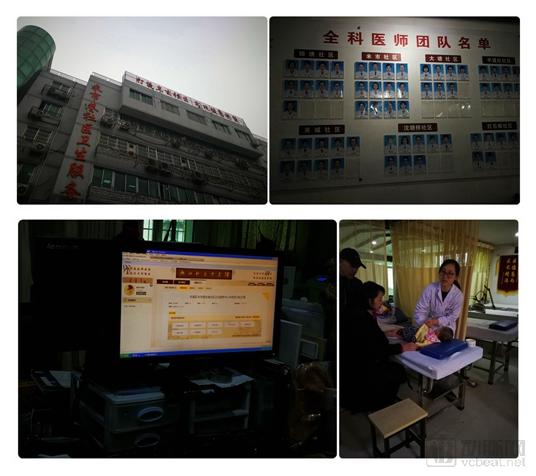
Overview of Mishi Lane Community Health Service Center
The center has long been strategically positioned in the exploration of traditional Chinese medicine (TCM) services. In October 2009, it established China’s first community-based TCM clinic, providing residents with TCM diagnosis and treatment, as well as rehabilitation and healthcare services. In 2014, the center upgraded its hardware infrastructure, creating a “TCM Appropriate Technology Zone” and a “TCM Rehabilitation Ward” spanning over 1,000 square meters.
In 2016, the center fully implemented the “Xuanhutai TCM Intelligent Diagnosis and Treatment System” to build an “Internet+” community-based traditional Chinese medicine (TCM) service platform. Since its adoption, the volume of TCM services at the center has increased significantly, with the proportion of TCM herbal decoction pieces and non-pharmacological therapies rising from less than 30% initially to nearly 50%.
Building on traditional Chinese medicine (TCM) services, the center has established a community-based platform for preventive healthcare and developed a prevention and health maintenance system with distinct TCM characteristics. It has gradually shifted the focus of TCM services from “treating diseases” to “preventing diseases before they occur,” and further elevated this approach to comprehensive “health services.” As the lead organization of the National Collaborative Group for TCM Preventive Healthcare Pilots, the center drafted and formulated the Guidelines for Preventive Healthcare Services in Primary Medical Institutions Nationwide, which have been promoted across China.
In the realm of TCM family doctor contract services, the center has actively explored the integration of traditional Chinese medicine (TCM) into these services by developing TCM service packages based on the full life cycle to meet the diverse needs of various populations. In 2017, the National Administration of Traditional Chinese Medicine designated the center as the lead unit of the National Collaborative Group for TCM Family Doctor Contract Services, entrusting it with the task of drafting the TCM contract service packages.
In terms of scientific research services for Traditional Chinese Medicine (TCM), the center was designated as the Zhejiang Provincial Research Center for Community TCM Services in 2012, becoming the first provincial-level research center nationwide to be established within a community setting. Furthermore, it has undertaken multiple research projects at the national, provincial, municipal, and disciplinary levels.
In terms of building the TCM talent team, the center has made breakthroughs by "inheriting a batch, introducing a batch, and cultivating a batch." By leveraging measures such as pairing inheritance with renowned senior TCM practitioners, recruiting college graduates, and establishing community TCM internship bases, it has built a robust TCM talent team. After launching the "Xuanhutai TCM Intelligent Diagnosis and Treatment System," the system not only empowers novice practitioners to prescribe with confidence and enhance their skills but also provides a rich knowledge base that facilitates continuous learning for physicians.
In terms of convenient TCM services, the center has established a regional information platform through the "Internet+" approach, achieving integration in laboratory testing, referrals, appointments, self-service, and mobile access. Additionally, it provides services such as regular home visits for TCM care, home-based elderly care, and health record management.
President Yang Jiaqi also introduced the center’s “One Hall, Four Stations” model: all four subordinate stations of the Mishi Alley Center operate traditional Chinese medicine (TCM) outpatient clinics, providing services such as TCM herbal decoction pieces, acupuncture, tuina massage, cupping, and gua sha to residents in the jurisdiction. Community residents can access professional TCM diagnosis and treatment services within a 10-minute walk, thereby establishing a 15-minute circle for specialized TCM services.
“Primary healthcare institutions like our center are on the front lines of resident health, serving as ‘gatekeepers’ for community well-being. As a traditional medical system, Traditional Chinese Medicine (TCM) is highly favored by residents and plays a significant role in preventive care ('treating potential diseases before they occur'), convenient diagnosis and treatment, and community-based rehabilitation. With the support of internet-based tools such as Xuanhutai, TCM services will deliver even greater value within communities,” stated Director Yang Jiaqi.
New Technologies Drive Innovative Development of Traditional Chinese Medicine
Prior to the media research, Wang Guoqiang, Deputy Director of the National Health and Family Planning Commission and Director of the State Administration of Traditional Chinese Medicine, along with his delegation, inspected Zhejiang’s practical initiatives in “Internet + Traditional Chinese Medicine (TCM)” innovation, summarizing them as the “Zhejiang Model” derived from this series of innovative explorations. During the visit to WeDoctor’s Wuzhen Internet TCM Clinic, Wang Guoqiang stated, “Whoever better meets the public’s needs represents the future and holds greater promise.” The “Zhejiang Experience” is worthy of reference and broader adoption.
He pointed out, “The integrated development of traditional Chinese medicine (TCM) health services and the Internet is inseparable from the development and sharing of big data. Moving forward, efforts should focus on data development and the establishment of a TCM cloud.” Provincial authorities will support Zhejiang Province in establishing a branch center of the National TCM Data Center and hope that Zhejiang will accelerate the construction and improvement of foundational databases centered on electronic medical records and electronic prescriptions for TCM. This initiative aims to promote the sharing and open access of TCM health big data resources, strengthen the integration and sharing of clinical and research data in TCM, adhere to people-centered, connectivity-oriented, application-driven, and effectiveness-focused principles, and explore experience in building branch centers at the national level.
Prior to this, the National Administration of Traditional Chinese Medicine issued the “Guiding Opinions on Promoting the Integrated Development of Traditional Chinese Medicine Health Services and the Internet.” The “Opinions” pointed out that the integrated development of traditional Chinese medicine (TCM) health services and the Internet refers to the deep integration of TCM health services—including wellness, healthcare, medical treatment, rehabilitation, elderly care, TCM culture, and health tourism—with innovative achievements of the Internet. This integration is of great significance for realizing personalized, convenient, shared, precise, and intelligent TCM health services, advancing supply-side structural reform in TCM, stimulating entrepreneurial and innovative vitality, promoting the inheritance and development of TCM, and building a Healthy China.
In fact, in recent years, the State Council, the National Administration of Traditional Chinese Medicine, and other entities have issued multiple documents encouraging the deep integration of traditional Chinese medicine (TCM) services with new technologies, exploring new models and developing new business formats to revitalize this traditional “national essence.”
Policies on the Integrated Development of Traditional Chinese Medicine and New Technologies
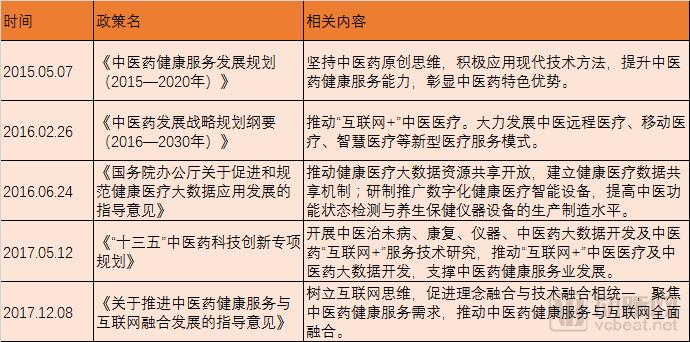
Driven by new technologies, traditional Chinese medicine (TCM) is revitalized, offering multi-level and diversified medical services to residents and contributing to national health. New technology platforms such as Huatuo Cloud, under WeDoctor Cloud, will provide technical support and solutions in this process, facilitating the deep integration of emerging technologies with TCM. The “Zhejiang Model” will also expand beyond Zhejiang Province, delivering greater value on the national stage.