

Oracle and Amazon Enter the Fray: Top 10 Frontiers in Healthcare Cloud Computing in 2017
“Cloud” computing has rapidly emerged as a popular technology for internet-related services in today’s era of rapid advancements in computer science. As public attention to health and medical care intensifies, technological breakthroughs in the healthcare industry are becoming increasingly intertwined with developments in the computing sector. Consequently, applications of cloud computing in the healthcare industry are continually emerging.
In recent years, the deployment of cloud computing in the healthcare industry has accelerated significantly. With its rapid, flexible, efficient, and cost-effective model, cloud computing has quickly gained favor within the industry. In 2017, the investment growth rate in medical cloud computing far exceeded the overall growth level of healthcare informatization. As cloud computing technologies, service models, and ecosystems have become increasingly mature, medical cloud services have officially entered a phase of rapid development.
CloudMine, a secure cloud platform, is designed to help healthcare organizations build digital health applications. In February 2017, CloudMine partnered with Redox.
It is reported that Redox is a cloud-based healthcare integration API service platform. While ensuring data security in the cloud, Redox enables users to seamlessly connect with numerous clinical systems.
Digital health developers and institutions using CloudMine need to share data with EHR (Electronic Health Record) systems through modern, next-generation APIs. Redox serves as a bridge between healthcare systems and the cloud.
Redox aims to complement this EHR connectivity solution with CloudMine’s core digital health platform. Redox can now offer customers an integrated platform that powers digital health applications, stores data, and complies with HIPAA standards.
Meanwhile, CloudMine users can directly connect to clinical systems, including EHRs, enabling simpler and more secure storage and management of relational data.
Niko Skievaski, President and Co-founder of Redox, stated, “Developers are able to rapidly build and iterate on the platform, ensuring the standardization and scalability of their solutions. CloudMine is committed to enabling developers to focus on user experience rather than infrastructure. We are excited that our joint solution will accelerate application delivery, and as the ecosystem evolves, this collaboration will bring even greater benefits.”
In February 2017, Ambra Health, a cloud-based medical imaging management company, announced the launch of Ambra for Developers, a cloud development platform tailored for medical imaging. This is the world’s first cloud development platform specifically designed for medical imaging.
Through the new API, healthcare systems and hospital IT departments can easily extend imaging capabilities to other applications, such as population health management and reporting tools. Furthermore, third-party developers can rapidly integrate Ambra’s imaging technology into their healthcare applications, thereby enhancing patient care for end users.
Many forward-thinking companies are leveraging Ambra’s cloud development platform to enhance their solutions, including deep learning, diagnostic decision-making, remote radiation therapy, and specialized image analysis. Ambra for Developers enables partners to seamlessly integrate best-in-class imaging management solutions with application architectures.
Ambra Health has been named a leader in medical image exchange solutions by KLAS for three consecutive years. Today, more than 750 healthcare providers use the Ambra network to share images. Each month, users from over 50 countries and regions worldwide log into the platform more than 750,000 times, representing a year-over-year growth of 500%.
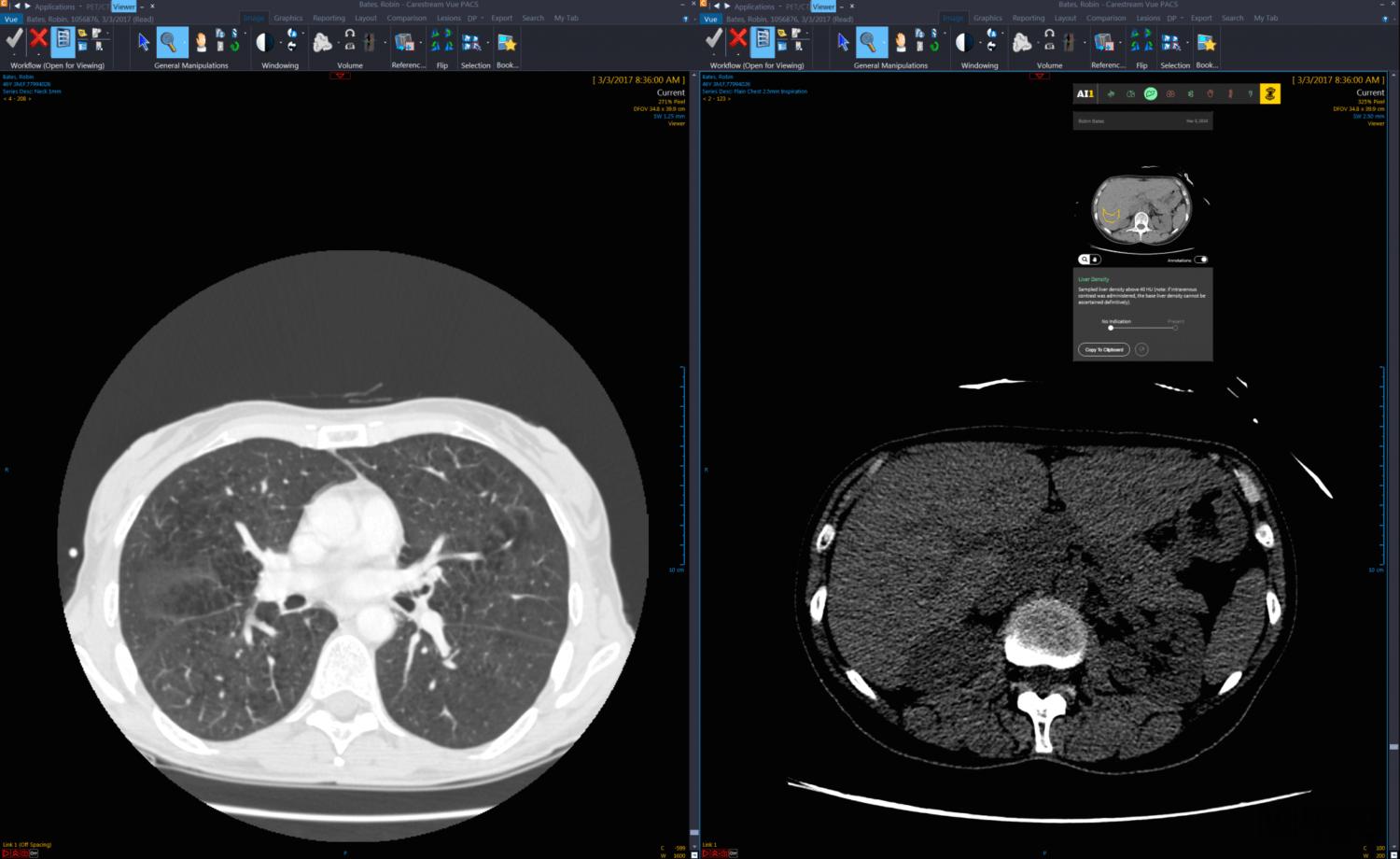
In the field of medical imaging, in November 2017, deep learning imaging analysis company Zebra Medical Vision announced that all its released and unreleased radiology algorithms would be enabled on Google Cloud.
As a pioneer in the fields of medical imaging instruments and deep learning, Zebra-Med is promoting transparency in its business model to facilitate the global adoption and promotion of health products.
According to IDC’s 2017 Health Insights data, over 450 petabytes (PB) of new imaging data are generated globally each year, with image storage volumes projected to double within the next five years. This trend poses challenges for healthcare providers in tracking the expansion of their storage and IT infrastructure, while also presenting opportunities.
In March 2017, cloud-based electronic health record (EHR) provider CareCloud announced that it had incorporated the Centers for Medicare & Medicaid Services (CMS) Merit-based Incentive Payment System (MIPS) into its clinical quality management program.
According to VCBeat, the program integrates qualified clinicians with novel clinical quality management models and simplifies MIPS reporting through a new guarantee mechanism, thereby helping physicians avoid substantial penalties. Clinicians who failed to submit MIPS data in 2017 will face a 4% reduction in their Medicare reimbursement rates in 2019.
CareCloud’s MIPS Guarantee Program, released as part of its clinical technology portfolio, will better support clinicians.
Since September 31, 2017, as long as an enterprise’s existing and new clients use the latest version of CareCloud Charts EHR, they will no longer be subject to penalties from the Centers for Medicare & Medicaid Services (CMS). CareCloud not only helps physicians avoid such penalties but, more importantly, transforms MIPS into an opportunity to enhance quality reporting and care management capabilities.
Ken Comée, CEO of CareCloud, stated in a press release: “Value-based care fundamentally transforms how healthcare services are reimbursed. This shift aims to strengthen the link between quality and reimbursement, but the transition process is challenging. We are proud to offer this guarantee program to help eligible clinicians participate in MIPS with confidence. Our clients will be the first to receive incentive bonuses under MIPS, delivering a better patient experience within this new value-based care model.”
In March 2017, Oracle Health Sciences launched a cloud-based data management workbench. This platform is poised to reduce costs and enhance traceability in clinical development by streamlining end-to-end clinical data flows in clinical research and development.
Oracle Health Sciences Cloud Workbench helps pharmaceutical companies and contract research organizations better integrate, coordinate, and analyze the growing variety and volume of clinical healthcare data.
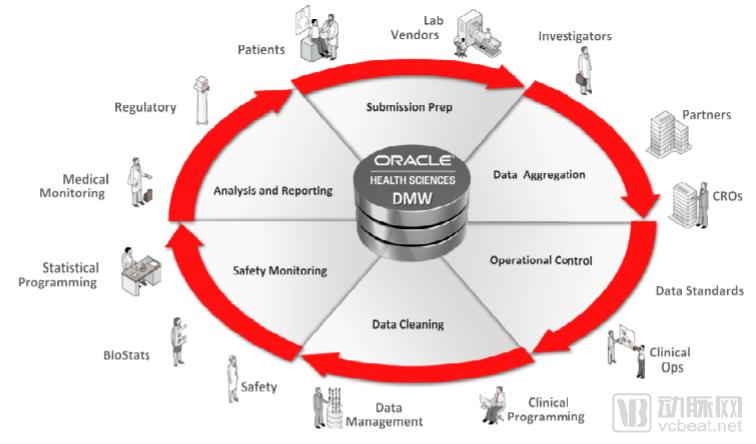
To evaluate clinical efficacy, ensure successful regulatory approval, and accelerate the market launch of more therapeutic options, pharmaceutical companies have generated substantial amounts of supplementary data, thereby increasing the complexity of planning and managing clinical trials. Through automation of data flows and data standardization, clinical researchers can gain near real-time insights to inform clinical trial decision-making. Moreover, these services are delivered via the cloud, resulting in significantly lower acquisition costs.
The integration of Oracle Data Management Workbench Cloud Service with Oracle Health Sciences InForm enables bidirectional, real-time data flow. Furthermore, it standardizes, enhances reusability, and ensures traceability across diverse clinical data sources by accelerating the efficiency with which clinical data managers aggregate, clean, and transform data into deliverables. Through coordinated workflows, data discrepancies are resolved more rapidly, clinical review cycles are shortened, and overall data quality is improved.
Steve Rosenberg, General Manager of Oracle Health Sciences, stated in a press release: “As we acquire data from sources such as electronic health records, wearable devices, and genomics, the volume and complexity of data in the healthcare and life sciences sectors have increased substantially. Today, clinical data managers and data scientists are integrating these data into clinical research and trials, enabling more therapies to reach the market more rapidly.”
“The industry has been seeking a purpose-built data management solution that supports the clinical data flow from data source to data submission through a lightweight cloud-based approach. Oracle’s new cloud data management platform manages these emerging data types at minimal cost while ensuring compliance with FDA data regulations.”
In October 2017, eClinicalWorks, a leader in healthcare IT solutions, launched four new features, which include:
V11 EHR is the latest version of the company’s core EHR/PM solution, designed to further transform healthcare delivery models by providing cutting-edge technology while continuously re-architecting the EHR system. Launched on December 15, 2017, V11 includes hundreds of enhancements to help healthcare providers improve their workflows.
eClinicalWorks Virtual Assistant (EVA): Used with V11, it enables customers to improve efficiency by interacting with the EHR through conversational interfaces. This cloud-based virtual assistant connects users to a broader healthcare services ecosystem.
Virtual Rooms (VR): By extending the reach of doctors' offices, patients can conduct video conferences with healthcare institutions worldwide through clinics, thereby enabling telemedicine.
This VR solution is directly integrated into the EHR, enabling patients to conduct video consultations with on-site clinics (whether primary care physicians or specialists) and other healthcare providers worldwide, thereby bringing a truly global perspective to traditional healthcare networks.
eClinicalWorks Launches Interoperable FHIR Cloud Service: Enables Third-Party Developers to Build Patient-Facing Healthcare Applications, Went Live in December 2017.
In October 2017, CareCloud and First Data jointly launched a new patient experience management platform called Breeze to facilitate communication between medical practices and patients.
The Breeze app enables patients to easily manage their doctor appointments, complete necessary insurance and medical forms, and make payments anytime, anywhere from their mobile phones.
Breeze has implemented a consumer-centric innovation philosophy in the healthcare sector, fundamentally transforming the interaction model between medical practices and patients. The platform is compatible with First Data’s Clover Mini and Clover Station, iOS and Android devices, as well as any computer. Patients can use Breeze to check in and schedule their next appointment, thereby avoiding waits at the reception desk.
Regarding payments, patients can view and manage balances across various payment accounts, including credit cards, debit cards, mobile wallets, HSAs, cash, and checks. Patients may opt for partial payments or set up installment plans, enabling them to pay in their preferred manner at any time.
Furthermore, by digitizing waiting rooms, Breeze has enhanced productivity, revenue, and patient satisfaction for medical practices of all sizes, while reducing administrative costs.
In Coral Gables, Florida, Barbara Arbide, who uses Breeze in her allergy practice, says, “From the moment patients walk in, they are happier, and my staff no longer needs to spend time handling piles of registration forms. The front office can focus on patient care and deliver high-quality service.”
In October 2017, Holy Name Hospital, a non-profit healthcare institution located in Teaneck, New Jersey, adopted CareCloud to implement Electronic Health Records (EHR) and practice management across 35 mobile medical practices.
It is reported that Shengming Hospital currently has a team of computer scientists and engineers providing a dedicated EHR system for inpatient services.
As Shengming Hospital’s physician network expands rapidly, medical partners and CareCloud are assisting Shengming in integrating and managing its large, complex, and growing outpatient practices. As part of the new EHR/PM (Electronic Health Record/Practice Management) initiative, CareCloud is not only providing technical support to the medical center but also helping to meet the data portability requirements necessary for collaboration with ACOs (Accountable Care Organizations).
In addition, Holy Name Hospital leverages CareCloud’s population health management capabilities to identify patients whose care has not met expectations and helps them improve the quality and outcomes of their care.
It is reported that CareCloud will also work with Pacific Global, Holy Name Hospital’s revenue cycle management partner, to streamline the hospital’s financial and clinical workflows in the outpatient setting.
In October 2017, health IT company Wellbe expanded its online patient navigation and engagement platform through partnerships with Physiotec and Staywell. Physiotec provides online rehabilitation programs, while Staywell offers a comprehensive library of guided content.
Amid the convergence of consumerism and value-based care, hospitals are striving to engage patients in the healthcare industry. Wellbe’s CarePlus solution integrates the unique strengths of its partners to deliver more advanced capabilities for online care.
As plug-and-play options within the Wellbe Cloud Connected Care Platform, Physiotec and Staywell flexibly customize system architecture and content for clients based on project requirements.
James Dias, Founder and CEO of Wellbe, stated, “The addition of two new members to the expanding Wellbe product portfolio reinforces our commitment and enhances our capabilities, providing hospitals and clinics with the solutions needed to meet consumer expectations for value-based care.”
Through its partnership with Physiotec, healthcare providers can now add exercise and rehabilitation videos specifically developed for clinical use to their connected care systems, enabling patients to receive online therapy.
Mathieu Gobeil, Director of Business Development at Physiotec, stated, “Although digital health practices and telemedicine have been prioritized by healthcare systems worldwide, few organizations have managed to widely implement simple and feasible solutions.”
By partnering with StayWell, Wellbe has created a system that delivers the latest, guideline-based educational content to patients.
P.J. Bell, Co-Chief Content Officer at StayWell, stated, “StayWell is dedicated to developing reliable healthcare content that meets customer needs—content that is not only engaging but also delivers significant impact. Integrating our research-driven content into Wellbe’s solutions will establish a foundation of accurate and easily accessible information. This empowers individuals to reduce their risk of future health issues, better manage their current health conditions, prepare for surgical procedures, and achieve a faster recovery.”
In 2017, Amazon firmly secured top-tier clients in the energy, technology, financial services, and government services sectors, with its cloud business generating $20 billion in annual revenue.
In November 2017, on the eve of the annual invention conference held in Las Vegas, Amazon Web Services announced a partnership with Cerner, a giant in electronic health records, to expand its business into the healthcare sector and help healthcare providers better leverage their data for health prediction.
In the initial phase of the collaboration, the focus was primarily on Cerner’s population health product—HealtheIntent. Reportedly, this product enables hospitals to collect and analyze large volumes of clinical data to improve patient health outcomes and reduce treatment costs.
Due to security concerns regarding sensitive information and the stringent federal regulations on data storage and sharing, hospitals and other healthcare institutions have not undergone a large-scale transition from traditional data centers to cloud platforms.
In recent years, leading cloud infrastructure providers have recruited health experts to ensure the security of health information and guarantee that their services comply with the requirements of the Health Insurance Portability and Accountability Act (HIPAA).
This collaboration is not the first between Cerner and AWS. At last year’s re:Invent conference, a Cerner vice president delivered a 47-minute presentation on HealtheIntent, highlighting how it leverages AWS for storage, computing, networking, databases, and “disaster recovery.”
In addition to extracting electronic medical records, HealtheIntent can also access data sources such as prescription information and insurance claims. It can provide healthcare organizations with clinical recommendations, such as ensuring appropriate patient-medication matching and identifying high-risk populations.
Arien Malec, Senior Vice President of R&D at Change Healthcare, stated that Cerner provides customers with a “source of comfort.”
According to VCBeat, Cerner generates approximately $5 billion in annual revenue, controls one-quarter of the U.S. electronic health record (EHR) market share, and assists the Department of Defense in modernizing its medical records systems. AWS reported operating income of $1.17 billion and sales of $4.58 billion in the third quarter, with analysts projecting its fourth-quarter sales to approach $5 billion.
In December 2017, Zansors, a personal medical data analytics company, released its cloud components.
Through this component, sensors and applications can transmit medical data to healthcare institutions using the Direct Standard, ensuring that Zansors users can securely transfer their personal health information to their care teams. Furthermore, patient-generated health data (PGHD) is collected in near real-time, which is critical for physicians.
Dr. Abhijit Dasgupta, Co-founder and Chief Data Scientist at Zansors, stated, “In an era where data breaches occur with some frequency, safeguarding patient privacy is paramount. We are developing a secure infrastructure for patients to share their data. This will enable clinical medicine and patients to enjoy a more efficient, secure, and consistent experience.”
Through this cloud-based infrastructure, Zansors connects patient-generated data with health systems, enhancing interoperability between the two. Zansors can transmit data from any system within Zansors servers to any other Direct server.
Nicole Stout, DPT, Vice President of Medical Affairs at Zansors, stated in a press release: “If data collected from patients can be seamlessly transmitted to healthcare institutions, the blind spots in care that have long plagued clinicians will be resolved. There is a gap between clinical care and personal daily health experiences, and data from sensors and applications, shared securely, will bridge this gap.”
1、http://hitconsultant.net/2017/02/22/cloudmine-redox-optimize-secure-sharing-healthcare-data-cloud/
2、http://hitconsultant.net/2017/11/15/zebra-medical-vision-google-cloud/
3、http://hitconsultant.net/2017/03/29/carecloud-integrates-merit-based-incentive-payment-system-ehr-platform/
4、http://hitconsultant.net/2017/03/24/oracle-data-management-workbench-cloud/
5、http://www.mobihealthnews.com/content/new-integrations-flesh-out-verily-and-sanofis-onduos-diabetes-management-platform
6、http://hitconsultant.net/2017/04/27/dariohealth-expands-u-k-market/
7、http://hitconsultant.net/2017/10/06/eclinicalworks-unveils-four-features/
8、http://hitconsultant.net/2017/10/03/carecloud-first-data-patient-experience-platform/
9、http://hitconsultant.net/2017/10/18/holy-name-medical-carecloud-implementation/
10、http://www.mobihealthnews.com/content/wellbe-adds-physiotec-online-rehab-and-staywell-guidelines-content-cloud-based-platform