

Ruihua Xinkang and Humei Healthcare Forge Strategic Partnership to Advance China's Three-Tier Cardiac Rehabilitation System with Private Sector Leadership
According to the 2015 Report on Cardiovascular Diseases in China, the prevalence of cardiovascular diseases in China has been on a continuous rise. Currently, it is estimated that there are 290 million patients with cardiovascular diseases nationwide, including 270 million with hypertension, at least 7 million with stroke, 2.5 million with myocardial infarction, and 4.5 million with heart failure, meaning one in every five adults suffers from a cardiovascular disease. Cardiac rehabilitation has been practiced for decades abroad with excellent outcomes, whereas in China, it is still in its infancy. Cardiovascular diseases have become a major health concern both in China and worldwide.
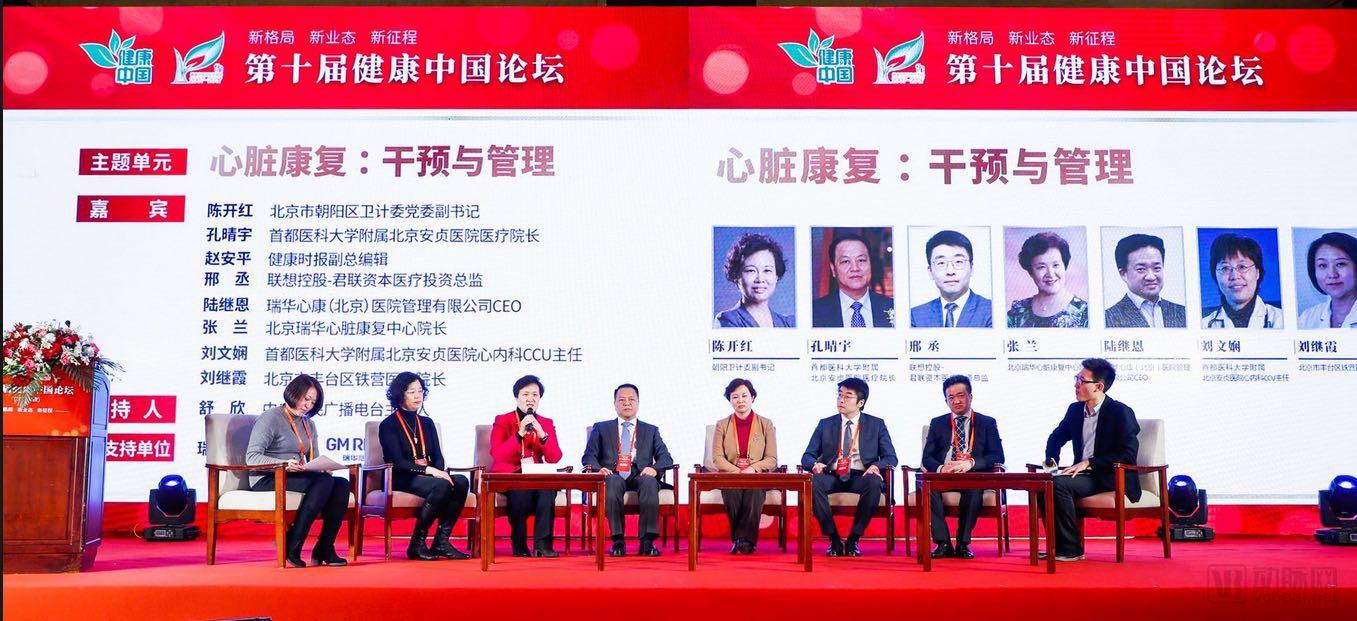
On December 29, at the 10th “Healthy China” Forum in 2017, Reihuaxinkang Medical held the “Cardiac Rehabilitation Parallel Forum.” During the event, Reihuaxinkang Medical entered into a strategic partnership with Huimei Healthcare Group, the joint venture of Mayo Clinic in China. With support from advanced U.S. medical technologies, cardiac rehabilitation in China is poised for enhanced development.
Reihuaxinkang and Huimei Medical will collaborate in areas such as clinical practice and management.In-depth Collaboration
At the signing ceremony, Ms. Yang Hong, Senior Vice President of Huimei Medical Group, stated that as Mayo Clinic’s joint venture in China, Huimei Medical Group exports Mayo Clinic’s cardiac rehabilitation knowledge and management system across four key areas, while also investing in Reihuaxinkang medical institutions.
According to Lu Ji’en, CEO of Reihuaxinkang Beijing Medical Investment Management Co., Ltd., the in-depth cooperation reached between Reihuaxinkang and Huimei Medical Group has facilitated the localization in China of the knowledge system, management framework, and other elements of the Mayo Clinic Cardiac Rehabilitation Center.
Beijing Ruihua Cardiac Rehabilitation Center is committed to building a distinctive, full-cycle cardiac rehabilitation and health management platform in China. By introducing the Mayo Clinic Cardiac Rehabilitation System, Ruihua Cardiac Rehabilitation will deepen its collaboration with Huimei Medical in clinical care, medical research, and talent development. This partnership aims to align with international standards, establish a domestic cardiac rehabilitation management system, and inject more professional expertise into China’s cardiac rehabilitation field.
The Construction of a Three-Tier Cardiac Rehabilitation System Is Particularly Important for the Cardiac Rehabilitation Market
At the parallel forum, representatives from the government, social capital, and medical institutions explored how to establish a three-tier healthcare system for cardiac rehabilitation in China from various perspectives.
With the development of the national economy and the implementation of the national “Healthy China” strategy and universal health insurance policies, it is particularly important to establish a three-tier cardiac rehabilitation system jointly constructed by large medical institutions, specialized rehabilitation facilities, and community health service centers, which will significantly advance the development of cardiac rehabilitation in China.
Chen Kaihong, Deputy Secretary of the Party Committee of the Chaoyang District Health and Family Planning Commission, stated that Chaoyang District took the lead in Beijing in establishing a new district-wide healthcare service system—the Chaoyang Medical Consortium—and pioneered the creation of specialized medical consortia nationwide, thereby achieving integrated development of high-quality medical resources and grassroots healthcare networks.
“For large medical institutions at the current stage, clinical treatment remains the primary focus. Therefore, we welcome the participation of private medical institutions such as Reihuaxinkang, which extend refined chronic disease management through cardiac rehabilitation, thereby supplementing the public healthcare system from outside. Meanwhile, close collaboration with large medical institutions and community health service centers can provide patients with favorable postoperative treatment outcomes, effective postoperative rehabilitation, and long-term, sustainable chronic disease management,” said Chen Kaihong.
Kong Qingyu, Vice President of Beijing Anzhen Hospital, Capital Medical University, stated that large medical institutions are currently overloaded. For instance, with over 10,000 cardiac surgeries performed annually at Anzhen Hospital, the hospital’s own physicians have limited capacity to manage such a vast population of postoperative patients.
The entry of specialized private medical institutions such as Reihuaxinkang into the market enables comprehensive postoperative management through professional rehabilitation teams, facilitating superior recovery and significantly improving patients’ quality of life.
“We have conducted comparative studies. Two patients who both underwent coronary artery bypass grafting (CABG) at Beijing Anzhen Hospital showed markedly different mental states after a period of time, depending on whether they participated in cardiac rehabilitation. The impact of mental state on lifespan and physical condition is far greater than most people can imagine.” He also stated that tertiary hospitals bear the primary responsibility for promoting cardiac rehabilitation. They must instill the concept of cardiac rehabilitation in physicians at secondary and primary care hospitals, while also educating patients about the knowledge and common sense surrounding cardiac rehabilitation to foster their belief in its necessity.
Zhang Lan, Director of the Beijing Ruihua Cardiac Rehabilitation Center, stated that since its establishment, the center has witnessed significant benefits for many cardiac rehabilitation patients within just eight months. As a crucial component of the three-tier cardiac rehabilitation system, the center helps patients develop healthy rehabilitation habits and embrace rehabilitation concepts during comprehensive cardiac rehabilitation management. After completing the three phases of rehabilitation, patients are more likely to adhere to their regimens, thereby ensuring the effectiveness of chronic disease management. Therefore, as a Phase II professional rehabilitation medical institution, Ruihua Cardiac Rehabilitation plays a pivotal bridging role in the cardiac rehabilitation process.
Liu Jixia, President of Fengtai District Tieying Hospital, stated that in the construction of a three-tier medical system, Fengtai District Tieying Hospital, as a regional medical center and regional rehabilitation center, plays a dual role. On one hand, it provides essential support to top-tier medical institutions specializing in cardiac rehabilitation, enabling large hospitals to focus on surgery-centric medical care. On the other hand, it ensures seamless continuity of care when patients return to their communities after being managed by professional cardiac rehabilitation institutions, thereby facilitating better community-based and home-based rehabilitation and promoting earlier recovery.
Xing Cheng, Investment Director of Healthcare at Legend Holdings’ Junlian Capital, speaking as a representative of social capital, stated that injecting capital to establish more institutions like Reihuaxinkang Medical can create effective coordination and complementarity with public hospitals, thereby enabling social capital to play a greater role in promoting national health.
Finally, Lu Ji’en, CEO of Reihuaxinkang Beijing Medical Investment Management Co., Ltd., shared at the conference his initial reasons for choosing cardiac rehabilitation as a niche sector. “Among the many branches of cardiac rehabilitation, we gradually recognized the importance of this field and observed the positive rehabilitation outcomes achieved by patients abroad. Given the rising prevalence of cardiovascular disease in China, cardiac rehabilitation provided us with a clear direction for our entrepreneurial venture. By drawing on advanced international technologies and concepts, Reihuaxinkang aims to establish standardized clinical pathways for rehabilitation. We are progressively building a comprehensive data repository on the cardiac health of the Chinese population and developing a cardiac rehabilitation management platform.”