

Shengjiaxin Medical Aesthetics Files IPO Prospectus: How Its 'Celebrity Doctor + Employee Partnership' Model Generated Over RMB 200 Million in Three Years with Specialized Fat Procedures
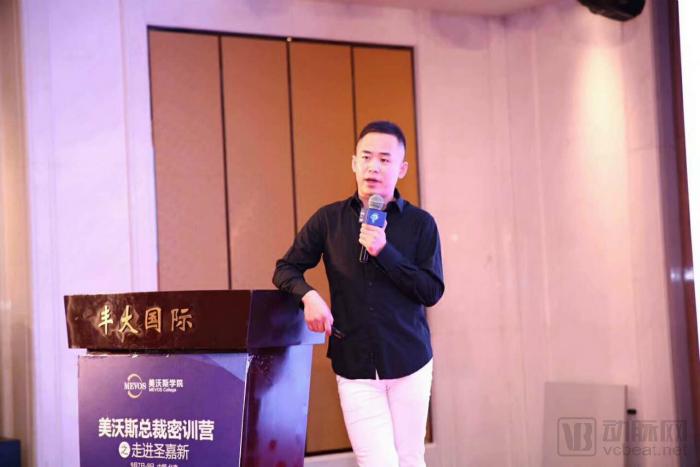
Mr. Xu Weiguo, General Manager of Shengjiaxin Medical Aesthetic Hospital
Medical aesthetics is a lucrative sector; Shengjiaxin, leveraging its physician-and-employee partnership model and focusing on fat-related procedures as a flagship service, achieved over RMB 200 million in revenue within three years.
Currently, the majority of medical aesthetic institutions on the market are still clinics. For independent clinics to scale up and evolve into boutique clinics or hospitals, they must address a series of challenges related to talent, capital, branding, and technology. Amidst competition from large chains and Putian-affiliated groups, they need to identify unique development models suited to both their own capabilities and market demands.
Beijing Shengjiaxin Medical Aesthetic Hospital was co-founded by three renowned experts: Li Zhen, an international expert in body contouring; Zhang Xiaotian, a specialist in facial sculpting; and Qiu Lidong, an expert in minimally invasive fat sculpting. The hospital has established a distinctive platform based on a partnership model among leading physicians, with plans to extend this partnership system to all staff members and consumers in the future.
What Makes Shengjiaxin a Favorite Among Doctors and Patients? VCBeat (WeChat: vcbeat) Conducted an Exclusive Interview with Mr. Xu Weiguo, General Manager of Shengjiaxin Medical Aesthetic Hospital, to Gain In-Depth Insights into the Operational Strategies of This Boutique Hospital.
The era of quick profits in the medical aesthetics industry has passed. With the exception of a few institutions that continue to thrive by acquiring customers through beauty salon channels, nightclubs, and other avenues, the trends toward branding, standardization, and capitalization are unstoppable.
Large branded chains such as Mylike, Yestar, and United Lige have already captured a significant share of the market. Leveraging their advantages in technology, management, and brand recognition, these institutions pose a challenge to smaller or boutique clinics and hospitals, which must redefine their positioning and carve out a niche in this competitive landscape.
“Large chains possess brand advantages and influence, whereas physician-owned clinics lack scale in terms of individual facility size and medical teams. In my opinion, their only competitive edge for future survival lies in specializing in distinctive surgical procedures—focusing on single-service offerings,” Xu Weiguo told VCBeat. This phenomenon is even more pronounced in regions with more mature medical aesthetics markets, such as South Korea and Taiwan, China.
The key to single-procedure surgeries lies in renowned physicians. “Why is the trend of doctors building their personal brands becoming increasingly pronounced? Because there is market demand. From the customer’s perspective, when undergoing surgery, their final choice of a healthcare institution depends more on the expertise and reputation of the specialists and physicians; for minimally invasive procedures and dermatological treatments, this factor may be relatively less significant.”
A common scenario in the market is that a medical institution operates well for several years, but then experiences a cliff-like decline in business development after one or two years due to the sudden departure of core physicians. “For the long-term stable development of a hospital, physicians are at the core.” Xu Weiguo consistently emphasizes the critical importance of physicians, particularly for small institutions that have not yet established brand recognition.
In the current market, many brands have achieved scale by integrating physician clinics, a common expansion strategy. However, Shengjiaxin has focused on “single-procedure specialties,” primarily fat-related procedures, as well as facial slimming and eye surgeries.
“Shengjiaxin focuses more on cultivating specialists in specific procedures, such as its three pioneering experts: Dr. Li Zhen, a specialist in body contouring; Dr. Zhang Xiaotian, a specialist in facial contouring; and Dr. Qiu Lidong, a specialist in micro-fat sculpting. Whether through external recruitment or internal development, the organization brings these professionals together on one or multiple platforms under a partnership model.”
Why Is the “Renowned Doctor Partner” Phenomenon Particularly Prevalent Now? On one hand, policies now permit and encourage physicians to leave public hospitals, while more industrial capital has also flowed into the sector.
On the other hand, physicians in China’s medical aesthetics industry—who should command the greatest respect—have long been relegated to the bottom of the value chain, with traditional channel managers potentially earning higher incomes than doctors. The call to return to the core principles of medical practice has never been more genuine and compelling than it is today.
“Shengjiaxin gathers expert physicians, some of whom may have previously operated their own clinics, while others have worked in public hospitals. Our starting point is to ensure that doctors have a voice,” said Xu Weiguo.
Especially in private hospitals, due to survival pressures and often out of necessity, many surgeons may perform procedures they are personally reluctant to undertake, driven by performance targets. “This creates moral discomfort among physicians. Ultimately, some choose to partner up and become shareholders, focusing on specific procedure lines. This model enables them to better serve patients who are true candidates for such interventions and particularly suitable for aesthetic medical treatments.”
The above outlines market demands and the evolving status of physicians, explaining the rationale behind the “Famous Doctor Partner” model. “At its core, it aims to enhance patients’ surgical outcomes and physicians’ professional expertise.”
Furthermore, Shengjiaxin holds an advantage in cost control through its “single-service offering + renowned physician partner” model. “When we conduct advertising or brand promotion, we focus solely on a single service category—namely, fat reduction and facial slimming. Unlike other institutions that need to allocate concentrated marketing resources across more than ten different service offerings, we do not face such complexity.”
Complementing the “Renowned Doctor Partner” system, Shengjiaxin has also pioneered an “Employee Partner” system. No matter how well a private institution performs, without publicity, customers will remain unaware of it.
“Consequently, we later adopted an employee partnership model. This approach enables greater clarity in specialization and standardization across a series of functions—including planning, digital operations, self-media, online-to-offline teleconsultation, on-site consultation, customer service, and medical/nursing care—thereby facilitating easier team replication.”
Xu Weiguo, who has 10 years of experience in the medical aesthetics industry, told reporters: “If operational staff are exposed to different surgeries and procedures, constantly switching between projects, it is difficult for them to quickly get into work mode. Moreover, such a model is hard to replicate. From the customer’s perspective, assigning a renowned specialist and a dedicated operational staff member to each specific procedure better meets customer needs. The ‘renowned specialist partnership model’ for standardized single-item procedures has become a hallmark of Shengjiaxin.”
How is the performance of individual product lines? The fat-related procedures at Shengjiaxin have generated nearly RMB 200 million in revenue over three years, with a typical return on investment (ROI) ratio of 1:10 for single-product initiatives. The company operates two licensed hospitals, Shengjiaxin and Shengjiarong, and is currently engaging in strategic collaborations with several institutions.
Under Sheng Jiaxin’s “Renowned Physician Partner” and “Employee Partner” systems, each expert team is structured with a tiered hierarchy of specialists. All surgical procedures are classified by complexity, allowing patients to select physicians from the appropriate tier based on their needs. Internally, the organization implements a three-tier partnership model—Junior, Intermediate, and Senior—with a well-defined career progression pathway.
“To become a junior partner, one must meet minimum tenure requirements in the industry. For instance, individuals with a background in strategic planning need at least three years of industry experience and one year within the company to be eligible for application. Candidates must also pass our professional data-based assessments, and we provide training for partners. A fission mechanism is established at each level: to advance from junior to mid-level partner, one must mentor and develop at least two junior partners of comparable caliber, among other conditions. This represents a process of fission and senior-led onboarding,” introduced Xu Weiguo.
Junior partners are eligible for project crowdfunding and startup equity; mid-level partners can receive dividend shares; and senior partners can obtain stock options and original shares. “Shengjiaxin has over 80 mid-level and senior partners.”
Xu Weiguo explained to the reporter: “Junior partners, also known as project crowdfunding partners, involve a company-wide crowdfunding initiative for a specific product or piece of equipment. Employees contribute funds to purchase the instrument, and the resulting profits are distributed among them in proportion to their investments, with some achieving investment returns of more than sevenfold.”
Looking ahead, Shengjiaxin will introduce a customer partnership model, building upon its existing physician and employee partnership frameworks.
An undeniable fact is that the diversity of channels—such as paid bidding, distribution channels, e-commerce, and social commerce—has effectively alleviated the challenge of user acquisition. While search engines previously accounted for 80% of internet traffic, sources are now far more diversified; nevertheless, offline traffic entry points continue to deliver substantial incremental growth.
“We have set up some of our consultation points in several high-traffic shopping malls in Beijing. Some customers may already own a store, such as a clothing or cosmetics shop. By leveraging offline foot traffic, we are able to direct these potential clients to our hospital, and the volume has been quite significant.”
Regarding future development directions, the reporter learned that under the renowned-physician and employee-partnership model, Shengjiaxin has also partnered with top-tier training institutions such as Huicheng Medical Aesthetics and Meiwosi to integrate operational agencies across the Chinese market. Currently, it has integrated several institutions in Guangzhou, Yantai, Hainan, and other regions, helping physicians at these facilities improve their operational capabilities.
“Unlike most medical aesthetic institutions on the market that simply integrate doctors or clinics, resulting in minimal changes to performance, our core strategy goes beyond integration to include operational enhancements. Under our system, it is common for monthly revenue to double compared to previous levels.”
Regarding competition, Xu Weiguo stated that although there are reputable fat-grafting institutions in the Beijing market, such as Dongfang Hexie, Dongfang Ruili, Yuzhiguang, and Jingmei, “we do not actually have a competitive relationship. The clientele targeted by Beijing is not limited to local residents but extends across China. The customer base is sufficiently large; in fact, greater competition among providers may be beneficial, as it could attract even more patients to Beijing for surgical procedures.”