

Changxi Medical Aims to Lead China's Inhalation Drug Delivery Market Amid Foreign Dominance

Chance Pharmaceuticals
Inhalation Product Developer
In the 1960s and 1970s, patients would strictly adhere to doctors’ instructions regarding injections and medications when seeking medical care. Today, however, if a doctor recommends an injection, a patient may ask whether the condition can be treated with oral medication alone, without injections.
As living standards improve, people are beginning to raise diverse demands for drug administration. However, many pharmaceutical companies focus solely on drug development, often giving little consideration to whether the route of administration meets societal needs. This has created growth opportunities for companies specializing in drug delivery technologies.
Hangzhou Chance Medical Devices Co., Ltd. (hereinafter referred to as “Chance”) is one of the very few entities, both domestically and internationally, that has masteredDry Powder Inhalation Drug Delivery System Platform Technologya high-tech company. The Company possesses patented dry powder formulation technology and efficient, user-friendly inhaler technology.
The company’s current pipeline includes fully generic drugs for chronic obstructive pulmonary disease (COPD) and asthma, improved asthma medications for pediatric and adolescent patients, and therapeutics targeting non-respiratory diseases.
Top-tier Management Team, Extensive Industrialization Experience
Chance Pharmaceuticals’ management team comprises graduates from prestigious universities in Europe and the United States, with professional backgrounds at renowned pharmaceutical companies in these regions. The team possesses extensive hands-on experience in overseas scientific research, project management, and production scale-up, as well as profound expertise in domestic new drug development, evaluation, manufacturing, and market launch.
Dr. Chen Donghao, Founder and CEO, formerly served as the General Manager of Chemo Group's China region, and graduated from ETH Zurich (Swiss Federal Institute of Technology in Zurich),He is the principal inventor of 24 international patents on inhaled drug delivery and has over 20 years of experience in the research, development, and commercialization of inhaled pharmaceuticals.

Dr. Chen Donghao, Founder and CEO of Chance Pharmaceuticals
Chen Donghao previously joined AIR (Advanced Inhalation Research), a drug delivery technology company founded by Massachusetts Institute of Technology (MIT) professor Robert Langer, as a founding scientist.The company was acquired in a full buyout for $150 million by Alkermes, a top-20 publicly listed U.S. biopharmaceutical company, just one and a half years after its establishment.According to Chen Donghao’s recollection, the acquisition caused a major stir in the industry at the time, and ultimatelyIt has been included in Harvard Business School’s case studies as a classic example.
Following the acquisition of AIR, Chen Donghao joined Alkermes as a key core member and, serving as the Head of CMC, successfully advanced the inhaled insulin project—a collaboration between Alkermes and Eli Lilly—to Phase II clinical trials. After leaving Alkermes in 2004, Mr. Chen subsequently served as R&D Director at Galenea and Alnylam Pharmaceuticals (a top 30 U.S. biopharmaceutical company). Alnylam is currently the world’s leading small nucleic acid (siRNA) pharmaceutical company, andChen Donghao is the leader of the world’s first clinical project for an inhaled siRNA drug.。
With many years of experience in the pharmaceutical industry, Chen Donghao has not only developed robust R&D capabilities for new drugs (including formulations and inhalation devices), but also possesses strong organizational leadership and corporate management skills. In particular, he has extensive industrialization experience covering the entire process from product development, clinical trials, and regulatory approval to manufacturing, with a focus on inhaled drug delivery for respiratory diseases such as asthma and chronic obstructive pulmonary disease (COPD), as well as non-respiratory indications in the central nervous system (CNS) and antiviral fields.
“In the biopharmaceutical industry, the vast majority of Chinese scholars pursuing advanced studies abroad focus on research, or so-called R&D (research and development). However, most of them remain at the “R” (research) stage and have not progressed to the “D” (development) phase. I have been relatively fortunate to have participated in several industrialization processes spanning from preclinical stages to Phase II/III clinical trials, thereby gaining a profound understanding of the entire product development chain.Therefore, the likelihood of setbacks is relatively lower for me, which I attribute to my industrialization experience.“Chen Donghao told VCBeat.”
From Chen Donghao’s perspective, inhalation drug delivery is a multidisciplinary field that involves not only pharmaceutical sciences but also significant engineering concepts. Therefore, when founding Chance Pharmaceuticals in 2015, Chen’s primary consideration was to assemble a team with complementary expertise and extensive practical experience.
Dr. Lan Chen, Co-founder of Chance Pharmaceuticals, is an internationally recognized expert in inhaled drug delivery technologies and the design, evaluation, and formulation interactions of inhalers. She has devoted many years to the research and development of micro- and nanoparticle preparation, as well as novel drug delivery devices and equipment. Dr. Chen possesses extensive experience and industrial resources in the design, mold opening and injection molding, optimization, and production of inhalers.
Targeting the Multi-Billion Inhaler Market: Three Key Technologies Break Foreign Monopoly
According to Chen Donghao, China currently has approximately 30 million asthma patients, with an annual growth rate of 4%. The number of patients with chronic obstructive pulmonary disease (COPD) is nearly 50 million, and the prevalence rate among individuals aged 40 and above reaches as high as 8.2%.
Obviously, China's inhalation market has huge development potential. By 2016, the market size had exceeded RMB 10 billion, with a potential market size reaching as high as RMB 60 billion. However, since inhalation preparations, especially dry powder inhalers, are considered high-end formulations involving the integration of drugs and devices, they have relatively high technical barriers, thereforeCurrently, the Chinese market is almost monopolized by foreign pharmaceutical companies, with domestic enterprises holding less than 5% of the market share.
Why Has China Failed to Develop Dry Powder Inhalation Products? Why Are Domestically Produced Powder Aerosols So Difficult to Bring to Market Compared with Generic Drugs in Other Dosage Forms?Chen Donghao believes that there are two main reasons.
First, there are technical issues.There are very few professionals in China specializing in the development of powder aerosols, and even fewer possess comprehensive experience spanning from preclinical stages to clinical trials and industrialization. Traditional pharmaceuticals predominantly involve formulation processes for tablets, capsules, and injections, without involving any medical devices. Currently, the vast majority of R&D management and technical personnel tend to directly apply their experience from tablets, capsules, and injections to powder aerosol development, overlooking a critical component: the device (inhaler).
Unlike traditional pharmaceuticals, powder aerosol formulations are integrated drug-device combination products. Under the concept of “drug-device interaction,” the device component should be incorporated into every step of the research and development process.Although R&D management and technical personnel understand that it is a combination product integrating drug and device, they often develop the formulation and the inhaler as two separate products during the actual R&D and experimental design processes.
Therefore, from another perspective, the difficulties currently encountered in the development of inhalation products in China, especially dry powder inhalers, are not merely technical issues, according to Chen Donghao.The root cause is insufficient understanding of powder aerosol products and inadequate awareness in clinical use settings.
To break the current monopoly held by foreign companies, Chance Pharmaceuticals has introduced a novel inhalation drug delivery solution.ChanceViaProprietary novel granulation and inhaler technologies that can alter and optimize particle deposition in the lungs, thereby broadening the eligible patient population.Therefore, Chance Pharmaceuticals' products have a broader range of applications, suitable for both respiratory and non-respiratory diseases.
In terms of dry powder preparation processes, Chance Pharmaceuticals possesses traditional jet milling technology as well as novel, unique, and market-recognized spray drying technology. Thus,Chance Pharmaceuticals can design solutions tailored to specific niche populations based on their conditions and respiratory status.Proprietary inhalers and their matched formulation processes.
In the design and optimization evaluation of inhalers, Chance Pharmaceuticals utilized the flow field corresponding to powder characteristics and the respiratory patterns of the target patient population.China's Leading ANSYS and EDEM Software. Currently, most inhalation products developed by domestic pharmaceutical companies are generics. A critical aspect of dry powder inhaler (DPI) development is how to minimize the time required to achieve consistent in vitro deposition profiles between the generic product and the originator drug.Chance Pharmaceuticals can minimize the product development cycle through the aforementioned computer-aided technologies.
In addition, Chance Pharmaceuticals has independently developed aPowder Micro-Infusion Technology, completed "Drug-Device-Filling”entire production chain. It is reported that the best capsule filling machines currently available in China can only fill down to 12 mg, whereas Chance Pharmaceuticals aims to achieve fills below 5 mg. The patent application for this technology is currently in the publication stage.
“The gap between us and foreign pharmaceutical companies is not just in APIs (active pharmaceutical ingredients); in fact, China is now the world’s second-largest API exporter, yet we still lag behind others, largely because”Issues with Pharmaceutical Machinery and Materials“. In particular, our understanding of powder properties for solid dosage forms is especially lacking,” said Chen Donghao.
Develop Differentiated Products to Achieve Overtaking on a Bend
Years of industrialization experience have made Chen Donghao realize that strategic decisions are more important than technical challenges, so the company's positioning must be precise.
Therefore, Chance Pharmaceuticals targeted the high-end dry powder inhaler (DPI) market from its inception. It is well known that among aerosols, nebulizers, and DPIs, the latter presents the greatest challenges in product development. However, Chen Donghao held a different view, believing thatThe high technological barrier means that the product is difficult to replicate. Although many large enterprises are currently developing powder aerosols, Chance Pharmaceuticals is confident in its ability to become a leader in the field of inhalation drug delivery.
“Compared to our peers, we started relatively late. To achieve overtaking on a bend, we must differentiate ourselves by fully leveraging our technological advantages while drawing on our years of industrialization experience to avoid non-technical pitfalls as much as possible.“Chen Donghao said.”
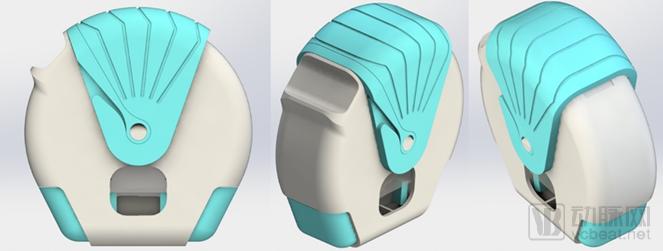
Drug Delivery Devices Currently Under Development by Chance Pharmaceuticals
Chance Pharmaceuticals has established a diverse and robust portfolio of inhaled drug products, with key offerings including fully generic medications for the treatment of chronic obstructive pulmonary disease (COPD) and asthma, improved-formulation asthma therapies tailored for pediatric and adolescent patients, and drugs targeting non-respiratory diseases.
Inhaled Medications for Non-Respiratory Diseases: Currently, Few Domestic Companies Are Engaged in This FieldThere are currently almost no companies in China developing inhaled medications for non-respiratory diseases. This is because such therapies demand more advanced drug delivery technologies, requiring the active pharmaceutical ingredients to be delivered into the patients’ alveoli and then reach systemic circulation via the bloodstream. It is reported that Chance Pharmaceuticals is currently developing inhaled medications for the treatment of non-respiratory conditions, including migraine, insomnia, and Parkinson’s disease.
With a top-tier team and precise product positioning, Chance Pharmaceuticals quickly gained the favor of investors. In April 2016, the company secured RMB 10 million in angel investment from Delian Capital.On January 2, 2018, Chance Pharmaceuticals announced the completion of its RMB 55 million Series A financing round, led by China International Capital Corporation (CICC) Venture Capital, with participation from Kaitai Capital and Delian Capital.
Next, Chance Pharmaceuticals will continue to develop products with market penetration and differentiation for respiratory diseases, forming a rich product line covering both respiratory and non-respiratory diseases, while also introducing high-quality overseas R&D products.
It is reported that in the first quarter of 2018, Chance Pharmaceuticals’ 3,000-square-meter GMP-compliant production facility will also be put into operation to meet R&D and small-batch production needs.
According to Chen Donghao, 2019 will also be a crucial year for Chance Pharmaceuticals. If everything goes smoothly, two new drug applications will be submitted to regulatory authorities, including the China Food and Drug Administration (CFDA).