

WeDoctor Launches 'Healthy Heartwarming' Initiative to Empower Rural Doctors and Advance Precision Health Poverty Alleviation
Recently, the “Health Warmth—Targeted Poverty Alleviation Support Plan for Village Doctors,” supported by WeDoctor, was officially launched. The plan will implement initiatives including the New Village Doctor Revitalization Program, capacity building and training for village doctors, and health care support for village doctors. It aims to cultivate and retain a cohort of outstanding village doctors in impoverished areas, enhance the capacity and accessibility of primary healthcare services, and ensure basic medical coverage for the rural poor.
300 Million Yuan to Support 100 Counties
According to VCBeat (WeChat ID: vcbeat), this public welfare initiative is guided by the Poverty Alleviation Office of the National Health and Family Planning Commission, and launched by Health News Agency and the Fosun Foundation. The program is planned to span ten years, starting with pilot projects in selected national-level poverty-stricken counties and gradually expanding to cover 100 counties. The first batch of pilots from 2017 to 2018 included 15 national-level poverty-stricken counties, such as those in the “Three Regions and Three Prefectures”—including Tibet, Xinjiang, and Tibetan-inhabited areas in four provinces—which are designated as deeply impoverished regions, as well as Daning County and Yonghe County in Shanxi Province; Qingjian County, Zizhou County, and Ziyang County in Shaanxi Province; Weining County in Guizhou Province; and Guangchang County in Jiangxi Province.
Furthermore, the program will annually select and reward ten outstanding village doctors from the recipient counties; implement diverse, needs-based training programs in these counties; facilitate long-term mentorship partnerships between tertiary hospitals and village doctors; donate scarce medical equipment and devices to township health centers and village clinics; and purchase critical illness insurance for village doctors. By integrating hospitals within the Fosun system, the program will establish expedited referral channels for patients in the assisted regions and waive fees for impoverished patients. The total investment over a ten-year period is projected to exceed RMB 300 million.
Wang Peian, Deputy Director of the National Health and Family Planning Commission, stated that the “Healthy Hearts—Targeted Poverty Alleviation Support Plan for Village Doctors” addresses the realities of shortages in healthcare personnel and inadequate service capacity in impoverished areas. The plan helps enhance the technical skills and service capabilities of primary care physicians in these regions, serving as strong support and a valuable complement to health-focused poverty alleviation efforts.
Internet + General Practice Education: Efficiently Empowering Primary Care Physicians
With the launch of pilot programs for tiered diagnosis and treatment and the implementation of health poverty alleviation initiatives, strengthening primary healthcare institutions and supporting the training of village doctors have become focal points of China’s new healthcare reform. However, due to the highly dispersed nature of village doctors in remote areas with limited transportation access, numerous challenges persist in delivering effective training to primary care physicians.
To enhance the capabilities of primary care physicians and foster public trust in them, WeDoctor has actively advanced its talent strategy by cultivating professional general practitioners through an “Internet + General Practice Education” model. In April 2016, WeDoctor partnered with Professor Zhu Shanzhu, Director of the Department of General Practice at Fudan University Medical School, to establish the “WeDoctor Academy of General Practice.” This initiative aims to create a specialized platform for general practice medical education and training in China. By integrating internet applications with traditional general practice teaching, the academy supplies the nation with core general practice educators, general practitioners, and primary care physicians who meet competency standards for their roles.
In response to the national call for tiered diagnosis and treatment and targeted poverty alleviation, WeDoctor General Practice Academy has, over the past year, supported training programs for primary care physicians and village doctors in multiple provinces, including Yunnan, Guizhou, Shandong, Hebei, and Guangdong. A total of 971 general practitioners and 193 general practice faculty members received offline training, while online teaching platforms reached tens of thousands of learners, thereby meeting the diverse training needs across regions with varying healthcare resource structures.
From June to December 2017, in order to enhance primary healthcare management and the capacity for general practitioner (GP) training, the School of General Practice conducted trainer-of-trainers programs for county hospital physicians and primary care GPs in Jinan and Qufu (Shandong Province), Jinhua (Zhejiang Province), Beijing, and other locations. A total of 193 participants passed the assessment, qualified as trainers, and received national-level GP trainer certificates.
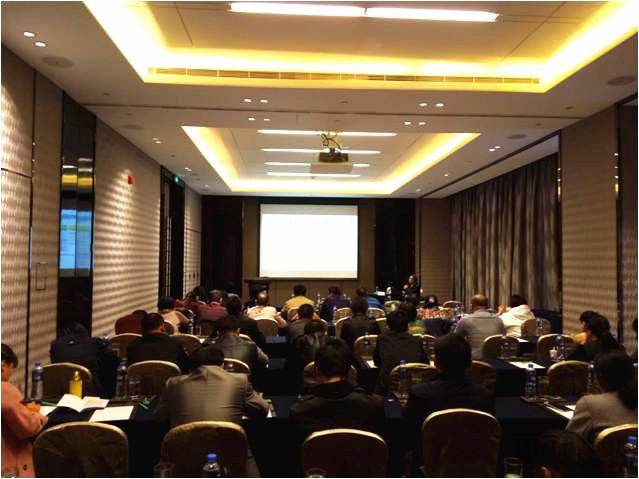
Trainees are undergoing training in the General Practice Faculty Training Program
From September to December 2017, the WeDoctor General Practice Academy launched the “Spring Seedling Program,” providing training in general practice knowledge and skills, as well as primary healthcare management, to 402 rural general practitioners from Longchuan County, Yunnan Province, and Jianhe County, Guizhou Province, along with 26 administrators from township health centers. The program adopted a blended learning model combining online study, offline instruction, and practical training in Shanghai. Additionally, the Academy will conduct a two-year training program for 608 rural general practitioners in Zijin County, Guangdong Province, aimed at enhancing their comprehensive service delivery and healthcare management capabilities at the grassroots level.
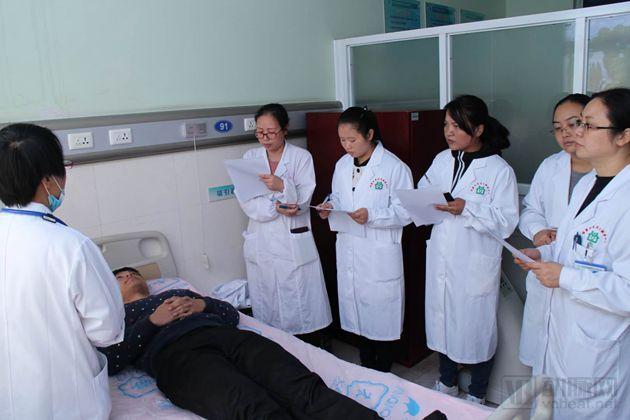
Trainees Learn Chronic Disease Management at Community Health Service Centers
In 2017, the WeDoctor General Practice Academy’s online training platform was officially launched. Leveraging its mobile app and official website, the platform curates high-quality video courses delivered by experts in general practice and pushes them to primary-care physicians across the country. It integrates offline training workshops with online learning guidance and assessment, enabling real-time tracking and management of participants’ progress. By embracing “Internet + General Practice Education,” the platform has broken down geographical and temporal barriers, earning widespread acclaim from learners.
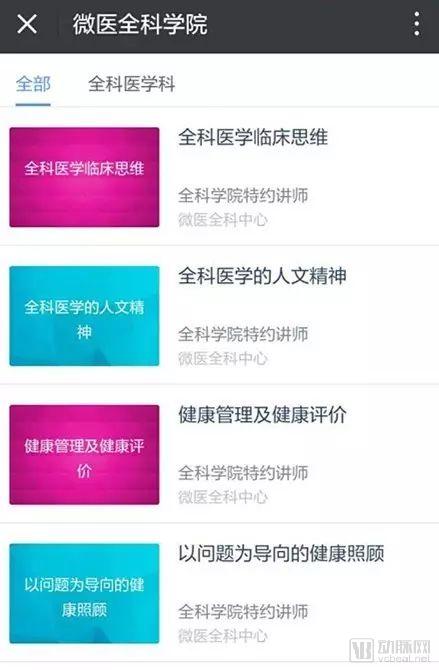
Micro Medical Academy Online Training Platform
According to Liao Jieyuan, Chairman of WeDoctor, in addition to its general practitioner training programs and targeted poverty alleviation support initiatives for rural doctors, WeDoctor will also participate in the establishment of Hainan Health Management College—the only university dedicated to health management in China. The company plans to develop the institution into a national training base for general practitioners and a continuing education platform for primary care physicians, thereby enhancing the endogenous capacity for faculty development in regions targeted by national poverty alleviation efforts and supporting the comprehensive improvement of competencies among grassroots doctors. Meanwhile, through collaborations with institutions such as Zhejiang University, WeDoctor has launched two medical artificial intelligence products—Ruiyi Intelligent Doctor and Huatuo Intelligent Doctor. These AI-driven systems will serve as “coaches” for primary care and family doctors, leveraging artificial intelligence assistance to enhance diagnostic and treatment capabilities at the grassroots level, ultimately transforming millions of primary care physicians into “super doctors.”