

DeLutong Biotech Files IPO Prospectus to Leverage World’s Only In Vivo CTC Capture Platform for Global Cancer Diagnostics Expansion
Working at CSPC Pharmaceutical Group16For several years, she served as General Manager at two subsidiaries under CSPC Pharmaceutical Group.and Group Vice President, yet at the peak of his careerSelectionResignation.
Against the backdrop of CSPC Pharmaceutical Group’s transformation from active pharmaceutical ingredients (APIs) to finished dosage forms, and further to innovative drugs, she led the company’s antibiotic formulations business to stand out among the “Big Four” antibiotic manufacturers. She also ventured into innovative drugs; under her leadership, NBP (Enbipu), CSPC’s independently developed innovative drug, successfully pioneered a model for the specialized promotion of homegrown innovative pharmaceuticals in China.
Yet, when she embarked on her first entrepreneurial venture at the age of 40, she chose to enter the medical device sector—a field with which she was not particularly familiar.
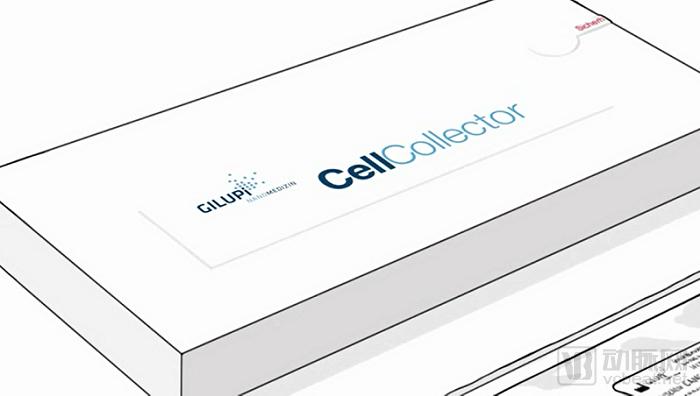
Gilupi is a German company specializing in the capture of rare cells from circulating blood and other biological fluids. The company’s core product, CellCollector, is a cell-capture device designed for in vivo CTC collection.
Xu Baozhi first encountered its product, CellCollector, in the second half of 2012; six months later, Delutong Company, which she had founded, acquired this German company.

Xu Baozhi, Founder of Delutong
At the time, she had left Shi Group less than a year earlier. Her former partner, Lü Qin, approached her with this product, hoping that she could leverage her more than ten years of experience and network in the pharmaceutical industry to help the German company seek industrial investors and business partners in China.。
As a senior executive at CSPC Pharmaceutical Group, she was approached by numerous headhunting firms in China after her resignation, but she politely declined all offers. In her view, CSPC Pharmaceutical Group is already one of the most prestigious pharmaceutical companies in China, and moving to another company of the same type held little appeal for her.
During the pitch for CellCollector, Xu Baozhi herself was moved by the product.
She believes that, in light of the development patterns of the pharmaceutical industry in advanced countries, the strategic direction of “oncology + medical devices” is correct, and it also presents an opportunity for her to adjust the industry structure.
From Minority Stake to Controlling Interest
Although the technology originated from a German company, her decade-plus of industry experience told her that to safeguard the interests of domestic companies, she could not simply act as an agent; instead, she needed to participate in GILUPI’s decision-making processes and retain the right to voice opinions and stay informed.
“At the outset of our collaboration, we established a plan to take a minority stake. We did not intend to assume controlling interest at that time; rather, we sought shareholder status to stay informed about the company’s operations, thereby safeguarding our interests in the event of significant corporate changes,” Xu Baozhi told VCBeat.
As Xu Baozhi gained a deeper understanding of the product and market during the registration process, she realized that beyond CTC capture, the product could be expanded into its own series of products and services. Ultimately, Delutong decided to acquire a controlling stake in Gilupi.
CellCollector is a CTC collection device. Beyond CTC sampling, it can be expanded into a comprehensive upstream and downstream product line, including detection kits and automated testing equipment and instruments. However, Delutong was not the only company to recognize this potential; during the acquisition process, it faced competition from two rivals—one from Europe and one from the United States.
At that time, the U.S. company was further ahead in its process than Deloitte, and overseas mergers and acquisitions by Chinese enterprises were still uncommon in 2012. Language barriers, differences in environment and culture, market disparities, coupled with the fact that China’s foreign exchange controls were perceived by Westerners as stringent, led German companies to even worry about whether they would receive payment.
Despite being at a disadvantage in many aspects, the German company ultimately chose Delutong.
“At that time, we finalized the agreement in China. That evening, everyone sat down to discuss why they had chosen us over U.S. companies,” recalled Xu Baozhi. “I believe two factors impressed them most: first, the market; second, our team.”
In terms of the market, China’s cancer incidence rate and number of new cases are both higher than those in the United States. Considering China’s medical insurance policies and the market’s acceptance of new products, China’s oncology testing market is bound to surpass that of the United States. Furthermore, as there are far fewer companies with proprietary CTC (circulating tumor cell) capture technologies in China than in the United States, these companies recognize that they will face less competitive pressure in the Chinese market.
Furthermore, given that the German company’s products are still imperfect and its team is more R&D-focused, it requires a team with extensive market experience and industrial background to help refine its products, thereby maximizing corporate value. In contrast, the U.S. entity is an investment firm, for which this represents purely a financial investment.
Undoubtedly, as an industrial investor, Delutong is more likely to impress them.
Introduce Johnson & Johnson’s CellSearch marketing team to build market capabilities
In addition to some former colleagues from CSPC Pharmaceutical Group, Xu Baozhi also brought in the core marketing team for Johnson & Johnson’s CellSearch in China.
CellSearch is the world’s first and only commercially available product for detecting circulating tumor cells (CTCs) that has received U.S. FDA clearance for use in the management of malignant diseases; in China, it is approved for use in the management of metastatic breast cancer.
However, due to inherent product defects (low detection rate) and the failure to develop a second-generation product, CellSearch was officially discontinued in 2016.
Xu Baozhi revealed that although CellSearch was discontinued due to its inherent limitations, the marketing team itself has always been optimistic about the Chinese tumor liquid biopsy market. Unfortunately, as the company headquarters is located in the United States, it was difficult for their small marketing team to convey their recommendations effectively.
When Xu Baozhi reached out to them, many domestic peer companies also approached them. After all, a marketing team with practical experience in the Chinese market is a rare find.
When asked how she successfully secured this team, Xu Baozhi responded, “I posed a question to them: Would you prefer to select a product with high similarity to your previous offerings, or one that is entirely different and can address the shortcomings of your prior products?”
Ultimately, they chose the latter, as Deluotong’s products differ most significantly from CellSearch.
Click to view video introduction
CellSearch employs an immunomagnetic affinity capture technique that relies on the binding of antibodies to antigens specifically expressed on the surface of tumor cells. In contrast, CellCollector is the world’s only product utilizing in vivo capture.
Ex vivo capture products generally require enrichment in 3–10 mL of blood. In contrast, the CellCollector directly inserts its functional zone into the antecubital vein via an indwelling needle to perform CTC enrichment within the bloodstream.
The functional zone, measuring two centimeters in length, is coated with trace amounts of specialized antibodies. During the collection process, this zone remains within the blood vessel for thirty minutes, enabling the specific capture of circulating tumor cells through the binding of antibodies to antigens on the surface of tumor cells.
Compared with other cell capture products, CellCollector’s product form resembles a traditional biopsy needle, allowing it to be directly integrated into hospital departments and used by physicians, just like other medical consumables and pharmaceuticals.
“Nearly all founders of CTC companies in the industry come from technical backgrounds; I am the least technically versed person in this field,” she added. “I know which marketing strategies should be adopted for different products and understand the subtle distinctions among various marketing approaches, so I may be easier to communicate with from their perspective.”
Drug-Device Combination Products or Medical Devices: CFDA’s Classification Determination
CellCollecto obtained CFDA registration approval in 2017. Regarding the approval process, Xu Baozhi stated that it was not easy. The company began preparations in 2013, but did not receive formal approval until 2017.
“The greatest challenge was determining the product classification—whether it should be categorized as a medical device or as a drug-device combination product. There was considerable disagreement among experts at the time,” said Xu Baozhi. “We began preparations in 2013 and only completed the classification determination in 2015.”
In vitro diagnostic products are designed for direct quantitative and qualitative testing, whereas the core function of CellCollector is sample collection, with trace amounts of antibodies coated on its sampling needle. Consequently, some experts at the time considered it to be a combination product comprising both a drug and a medical device.
However, the antibody content in the product is extremely low, meeting the FDA’s definition of a microdose, and it undergoes no absorption or metabolism in vivo. After detailed review and discussion, the expert panel reached a consensus to classify CellCollector as a Class III medical device.
Nevertheless, because the product is coated with antibodies, the requirements for product registration and approval are exceptionally stringent, approaching the review standards for combination products (drug-device combinations), with the assessment of data related to the antibody component constituting a significant proportion of the review.
“A significant portion of our core team has a background in pharmaceuticals, and the successful completion of product registration was also partly due to chance,” added Xu Baozhi.
Next Step: Marketing and the Upstream-Downstream Value Chain
With the registration of core products completed and the marketing team largely established, the company has entered a phase of large-scale commercial replication.
After several years of development, the prototype of the automated counting machine for core products has completed R&D and is about to begin product engineering. In addition, the company has established strong partnerships in downstream testing (including PCR and NGS companies), basically completing the closed loop of product services.
At the market level, the company has established R&D collaborations across China based on different cancer types and built connections with nearly 100 hospitals, 30 of which are currently using Delutong’s products. Moving forward, the company will expand its clinical marketing team to reach more clinical institutions.
In addition to cell capture, CTC-based liquid biopsy also involves subsequent detection steps. The CellCollector product has made it possible to bring the cell capture process back to hospitals or specific departments; however, in most cases, the subsequent detection steps still rely on third-party testing centers. Physicians would prefer automated detection equipment that allows the entire detection process to be completed within the hospital.
Based on this, Delutong has launched an automated device for detecting tumor cell surface proteins, enabling physicians to perform staining and quantify the expression levels of cell surface-specific proteins within their institutions.
In the downstream testing segment, the Company currently enhances its downstream testing services primarily by establishing outsourcing partnerships with PCR and NGS companies. The Company is collaborating with a German firm to develop a proprietary PCR analyzer, with preliminary development expected to be completed by August 2018.
Furthermore, the company has established a partnership with a German biotechnology firm to jointly improve the coating technology of CellCollector and expand its application to the capture of other rare cell types beyond tumor cells.
“We aim to leverage CellCollector as a catalyst to penetrate the tumor diagnosis and minimally invasive therapy market, and we will gradually expand our product portfolio in the fields of oncology IVD and medical devices,” disclosed Xu Baozhi.
It is reported that since its establishment, the company has successively completed two rounds of financing, with the third round currently underway.