

In-Hospital Caregiver Industry: Industrialization in Tier-1 and Tier-2 Cities, with Room for Standardization and Regulatory Oversight
As early as 1978, the former Ministry of Health’s “Principles for Organizational Staffing in General Hospitals (Trial Draft)” stipulated that the ratio of hospital beds to nurses in medical and health institutions shall not be lower than 1:0.4. On May 12, 2008, the State Council promulgated the “Regulations on Nurses,” once again emphasizing in legal form that “the number of nurses staffed by medical and health institutions shall not be lower than the nurse staffing standards prescribed by the health administrative department of the State Council.” Ten years have passed,The nurse-to-bed ratio of 1:0.4 for general wards in tertiary hospitals remains a “reference standard” that is difficult to implement.
On one hand, the rapid growth in domestic nursing demand coupled with long-term underinvestment in nursing care has led to non-compliance with hospital “bed-to-nurse” ratios and a severe shortage of nursing staff. On the other hand, the accelerating pace of life has left urban residents with insufficient time to provide bedside companionship for patients in hospitals. The convergence of these multiple factors has directly given rise to an intermediary industry chain—caregiving companies—thereby fostering the emergence and development of the professional caregiver sector.
“Loose cannons” is a term that frequently appears in journalists’ research on the caregiving industry, where high turnover has brought greater uncertainty to the profession.
In the hospital, as the primary setting for diagnosis and treatment, what role do patient care attendants actually play? Which stakeholders’ interests are involved in the in-hospital patient care attendant industry?VCBeat (WeChat: vcbeat)The reporter reviewed relevant literature and conducted interviews with companies to present the details of this industry.
I. Policy: Regulations exist, but their binding force is relatively weak
With the gradual development and widespread adoption of the caregiver industry, governments at all levels in China have successively introduced relevant policies to promote more scientific and institutionalized management of caregivers. For instance, in 1997, the former Ministry of Health issued the "Notice on Further Strengthening Nursing Management Work," which made preliminary provisions regarding matters such as certification requirements for caregivers, their employment, and overall management.
In April 2001, the Beijing Municipal Health Bureau, and in 2004, the Shanghai Municipal Health Bureau, respectively issued documents to regulate the management of nursing aide companies, social insurance for nursing aides, and the administration of industry associations.
Subsequently, the Shanghai Municipal Human Resources and Social Security Bureau issued the “Notice on Strengthening the Management of External Hospital Caregivers in This City” in 2009 and the “Notice on Piloting Flexible Employment Registration for Four Categories of Non-Local Practitioners in Shanghai, Including ‘External Hospital Caregivers’” in 2013. These measures established regulatory provisions for external caregivers and implemented a flexible employment registration system for non-local practitioners working in Shanghai.
In July 2013, the Provincial Health and Family Planning Commission, the Fujian Provincial Department of Human Resources and Social Security, and the Fujian Provincial Price Bureau issued the “Opinions on Launching Pilot Work to Standardize the Management of Hospital Nursing Assistants.” The Opinions stipulate, under the section “Establishing a Nursing Assistant Management Body,” that nursing assistants may be employed by hospitals, dispatched by labor intermediary agencies, or hired by patients through the hospital. Hospitals shall establish a nursing assistant management body responsible for the daily administrative management of nursing assistants.
Where hospitals or patients engage nursing assistants through hospital employment, the nursing assistant management body is established by the hospital. The Nursing Department of the hospital assumes centralized responsibility for the professional management of nursing assistants, while the head nurses of each nursing unit are specifically responsible for work assignments and quality supervision of nursing assistants.
The aforementioned policies have played a positive role in promoting the standardized management of nursing attendants and the orderly development of the nursing attendant industry. However, due to the weak binding force of relevant regulations, enforcement efforts need to be strengthened in certain regions.
II. Fragmented Market: Traditional Caregiving Firms Often Maintain Long-Term, Stable Outsourcing Relationships with Hospitals
In terms of market size for hospital care, the patient attendant industry boasts a substantial market. According to data from the "2016 Statistical Bulletin on the Development of Health and Family Planning in China" issued by the National Health and Family Planning Commission, approximately 170 million patients were admitted to hospitals nationwide in 2016. The bed occupancy rate was 85.3% (91.0% for public hospitals), and the average length of stay for discharged patients was 9.4 days (9.6 days for public hospitals). The average market price for daily nursing care ranged from RMB 150 to 170. While there is no precise data on the proportion of patients requiring nursing care, a conservative estimate places it at around 10%. Consequently, the exact market size remains difficult to calculate. However, according to industry insiders, demand for postoperative nursing care is particularly high in departments such as neurology, neurosurgery, orthopedics, and thoracic surgery.
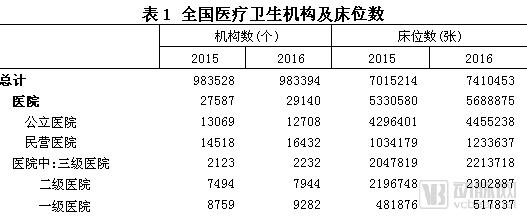
Note: This table is incomplete
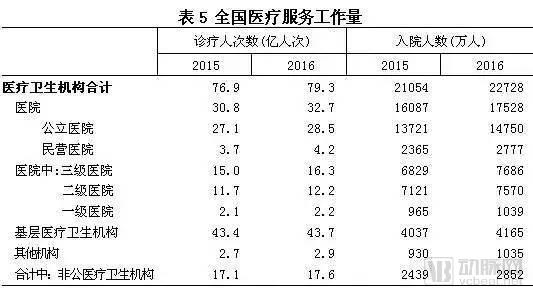
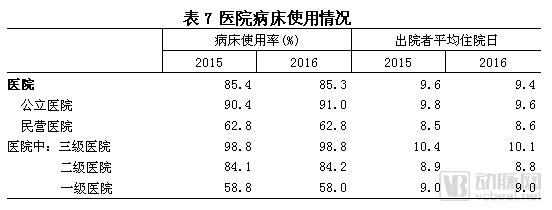
Source: Partial data extracted from the "Statistical Bulletin on the Development of Health and Family Planning in China in 2016" issued by the National Health and Family Planning Commission
With the continuous reform and development of China's healthcare sector, societal demand for refined nursing care has been steadily increasing, and the patient care attendant industry is expanding. Companies that provide patient care attendants and nursing services to hospitals are commonly referred to as "caregiving companies."
Generally speaking, the business activities of patient escort companies within hospital wards mainly fall into two categories:First, entering hospitals through the bidding process to provide caregivers to patients, with patients being the primary payers; second, signing labor dispatch agreements with hospitals to contract out patient companion care services, i.e., providing nursing assistants to hospitals, with the hospital being the payer for such services.
The distinction between patient care attendants and nursing assistants lies in the level of care and skill requirements. Nursing assistants primarily undertake relatively specialized nursing tasks, such as critical care involving the operation and monitoring of medical equipment, with their main responsibility being to assist nurses. In contrast, patient care attendants focus mainly on activities of daily living (ADLs), including assisting patients with meals, elimination, bathing, and bed unit hygiene.
Ma Jie, Deputy General Manager of Beijing Kangjian Afu Property Management Co., Ltd. (hereinafter referred to as “Afu Care”), revealed thatCurrently, in the hospital market, professional caregiving companies, domestic service agencies, human resources firms, and property management companies are all providing caregiver services.For example, Aifu Care’s services encompass hospital property management, patient care attendant services, and more.
For hospitals and patients requiring nursing care, caregivers are entirely independent third parties who have a contractual relationship with the hospital, rather than an administrative subordination. AndThe primary role of caregivers is to provide daily living care for patients. As this service is not included in the hospital's service offerings, medical insurance does not cover these costs.
Ma Jie told VCBeat that in the relatively standardized Beijing market for patient-caregiver services, the prevailing model involves companies paying hospitals a certain management fee. In return, hospitals allow caregiver agencies to operate on-site and provide services to patients, with clearly defined responsibilities and rights for both parties. Hospitals do not compel patients to hire caregivers through designated channels; instead, caregiving fees are settled directly between patients and caregivers, without direct involvement from the hospital. Furthermore, to ensure unified management and clear accountability, larger hospitals typically permit only one professional caregiver company to operate within their premises.
In regions outside Beijing, the majority of hospital patient escort services are managed by outsourced property management and other third-party companies, with no administrative fees involved. This is because patient escort work inherently carries high risks, and managing fragmented caregivers poses significant challenges for hospitals. Centralized operation and management by outsourcing firms not only facilitate hospital administration but also provide patients with a relatively greater sense of security.
"Beijing has the largest and most mature market for patient caregivers in China, with relatively standardized market mechanisms. 'Where there are hospitals, there are caregivers,' and companies providing caregiver services generally possess labor dispatch qualifications. Large hospitals at Level II Grade A or above typically sign management agreements with companies for caregiver services, whereas some smaller hospitals still rely on freelance caregivers."
According to statistics from the Beijing Nursing Association, by the end of 2016, there were 59 patient care attendant companies of varying sizes operating across 110 hospitals in Beijing. Each company served different hospitals, with varying scales of operation, resulting in a relatively fragmented market.
For the traditional in-hospital caregiver industry, Aifu Nursing’s model is quite typical. Its 14 years of deep engagement in hospitals have allowed it to accumulate substantial resources. Currently, Aifu Nursing collaborates with approximately 20 Grade IIIA hospitals in Beijing, including Xuanwu Hospital and Peking University People’s Hospital.
Although hospitals do not directly participate in service transactions between patients and caregivers, they exert certain regulatory oversight over the management of caregiving agencies operating within their facilities. This includes standardizing caregiver uniforms, providing guidance on disease control and prevention, and offering fire safety instructions, all of which fall under the scope of logistical management.
Another patient-care company based in Tianjin, Taixin Kanghu, has expanded its operations to 14 provinces, including Heilongjiang, Jilin, Liaoning, Henan, and Hebei. It has established 11 branch offices, all under the direct vertical management of Taixin Kanghu, with more than 300 managerial staff. Currently, Taixin Kanghu collaborates with approximately 100 hospitals, covering general hospitals and specialized rehabilitation hospitals, among others.
Liu Mingyu, Director of the Fourth Business Division at Taixin Kanghu, stated: “The socialization of hospital logistical services has gradually become a trend,“Professional caregiving companies typically operate only after obtaining hospital authorization and upon mutual alignment of values.” Meanwhile,The entry of patient escort companies into hospitals also, to some extent, provides services to hospitals in areas such as environmental improvement, enhancement of service reputation, and overall improvement of high-quality nursing care.
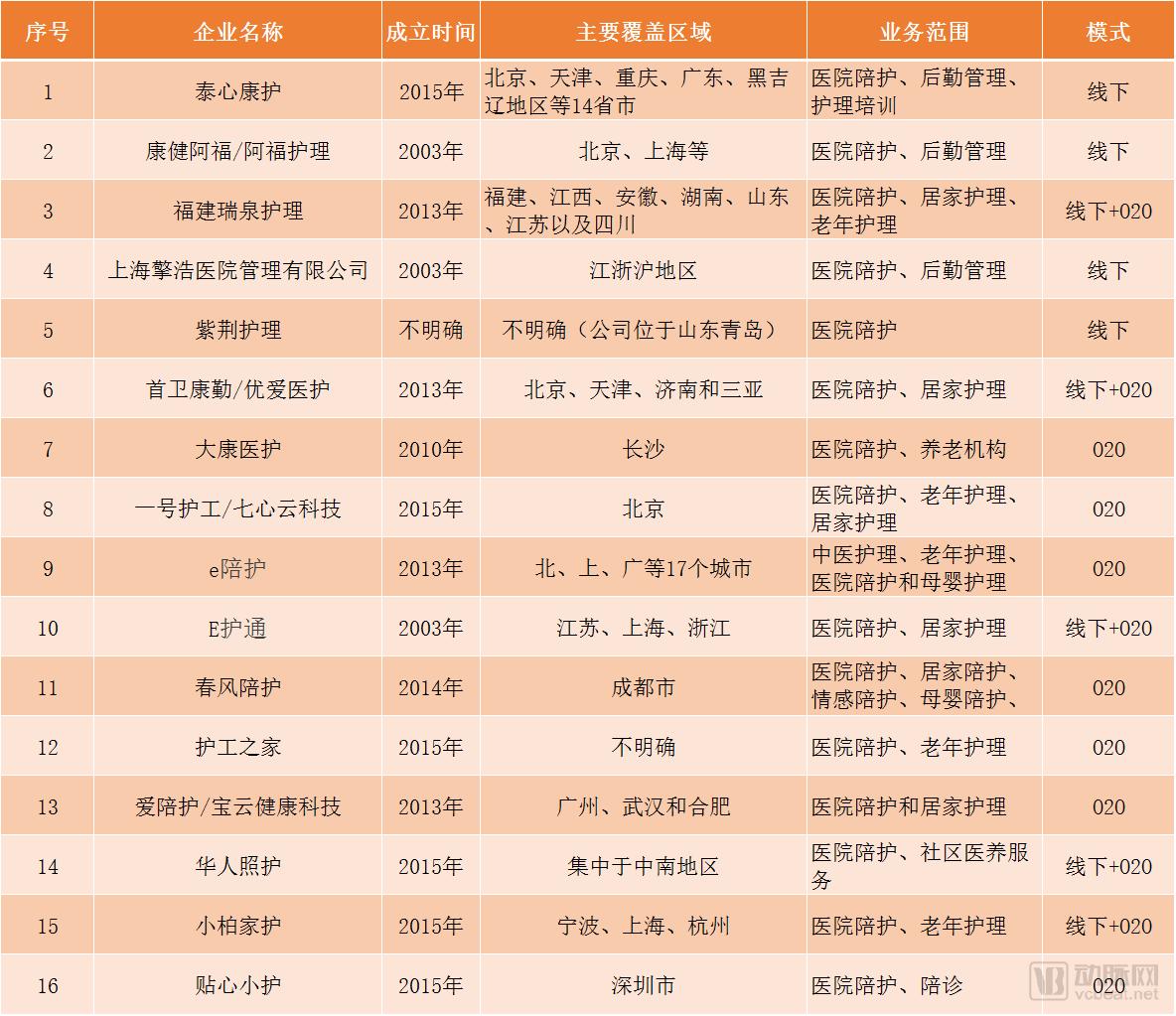
VCBeat’s Statistics on Selected Patient Escort Companies and Their Business Models (Source: Public Information Search)
Note: Due to the highly fragmented nature of domestic service and property management companies, statistics are limited to professional caregiving enterprises or those specializing in caregiver services.
III. O2O Caregiving Enterprises: Diversified Services, with In-Hospital Operations Still Primarily Focused on Offline Patient Referrals
Among the enterprises covered by VCBeat, in addition to those with relatively traditional business models, a wave of internet-driven startups has emerged. These companies leverage the internet as a platform to provide in-hospital patient escort services through an Online-to-Offline (O2O) model. The key distinction between these enterprises and the aforementioned hospital-based providers lies inO2O-based caregiving companies often operate via mobile platforms, offering patients greater autonomy and more flexible service options. Moreover, these enterprises typically provide not only in-hospital companionship but also a range of nursing services, including long-term care and home-based companionship.
Xiaobojiahu, established just over two years ago, is a “newcomer” compared to traditional patient escort companies. Although it operates as an internet-based enterprise, Zhao Xia, co-founder of Xiaobojiahu, told reporters that their initial in-hospital patient escort services were still acquired through offline channels. “Patient escort services are non-standardized, person-to-person services. The key challenge in user experience lies in the precision of matching caregivers with patients, which requires consideration of numerous factors such as arrival time, skills, gender, and personality. Therefore, we have registered over 100 tags for each ‘Home Care Specialist’ (Note: At Xiaobojiahu, all personnel providing nursing services are uniformly referred to as ‘Home Care Specialists’) and implemented classification and grading systems, significantly improving the match between customer service needs and available caregivers, thereby effectively enhancing service satisfaction.”
Zhao Xia told reporters,Eighty percent of Xiaobojiahu’s revenue is derived from hospital settings. In large general hospitals, unlike the traditional model where caregiving agencies sign exclusive agreements with hospitals, Xiaobojiahu focuses on departments with high nursing dependency, such as neurology, orthopedics, and cardiac surgery. In rehabilitation hospitals, Xiaobojiahu provides comprehensive coverage by contracting out the entire patient escort services.Xiaobojiahu has currently partnered with more than 20 general and specialized hospitals in cities such as Ningbo, Shanghai, and Hangzhou.
Similar to traditional caregiving agencies, Xiaobojiahu acquires customers within hospitals through partnerships with medical institutions. It employs a unified identification system for patient referral, such as standardized caregiver uniforms and name badges (containing personal QR codes), to expose users to brand identifiers. Consequently, users can place orders by scanning the QR code or access services facilitated by on-site supervisors stationed at the hospital.
Furthermore, Xiaobojiahu’s self-developed WeChat service account online ordering system has achieved significantly higher user acceptance for repeat purchases by children on behalf of their parents or for customers scheduling previously assigned caregivers upon readmission, thereby substantially reducing promotional costs.
IV. Caregiver Population Labels: Low Income, Low Educational Attainment, Migrant Population
Caregivers constitute a relatively distinct demographic with clearly defined characteristics. They are predominantly low-income, less-educated individuals aged 30 to 50, with women outnumbering men. The vast majority are migrant workers in urban areas.
In terms of recruitment channels, when enterprises enter a hospital, screening and incorporating existing nursing assistants is one approach. Additionally, the nursing assistant community exhibits clustering characteristics, with individuals typically entering the profession through referrals (“people bringing in people”). Among these, “referrals from fellow townspeople” constitute another important channel.
Afu Nursing has already assembled a 2,000-strong caregiving team at its flagship company in Beijing. Ma Jie stated, “A large number of employees are recruited through referrals from fellow villagers; in some projects, as many as 20%–30% of the staff may come from the same village.”
Regarding the educational or competency requirements for employees, traditional enterprises have relatively low standards, with basic prerequisites being “literacy” and “numeracy.” For O2O platform-based companies, an additional requirement is the “ability to operate smartphones/smart systems,” as staff need to perform tasks within these systems, such as filling out nursing logs. Consequently, the overall educational attainment of their workforce is higher than the market average.
By the end of 2017, Xiaobojiahu’s team of home care nurses had reached 1,800 within two years, up from just 900 in 2016, marking a rapid expansion of its workforce over the one-year period.
Unlike the other two companies, Taixin Kanghu’s recruitment channels include additional collaborations with the government.For example, in the Lüliang Mountain region of Shanxi Province, the export of nursing aide labor has become one of the effective means for the government to implement its poverty alleviation campaign and achieve targeted poverty reduction.Taixin Kanghu responded to the call of “training one person, employing one person, and lifting one person out of poverty,” and cooperated with the Shanxi Provincial Health and Family Planning Commission to effectively align with the labor export program for nursing aides in the Lüliang region of Shanxi Province. The “Lüliang Mountain Nursing Aides” brand has gradually taken shape, in which professional caregiving enterprises such as Taixin Kanghu have playedAbsorbing the Workforcerole.
Furthermore, Taixin Kanghu has partnered with the China Revolutionary Base Areas Promotion Association, the Chongqing Household Service Industry Incubation Base, and the Gansu Provincial Women's Federation to facilitate labor supply. Currently, Taixin Kanghu’s caregiving team comprises 3,000 members. Although the caregiver industry is characterized by high workforce turnover and Taixin Kanghu operates across 14 cities, the company successfully navigates the industry’s recurring “labor shortages” during peak demand periods, holidays, and the busy wheat harvest season. This resilience is attributed to its network of partner training schools nationwide and its strategy of enhancing overall caregiver benefits to improve employee retention.
V. Revenue sharing between enterprises and caregivers is typically based on a fixed ratio, while traditional caregiver agencies are beginning to explore value-added services
Public perception of caregivers is generally that they are low-paid and overworked. Due to excessive commission fees charged by some non-compliant agencies and inadequate employee benefits such as insurance, caregiving companies are often labeled as “exploitative.” The so-called “unlicensed caregivers” in the market are mostly individuals who choose to work independently in a “guerrilla” style, either to avoid paying franchise fees or to evade agency commissions.
After becoming caregivers, this group typically earns RMB 150–170 per day, in line with the industry average. Professional nursing care for patients who are critically ill, disabled, or semi-disabled after surgery usually costs RMB 180–200 per day.For caregiving agencies that rate their nursing staff, such as Taixin Kanghu and Xiaobojiahu, daily income tends to be slightly above the market average as years of service increase.
Upon reviewing relevant materials, reporters found that the revenue-sharing ratio between traditional caregiving agencies and care workers was typically around 3:7. In other words, the company would take a 30% cut from the daily service fee. According to market dynamics, the caregiving industry is generally regarded as a “low-cost,” “high-revenue” business.
However, as the market becomes more standardized and the caregiving industry reaches relative maturity in major cities such as Beijing, Shanghai, and Guangzhou, the commission rates for some companies are gradually decreasing.The operational costs of an enterprise include hospital management fees, as well as expenses for employee training and logistics. New O2O caregiving enterprises typically also bear significant costs for building information technology platforms.
According to public information from Xiaobojiahu, its service prices generally range from 160 to 300 yuan. Employee income is managed transparently, with each home care specialist having an independent wallet in the system; their monthly incomes vary between 4,500 and 9,000 yuan. After two years of operation, Xiaobojiahu has accumulated a total of 20,000 service instances.
According to the statistical data from Afu Nursing,For general hospitals with every 2,000 beds, the daily workload can reach 150 to 200 patient beds, and the daily wage of nursing assistants is on par with the market average (Around RMB 150–170)。According to Ma Jie, “After deducting costs such as hospital management fees, nearly every hospital project is profitable. This includes not only patient escort services but also property management and the outsourcing of hospital nursing attendants. Almost all contracts for these projects are signed at a scale of tens of millions of yuan.”
Taixin Kanghu serves approximately 500,000 patient-visits annually. Caregivers’ daily nursing income ranges from RMB 160 to RMB 400, depending on their star rating assessed through nursing evaluations, with an average service duration of 5–10 days.Among this, 80%-90% of the revenue is retained by the caregivers themselves, with the company taking a 10%-20% share, which is lower than the market average.Liu Mingyu emphasized, “The 10%-20% revenue share covers expenses such as staff management costs, uniforms, and employee benefits; this industry is actually characterized by thin profit margins.” With plans for an initial public offering (IPO), Taixin Kanghu is currently focusing on “volume,” aiming to achieve its IPO goal through expansion in scale.
It is worth noting that the relationship between Taixin Kanghu and hospitals is more akin to a mutually beneficial partnership, with no management fees paid to the hospitals. “We have our own comprehensive suite of software solutions. For instance, we can provide hospitals with a free scheduling system for their nursing staff. Furthermore, the patient escort and logistical support services we offer genuinely address hospital operational challenges. Therefore, no management fees are involved,” said Liu Mingyu.
Currently, Taixin Kanghu is exploring short-, medium-, and long-term profit points through value-added services. Once its patient escort services reach maturity, the company plans to introduce nursing assistive devices and equipment. “We aim to expand the overall business scope, covering not only the patient escort segment but also training and elderly care. In the future, we intend to achieve profitability by diversifying our value-added service offerings.”
VI. The caregiver market is uneven in quality; the focus of standardization lies in training, standardized processes, and effective feedback
It is precisely due to the low income levels and educational attainment of caregivers, coupled with a fragmented market and service landscape that poses regulatory challenges, that bottlenecks have emerged in the development of this industry.
As early as 2007, nine hospitals in Beijing began piloting a nursing assistant system to explore pathways for gradually replacing informal caregivers with trained nursing assistants. One perspective holds that substituting informal caregivers with professionally trained nursing assistants can both strengthen the nursing workforce and standardize hospital management. However, this shift has led to increased hospital costs.
In the second half of 2016, several provinces and municipalities, including Shandong, Jiangsu, Sichuan, and Chongqing, increased nursing care fees by several folds. However, even in Jiangsu Province, which had the highest rates, the fee for Level I nursing care was RMB 90 per day, still leaving a considerable gap compared to the cost of hiring private caregivers. Relevant authorities once estimated that the cost of providing Level I nursing care was approximately RMB 96 per patient per day. Consequently, for many years, nursing services in hospitals have been regarded as a “loss-making endeavor.”
However, due to the uneven quality and frequent problems in the caregiver market, some industry insiders have pointed out that integrating caregiver services into hospital management systems is the direction for hospital development.
Caregiving companies manage nursing assistants by, on one hand, integrating fragmented independent caregivers and, on the other, standardizing the practices of existing staff.
According to news data from a 2013 survey of nursing assistants published in the Sichuan Daily, nursing assistants in Sichuan Province fall into three categories: first, those employed by property management or nursing assistant companies, accounting for 40% of hospital-based nursing assistants; second, individuals who have spontaneously entered the field, commonly referred to as “unlicensed nursing assistants” and frequently highlighted in recent news reports, representing 50%; and third, those formally managed by hospitals, comprising 10%.
Liu Mingyu told reporters, “The caregiving industry has gradually matured in first-tier cities such as Beijing, Shanghai, and Guangzhou, forming an industrial cluster model; however, fragmented and unregulated practices still persist in second- and third-tier cities.”This has also led to regional imbalances similar to those observed in China's economic development.
For hospitals, the fragmented segment of informal caregivers represents a risk. Consequently, caregiving companies operating within hospitals often engage in the “formal integration” of so-called “unlicensed caregivers.” According to Liu Mingyu, after Taixin Kanghu enters a new hospital, it screens caregivers in accordance with company requirements. Under a merit-based system that retains the best and eliminates the least competent, those who meet the criteria and are willing to join the company are “brought on board.” “We do not charge any fees to caregivers who choose to join us; instead, we provide uniforms, accommodation, and other benefits free of charge to help address their logistical needs. For those unwilling to join, we take measures to encourage their departure.”
The contradiction between the low skill level of caregivers in nursing services and the professionalism required by patients has led to societal "misunderstandings" of the caregiving industry.To dispel stereotypes such as “unlicensed caregivers” and “lack of protections,” companies often prioritize training, which serves as the most direct approach to mitigating risks and enhancing service quality. According to observations by VCBeat, while companies vary in their employee development and training methods, the underlying principle remains consistent: standardized and normalized processes are indispensable.
Ma Jie believes that “innovating management models to align with industry characteristics” is the key to addressing the existing problems in the caregiver market.“Caregiving is more practice-oriented than theory-based. Therefore, in addition to pre-job training, Aifu Nursing implements a mentorship-based learning program, cultivating a team of clinical instructors to facilitate learning in practical settings.” After completing preliminary skills “literacy” training, caregivers must also pass the qualification examination for medical institution nursing assistants, organized by the local Health and Family Planning Commission and the Human Resources Bureau, before working with certification.
Afu Care has also developed instructional demonstration videos, utilizing scenario-based teaching to help employees get up to speed more quickly. Furthermore, for all projects involving caregiving staff, a dedicated training instructor is assigned to conduct daily on-site inspections and instruction, ensuring the consistent quality of caregivers’ skills.
Furthermore, in the post-service feedback phase, Aifu Nursing conducts dedicated follow-up calls 72 hours after service delivery to assess customer satisfaction, achieving a contact rate of up to 75%. Based on the feedback collected, the company has established behavioral standards comprising “10 Good Practices for Caregivers” and “15 Bad Practices for Caregivers,” developed a scoring system, and implemented a reward and penalty mechanism for caregivers.
China Blue-Collar Platform is the employee training platform of Taixin Kanghu. Through cooperation with government departments such as the National Health and Family Planning Commission, Taixin Kanghu conducts initial screening during the selection process. After integrating individual resources, candidates are dispatched to various local training institutions under the China Blue-Collar Platform for secondary training, and then allocated to different projects for deployment, thereby ensuring a stable supply of manpower.
Liu Mingyu emphasized, “Our entry into this market is aimed at establishing access standards for the caregiving industry. Taixin Kanghu aspires to become a leader in this sector by building a standardized system and improving the living and working conditions of caregivers.”
In addition, both Taixin Kanghu and Xiaobojiahu have adopted commercial insurance models to provide coverage for employees and patients, thereby managing potential risks in service delivery.
Not limited to offline training, Xiaobojiahu has also developed an E-learning online system, requiring home care specialists to complete more than four continuing education sessions and skill-level assessments annually. Zhao Xia emphasized“The establishment of standardized SOPs is a core philosophy embedded in the company’s management and operations. We aim to achieve rapid, large-scale expansion by standardizing traditionally non-standardized services such as hospital escort and home care, thereby providing essential business data support for future value-added services.”
In actual business operations and management, Xiaobojiahu provides home care nurses with standardized nursing kits, including blood pressure monitors, glucometers, and disinfection supplies. The "Home Care Nurse Service Log" has been digitized into an online process, allowing clients to review logs to understand the services provided, which also serves as a mechanism to supervise service quality. The star-level promotion model for home care nurses is designed based on multiple dimensions, such as skill level, service hours, and service evaluations, and is linked to income, thereby enhancing the nurses' engagement with the platform.
Summary
In China, the occupation of patient care attendant has not yet been clearly defined as a formal profession; it is a temporary auxiliary role positioned between domestic nannies and hospital nurses.
Although nursing assistants work in hospitals, they are not formal employees of the hospitals but are affiliated with professional nursing assistant management companies, operating under a socialized management model. Dedicated management personnel are fully responsible for all aspects, including recruitment, training, supervision, performance evaluation, and resignation. However, as nursing assistance is not yet recognized as a formal profession, relevant management systems are still being explored.
Currently, management standards vary across caregiver agencies, and the scientific rigor of their management practices remains to be validated. Deficiencies in caregiver training, compensation payment, and rights protection have led to persistently high rates of job-hopping and career changes among caregivers, posing significant challenges to maintaining workforce stability and achieving the long-term development of the caregiving industry.
However, market observations indicate that industrialization is driving positive development across the sector. The emergence of an industrialized landscape means that market share is being distributed among a greater number of enterprises. Under competitive pressure, services are becoming increasingly standardized, accompanied by the introduction of corresponding regulatory measures, thereby bringing greater standardization and regulation to the entire patient care attendant industry.
The traditional “commission-based” and “monopolistic” models have begun to undergo new changes with the integration of the internet. Companies providing caregiver services are no longer confined to mere labor outsourcing but are exploring diversified pathways. After all, hospitals serve as ideal channels for customer acquisition for these enterprises.
As this article draws to a close, we extend our special thanks to the following industry professionals for their support of VCBeat:
Co-Founder of Xiaobojiahu, Zhao Xia
Ma Jie, Deputy General Manager of Beijing Kangjian Afu Property Management Co., Ltd.
Liu Mingyu, Director of the Fourth Business Division, Taixin Kanghu
Zhang Xueli, founder of HuLianWang, and Xie Qi, Vice President of YiHuDaoJia, also contributed to this article.