

Nanochip Microneedle Technology by Natong Bio: Revolutionizing 165-Year-Old Injection Paradigm with Painless, Non-Invasive Transdermal Drug Delivery
"This is an innovation in human drug administration technology." — Forbes China
"This is a revolution in human cosmetic skincare." — Karl Popp, President of the American Society of Cosmetic Chemists
This is "Nanocrystal."
Injections and Medications: A Common Occurrence in Today’s Advanced Medical Era
In 1853, Alexander Wood of Scotland and Charles Pravaz of France first combined a syringe with a needle, an innovation that became the precursor to the modern syringe. While this invention has saved countless lives, it also claimed the lives of many physicians. Needlestick injuries are the primary route of transmission for hepatitis and HIV among healthcare workers.
It was not until 15 years ago that a father’s “unconventional” idea upended this invention, which had existed for 165 years.Why Are Injections Still So Painful for Children Today?“This compassionate question prompted deep reflection from scientist Xu Bai. He assembled a team of eight senior scientists to form an R&D group, determined to solve this global challenge.”
The team members hail from diverse fields, including semiconductor materials, new drug development, biopharmaceutical marketing, FDA regulatory submissions, clinical protocol design, and market promotion. Through the integration and synergy of these multidisciplinary expertise, they have initiated a series ofPainless Microneedling — Nano-ChipR&D journey, and established Suzhou Natong Bionanotechnology Ltd. (hereinafter referred to as“Natong Bio”)。
What is the “Najing” microneedle developed by Suzhou Natong Bionanotechnology Ltd.? It is aNovel Transdermal Drug Delivery Systems for Altering Drug Dosage Forms, which appears like a miniature seal on the surface, is crafted from high-purity single-crystal silicon engraved using nanotechnology, with needle tips measuring less than 80 nm in diameter.One-thousandth the thickness of a human hair。
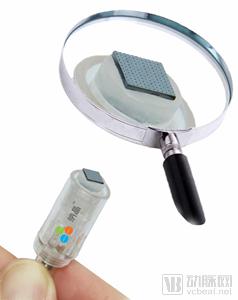
Gently press the chip against the skin, allowing the microneedles arranged in a matrix on its surface to penetrate the stratum corneum of the epidermis, which acts as a barrier to drugs, thereby creating thousands of drug delivery channels. Subsequently, apply skincare products or pharmaceutical agents to the treatment area; the medication will then gradually permeate into the epidermis, enabling quantitative and continuous drug delivery.Truly Achieve a Painless, Non-Invasive, Safe, and Efficient Drug Delivery Process。
According to VCBeat, Natong Biotechnology has secured more than ten exclusive licensed patents for this technology and has successively received honors such as the “Asia Innovation Award,” the U.S. “SVIEF” (Silicon Valley International Entrepreneurship Festival), “Red Herring,” and the “Annual Contribution Award” from the Society for Transdermal Drug Delivery.
On the path to turning dreams into reality, government support has played a crucial role in the success of Natong Bio.
According to Xu Bai, CEO of Natong Biotech, the initial implementation of the nano-microneedle project in China was launched through the National Key R&D Program (formerly known as the 863 Program) of the Ministry of Science and Technology. Subsequently, the team rapidly transformed the concept into a product, receiving strong support from various levels of government, including the Ministry of Science and Technology, Jiangsu Province, Suzhou City, and the Suzhou Industrial Park. It is reported that after reviewing their project, a minister from the Ministry of Science and Technology made the following remark:"In China today, there is no shortage of people who turn money into papers, but those who can turn papers into money are in short supply."
In 2018, marking the eleventh year of Suzhou Natong Bionanotechnology Ltd.’s development, the hardships of its founding still felt like yesterday to Xu Bai and his team.
At that time, venture capital in China was not as hot as it is now, and Johnson & Johnson and 3M in the United States were also developing similar microneedle products. Therefore, it was very difficult for Natong Bio to obtain financing in the United States. Even if it was just $5 million, no one was willing to invest.
The partners traveled extensively to Boston, New York, and Silicon Valley, and even went to Taiwan in 2005 to seek financing, but all attempts ultimately failed. Compounding the difficulty, the company was further impacted by the 2008 collapse of Lehman Brothers, the fourth-largest investment bank in the United States, which triggered a global financial crisis and made Natong Bio’s fundraising efforts even more challenging.
At a time when the company’s fundraising prospects appeared bleak and its R&D efforts had stalled, Suzhou Natong Bionanotechnology Ltd. received a RMB 10 million grant from the Suzhou Industrial Park. This support proved to be a timely lifeline; leveraging these funds, the company accelerated its R&D progress, swiftly completed all clinical trials for its medical devices, and successfully obtained certification from the China Food and Drug Administration (CFDA).
“Looking back, we are actually quite glad that we didn’t raise a large amount of funding at the time, because we were extremely cautious with every penny spent, which drove exceptionally high efficiency,” said Xu Bai.
Until 2010, SoftBank China proactively approached Natong Biotechnology and made its first investment since the financial crisis, helping Natong embark on the path to large-scale mass production—a partnership that has endured to this day. Natong Biotechnology soon completed its Series A financing round, yielding substantial returns for investors in that round. According to VCBeat, Natong Biotechnology is currently raising a Series B round valued between RMB 80 million and RMB 100 million, with several investors already preparing for capital injection.
With so many sectors in the healthcare industry, why did Natong Biotech specifically choose medical aesthetics? Xu Bai told reporters that nano-microneedles are, in essence, a drug delivery device. Looking at the global drug delivery market, it is difficult for companies specializing in drug delivery devices to achieve significant scale.Medical devices are akin to an unloaded gun; without ammunition or medication, they can never achieve clinical end-use application.Research on biologic macromolecule drugs is currently booming, yet over 95% of these biologics require injection for administration. However, most companies developing new drugs lack expertise in medical devices.
Therefore, drug delivery device companies such as Suzhou Natong Bionanotechnology Ltd. have ushered in development opportunities. However, cross-sector collaborations between pharmaceutical and medical device companies also present certain challenges. For instance, medical device companies often bear all the technical risks, while pharmaceutical companies reap the rewards. This imbalance in benefit distribution frequently constrains the growth of medical device enterprises.
Therefore, when envisioning the company’s strategic direction, the team selected the medical aesthetics industry, which features relatively low entry barriers and facilitates robust cash flow generation.This also laid the foundation for the company’s business model: first generating cash flow by entering the two mature markets of lifestyle beauty and professional salon-based aesthetics, then creating value in medical devices to penetrate the primary healthcare sector.
“Although we started with medical aesthetics, our ultimate goal is definitely to address medical issues,” emphasized Xu Bai.
Therefore,Currently, Natong Bio's business is primarily divided into three sectors: medical aesthetics, lifestyle beauty, and basic healthcare.
First,Penetrate the mass-market lifestyle beauty and skincare sector through online e-commerce, offline channel agency, and OEM models, directly selling nanocrystal consumables, penetration-enhancing devices, and high-efficacy beauty and skincare products to end consumers.
Secondly,Provide product technology licensing and supporting products to hospitals, aesthetic clinics, and other medical facilities through an offline distributor model.
Finally,After establishing stable cash flows in the lifestyle beauty and professional salon sectors, the company has expanded into the field of basic medical care. According to VCBeat, the company has conducted a series of clinical trials in areas such as insulin, topical anesthesia, and vaccines, and has partnered with renowned hospitals both domestically and internationally to provide technical support for clinical observations and research.
It has proven that Natong Bio’s choice was correct.In the past few years, Suzhou Natong Bionanotechnology Ltd. has established partnerships with over 100,000 professional beauty institutions, five world-class skincare brands, and more than 300 specialized manufacturers. Its products are exported to over 20 countries and regions, including the United Kingdom, France, the United States, South Korea, Japan, and Southeast Asia. Ranking first globally in shipment volume, the company expects to ship over 10 million nano-microneedle chips this year, generating revenue exceeding RMB 100 million.
In fact, in the pharmaceutical industry, besides Suzhou Natong Bionanotechnology Ltd., there are approximately 50 other companies worldwide also attempting to develop nanomicroneedle drug delivery systems. However, currently only Johnson & Johnson and 3M can be considered true competitors. Faced with such formidable rivals, Suzhou Natong Bionanotechnology Ltd. has opened up an alternative path to industrialization by modifying base materials and processing techniques.has become a global leader in the microneedle industry.
In the medical aesthetics industry, where product quality varies significantly, Natong Biology has still captured a 90% market share despite the chaotic market conditions.
“Facing China, a country known for imitation, Xu Bai remains highly optimistic about various acts of counterfeiting. ‘This may not be a bad thing; at least it shows that our direction is correct, otherwise others would not bother to imitate us. But to be honest, the technical barriers are quite high, and genuine replication is extremely difficult.’”
“This involves not only materials and processing techniques, but also triggers a restructuring of the entire industry chain and the re-development of products. For instance, a significant number of facial masks in the Chinese market fail to meet quality standards, leading to many cases of ‘hormone-dependent dermatitis.’ If substandard products are delivered via nanochip patches, it could cause unpredictable allergic reactions and side effects.”
Therefore, Xu Bai called on the state to strengthen intellectual property protection while encouraging independent innovation, emphasizing:“Only with strengthened intellectual property protection can enterprises have the intrinsic motivation for innovation; if everyone merely engages in blind copying, wouldn’t the driving force behind scientific and technological innovation be lost?”
In recent years, leveraging the momentum of the current aesthetics and minimally invasive cosmetic surgery industries, Natong Bio has applied its nanomicroneedle technology across various sectors of the medical aesthetics industry, including semi-permanent eyebrow tattooing, semi-permanent lip tinting, semi-permanent foundation treatments, as well as a series of beauty products and procedures such as eyelash enhancement, apple cheek augmentation, mesotherapy injections, facial masks, acne treatment, pigmentation removal, and wrinkle reduction.Non-invasive Penetration Enhancement and Delivery。
Furthermore, Suzhou Natong Bionanotechnology Ltd. is currently developing an in vitro diagnostic (IVD) product for assessing skin conditions. Xu Bai stated, “We have always positioned ourselves as providing tools and solutions to physicians.”In recent years, we have also been striving to build a closed-loop precision medicine system that connects diagnosis and treatment. Through this loop, we provide dermatologists with a ‘stethoscope’ to facilitate rapid diagnosis of skin conditions and deliver corresponding treatments.”
It is reported that the IVD product under development by Natong Bio has already entered small-scale market promotion and testing, with quite positive user feedback.
In 2018, Natong Biotech planned to list on the NASDAQ in the United States. According to Xu Bai, Natong Biotech has a comparable company listed on the NASDAQ that is engaged in the research and development of transdermal botulinum toxin, with a valuation of approximately $800 million, despite generating only $300,000 in revenue in 2016. Although Natong Biotech’s current valuation is not as high as that of its counterpart, its revenue growth far exceeds that of the comparable company. Therefore, if Natong Biotech were to list on the NASDAQ, it would have room for growth by several tens of times.
Xu Bai, Chairman of Suzhou Natong Bionanotechnology Ltd. After graduating from the University of Science and Technology of China in 1986, Xu Bai went to France for further studies and obtained his Ph.D. in Materials Science from the French National Centre for Scientific Research (CNRS) in 1991.
Prior to returning to China, Xu Bai served as Chief Scientist and Doctoral Supervisor of Nanosystems/MEMS Technology at the University at Albany, State University of New York. During his tenure, heSuccessfully led the integration and construction of a 200mm silicon wafer MEMS development and processing line, with a total investment exceeding USD 100 million.. It is reported that this processing line is the world’s first 200 mm integrated nano/microfabrication platform dedicated to the research and development of MEMS devices.
Meanwhile, Xu Bai also participated in the establishment of the University at Albany’s College of Nanoscale Science and Engineering, the first institution in the United States dedicated to the development and research of nanotechnology.Awarded the first Ph.D. in Nanoscience in the United States in 2004。
VCBeat believes that, under the leadership of such a humble and persistent entrepreneur and scientist, and driven by humanity’s exacting demands for medical technology and its aspiration for a better life, Natong’s painless microneedle transdermal controlled-release drug delivery system will see increasingly widespread application, bringing a higher quality of life to more patients and consumers.