

Tasly Capital's Decade of Achievement: Over RMB 10 Billion AUM, 50+ Investments, and an Integrated Industry-Finance Ecosystem
It has become a hot topic in the healthcare investment sector in recent years for large corporations to lead the establishment of industrial funds or participate in their operations.
Tasly Capital has mastered this approach, having strategically positioned itself in industrial capital for over a decade and achieved remarkable results. Recently, Tasly held the “Big Health Industry Investment Innovation Ecosystem Conference,” where it publicly disclosed its ten-year “performance report” and shared its perspectives on investment opportunities and strategic deployment logic within the big health industry.
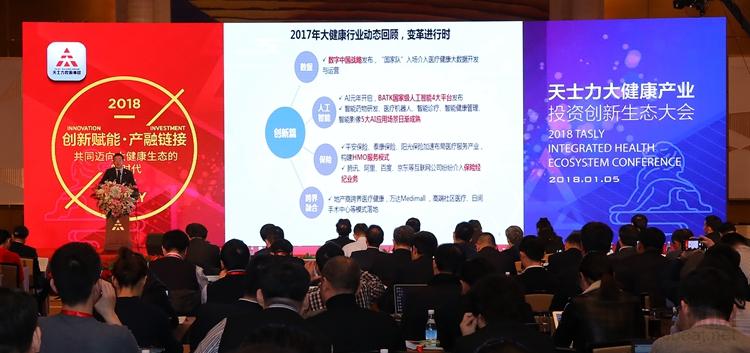
Yan Kaijing, Executive Chairman of the Board of Directors of Tasly Holding Group and Chairman of Tasly Capital Holdings, delivered a keynote presentation on the theme “Innovation Empowerment: Integration of Industry and Finance” at the conference.
Tasly Capital: A Model for Industry Funds
Tasly’s operations in industrial capital began with “young marshal” Yan Kaijing.
Yan Kaijing majored in Investment Banking at the University of Reading in the United Kingdom, where he earned a master’s degree. As one of the UK’s prestigious “Red Brick Universities,” the institution boasts a long history and specializes in cultivating senior management talent in the financial sector. It is home to the renowned ICMA Centre (International Capital Market Association), which is hailed as the cradle of investment elites.
It was precisely this experience that provided Yan Kaijing with the vision and network to manage Tasly Capital’s investment activities.
Personally overseen by Yan Kaijing, the “Group Strategic Investment Business Group” was established around 2008, comprising multiple entities to manage the financial operations of Tasly Holding Group. In 2016, Tasly Capital Holdings Co., Ltd. was formally incorporated, focusing comprehensively on investment, mergers and acquisitions, and collaborations targeting high-quality potential assets in the big health sector. As a vital component of Tasly Group’s dual-drive strategy of “industry plus capital,” it plays a pivotal role in integrating industrial development with financial services.
“Pooling Strength” is a key characteristic of Tasly Capital’s development. Since the establishment of its Strategic Investment Department, Tasly Capital has launched five RMB-denominated funds and three USD-denominated funds, with total capital raised exceeding RMB 10 billion.
Among the partners of the funds raised by Tasly Capital are local government guidance funds, professional investment firms, and industrial capital. Indeed, the development trajectory of Tasly Capital perfectly embodies its core philosophy: “industry as the foundation, finance as the instrument, and industry-finance interaction.”
“Pooling Resources” Must Have a Clear Focus. Over the past decade, Tasly Capital has invested in more than 50 projects, spanning pharmaceutical manufacturing, pharmaceutical distribution, pharmaceutical retail, medical services, digital health innovation, and traditional Chinese medicinal materials. Flagship investments include Meinian Onehealth, Berry Genomics, and Ascletis Pharma.
“Tasly Capital focuses on investment and M&A activities in the healthcare and wellness sector. On one hand, it conducts minority equity investments primarily through its affiliated funds, aiming to achieve excess investment returns; on the other hand, it engages in project acquisitions or joint ventures aligned with the industrial development needs of Tasly Group and its affiliates, with the goal of supplementing and enhancing Tasly’s product portfolio and segments.” Yan Kaijing elaborated on the interconnected logic underlying the two investment models employed by Tasly Capital.
Not only capable of entering, but also of exiting. As industrial capital, Tasly Capital enjoys broader and more diversified exit channels compared to ordinary private equity funds. It has successfully exited nearly 10 projects through IPOs, mergers and acquisitions, and other means, achieving an average investment return of over 30%.
IPO Channels: Meinian Onehealth Healthcare and Jichuan Pharmaceutical, in which Tasly Capital invested, have successfully listed and exited; Berry Genomics and Chongqing Pharmaceutical Group have also successfully gone public, while Huangfeng Shen and Guizhou Sanli are currently filing for IPOs.
In addition, mergers and acquisitions by other companies also serve as a key exit strategy for Tasly Capital. For instance, the exit from Bayer Dental was achieved through its acquisition by Lenovo Group, and Puxin Biotechnology similarly completed its exit via acquisition by another company.
“Our vision is to become an asset management platform respected by consumers, entrepreneurs, and investors in the broader health industry; leverage the integration of industry and capital to enhance industrial innovation and upgrading capabilities, and achieve the goal and mission of making health accessible to all.” This is how Yan Kaijing articulated the vision and mission of Tasly Capital.
Following its encouraging achievements, Tasly Capital is also increasing its investments in industrial capital and is currently raising two specialized funds and one dual-currency fund, with a combined scale of RMB 2.1 billion.
Additionally, Tasly Capital will also act as a shareholder of Tianjin Haihe Industrial Investment Fund Management Co., Ltd. and join forces with the Haihe Industrial Fund to establish a new fund-of-funds focused on the pharmaceutical and healthcare industries, with a target size of RMB 10 billion.
By focusing its strengths, targeting high-quality assets, and maintaining the flexibility to both enter and exit investments, Tasly Capital’s operational approach serves as a model for industrial funds, providing a benchmark for large pharmaceutical enterprises participating in industrial capital operations.
Targeting Opportunities Amidst Change
Driven by policy, market, capital, technology, and consumption, the landscape of the big health industry is undergoing dramatic changes. To seize investment opportunities in this sector, one must have a clear insight into industrial dynamics. As the head of Tasly’s industrial capital, Yan Kaijing also shared his understanding of the big health industry.
From the perspective of healthcare reform, cost containment by medical insurance will continue to drive payment system reforms centered on payment methods, strictly control the proportion of drug expenditures, and limit reimbursement scopes for auxiliary drugs and injectables. Tiered diagnosis and treatment will be gradually implemented, family doctor contracting services will be deeply entrenched, and pilot programs for specialized medical consortia will expand. Secondary price negotiations will become routine, with Group Purchasing Organizations (GPOs) and cross-regional centralized procurement emerging as trends. The two-invoice system and zero-markup policy will be further advanced, a registration system for pharmaceutical sales representatives will be established, and the practice of subsidizing healthcare with drug profits will be completely abolished.
From the perspective of market structure, entry barriers in the pharmaceutical manufacturing industry have risen, leading to the accelerated elimination of small pharmaceutical companies and a rebound in industrial growth. The pharmaceutical distribution sector is undergoing rapid consolidation, with further increased market concentration, accelerated regional business transformation, and third-party logistics providers entering the market as disruptive forces. The chain pharmacy rate continues to rise, while the new trend of prescription outflow has spawned innovative models such as Pharmacy Benefit Management (PBM). Third-party imaging and laboratory testing services are gaining momentum and evolving toward group-based development; the growing value of physicians’ personal brands is driving the expansion of private medical institutions. Reforms to the filing system for health supplements have made brand equity a core competitive advantage, e-commerce has replaced pharmacies as the second-largest sales channel for health supplements, and the direct-selling model is in urgent need of transformation.
Furthermore, technologies such as big data and artificial intelligence will accelerate industrial restructuring. This is evidenced by the launch of the “Digital China” strategy, the establishment of AI national teams—such as the intelligent platforms of Baidu, Tencent, and iFlytek—and the vigorous development of health and medical big data.
“The true potential of the ‘Big Health’ sector to address patients’ health issues lies in its coverage of the entire continuum of care and rehabilitation—before, during, and after illness—and in its provision of a comprehensive health platform that encompasses physical, cognitive, and mental well-being,” said Yan Kaijing.
Taking the pharmaceutical industry as an example, Yan Kaijing shared his views on the types of pharmaceutical companies that he believes will achieve future success: first, companies developing breakthrough therapies within a single therapeutic area; second, companies capable of building innovative drug portfolios across multiple therapeutic areas; and third, companies establishing diversified business models and leveraging data connectivity to deliver innovative services.
“Policy, market, capital, and technology—the four major factors—are rapidly driving the industry forward. Driven by these factors, personalized in-depth mining centered on consumer credit payment and healthcare big data, with data as the connector, will gradually form a consumer-centric, comprehensive service model. This will be the core model for the development of the medical industry over the next decade,” said Yan Kaijing.
Analysis of Tasly Capital’s “4D” Investment Model
Amidst the evolving healthcare industry, Tasly Capital has its own investment thesis.
“Given the characteristics of the healthcare and wellness industry, we will undoubtedly center our strategy around the ‘4D’ model over the next one to two years, or even the next decade. Future pharmaceutical products will be an integrated combination of product, content, data, and service scenarios, which is essential to delivering genuine health benefits to users,” said Yan Kaijing.
The “4D” model articulated by Yan Kaijing comprises: Diagnosis—encompassing in vitro molecular diagnostics, precision diagnostics, and genetic screening; Drugs—including cellular immunotherapy, gene therapy, and 3D-printed pharmaceuticals; Devices—such as surgical and rehabilitation robots and wearable devices; and Digital services—covering artificial intelligence, remote diagnostics, and physician groups.
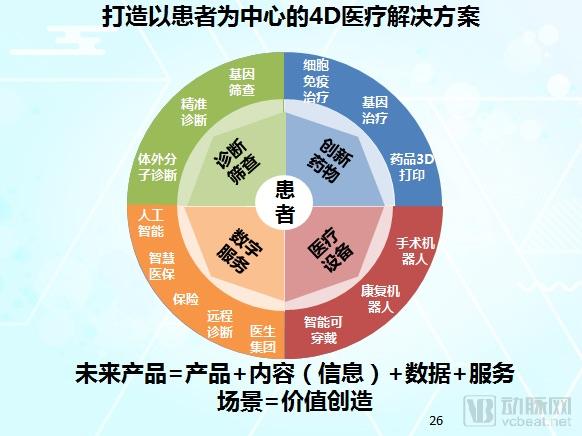
Tasly Capital's 4D Investment Model
From the perspective of the disease spectrum, Tasly Capital will focus on the fields of cardiovascular and cerebrovascular diseases, oncology, and diabetes, building patient-centric solutions through investment and incubation.
“We aim to develop a patient-centric service model through the integration of industry and finance. This involves transforming traditional products into product information data, constructing health models through data structuring, and leveraging modularized health models to create more precise user profiles for individuals in diverse future scenarios. Ultimately, this approach will enable us to meet patient needs by accurately matching them with tailored products and services.” According to Yan Kaijing, Tasly Capital will establish a complete chain encompassing diagnosis, treatment, and services through industrial investment, integrating these scenarios to forge new service models.
In practice, leveraging industrial investment to mobilize industry resources and achieve ecosystem development is a common strategy adopted by large conglomerates. This approach offers significant advantages. For listed companies, investing through industrial funds helps diversify investment risks and ensures that the listed entity remains unaffected by investment fluctuations. Meanwhile, industrial fund investments typically focus on the supply chain surrounding the listed company, providing high-quality resource reserves for its future development. For professional asset management firms and government guidance funds participating in these initiatives, this model facilitates capital aggregation and leverages resource multiplier effects.
Statistics from VCBeat show that in the past three years, pharmaceutical group companies have initiated or participated in nearly 160 industrial funds, with a proposed fundraising scale exceeding RMB 240 billion. Some of these funds have already completed fundraising and are engaged in project operations. It is fair to say that industrial funds are a significant driving force behind the transformation of the healthcare and wellness industry. Among them, Tasly Capital undoubtedly stands out as a leader.
“The future is already here; we see it because we believe in it.” With a clear insight into the evolving trends of the healthcare and medical industry and a deep understanding of industrial capital operations, Yan Kaijing stated that Tasly Capital has charted its course for the next decade.