

2017 HITIA Annual Conference Successfully Held in Shanghai with Over 300 Hospital CIOs and Engineers Driving Healthcare IT Innovation
The 2017 Annual Conference of the Health Information Technology Innovation Alliance (HITIA) was successfully held in Shanghai on January 6–7. The event was hosted by HITIA and the Shanghai Bee Club, organized by Shanghai Moan Information Technology, and supported by Yilijie Technology, Kyee Group, Linkong Network, Yitu Technology, VMware, Dell, Winning Health, China Unicom, Amazon, and Shanghai Internet Software Group.
As the inaugural annual conference since the alliance’s establishment, this event attracted more than 300 hospital CIOs, engineers, and corporate representatives from provinces and municipalities across China, including Shanghai, Jiangsu, Anhui, and Guizhou. Dozens of hospital leaders and industry representatives delivered keynote speeches, including Cao Jianfeng, Deputy Director of the Information Center of the Shanghai Municipal Health and Family Planning Commission; Wu Zhengyi, Vice President of Shanghai Ninth People’s Hospital; Wu Danfeng, Director of the Finance Department at Shanghai Tenth People’s Hospital; Feng Jie, Director of the Information Center at Huadong Hospital and Chairman of the Health Information Technology Innovation Alliance; Huang Hong, Director of the Information Center at Huashan Hospital and Secretary-General of the Health Information Technology Innovation Alliance; Zhao Yan, Director of the Information Center at Ruijin Hospital; Xu Dong, Director of the Information Center at the First Affiliated Hospital of University of Science and Technology of China; Shao Huagang, President of Shanghai Kyee Group Co., Ltd.; and Kuang Hua, Founder and CEO of LinkAir Network.
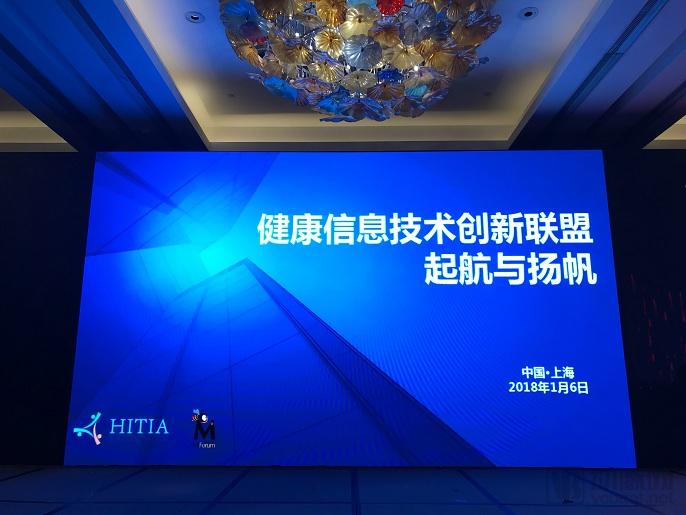
The two-day annual conference presented several prestigious awards, including the “Top 10 Engineers,” “Top 10 CIOs,” “Top 10 Innovative Applications,” and “Top 10 Service Reputation Awards.” Additionally, the conference was organized into three thematic forums based on different research areas and directions: the Liankong Innovation Forum, the Winning Health Youth Forum, and the Unicom Information Security Forum.
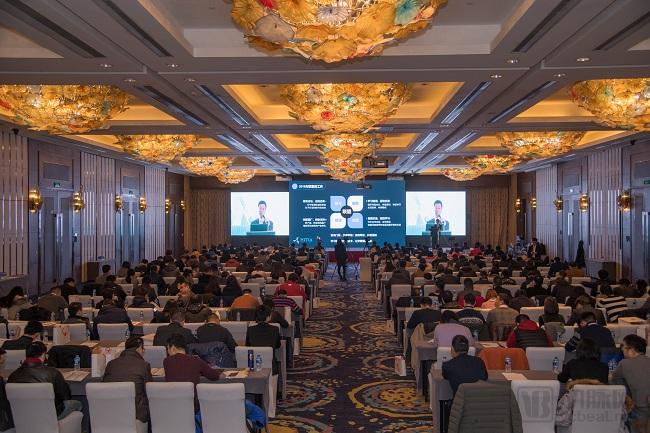
According to VCBeat, the Health Information Technology Innovation Alliance is an industry-oriented, non-profit technical exchange organization voluntarily formed by information professionals in the health sector and related entities. The diversity of participating entities and the flexibility of its operational mechanisms constitute the alliance’s organizational highlights.
From the perspective of industry-academia-research collaboration, the Alliance will primarily carry out activities in three directions: the Study Society, the Elite Club, and the Entrepreneurship Camp. “MedEnjoy Factory” serves as the brand for the Alliance’s activities.
“MedTech Factory – Study Club” is positioned to interpret industry developments and lead emerging trends by conducting research on technology, standardization, and industrial aspects of healthcare informatization. It produces regular industry updates and white papers, and hosts periodic study salons to promote professional exchange and learning within the sector.
“MedShare Factory - Elite Club” brings together experts, identifies talent, and builds communities by establishing a platform for communication, collaboration, and promotion. The value of this platform lies in expert consultation, talent recommendation, and network building.
“MediShare Factory – Startup Camp” focuses on aligning industry services with market demands, offering startup mentoring, capital matchmaking, and resource connectivity. It serves as a bridge between entrepreneurs and investors, providing support for the growth of small and micro medical IT enterprises while also creating an enabling environment for clients’ innovative ideas to be implemented.
At the main forum on the first day, Wu Zhengyi, Vice President of Shanghai Ninth People’s Hospital, delivered a keynote speech titled “Construction of Clinical Research Data Centers in Healthcare.”
He believes that, in the construction of the hospital’s new campus, while the Information Department can ensure the stability and normal operation of a given system, many underlying factors fall outside its control. These include changes in clinical workflows and adjustments to inventory management. As the executive leader in charge, one must effectively coordinate and organize throughout this process, while gaining a deep understanding of the hospital’s informatization development.
In 2013, Shanghai Ninth People’s Hospital collaborated with Microsoft and Yilijie Technology to jointly develop and launch a medical big data management platform. After four years of operation, the platform enabled the deployment and operation of a hospital-wide Clinical Data Repository (CDR). This CDR model is currently being promoted and studied across China.
In 2017, Shanghai Ninth People’s Hospital obtained the Grade 4 Class A certification for Interconnectivity Standardization Maturity from the National Health and Family Planning Commission.
During the certification process, the hospital advanced its informatization initiatives, including IT infrastructure, cybersecurity, data integration, and shared documentation.
In July 2017, the State Council issued the “Guiding Opinions on Establishing a Modern Hospital Management System,” which
It has been clarified that hospital operational performance, informatization development, and information protection systems shall be incorporated into the hospital management framework.
Many hospitals and enterprises are developing data platforms; however, if these serve merely as interface displays, they do not fulfill the ultimate objective. The ultimate goal of big data is intelligent healthcare, enabling data-driven smart decision-making for administrators in the future.
Dean Wu believes that there are three important metrics for big data:
1. Big data is not merely massive data, but rather segmented data. Hospitals need to structure these segmented data sets, re-integrate and cross-fuse them, and finally perform cleansing, standardization, and structuring.
2. Block data is not merely used for report generation; rather, it empowers data to speak for itself to support decision-making.
3. Big data is streaming data. Big data can facilitate analysis and decision-making based on statistical reports over a given period, much like a flowing stream.
He believes that to excel in big data, two key aspects must be addressed:
1. Data Standardization. Remove irrelevant data and retain useful data.
2. Let the data speak. Data can drive thinking, which is the core value of big data.
In terms of informatization, Shanghai Ninth People’s Hospital has implemented two strategic initiatives. The first, already realized, is the construction of a Clinical Data Repository (CDR) platform. This platform has driven the development of structured electronic medical records and mobile healthcare services, while also establishing logical associations between ICD-10 diagnosis codes and CM3 procedure codes. Furthermore, single-disease databases have been created within the data warehouse to ensure data integrity and standardization.
Second, hospital informatization must closely keep pace with the development of healthcare reform; failure to understand policy will inevitably result in obsolescence. Shanghai’s healthcare reform policy emphasizes transforming development models, optimizing structural composition, and restructuring operational mechanisms, with a project-oriented approach centered on clinical care. Rather than increasing bed capacity or pursuing growth in outpatient visit volumes, hospitals should shift their focus toward developing distinctive specialized disciplines and managing complex and challenging cases.
"Structural adjustment refers to the optimization of hospital structures. Shanghai Ninth People's Hospital conducts monthly analyses of cost structures by disease type, average cost per visit, and budgeting for revenue, expenditure, and cost structures. These structural adjustments are tasks that must be supported by information systems."
Transforming mechanisms, that is, reforming the performance-based compensation distribution system. These changes determine the direction of hospital informatization development.
For a hospital’s information department, merely possessing a basic level of professional knowledge is far from sufficient; its primary focus should be on project management for information systems. Furthermore, hospital informatization must never be detached from clinical practice. Technical support from IT companies and project management by the information department alone are inadequate. It is also essential to cultivate a team of clinicians who are passionate about hospital informatization, as this group plays a crucial role in advancing digital transformation.
Following President Wu’s keynote address, Huang Hong, Director of the Information Center at Huashan Hospital; Wu Danfeng, Director of the Finance Department at Shanghai Tenth People’s Hospital; and Shao Huagang, Executive Vice President of Shanghai Kyee Technology Co., Ltd., also delivered their respective speeches.
It is reported that the Health Information Technology Innovation Alliance plans to hold an academic conference once every quarter in 2018. Meanwhile, it will leverage the internet to further expand its influence and attract more industry professionals to join the alliance. VCBeat predicts that the alliance is poised to become a significant non-governmental organizational force within China’s healthcare sector, holding substantial importance for advancing the development of the country’s healthcare informatization industry.