

Baiai Smart Tech and Top Gene Forge Strategic Partnership to Accelerate AI-Driven Genomic Sequencing
On January 9, VCBeat learned that Baiyang Intelligent Technology, a subsidiary of Baiyang Pharmaceutical Group, and TopGene formally signed a cooperation agreement in Beijing. The two parties will integrate resources to facilitate the implementation and development of Watson for Genomics (hereinafter referred to as WfG) in China, and promote the deployment of WfG in all cities covered by TopGene. With the establishment of this partnership, WfG is set to accelerate its integration into China’s oncology treatment system.
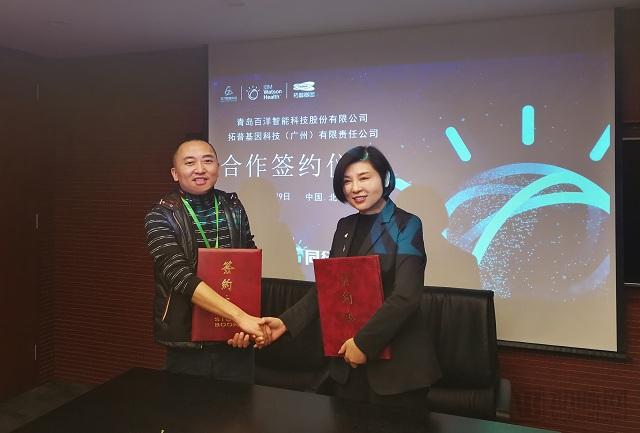
Ms. Wang Biquan, CMO of Baiyang Intelligent Technology, and Mr. Sun Gang, Co-founder of TopGene, jointly attended the signing ceremony.
Policy Drives the Integration of AI and Genomics
As a novel genetic testing technology, gene sequencing can detect DNA through blood, other bodily fluids, or cells. Currently, gene sequencing has undergone four generations of innovative development, reaching a level of cost, throughput, and accuracy suitable for widespread clinical application. With the evolving landscape of disease profiles, significant national efforts to enhance healthcare standards, and rising public health awareness, the gene sequencing market grew from $794 million in 2007 to $4.5 billion in 2013, representing a compound annual growth rate (CAGR) of 33.5%. It is projected to maintain rapid growth in the coming years, reaching $11.7 billion by 2018, with a CAGR of approximately 21.1%.
With the widespread adoption of gene sequencing in clinical practice, national policies have increasingly favored this field. In May 2017, the “13th Five-Year” Special Plan for Biotechnological Innovation was issued, aiming to accelerate the development of biotechnology and the biotech industry, with the goal of achieving overall parity (“running alongside”) and leadership in select areas (“leading the race”) by 2020.
It was mentioned that the development of next-generation gene sequencing technologies should be prioritized, with an emphasis on the application of single-molecule technologies and the analysis and interpretation of sequencing data. In addition, last July, the State Council released the "Development Plan for Next-Generation Artificial Intelligence," which highlighted the use of artificial intelligence to conduct large-scale genomic identification, proteomics, metabolomics research, and new drug development. These favorable policies have created excellent opportunities for the integration of AI and the genomics industry.
As a company specializing in gene sequencing for female cancers such as breast and ovarian cancer, TopGene promotes the clinical application of precision medicine through an integrated “gene + referral” service model, the combination of “research + clinical” applications, and a dual-engine drive mode of “gene + cell.”
Sun Gang, Co-founder of TopGene, stated: “Gene sequencing technology and precise data analysis are the two key elements in enabling precision medicine for cancer patients. The effective integration of these two components not only improves the efficiency of cancer drug therapy but also helps identify suitable targeted therapies or other treatment options for patients. Our collaboration with Baiyang Smart Technology on the WfG solution will effectively enhance the precision of patient treatment.”
AI Breaks Through the Bottleneck in Gene Sequencing Development
Although gene sequencing has reached the level of widespread clinical application, data computation remains its biggest bottleneck. The volume of data involved in genomics is at the terabyte (TB) scale, and achieving smooth, timely transmission and sharing of these data among different users poses a significant challenge for many data scientists. Typically, whole-genome analysis takes several weeks, a timeframe that is too long for many clinical medical services; therefore, it is imperative to accelerate genomic analysis in clinical or outpatient settings.
From the current perspective, gene sequencing can indeed obtain more mutation detection results with clinical actionability, which is more conducive to assisting doctors in precise clinical treatment of tumors. However, it also requires stronger manual analysis support. The occurrence and development of most tumors are accompanied by multiple forms of variation in multiple genes. There are nearly 500 cancer-related genes carried by the human body, with nearly 10 million ways of gene variant expression.
According to VCBeat, the world’s leading non-AI gene sequencing companies can currently identify no more than 100,000 types of genetic variants, a process that is highly time-consuming. Due to inconsistent expertise among interpreters and the scarcity of comprehensive genetic databases, it is impossible to avoid omissions during the interpretation process. Therefore, precision oncology requires an accurate and comprehensive intelligent decision-support assistant.
The advent of WfG, powered by artificial intelligence, has made it possible to achieve large-scale application of precision medicine for cancer patients. WfG can rapidly extract required information from structured and unstructured data sources at scale and further apply machine learning techniques. Meanwhile, WfG is capable of understanding and interpreting specific tumor mutations and pathological features, reconstructing knowledge bases, and identifying potential treatment options, thereby helping physicians save time and effort while making precise therapeutic decisions.
Currently, the WfG solution supports all known tumor types, including but not limited to common solid tumors such as lung cancer and breast cancer, hematologic malignancies such as leukemia, lymphoma, and myeloma, as well as cancers of unknown primary origin and rare tumors. Meanwhile, WfG has established collaborative partnerships with expert teams at 14 top-tier cancer centers and independent clinical laboratories in the United States, thereby standardizing clinical interpretation.
The University of North Carolina Lineberger Comprehensive Cancer Center, a top-tier U.S. cancer research institute, conducted a comprehensive evaluation study on WfG. Among the 1,018 enrolled patients, WfG completed the clinical interpretation for each patient within three minutes following targeted whole-exome sequencing and bioinformatics analysis. The interpretation results not only included assessments by the center’s expert panel but also identified an additional eight genes amenable to targeted therapy, thereby potentially benefiting 32% (323/1,018) of the patients.
Wang Biquan, Chief Marketing Officer of Baiyang Intelligent Technology, stated, “We are honored to enter into this strategic partnership with TopGene. In recent years, the rapid development of the gene sequencing market has highlighted the urgent need for personalized medicine. Therefore, we have introduced WfG, the most mature solution in the cognitive healthcare field, to China. By joining forces with TopGene, we aim to empower genetic testing with artificial intelligence and jointly promote the practical implementation of precision medicine solutions.”
As the core entity of Baiyang Pharmaceutical Group’s internet application ecosystem, Baiyang Intelligent Technology is committed to improving health through technology. Its partnership with TopGene marks another significant step in accelerating the comprehensive implementation of WfG in China, following its collaboration with Berry Genomics last September.