

Porimy Secures China's First Medical Device Registration for 3D-Printed Ceramic Dental Prostheses and Files IPO Prospectus
VCBeat (WeChat ID: vcbeat) has learned that recently, the domestic [product/device] independently developed by Bolimai, an incubated team of the Kunshan Industrial Technology Research Institute,Industrial-Grade High-Performance Ceramic 3D Printers and Compatible Ceramic Slurries Launched, and obtained China's first medical device registration certificate for 3D-printed ceramic dentures.
Kunshan Industrial Technology Research Institute, established in July 2008, is a state-owned enterprise legally incorporated. It adopts an open, networked, and clustered approach to focus on Kunshan’s industrial characteristics, carrying out R&D for technology applications and providing public technical services.
Data shows that the 3D Printing Materials and Process R&D Center of the Kunshan Industrial Technology Research Institute focuses on 3D printing materials and processes, which are core technologies in additive manufacturing. To this end, its subordinate department, the Advanced 3D Inkjet Equipment Research Institute, has established the 3D Printing Materials and Process R&D Center to conduct focused research on the following 3D printing materials and their corresponding printing processes:
1、Photosensitive Resin-Based 3D Printing Materials, such as micro-jet photosensitive resin materials and digital light processing (DLP) photosensitive resin materials;
2、Ceramic-Based 3D Printing Materials, such as cobalt oxide ceramic slurry;
3、Bioink, such as bio-tissue engineering scaffold printing inks and cell printing inks;
4、3D-Printed Food Ingredients, such as chocolate for 3D printing.
VCBeat has learned that the Kunshan Industrial Technology Research Institute holds a 40% equity stake in Kunshan Bolimai 3D Printing Technology Co., Ltd., with other shareholders includingProfessor Wang Yungan, one of the first experts in China to engage in 3D printing research。
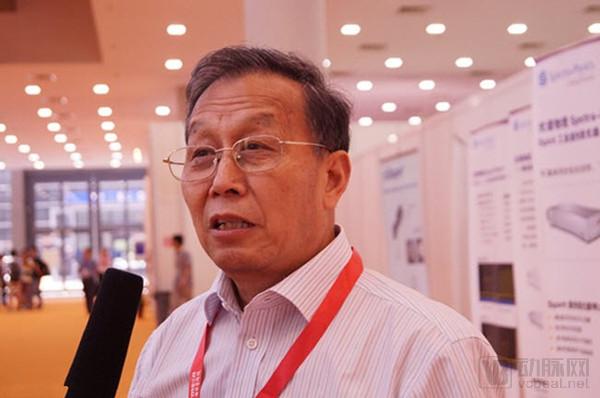
Professor Wang Yungan is a professor and doctoral supervisor at Huazhong University of Science and Technology, an expert enjoying special government allowances for outstanding contributions awarded by the State Council, and formerly served as Assistant to the President of Huazhong University of Science and Technology.
Since the 1990s, he has been dedicated to research on rapid prototyping and rapid tooling. In recent years, his focus has shifted to the application of micro-droplet jetting technology in the electronics industry and biomedical engineering. He has achieved notable progress in applying inkjet printing technology to the fabrication of printed circuit boards (PCBs), tissue engineering scaffolds, and dentures. Committed to the development and research of 3D printing technology in China, he has developed multiple types of 3D printers that are first-of-their-kind domestically.
In the 1970s, Germany's renowned VITA company invented the In-Ceram technology, which significantly enhanced the strength of all-ceramic crowns. This innovation was rapidly adopted in clinical practice, and the lifelike aesthetic results achieved by all-ceramic crowns astonished dentists.
All-ceramic porcelain-fused-to-metal crowns can also be classified into alumina all-ceramic crowns, cast all-ceramic crowns, and zirconia all-ceramic crowns, depending on the materials used.Zirconia all-ceramic crowns are a type of all-ceramic porcelain-fused-to-metal crown, with their internal structure made of zirconia ceramic.
Prior to the advent of 3D printing technology, fabricating a single dental prosthesis required taking bite impressions, sending them to a laboratory for manufacturing, and undergoing iterative adjustments, resulting in a prolonged production cycle. In contrast, 3D printing technology not only enhances efficiency but also significantly reduces material consumption.
"Open your mouth, perform a 3D scan of the teeth, and the 3D printer can print out a tooth."Zirconia Ceramic Dental Crowns。
In recent years,Metal 3D printing technology is increasingly being applied to the manufacturing of dental crowns, bridges, and frameworks., but3D Printing of Ceramic Dentures Is Challenging。The challenge lies in materials and laser curing technology., while maintaining material fluidity, it must also be able to set rapidly.
According to the introduction, this ceramic 3D printer employs laser scanning to cure slurries with high ceramic content. During the printing process, the laser power, laser spot size, and scanning speed are adjustable.
Currently, Bolimai Technology has independently developed a high-performance ceramic 3D printer and launched a 3D-printed zirconia ceramic dental crown production line. The process comprises digital scanning and modeling of patient dental impressions, 3D design of the dental crowns, 3D printing of green bodies, debinding and high-temperature sintering, and glazing.
Currently, the imported products available on the market are mainlyWieland (Germany), ZirconZahn (Germany), and 3M (USA). Developed by Bolimai TechnologyThe products of the 3D-printed zirconia ceramic denture production line have passed mechanical property and biocompatibility testing., and obtained the first medical device registration certificate for 3D-printed ceramic dental crowns in China in October 2017, thereby enabling their official market launch and sales.
Bloomden stated that zirconia ceramic dentures have stringent requirements for strength, morphology, dimensional accuracy, and translucency. They are typically fabricated using CNC milling technology; however, this subtractive process removes a significant amount of material, leading to high costs for all-ceramic crowns and potentially introducing internal cracks caused by milling forces.
This 3D PrintingThe material utilization rate of zirconia ceramic dentures can exceed 90%., the denture exhibits no internal cracks and has a low cost, which is highly conducive to the promotion and application of 3D-printed ceramic dentures.
Testing has confirmed that this ceramic 3D printer and its配套 materials possess fully independent intellectual property rights. Its performance has reached advanced international standards, while its price is only one-quarter that of imported equipment. Furthermore, all 3D printing materials are independently developed and manufactured in-house. Against the backdrop of import substitution, it represents a strong candidate for replacing imported products.