

J.P. Morgan Healthcare Conference 2018 Highlights: Strategic Insights and Product Roadmaps from Johnson & Johnson, Medtronic, Abbott, Eli Lilly, Pfizer, and Illumina
On January 8, 2018 (U.S. time), the annual J.P. Morgan Healthcare Conference was held as scheduled in San Francisco, attracting more than 450 publicly listed healthcare companies and innovative enterprises, along with over 9,000 healthcare entrepreneurs and investors.
At the conference, Bill Gates provided a detailed explanation of the investment rationale behind his medical foundation. Meanwhile,CEOs of major healthcare companies, including Johnson & Johnson, Medtronic, Abbott, Eli Lilly, Pfizer, Amgen, Merck & Co., and Illumina, shared their development strategies and the goals they aimed to achieve in 2018.
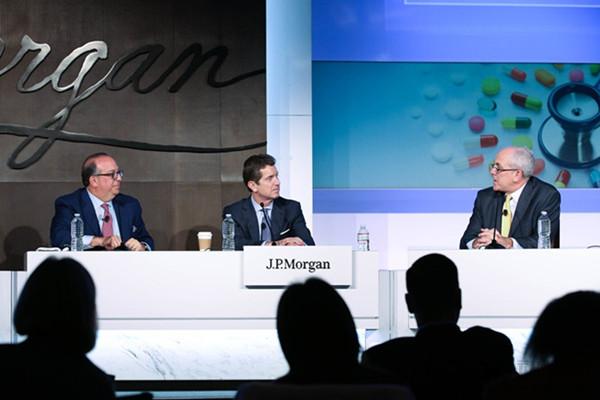
VCBeat (WeChat ID: vcbeat) has compiled the following insights from these industry luminaries:
Johnson & Johnson CEO Alex Gorsky stated that the company should manufacture a crisis, such as concerns that Amazon could disrupt its business in the future. This approach might help the company outperform the broader market.
Gorsky’s remarks on manufacturing crises are primarily directed at the issues that have emerged in the healthcare sector in recent years. He believes this is “a time very much worth reflecting on science and technology.” In the 1990s, the biopharmaceutical industry faced significant criticism for developing “me-too drugs” that offered no clear benefit to patients. But now, things are different.The Rise of Immunotherapy Has Enabled Unprecedented Treatment for Diseases Including Hepatitis C and HIV/AIDS.
Additionally,Johnson & Johnson has also been very active in the field of robotic surgery.Johnson & Johnson partnered with Alphabet, Google’s parent company, to establish Verb Surgical, a company dedicated to integrating machine learning, instrumentation, advanced visualization, and data analytics to create a new robotic surgical system. Verb Surgical has developed a prototype but has not yet launched it on the market.
The pace of industry change could accelerate rapidly in the coming years. This is why he urged Johnson & Johnson to “manufacture a crisis.” Gorsky also specifically mentionedAmazon, as more and more people speculate that this e-commerce giantPlans to enter the retail pharmacy and pharmaceutical benefit management (PBM) businesses.
As for how to maintain such a sense of crisis, Gorsky believes that Johnson & Johnson first needs to innovate internally and collaborate with external organizations. The acquisition of the Swiss pharmaceutical company Actelion serves as an example of how Johnson & Johnson leverages creativity in its partnerships.
Finally, Gorsky stated that even in the midst of a “crisis,” sound operational strategies remain crucial. He believes that,Johnson & Johnson needs to think like it is “running a tractor factory.”
“We have found that optimized therapy represents our greatest success in value-based healthcare, as the value created by technology is directly linked to clinical outcomes,” Medtronic CEO Omar Ishrak told investors. “In this regard, our strongest performer has been Tyrx, particularly over the past year, which has given us great satisfaction.”
TYRX is an antimicrobial envelope that wraps around implantable cardiac electronic devices, such as pacemakers or defibrillators, and elutes drugs to prevent infections following the implantation of such devices. Over time, the mesh device is completely absorbed by the body without leaving any trace.
In 2014, Medtronic acquired Tyrx, a New Jersey-based company, for $160 million., thereby acquiring the product. At a large healthcare institution, use of this device reduces infection-related costs by $6.4 million annually. “This is a successful value-based care model; we are in the early stages of implementation and will continue to expand it,” said Ishrak.
Ishrak hints that Tyrx’s success is primarily linked to the fundamental drivers of healthcare:Pay for Expected Clinical OutcomesHe stated, “Uncertainty in the market is inevitable sooner or later; this is a fundamental fact. In my view, paying for clinical outcomes and creating added value must be the right approach.”
Following the acquisition of Tyrx, Medtronic announced in June 2015 that it would acquire Covidien. At the time, many questioned Medtronic’s M&A strategy. In response, Ishrak stated that he intended to “adhere to acquisition discipline,” urging Medtronic to adopt a wait-and-see approach and avoid paying premium valuations for growth-stage companies in the wake of the Covidien deal.
Ishrak stated that since the acquisition of Covidien, Medtronic has spent $3.7 billion on acquisitions, nearly all of which were technology-driven companies. Therefore, for Medtronic, the key consideration is how to develop promising technologies and commercialize them.
Brian Yoor, Executive Vice President of Abbott Laboratories, stated that in 2018, the company also reached two major milestones.
1. Abbott’s 130th AnniversaryOver the past period, Abbott has made significant contributions to healthcare and created substantial shareholder value. In 2017, Kiplinger named Abbott one of the 30 best stocks of all time.
Second, the fifth anniversary of Abbott's separation from AbbVie.This strategy created a new Abbott. On the day before the separation was announced, the company’s market capitalization was $82 billion.Currently, the combined market capitalization of Abbott and AbbVie is approaching $260 billion, representing an increase of nearly 220%.
Over the past year, Abbott has taken two of its most important strategic actions,Acquired St. Jude Medical in January 2017, and Alere in the fall.. The addition of St. Jude Medical and Alere has strengthened Abbott’s leadership and influence in key areas of healthcare.
Alere’s rapid diagnostic technologies have been integrated into Abbott’s existing point-of-care testing (POCT) portfolio, propelling Abbott to the top position in the global POCT market. The combination of St. Jude Medical with Abbott’s vascular business has established Abbott as a leader in the cardiovascular device market and expanded its presence into a new therapeutic area: neuromodulation for the treatment of chronic pain and movement disorders.
Brian Yoor stated that Abbott will increase its R&D investment and allocate additional funds to consolidate the company’s position in the global market.
In 2017, sales of two blockbuster biotech drugs, Enbrel and Neulasta, declined, but Amgen effectively controlled costs, resulting in largely flat revenue. At the J.P. Morgan Healthcare Conference, CEO Bob Bradway shared five insights on the future of biotechnology.
1. Earnings per share (EPS) are projected to achieve double-digit growth in 2018.The company expects to cut costs by approximately $1.5 billion this year to boost earnings. Amgen’s stock buybacks could also bring about significant changes.
2. Amgen has five “compelling long-term growth drivers.”Amgen has identified five products, among which the osteoporosis drug Prolia is currently the company’s fastest-growing blockbuster.
3. Legacy drugs continue to generate robust cash flows.Despite declining sales of the autoimmune disease drug Enbrel and Neulasta, Bradway emphasized that these two drugs, along with other legacy products, remain important to Amgen and are expected to generate strong cash flows for many years to come.
4. Returning capital to shareholders is the top priority.Bradway emphasized, “Capital allocation in biotechnology is a matter of foresight, not an afterthought.” Since 2011, Amgen has returned $34 billion to shareholders, comprising $21 billion in share repurchases and $13 billion in dividends.
5. What kind of acquisitions will Amgen pursue?Many speculate that Amgen will undertake one or more acquisitions in the near future. Bradway acknowledged the company’s intention to expand its business, noting that “it is possible to pursue some attractive business development opportunities.”
He stated that Amgen considers four key factors in any transaction. First, the company seeks innovative products to complement Amgen’s six therapeutic focus areas. Second, Amgen aims to accelerate its international strategy. Third, biotechnology must “leverage (translate) capabilities.” Finally, Bradway emphasized that any deal undertaken by Amgen is intended to create long-term value for shareholders.
Mikael Dolsten, President of Global Research and Development at Pfizer, summarized his remarks in one word:Productivity。
Pfizer's productivity can be judged by the number of blockbuster drugs it produces.Between 2005 and 2010, the company launched two blockbuster products: the cancer drug Sutent and the Prevnar 13 pneumococcal vaccine.
From 2011 to 2016, Pfizer launched five blockbuster products: the pneumococcal vaccine Prevnar 13, the blood thinner Eliquis, the rheumatoid arthritis drug Xeljanz, the breast cancer treatment Ibrance, and the eczema medication Eucrisa.
Among them, Prevnar 13 pneumococcal vaccine generated approximately $5.4 billion in sales in 2017, making it Pfizer’s best-selling product. Ibrance is one of Pfizer’s fastest-growing star products. Approved by the FDA in 2015 for the treatment of breast cancer, this drug is projected to become the fifth best-selling oncology medication worldwide, with global sales expected to exceed $7 billion over the next five years.
Mikael Dolsten stated that Pfizer is now more productive because the company has remained focused on “rigor and science.” This means Pfizer has improved its ability to assess risks and select the most promising assets.
Over the next five years, Pfizer aims to launch up to 15 potential blockbuster drugs.Five of these may be in the oncology space. They include new indications for Ibrance and Xtandi, as well as a combination therapy involving Bavencio, developed through a collaboration between Pfizer and the German pharmaceutical company Merck KGaA.
Finally, Dolsten does not believe that acquisitions will hinder Pfizer’s productivity gains. He stated, “For a large company, it is crucial to consistently focus on opportunities for growth or accelerated growth.” If Pfizer identifies acquisition targets, it acts swiftly. For example, Pfizer completed its acquisition of Anacor in June 2016 and received FDA approval just six months later.
Illumina Shares Surge on CEO Francis de Souza’s Remarks at J.P. Morgan Conference, Rising About 7% in Early Trading; de Souza Delivers Five Positive Updates for the Company
1. Financial data is objective.Illumina’s full-year 2017 revenue is projected to increase by 15% year over year, reaching approximately $2.75 billion.
2. The Sustained Momentum of NovaSeqTo date, Illumina has delivered 285 NovaSeq systems to approximately 150 customers worldwide. Illumina anticipates a multi-year adoption cycle for the NovaSeq platform.
The company expects that most of the more than 850 customers currently using Illumina’s HiSeq X sequencing system will transition to the NovaSeq. As the cost of gene sequencing decreases, more new customers will purchase the NovaSeq.
3. Launch of the iSeq™ 100 Sequencing System.Illumina announced the launch of a new desktop system called iSeq, with an accuracy rate of up to 99.8%, priced at under $20,000, and scheduled to begin shipping in the first quarter of 2018. The company estimates that iSeq has more than 50,000 potential customers, including 35,000 next-generation sequencing users.
4. Growth was achieved in major emerging markets.De Souza stated that the consumer genomics sector has reached a turning point, with over 7 million consumer samples sequenced or genotyped in 2017. Illumina’s consumer genomics clients include major market players such as Ancestry, 23andMe, and Helix.
5. Reached a partnership with Thermo Fisher Scientific.At the J.P. Morgan Healthcare Conference, Illumina and Thermo Fisher Scientific announced a partnership. This collaboration enables Illumina to offer Thermo Fisher Scientific’s Ion AmpliSeq technology to researchers conducting scientific studies on Illumina’s next-generation sequencing (NGS) platforms.
Ion AmpliSeq features advanced amplicon technology that enables efficient amplification of DNA and RNA from trace samples, making it suitable for various research fields including scientific research and in vitro diagnostics.
Changes to the law signed by U.S. President Donald Trump in December will slightly lower the global tax rate for Eli Lilly and Company, headquartered in Indianapolis. As a result, Eli Lilly will receive a substantial cash infusion. With $10 billion in funds held overseas, the repatriation of cash will facilitate the expansion of Eli Lilly’s business operations and further enhance its competitiveness.
“Going forward, we can invest in building factories and laboratories without worrying about tax rates. The only concerns we need to address are talent and the market,” said David Ricks, CEO of Eli Lilly and Company.
Meanwhile, Ricks also stated that he still aims to build a more comprehensive product portfolio, particularly in cancer treatment. He noted that many competitive companies are currently developing therapeutic offerings in immunology, diabetes, and oncology.
1. Consumers should benefit from greater pharmaceutical rebates.
Ken Frazier, CEO of major pharmaceutical company Merck & Co., stated: “Rebates paid by pharmaceutical manufacturers amount to approximately one-third of brand-name drug costs. One-third of patients gain access to the distribution system through insurance companies, pharmacy benefit managers (PBMs), and other channels via rebates, which are not passed on to consumers.”
“I believe that what we truly need to do is channel some of the rebates to those who genuinely need them, directly at the pharmacy counter.”
2. If Amazon can make drug circulation more efficient, it will support its entry into the pharmaceutical distribution sector.
Ken Frazier’s remarks on rebates were likely prompted by questions about Amazon, the large online retailer, and its intention to enter the pharmaceutical delivery sector. He stated that he would support Amazon’s entry into drug distribution if it could make the pharmaceutical supply chain more efficient.
The performance of Celgene, a biopharmaceutical leader, declined sharply in 2017, with its stock price falling by nearly 10%. Even before the conference, the company’s announcement of its acquisition of the private biotechnology firm Impact Biomedicines failed to inspire investors, and its stock price dropped more than 3% in early trading the next day.
Nevertheless, Celgene CEO Mark Alles also brought some good news to the J.P. Morgan Conference.
1. Why Acquire Impact Biomedicines
Recently,Celgene Announces Proposed $7 Billion Acquisition of Impact Biomedicines, but investors remained unconvinced. This is primarily because Incyte’s Jakafi dominates the market for targeted therapies for myelofibrosis (MF), including Impact’s fedratinib. Moreover, fedratinib raised some potential safety concerns in clinical settings last year.
However, Alles acknowledged that while Jakafi is the market leader, fedratinib still holds significant potential in treating relapsed myelofibrosis. Approximately 20% of all MF patients do not respond to Jakafi.
2. Otezla Is More Potent Than You Think
Celgene’s poor performance last year was partly due to Otezla’s sales falling short of expectations. However, autoimmune disease drugs are not becoming a drag on the biotechnology sector, as Otezla has demonstrated strong and sustained growth. Alles pointed out significant untapped opportunities for Otezla, noting that approximately 60% of patients diagnosed with psoriasis remain untreated.
3. Ozanimod Poised to Shake Up the Multiple Sclerosis Market
Celgene has high expectations for ozanimod. The company hopes that its drug for treating relapsing multiple sclerosis (MS) will receive FDA approval later this year. If ozanimod is approved as expected, Alles believes it will shake up the entire MS market.
4. Steady Performance Growth
Although investors were disappointed with Celgene’s stock performance last year, the company reported strong results when it announced its fourth-quarter and full-year 2017 figures. Alles stated that Celgene expects full-year 2017 revenue to reach $13 billion, a 16% increase from the previous year. Celgene anticipates at least a 12% revenue growth in 2018.
5. Even as Revlimid Loses Exclusivity, the Future Remains Bright
Some investors may be concerned about what will happen to Celgene after it loses exclusivity for its blockbuster blood cancer drug, Revlimid. Alles remains optimistic, stating that Celgene plans to launch 10 blockbuster drugs over the next five years, which could add more than $15 billion in annual revenue at their peak sales periods.
Acquisitions are also critical to Celgene’s future. With its 2015 acquisition of Receptos, Celgene secured ozanimod. Assuming Celgene’s planned acquisition of Impact proceeds as scheduled, fedratinib could become another blockbuster drug obtained through acquisition.