

Wei Aikang Medical Files IPO Prospectus: Three Integrated Community Healthcare Products Drive Single-Clinic Monthly Revenue into Hundreds of Thousands
Products in the healthcare industry differ from those in other sectors. Each patient presents a unique clinical profile, and each physician has distinct prescribing habits. A significant challenge lies in standardizing personalized medical and health needs into uniform products, with the standardization of clinical products being particularly difficult.
“A quality product ensures that users receive consistent medical care and services at any campus of a hospital chain,” Wang Huanan, Vice President of Wei'aikang Medical Group, told VCBeat.
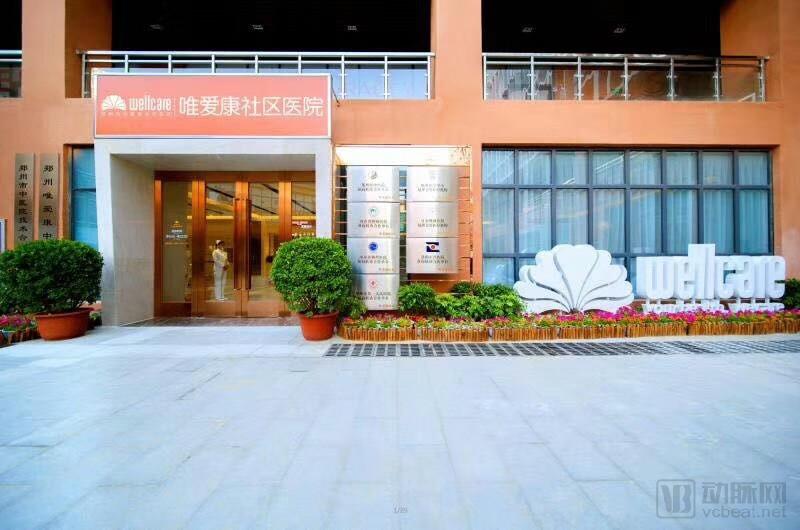
According to Wang Huanan, since the trial operation of the Sports Park branch of Wei’aikang Community Hospital began in June 2017, its daily outpatient volume has been approximately 120 visits. While there is room for growth, exceeding 200 patient visits per day would compromise the service quality of this single-site facility and negatively impact patient experience. To address this, the hospital leverages online family doctors to triage patients based on urgency and severity, strategically directing them to the facility during off-peak hours. This approach generates monthly revenues in the hundreds of thousands of yuan.
What community healthcare products does Henan Wei'aikang Medical Group offer? How are these products promoted? Why did they gain user favor even during the trial operation phase? What types of medical products are suitable for community healthcare settings?
For a long time, community healthcare has been regarded as an underwhelming option in many regions. Although medical institutions located within communities are geographically close to residents, there is a lack of trust in the physicians working at these facilities. Uncertain about whether these doctors can effectively address their health concerns, residents often have little motivation to seek care there.
On the other hand, community healthcare cannot compete with tertiary Grade A hospitals and specialized hospitals in terms of medical talent and technology. How, then, can this dilemma be resolved?
Before designing community medical service products, Wang Huanan first developed a profile of community residents. He posited that the typical household consists of a nuclear family of three plus parents, forming a five-member household whose needs encompass those of all demographic groups. Based on this core structure, various other household compositions can be derived; thus, the five-member household model can be said to cover the full spectrum of healthcare demands. Children require services for the diagnosis and treatment of common illnesses, pediatric health check-ups, vaccinations, and growth monitoring; young adults primarily need diagnosis and treatment for common illnesses; while the elderly require diagnosis and treatment for common illnesses as well as management of chronic diseases.
In light of these requirements, he prioritized the integration of family doctor enrollment with community hospitals during product planning, creating a standard offering for community healthcare settings to manage common and chronic diseases.
During the establishment of Wei'aikang Medical's product R&D team, Wang Huanan primarily adopted a three-step approach. First, core personnel were selected; the current team comprises individuals with experience in hospital liaison, development of medically oriented products, and general practitioners. Second, all team members are physicians holding associate chief physician titles or higher, responsible for overseeing medical quality and controlling the accuracy of medical content within the products. Finally, the team includes health managers, nutritionists, customer service representatives, and sales personnel, whose duty is to provide timely feedback on customer product experiences.
Meanwhile, in 2017, Wei'aikang Medical also collected health records for over 13,000 community residents. By evaluating these records, the company could identify relatively concentrated and precise medical (health) needs. For those with rigid demand, products could be immediately launched for conversion; for lifestyle-related needs, market testing was conducted through third-party partners. For their product research and development, the evaluation results of residents' health records served as the most critical basis.
Through such meticulous classification, Wei'aikang Medical’s product portfolio currently comprises three major categories: diagnostic and therapeutic products (for community hospitals), service-oriented products (out-of-hospital medical and nursing home services), and integrated products (covering health management services such as telemedicine and medical device rentals).
Diagnostic and therapeutic products are integrated solutions that combine prevention with diagnosis and treatment, designed for specific diseases or disease spectra and deployed in offline community hospitals. For instance, various service packages for chronic diseases fall into this category; these products have well-established clinical pathways, with a focus on daily monitoring and guidance.
Service-oriented products focus on the process, requiring a range of personalized services throughout the patient’s healthcare journey, such as medical accompaniment, expedited care pathways, and cross-regional medical consultation.
Combined products are designed by integrating customers' diagnostic and treatment needs, service requirements, and health needs, while incorporating elements of disease management and health management.
How are these three major products organically integrated? In summary, it has established its own customer base through personalized contracts with family doctors, conducts precise marketing by evaluating users’ health records, and builds community hospitals whose department configurations, product positioning, and R&D are also based on health assessments, striving to achieve precise positioning and marketing.
To date, in this living area covering 30,000 community residents, Wei'aikang Medical has signed contracts with 70% of the residents, among whom 38% have converted into daily outpatient visits at the community hospital.
“Of course, this is only the current product classification standard. As the market continues to be explored, we will have more products available to the market,” said Wang Huanan.
In Wang Huanan’s view, there are two major challenges in designing community healthcare products. One is the accurate understanding of patient needs; the other is the standardization constraints across all links of medical services. “Our goal in product development is to solidify similar needs into standardized templates as much as possible. However, this standardization inevitably confronts the complexity of customer demands and the diversity of in-hospital services. The greatest difficulty in medical product design lies precisely in simplifying such complexity and diversity.”
Productized community medical services are scarce in China, with Henan Wei'aikang Medical Group Co., Ltd. being among the few actively exploring this model. Its advantage lies in product design grounded in clinical diagnosis and treatment, incorporating extensive service offerings as well as disease and health management strategies. However, a significant drawback is that these products rely entirely on out-of-pocket payments, as they currently cannot integrate third-party payers (such as basic medical insurance and commercial health insurance), primarily due to existing reimbursement policies.
Furthermore, while the outcomes of medical services can be predicted and controlled, the results of clinical practice and diagnosis and treatment cannot. A fundamental element of any product is the reasonable fulfillment of promises; however, this is particularly challenging to achieve in the healthcare industry. In the medical and health sectors, apart from pharmaceuticals and health supplements, most product designs are based on process commitments rather than outcome guarantees.
“Our products have received widespread acclaim while serving community residents.” This is mainly reflected in the following aspects:
1) Convenience: Customers’ subjective experiences are directly addressed by healthcare service products.
2) It is expected that the product will resolve the issue as anticipated.
3) Great value: Through comparison, customers have discovered productized medical and health services.
4) Efficiency: Whether for doctors or patients, adopting a standardized product approach to address homogeneous personalized needs can basically achieve the desired outcomes efficiently.
For example, community resident “A” has suffered from chronic neck, shoulder, lower back, and leg pain. A health record has been established for this patient, with analysis and assessment confirming a diagnosis of cervicobrachial syndrome. Since the onset of winter, the patient has frequently experienced neck stiffness, soreness, and occasional dizziness. The patient selected a combination package consisting of cervical support products and home-based rehabilitation services. If the patient can leave work on time, they visit the community hospital for treatment (including tuina massage, physical therapy, muscle mobilization techniques, and acupuncture). In case of scheduling conflicts, home-based rehabilitation services are chosen. Throughout the course of treatment, the health record is updated in a timely manner.
“In fact, R&D is not the most challenging part; the greatest difficulty lies in product promotion, specifically in engaging with residents. Previous media reports have also highlighted that the most challenging aspect of signing up for family doctor services is establishing face-to-face contact with residents. People simply do not have sufficient time to understand your offerings or grant you access to their homes,” said Wang Huanan.
To this end, he implemented three measures to address residents' concerns and met with them.
First, build strong relationships with residential property management companies, sub-district offices, and community committees.
Second, conduct regular on-site promotional activities in residential communities at fixed times and locations. Every morning from 7:30 to 10:30 and afternoon from 16:00 to 18:30, we will be stationed at designated areas within the community to address residents’ health concerns, such as blood pressure measurement and health education sessions.
Before each on-site promotion, there was no need to pay fees to the property management. With their assistance, advance notices were proactively posted in WeChat groups to inform residents. The property management companies viewed these initiatives as community benefits for residents. In this manner, Wei'aikang Medical successfully entered a total of 26 residential communities.
Third, word-of-mouth promotion. All residents who have signed contracts with Wei'aikang will proactively promote the service, thereby encouraging another group of residents to sign up.
Fourth, sign up for a family doctor contract free of charge to enjoy more than 10 public health services.
Fifth, community hospitals demonstrate a people-friendly and convenient approach, with winter operating hours extending to 9:00 PM and summer hours to 10:00 PM, thereby enabling busy community residents to truly experience the convenience.
Initially, Wang Huanan led his team to sign up users, but they were completely ignored. Later, they adjusted their strategy by targeting individual residential communities as entry points and securing support from property management companies, which made ground promotion efforts much easier. The first batch of patients for Wei'aikang Community Hospital was also acquired through this approach.
When these contracted patients visit the Wei'aikang Community Hospital, they are greeted not only by a pleasant clinical environment but also by affordable pricing, with an average cost of around RMB 100. More importantly, community residents can experience high-quality services and enjoy highly convenient access to medical care.
“Even so, I believe the role of community healthcare in the future is to nip diseases in the bud. It must be about paying for health, not for disease. I first assess your health status and then help you take action, which is a more personalized approach,” said Wang Huanan.
So, for community chain operators, can the products of this community hospital be replicated in other regions?
Taking Wei'aikang Medical as an example, its community hospital in the Sports Park campus is the first of its kind, with 32 more to be opened in Zhengdong New Area. These facilities constitute an important component of the 33 convenience service centers in Zhengdong New Area. Leveraging these convenience service centers as platforms and focusing on innovative community healthcare services, Wei'aikang adopts a chain-based, branded, and standardized operational model. It aims to build an entry-level platform for all populations to access healthcare services and products, creating a “15-minute community medical convenience life circle” that provides residents with high-quality, convenient community diagnosis, treatment, and health management services.
As a chain operator of primary healthcare institutions, Henan Wei'aikang Medical Group places significant emphasis on post-launch services following the introduction of its community-based products, which are primarily categorized into three aspects:
1) Service Standards for Healthcare Professionals. The product design already incorporates service standards for healthcare professionals; services can be provided by aligning with the standardized manual in conjunction with product requirements.
2) Quality control standards that combine clinical criteria with standardized manuals to ensure the quality of medical (health) services.
3) Public service standards adopt a patient-centered approach, leveraging multiple measures such as patient feedback and customer service center follow-up calls to maintain high service quality.
In daily medical management and service delivery, the consistent implementation of standardized operations serves as an internal requirement for standardization; for the market and customers, products are the market-driven outcomes of standardized operations.
Therefore, Wei'aikang Medical further categorizes its offerings into basic products and core products. Basic products are developed based on the diagnosis and treatment services for common and chronic diseases provided by community healthcare facilities. Core products consist of precise analyses conducted following health assessments. In the subsequent establishment of other community hospitals, new product lines will be developed, such as service-based products and potential products.
The only constant principle is to adjust offerings—adding or removing items—centered on chronic diseases, common conditions, medical services, diagnostic tests, pharmaceuticals, and other suitable content within the community. For clinical products, Henan Wei'aikang Medical Group entrusts physicians' tasks to doctors themselves, while transforming standardized services into marketable products.
For medical industry products, the service process can be expected, but the service outcomes and clinical results cannot.
Regarding the service revenue of future community healthcare, Wang Huanan believes that it is primarily built on patient trust in medical professionals and subsequent revenue generation, with relatively high rates of referrals and repeat sales.