

In the Era of AI-Driven Medical Imaging, What Role Does Cloud PACS Play?
“There are more than 300 PACS vendors in China, but only about 30 of them possess genuine R&D capabilities, and Huaying Yunshang is one of these. Huaying Yunshang’s independently developed Radida Cloud PACS integrates hospital-based PACS, cloud-based PACS, and mobile PACS into a unified national platform. Meanwhile, through applications such as its WeChat Official Account, Mini Programs, and the Xiaorui Doctor APP, patients can access remote medical services more conveniently,” Guo Jingxin, CEO of Huaying Yunshang, told VCBeat.
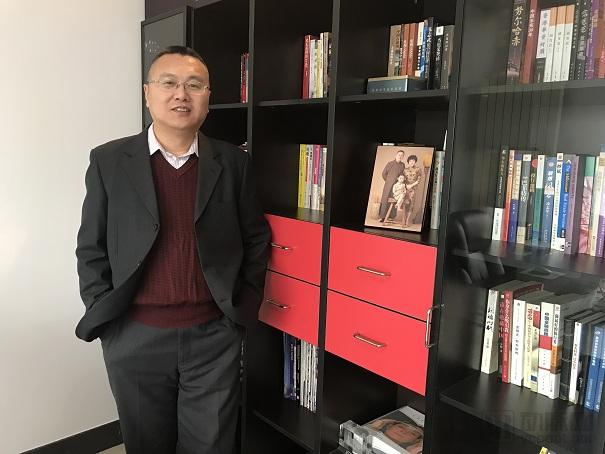
After graduating with a degree in Nuclear Physics from Lanzhou University, Guo Jingxin was admitted to Peking University as a graduate student in Nuclear Physics, specializing in Medical Physics. In 2004, driven by his personal interest, Guo Jingxin founded the MedImaging Online Forum.
According to Guo Jingxin’s recollection: “Around 2005, radiologists across China frequented only two online platforms: the Imaging section of DXY and Yiying Online.”
Leveraging its first-mover advantage, Yiyiing Online remained highly popular from 2004 to 2012. Countless radiologists across China became acquainted with Guo Jingxin through the forum’s academic activities and gatherings; he even led physicians in publishing several books related to medical imaging.
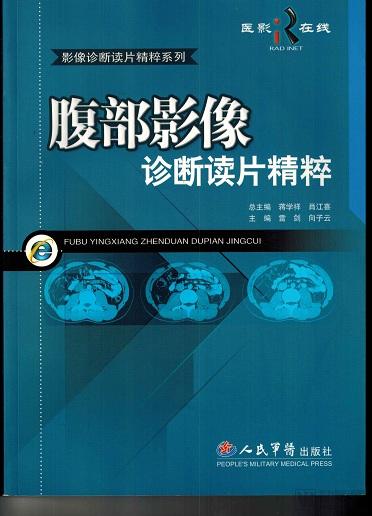
Guo Jingxin, well-known as he is, felt a tinge of anxiety amidst his excitement. After several years of operating the website, although it had gathered most radiologists across China, it had not earned a single penny; instead, it had incurred significant losses. Transitioning from idealism to reality, and from hobby to career, is a hurdle that must be overcome.
What Should Be the Next Step?
Establishment of Huaying Cloud Commerce
In 2006, Guo Jingxin made a decisive move to enter the offline physical market. From acting as an agent for imaging equipment to selling consumables and films, and even providing maintenance services for imaging devices, he has covered nearly every aspect of the radiology business.
At the end of 2013, with the rise of the cloud services concept, Guo Jingxin established Huaying Cloud Commerce and began exploring imaging cloud services.
In September 2015, the State Council issued the "Guiding Opinions on Advancing the Construction of a Tiered Diagnosis and Treatment System," which called for promoting the establishment of such a system, integrating and advancing the sharing of medical resources, and improving the tiered diagnosis and treatment service system with a focus on strengthening primary care.
As soon as the policy was announced, the astute Guo Jingxin immediately sensed that an opportunity had arrived.
Up to 80% of the information stored in large hospitals comes from imaging data. The accumulated imaging data over the years not only occupies a massive storage volume but also increases at a rate of terabytes per month, gradually intensifying the conflict between limited physical space and ever-growing storage demands. Coupled with the lack of imaging data sharing across multiple departments and hospital campuses, cloud-based PACS has become an urgent need for hospitals.
In 2015, Huaying Cloud Commerce assembled an engineering team of more than 20 members (which has since grown to over 60) to develop cloud-based PACS products, officially announcing its entry into the cloud PACS industry.
Huaying Cloud Commerce’s cloud PACS product is named RADIDA, an abbreviation for Radiology Data.
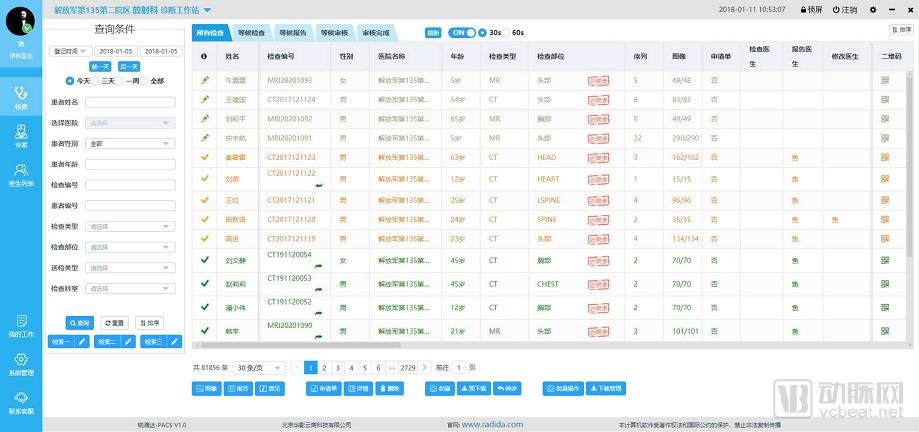
According to Guo Jingxin, the products of many cloud PACS companies merely forward data to the cloud via a relay server and generate reports in the cloud. With their limited functionality, these solutions are difficult for Tier 2 Grade A and Tier 3 Grade A hospitals to accept and adopt. “Unlike conventional cloud PACS, RADIDA integrates both local and cloud-based PACS, enabling physicians to process images and reports from any internet-connected location using devices such as laptops and smartphones.”
Local PACS systems are highly complex, with the cost of implementing a hospital-wide PACS in a Grade A tertiary hospital typically exceeding RMB 10 million. When developing cloud-based PACS solutions, traditional PACS vendors are generally reluctant to upgrade their on-premise systems; instead, they merely migrate certain data to the cloud and implement only basic functionalities there.
Huaying Cloud Commerce’s approach is as follows: first, deploy a PACS system locally, and then deploy a mirrored system in the cloud. This ensures that the cloud-based PACS and the local PACS are nearly identical in both functionality and user interface, serving as mutual mirrors. Furthermore, it enables bidirectional real-time data interaction; any data modification on either end triggers synchronous updates across all systems.
“Yunshang is a nationwide unified PACS cluster, where every hospital serves as an extension and node of the PACS platform. In essence, Huaying Cloud Commerce operates a national cloud-based PACS platform. Registered physicians can perform operations on the platform once authorized by their respective hospitals. Moreover, RADIDA is fully integrated into hospitals’ internal workflows, enabling seamless connectivity with existing processes,” said Guo Jingxin.
Do What Traditional PACS Cannot
Traditional PACS systems are predominantly developed using VB and Delphi. To achieve real-time interaction between the cloud and on-premises environments, both sides must utilize the same development language. For traditional vendors, this necessitates a near-complete restart—from programming language and architecture to functionality—effectively building from scratch.
“Those with nothing to lose fear not those who have something at stake. Huaying Cloud Commerce’s cloud PACS adopts the latest technology; we have no sunk costs, and therefore face no transition issues.”
Over the past three years, Huaying Cloud Commerce’s RADIDA has primarily focused on the field of radiology. In early 2018, RADIDA’s ultrasound system was nearing completion of research and development and achieving network connectivity. Reportedly, the platform boasts strong scalability and can be gradually extended to nuclear medicine, pathology, electrocardiography (ECG), endoscopy, ophthalmology, and other specialties. Through centralized appointment scheduling, it enables tiered diagnosis and treatment as well as two-way referrals between prefecture-level cities and township health centers.
Currently, Huaying Yunshang’s RADIDA has been deployed and is in use at 300 hospitals across China, including 20 secondary-level or higher hospitals, with the majority being primary-care facilities. Every day, more than one million medical images are uploaded to the RADIDA platform. Guo Jingxin stated that in 2018, RADIDA would focus on implementation in Grade II Class A and Grade III Class A hospitals and undertake multiple medical imaging consortium projects.
In addition to hospitals and physicians, patients are also a vital component of the platform. To address this, Huaying Cloud Commerce has developed “Xiao Rui Doctor” (Mobile PACS Imaging) to provide mobile services for both patients and physicians. Through this platform, patients can conveniently schedule appointments with renowned specialists and monitor their queue status in real time, allowing them to arrange their visit times reasonably. Via the app, WeChat Official Account, and Mini Program, patients can also access their medical images and diagnostic reports.
“If a patient has sought medical care at ten hospitals, and all ten hospitals use Huaying Yunshang’s RADIDA system, then all of the patient’s information can be consolidated on a mobile device. In this way, the smartphone becomes the patient’s personal health record,” Guo Jingxin told VCBeat.
OMO Business Model
“The world is on the verge of entering the era of ‘OMO’ (Online-Merge-Offline), and China’s remarkably rapid development positions it to potentially achieve OMO integration globally first.”
On November 22, 2017, Dr. Kai-Fu Lee, founder and CEO of Sinovation Ventures, published a column in The Economist’s “The World in 2018” special report, describing how Online-Merge-Offline (OMO) is transforming daily life across sectors such as transportation, retail, and education.
In Guo Jingxin’s view, what Huaying Yunshang is doing represents the OMO model. Through RADIDA, it has redefined the PACS system.
Regarding the deployment of cloud PACS in large Grade II and Grade III hospitals, Guo Jingxin described the process as “painful.” “If a PACS meets only 90% of requirements, hospitals simply will not adopt it; therefore, you must fulfill over 99% of functional and performance requirements. Meanwhile, the product can be considered mature only when a single platform can simultaneously accommodate the personalized needs of different hospitals.”
A Major Battle in Cloud PACS Is Expected in the Next Two to Three Years
Currently, the three hottest businesses in the medical imaging sector are: first, cloud-based PACS; second, third-party imaging centers; and third, AI for medical imaging.
According to Guo Jingxin’s understanding, these are three distinct categories of business: Cloud PACS serves as an AI application scenario, whereas for third-party imaging centers, it functions more as a connectivity tool.
“Over the next two to three years, China’s medical PACS industry will undergo a major reshuffle, with the number of PACS vendors plummeting from more than 300 currently to fewer than 20.” This is Guo Jingxin’s outlook for the future. The primary driver is internet-enabled transformation. This shift has turned PACS projects from small-scale, workshop-style operations into large-scale, coordinated efforts akin to military campaigns. Such large-scale operations place exceptionally high demands on a company’s capital, technology, talent, market presence, and management capabilities; without a team of several hundred employees, it will be difficult to prevail.
Wang Ran, founder of China Renaissance Capital, has long believed that the sector most likely to produce companies on the scale of BAT (Baidu, Alibaba, and Tencent) is the health industry. He argues that any company capable of reaching such a scale must possess platform-like value and characteristics. “In this regard, I believe Huaying Cloud Commerce meets these criteria,” said Guo Jingxin.