

Zebra Medical Vision Files IPO: $1 AI-Powered Screening for Multiple Diseases with Largest Anonymized Imaging Database Surpassing IBM
The advent of the intelligent era, regarded as the Fourth Industrial Revolution, has made terms such as artificial intelligence (AI) and big data frequent topics of everyday conversation. With the continuous emergence, advancement, cross-pollination, and integration of various technologies, numerous emerging disciplines are arising and gradually being applied to the field of healthcare.
Ninety percent of medical data originates from medical imaging, with such data growing at an annual rate of 30%. In contrast, the growth in the number of radiologists and their work efficiency are insufficient to keep pace with this trend, placing immense pressure on physicians. Furthermore, the majority of medical imaging data still requires manual analysis, a process whose most significant drawback is imprecision; judgments based solely on clinical experience are prone to causing misdiagnoses.
By leveraging advanced image recognition and deep learning technologies, artificial intelligence is well-positioned to address the two major challenges associated with manual processing of large-scale medical imaging data. This will significantly enhance the efficiency and accuracy of data analysis, alleviate the workload on physicians, and concurrently improve the efficiency and precision of diagnosis and treatment.
Zebra Medical Vision, based in Kibbutz Shefayim, Israel, is a company that leverages machine and deep learning to deliver next-generation products and services to the healthcare industry. Its imaging analytics platform enables healthcare institutions to identify patients at risk of disease and provides improved, preventive care pathways to enhance patient outcomes.
Reduce Physician Costs
Zebra’s platform provides a cloud-based, fully managed R&D environment. Users can access extensive de-identified research materials and data. The platform features advanced GPU (Graphics Processing Unit) computing capabilities and supports various research tools. Different research organizations can also collaborate on the platform to jointly develop tools.
Zebra’s radiology assistance system can receive scan images from various modules, automatically analyze them, and interpret diverse clinical findings. The results generated by the system are provided in real time to radiologists, other physicians, or hospital information systems as needed.
Zebra leverages its proprietary database and machine learning technologies to develop software capable of real-time data analysis while maintaining the accuracy of human interpretation. This solution provides essential assistance to radiologists, enabling them to effectively manage their growing workloads without compromising quality.
Meanwhile, healthcare providers use Zebra to predict diseases. It alerts them when patients are at high risk for cardiovascular, pulmonary, skeletal, and other conditions. Additionally, Zebra has facilitated the establishment of certain healthcare regulations, such as the Medicare Access and CHIP Reauthorization Act (MACRA).
Through Zebra, healthcare providers can deliver the attention patients need at the right time, reducing overall costs while improving the quality of care.
AI1 Initiative: One-Dollar Screening for High-Prevalence Diseases
Zebra’s AI1 solution helps users automatically detect high-incidence diseases, with each scan costing only $1. The current solution covers disease detection in the bones, lungs, cardiovascular system, liver, and other areas.

Zebra’s bone mineral density algorithm utilizes images obtained from computed tomography to determine bone mineral density, with the resulting values equivalent to the T-scores measured by dual-energy X-ray absorptiometry (DEXA).
Healthcare providers can leverage existing computed tomography (CT) data to conduct preliminary screening for patients at high risk of fracture, without the need for additional tests or radiation procedures. The resulting findings can be integrated into bone health or fracture prevention programs, thereby reducing the overall incidence of fractures and associated costs.
Among individuals aged 50 and older, one in three women and one in five men suffer from osteoporosis. Globally, more than 9 million fractures annually are associated with osteoporosis. Furthermore, 80% of potential patients remain undiagnosed or untreated, and the quality of life for those who sustain osteoporotic fractures declines significantly—25% of individuals with hip fractures are admitted to nursing homes within 12 months post-fracture. In the United States alone, estimated expenditures for osteoporosis treatment reach $17 billion.
One of the indicators used to determine whether a patient has osteoporosis is bone mineral density. DEXA scans provide T-scores, which, when combined with other risk factors, can assess the likelihood of having osteoporosis. However, currently only a small number of people proactively monitor their bone mineral density, and few have undergone DEXA scans; consequently, the detection rate of osteoporosis remains persistently low.
Zebra’s compression fracture detection algorithm combines traditional machine vision-based image segmentation with convolutional neural network (CNN) technology, and can be applied to any computed tomography (CT) scans of the thorax, abdomen, and pelvis. The algorithm automatically segments spinal images, identifies and localizes compression fractures, and differentiates between compression fractures, endplate degeneration, and bone spurs.
Compression Fractures: Osteoporotic vertebral compression fractures are common, affecting one in four postmenopausal women and one in seven men over the age of 65. Vertebral compression fractures (VCFs) are a direct cause of reduced mobility and functional status, particularly in elderly patients. Timely surgical or minimally invasive intervention for VCFs is highly effective, yet such treatments are rarely utilized.
There are many causes of vertebral compression fractures, such as infection, trauma, malignant tumors, and osteoporosis, with osteoporosis being the most common cause. Therefore, in individuals over the age of 50, vertebral fracture serves as an indicator for diagnosing osteoporosis.
If detected early, fatty liver disease is reversible through lifestyle modifications such as dietary changes, exercise, and reduced alcohol consumption. Zebra’s fatty liver algorithm analyzes CT scan data of the thorax and abdomen, automatically segmenting the liver in the images and calculating its mean density. This algorithm can serve as an early warning for prediabetes, prompting lifestyle changes.
Zebra's emphysema algorithm can analyze thoracic CT scan images, detect areas of pulmonary emphysema, and calculate the volume of emphysema as a proportion of total lung capacity.
Additionally, Zebra can provide a more accurate understanding of populations with a high prevalence of emphysema, helping patients manage the disease properly and effectively before their condition deteriorates.
In the United States, nearly 12 million people have been diagnosed with chronic obstructive pulmonary disease (COPD). COPD is the third leading cause of death, following heart disease and cancer. Current estimates indicate that the annual direct and indirect medical expenditures for COPD in the United States reach as high as $50 billion.
Coronary Artery Calcium Scoring Algorithm
Zebra’s coronary artery calcium scoring algorithm automatically calculates the coronary artery calcium score based on standard, non-contrast chest CT scans. This tool enables early detection of individuals at risk for severe cardiovascular issues.
Coronary Artery Calcium Score is a biomarker for coronary artery disease and a strong predictor of cardiovascular diseases such as heart attack or stroke. Traditional assessment of the Coronary Artery Calcium Score requires specialized angiography or non-contrast, ECG-gated cardiac computed tomography.
Recently, a highly reliable derived coronary artery calcium score has been obtained from low-dose chest computed tomography via algorithms.
In addition, Zebra is continuously developing new algorithms aimed at predicting disease onset from routine medical imaging data, including plain radiography (X-rays), mammography, head computed tomography (CT), and magnetic resonance imaging (MRI). Applications include the detection of malignant breast lesions, identification of acute intracranial hemorrhage, risk assessment for pulmonary hypertension and aortic aneurysm, analysis of chest X-rays, and detection of pulmonary nodules from chest CT scans.
Partners
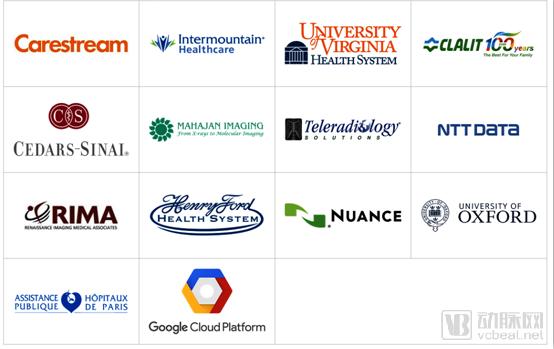
Zebra’s automated algorithms and clinical insight decision support tools have attracted more than 1,100 hospitals and healthcare institutions, forming a partner network. Key partners include: Carestream, Intermountain Healthcare, University of Virginia Health System, Clalit, Cedars-Sinai, Mahajan Imaging, Teleradiology Solutions, NTT DATA, RIMA, Henry Ford Health System, Nuance, University of Oxford, Assistance Publique – Hôpitaux de Paris, and Google Cloud Platform.
Financing Status
Zebra has secured $20 million in two rounds of financing.
On April 6, 2015, it secured an $8 million investment from Khosla Ventures, Marc Benioff, and Deep Fork Capital.
On May 24, 2016, it secured $12 million in investment from Intermountain Healthcare, Khosla Ventures, Dolby Family Ventures, Marc Benioff, and OurCrowd.
Awards and Honors
From 2014 to the present, in just three years, Zebra has accumulated “the world’s largest anonymized database of medical imaging and clinical data,” even surpassing IBM.
Such a rapidly rising company has garnered numerous accolades, including being named one of the Top 5 Artificial Intelligence Companies globally by Fast Company magazine, recognized as one of the Top 50 Leaders in the AI Industry by Fortune magazine, designated as a Cool Vendor by Gartner, honored as the 2017 Technology Innovator by Frost & Sullivan, and awarded the Social Impact Award by the Ayn Rand Institute.