

Guangzhou Women and Children's Medical Center Emerges as China's Top Hospital in Interoperability Comprehensive Strength
Recently, to promote the interoperability and sharing of medical and health information, in accordance with the requirements of the “13th Five-Year” National Plan for Population Health Informatization Development, the National Health Statistics Information Center organized and carried out the 2017 national assessment of standardization maturity for medical and health information interoperability. This initiative conducted technical evaluations of the informatization development levels in relevant regions and hospitals that voluntarily applied to participate, and publicly disclosed the assessment results for 15 regions and 50 hospitals.
According to the public announcement, a total of 50 hospitals have received corresponding ratings for Interconnectivity in this round. Prior to this assessment, four rounds of the National Health and Medical Information Interconnectivity Standardization Maturity Assessment had already been conducted. To date, a total of 90 hospitals have obtained corresponding ratings, as shown in the figure below:
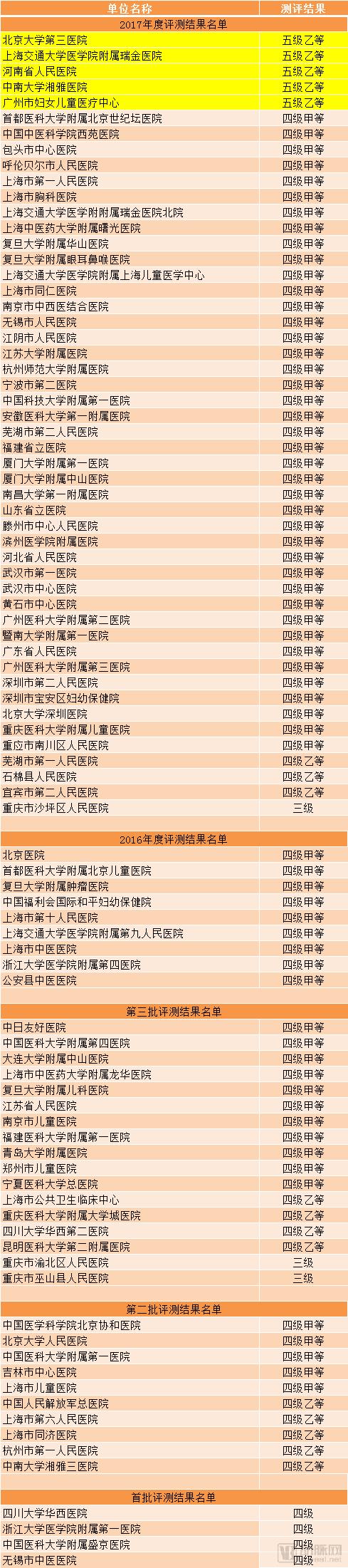
Among the hospitals participating in this evaluation, Peking University Third Hospital, Ruijin Hospital Affiliated to Shanghai Jiao Tong University School of Medicine, Henan Provincial People’s Hospital, Xiangya Hospital of Central South University, and Guangzhou Women and Children’s Medical Center became the first to achieve Level 5 certification in the Interconnectivity Assessment.
Compared with previous years, the number of hospitals participating in the evaluation in 2017 reached a historical high.This also reflects, to some extent, the year-on-year improvement in the level of informatization and interoperability among hospitals in China.
To further analyze the current comprehensive capabilities of hospital informatization and interoperability in China, VCBeat (WeChat Official Account: vcbeat) combined the list of high-level hospitals from the National Health and Family Planning Commission’s Hospital Management Institute’s “Grading Evaluation Standards for Electronic Medical Record System Application Levels” with the HIMSSEM RAM rating results. Based on the sum of total scores and corresponding criteria, it calculated the top 135 hospitals in China with the highest comprehensive strength.
VCBeat conducted statistical analysis based on the data, with the results and criteria as follows:
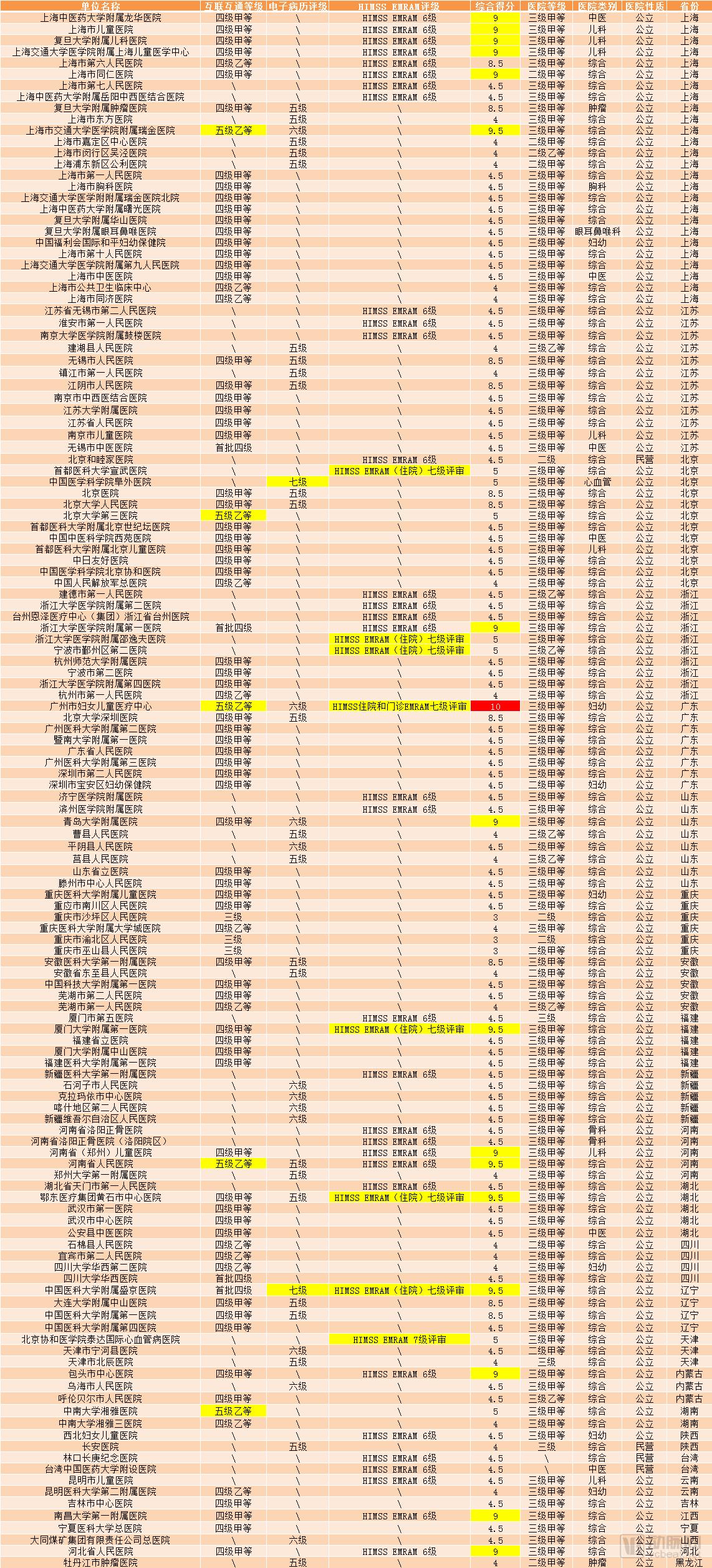
The final score is calculated as the sum of the Interconnectivity Maturity Level and the higher score from the other two rating systems. Specifically, Interconnectivity Level 3 is scored as 3 points; Level 4 Class B as 4 points; the first batch of Level 4 and Level 4 Class A as 4.5 points; and Level 5 Class B as 5 points. For the Electronic Medical Record (EMR) System Functional Application Levels, Levels 5, 6, and 7 are scored as 4, 4.5, and 5 points, respectively. For HIMSS EMRAM, Stages 6 and 7 are scored as 4.5 and 5 points, respectively. Due to the significant overlap in content between the latter two rating systems, if an entity passes both, only the higher score will be counted.
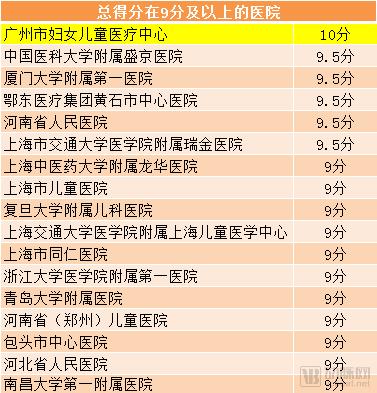
According to the scoring criteria, the following 17 hospitals emerged as the top-scoring institutions with the strongest comprehensive capabilities. Among them, Guangzhou Women and Children’s Medical Center successfully claimed the top spot with a perfect score of 10, the only one to achieve this distinction.
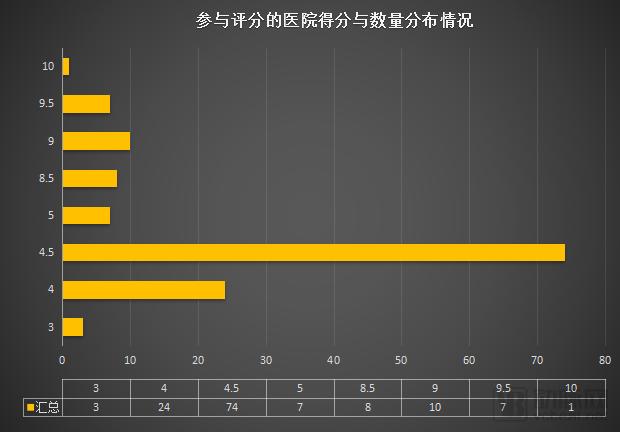
As can be seen from the comprehensive scores and their distribution, nearly half of these 135 hospitals have scores clustered around 4.5 points. Objectively speaking, these hospitals only participated in the Interconnectivity Assessment and did not take part in the other two tiered evaluations, which placed them at a slight disadvantage in scoring. However, this outcome does not imply that these hospitals lack the capability to achieve ratings in the other assessments.
Geographically, hospitals in Shanghai have become the primary region for the concentrated implementation of interoperability. In addition, hospitals in the Jiangsu-Zhejiang region and Beijing form the second tier in terms of interoperability adoption, while the potential in other cities remains to be fully explored.
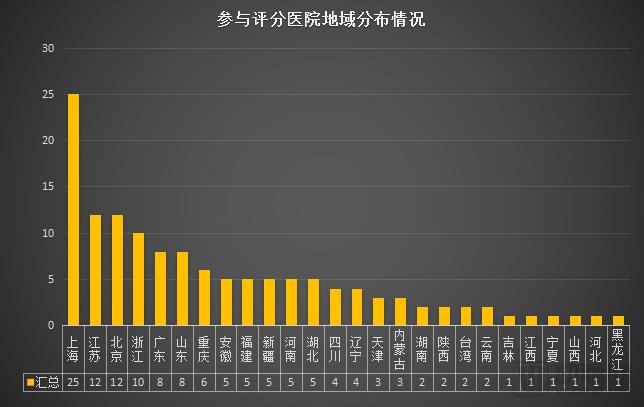
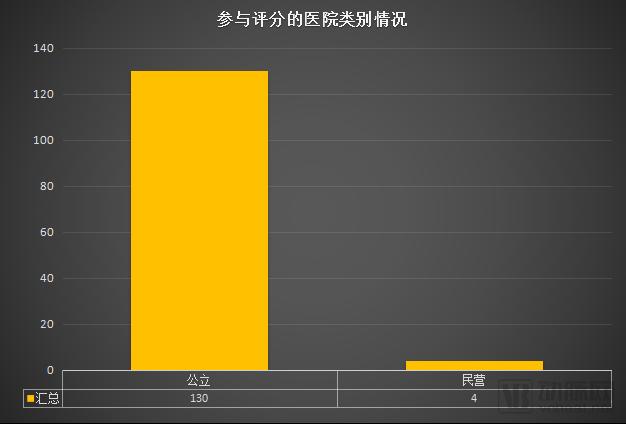
Among the shortlisted hospitals, 130 are public hospitals. Apart from two hospitals in the Taiwan region, only two private hospitals—Beijing United Family Hospital and Chang’an Hospital—were included, with both scoring below 5 points. This indicates that there is still considerable room for improvement in the interoperability and informatization levels of private hospitals in China.
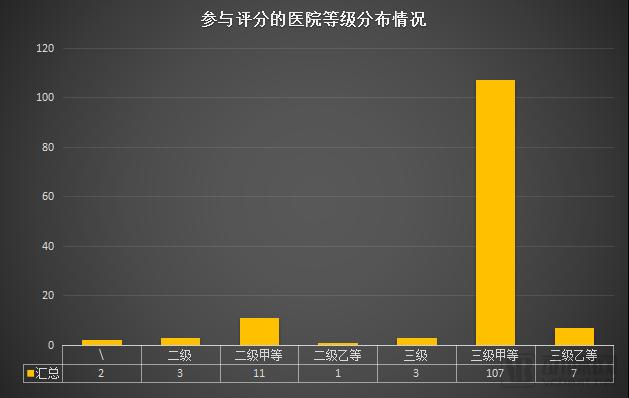
In terms of hospital classification, the vast majority of shortlisted hospitals are Grade 3A institutions, while those of other grades are relatively few, indicating considerable room for improvement.
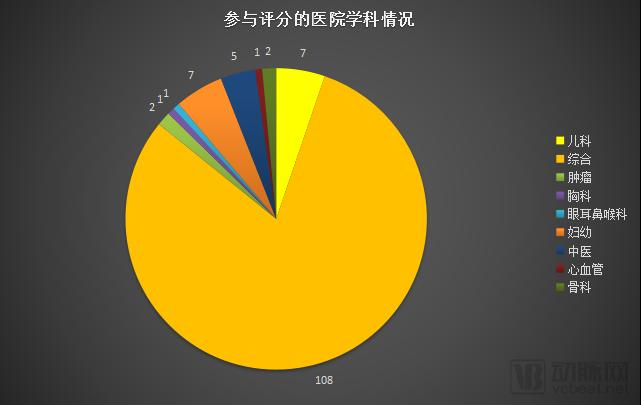
Among the shortlisted hospitals, in addition to general hospitals, VCBeat has identified three key high-potential specialty hospitals, namely:Pediatric Hospitals, Maternal and Child Health Hospitals, and Traditional Chinese Medicine Hospitals. Thus, it can be seen that these three types of hospitals are the specialized hospitals with the highest current demand for interoperability in China.
The Evolution of Interconnectivity: New Trends for the Future
On April 28, the General Office of the State Council issued the “Opinions on Promoting the Development of ‘Internet + Healthcare’” (hereinafter referred to as the “Opinions”).
Its purpose is to advance the implementation of the Healthy China Strategy, enhance the modernized management of healthcare services, optimize resource allocation, innovate service models, improve service efficiency, reduce service costs, and meet the people’s growing demands for medical, health, and wellness care.
The “Opinions” explicitly propose that all regions and relevant departments shall coordinate and advance the development of a unified, authoritative, and interoperable national health information platform, gradually achieving integration and connectivity with the National Data Sharing and Exchange Platform.
Hospitals at Level II and above shall improve the functionality of their hospital information platforms, integrate various internal system resources, and enhance hospital management efficiency. Tertiary hospitals shall achieve interoperability and sharing of medical service information within the hospital by 2020; hospitals with the necessary conditions shall expedite implementation.
The signal released by the State Council will further accelerate the pace of interconnectivity among hospitals at all levels.
In the course of hospital interoperability development in recent years, certain content transformations have also taken place. Take the graded evaluation of electronic medical records as an example.
At the China Hospital Information Network Congress (2018 CHINC) held at the Hangzhou International Expo Center on March 23, 2018.
“Digitalization, informatization, internet integration, and intelligence” became the central themes of the conference. On this day, the graded evaluation system for electronic medical records (EMR) adopted a new standard. Building upon the previous highest level of Grade 7, a more challenging Grade 8 has been added.
At the meeting, experts analyzed five major shortcomings of the quantitative scoring method for application levels in the 2011 version, including:
1. Electronic medical record (EMR) systems are predominantly adopted by lower-tier hospitals in China, necessitating enhanced differentiation in their evaluation criteria;
2. The scope of electronic medical record evaluation is not fully covered; there are new demands for medical quality control, knowledge base application, and data utilization, which currently guide the direction of application development;
3. There is some overlap in the content of the current standard evaluation items;
4. The descriptions of some items are not clear enough, affecting understanding during use;
5、Some Hospitals’ Blind Pursuit of Higher Accreditation Levels Has Led to Poor Actual Data Quality。
Therefore, in response to these five major deficiencies, the current evaluation framework for electronic medical record grading has been revised around six fundamental principles:
1. Maintain stability: Ensure that previous evaluations remain comparable to the greatest extent possible;
2. Enhance Discrimination:Add a level and adjust the grading, move some functions into the requirements that are 1-2 levels higher;
3. Expand the scope of assessment: Incorporate medical quality improvement initiatives into the evaluation framework and add application roles;
4. Specify the content of examination, laboratory testing, and treatment items within the existing evaluation functions;
5. Add an evaluation dimension toData Quality (Information Quality) Included in Performance Assessment. List the data quality assessment requirements for different levels;
6. Revise the content in the original instructions to avoid ambiguity.
The most important point is that,Data Quality Has Become the Focus of Ratings, which eliminates the possibility of hospitals passing evaluations with falsified data as in the past, and allows the evaluation process to return to its essence—namely, the accumulation, sharing, and utilization of truly valuable big data.
In addition to changes in the EMR grading system, the assessment of standardization maturity for interoperability has also been undergoing continuous pilot improvements over the past two years.
In September 2017, the Statistical Information Center of the National Health and Family Planning Commission officially issued the updated “National Medical and Health Information Regional (Hospital) Information Interoperability Standardization Maturity Assessment Scheme (2017 Edition),” building upon the “Hospital Information Interoperability Standardization Maturity Assessment Scheme (Trial)” released in 2015.
The figures below show the 2015 and 2017 editions, respectively:


The primary differences between the 2015 and 2017 versions lie in the definition and scope of the test content.
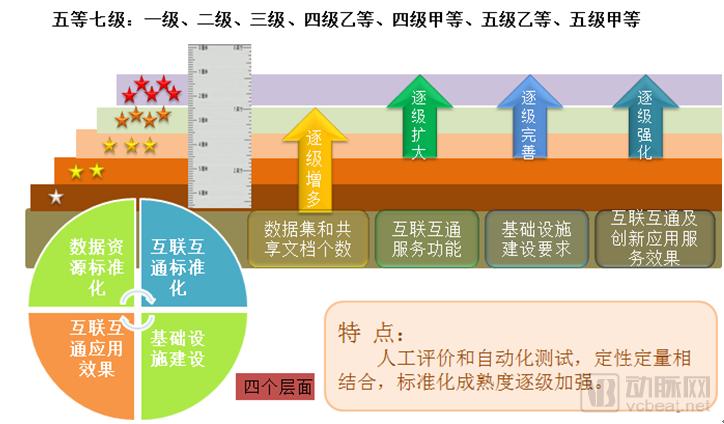
The 2015 Assessment of Hospital Information Interconnectivity Standardization Maturity was primarily divided into two components: product testing and project application evaluation. These two components respectively includeStandardization of Data Resources, Standardization for Interconnectivity, Infrastructure Development, and Application Effectiveness of Interconnectivity。
In contrast, the 2017 version of the assessment description was adjusted toLaboratory Testing and Project Application EvaluationTwo stages.Conduct standards compliance testing and evaluate the practical effectiveness of interoperability for healthcare institution informatization projects centered on electronic medical records (EMR) and hospital information platforms, respectively.
Compared with the previous version, this definition more prominently highlights the discrepancies between real-world practice and standardized testing. It serves as a strong catalyst for enhancing the weighting of practical applications in hospital interoperability initiatives.
Although the two versions appear to differ little in test content, the 2017 edition adheres to a broader and more up-to-date range of standards and documents. For instance, the conformance testing for shared document standards in the 2017 edition specifies that quantitative indicators must be used to assess the structural and content normative compliance in accordance with standards such as WS/T 500-2016 and WS/T 483.2-2016. This represents a significant departure from the 2015 edition. Consequently, the 2017 edition reflects an improvement in both the quality and extent of data sharing in hospitals.
Although the two versions differ in definition and scope, the seven assessment levels—Level 1, Level 2, Level 3, Level 4 Grade B, Level 4 Grade A, Level 5 Grade B, and Level 5 Grade A—remain unchanged:
Analysis of Industry Development Trends
An analysis of changes in the Standardized Maturity Assessment for Interconnectivity of Hospital Information Systems and the Graded Evaluation of Electronic Medical Records reveals that the quality and sharing level of medical data will become the top priority for informatization construction in hospitals at all levels across China.
Based on the current state of interoperability among hospitals in China as discussed earlier, VCBeat believes that healthcare IT companies seeking incremental growth should focus on the following areas for breakthroughs:
1. Private hospitals at Level II and above;
2. Pediatric Hospitals, Maternal and Child Health Hospitals, and Traditional Chinese Medicine Hospitals;
3. Markets in provinces and municipalities such as Chongqing, Sichuan, Anhui, Xinjiang, and Hubei.