

Dental Chain Profitability Challenges? YaboHui Empowers Dentists and Clinics with 4,000 Institutional Partnerships
In the field of dentistry, it is perceived from the outside as a high-profit, low-barrier industry, where a group of dentists simply interact with patients, and the average transaction value is high. However, the current reality of the industry is that large chain clinics can even incur annual losses amounting to hundreds of millions of yuan.
Outsiders have aggressively entered the dental care sector with a brute-force approach, as exemplified by Aux’s investment in building dental hospitals, only to meet with failure.
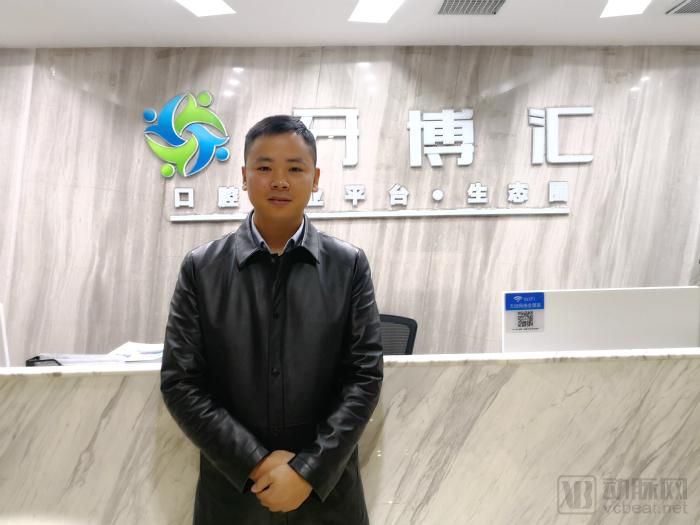
Li Xiangfu, Founder of Yabohui
Once a single-clinic practice achieves profitability, expanding beyond five locations will inevitably encounter new growth ceilings. What exactly are these stumbling blocks? What is the current mindset of dentists embarking on entrepreneurial ventures? And how can we better serve dentists, clinics, and entrepreneurs?
With these questions in mind, the reporter visited Yabohui, located on the fourth floor of an office building at Desiqin Plaza in Yuhua District, Changsha, and met its founder, Li Xiangfu. He was reviewing the design plans for the “Xiu Chi” incubation project and only stopped his work upon seeing the reporter arrive.
“I currently rent an apartment near the company, just a five-minute walk away, to make it more convenient to handle work matters,” Li Xiangfu told reporters. He has maintained this arrangement ever since founding Yabohui.
In an office decorated in traditional Chinese style, a calligraphic scroll bearing the characters “She De” (to give and to receive) hangs prominently at the center—this is the motto of Li Xiangfu, who has over a decade of experience in the dental industry.
“Entrepreneurship in the dental industry will struggle to fundamentally address the sector’s persistent challenges unless proper trade-offs are made and core issues are resolved. Our primary task is to integrate various resources to tackle the shortage of dentists.”
After more than two years of steady progress and diligent work, Li Xiangfu stated that Yabohui has carved out a unique path of aggressive expansion and disruptive competition, distinct from other enterprises.
How exactly does YaBoHui address the talent, management, and funding challenges facing the dental industry, and what is its development strategy for 2018? To find out, VCBeat (WeChat ID: vcbeat) conducted an exclusive interview with Li Xiangfu, founder of YaBoHui.
Although dental clinics and hospitals are no longer scarce, and the dental industry has reached a high level of maturity, public awareness of oral health care remains weak.
“Daily oral hygiene practices, such as brushing teeth morning and night, are being carried out, but are they being done thoroughly? Clearly, this is far from sufficient. As the saying goes, ‘A toothache is not a disease.’ When people experience tooth pain, they often do not regard it as a medical condition. Indeed, oral disease prevention is challenging to implement. Many people around me may not have visited a dentist for decades; therefore, the issue of patient education has long persisted and will require a considerable amount of time—possibly the efforts of one or two generations—to address,” said Li Xiangfu. He noted that the prevalence of dental diseases among Chinese people is high, and there is substantial unmet demand.
Prior to founding Yabohui, Li Xiangfu spent 12 years in Zhuhai managing the operations of dental clinics. Guangdong Province is the birthplace of many large dental chains, such as Bybo Dental, characterized by a mature market, intense competition, and high saturation.
“Returning to Changsha at the end of 2014, I initially followed the common path and mindset of most entrepreneurs by establishing a medical institution with plans to build a chain. At the time, I did not overthink it; I believed that my more than ten years of experience in Guangdong had adequately prepared me. For Changsha, where the economy was relatively less developed, there were greater entrepreneurial opportunities and a higher likelihood of success.”
Three months later, the clinic became profitable, and by the fifth or sixth month, it began to expand. Li Xiangfu said, “At that time, the new stores were already being prepared for renovation, but unexpectedly, a major problem arose: our reserve of physicians was poached by competitors.”
"The shortage of dentists is also a persistent challenge in Guangdong, an economically developed province. However, the situation there is less severe due to its larger talent pool; vacancies can be filled promptly. In Hunan, by contrast, the circumstances are different," pointed out Li Xiangfu. He noted that many dental institutions in Hunan basically face dentist shortages, with some even establishing dedicated headhunting teams to recruit outstanding dentists from various hospitals.
“I believe that what is happening in Hunan is also being encountered elsewhere across China; the biggest challenge facing the expansion of large dental chains is talent, which I see as the primary bottleneck hindering the rapid development of the entire dental industry.”
“From the perspectives of market size and capital market enthusiasm alone, the dental industry is not short of funding or equipment. However, talent development requires a long lead time and incurs high costs. This is unlike dental chair units on a production line, where standardized manufacturing can be achieved simply by setting up a production line, purchasing raw materials, and injecting additional capital.”
“Although the country has many prestigious higher education institutions, each one produces only dozens or hundreds of graduates annually. With the current chain expansion trend, hundreds of new clinics are opened each year, and the talent supply simply cannot meet this demand. Furthermore, while university graduates possess fundamental competencies, their practical clinical skills and diagnostic experience are far from sufficient. There is no quick fix to transform them into highly competent physicians; this requires sustained training and investment.”
It has been learned that Professor Luo Jianguo, a partner at Yabohui, has 30 years of experience in the dental industry. He is a professor at the Second Xiangya Hospital of Central South University and is recognized as the pioneer in promoting ultrasound-guided minimally invasive periodontal therapy in China. Professor Luo has also conducted lecture tours across China for ten years, exerting significant influence in the field.
Mr. Li Xianggui, another partner of Yabohui, has been engaged in the trade of medical devices and equipment in Hunan Province for many years, possessing a clear understanding of the market, supply and demand dynamics, and the supply chain.
Based on the current state and existing challenges of the oral care industry, the three founding partners established Yabohui in 2015.
In the field of dentistry, there are three core groups: dentists, clinics (hospitals), and patients.
Yabohui helps dentists build core competencies and restore their professional value, while also assisting hospitals and clinics in continuously improving clinical standards and achieving standardized operations, thereby ensuring that the public has access to safe, convenient, and high-quality dental care services.
Yabohui has configured six major business modules to address the needs and pain points of core stakeholders in the dental healthcare sector.
The first module is the Think Tank Center, namely the Stomatologist Group. “The Stomatologist Group actually began operations in 2015; however, due to the pace of national policy implementation, it was not until June 2017 that Yabohui became the first enterprise in China to be officially licensed as a stomatologist group.”
It was reported that in 2016, Yabohui conducted 228 training sessions. In 2017, it scaled up its market operations, increasing the number of training sessions to nearly 400, thereby providing professional development services to over 20,000 dentists and other oral healthcare practitioners.
To date, YaBoHui has amassed over 12,000 members and partnered with more than 4,000 medical institutions, making it “the largest training organization for dental professionals in China by scale.”
Unlike traditional training and education, Yabohui creates personalized growth plans tailored to each dentist’s specialty and needs. Upon becoming a member, participants undergo four phases of coursework to help them identify their professional development direction. Based on this direction, Yabohui offers a series of specialized courses to provide systematic training for its members.
“Because the field of dentistry is highly specialized, we expect each dentist to become an expert in a specific area in the shortest possible time. Currently, the vast majority of dentists are general practitioners, which will have an adverse impact on the long-term development of the industry.”
Why is refinement necessary? Because patients’ expectations for medical experience and needs are increasingly high, with growing demands for physicians’ professionalism and expertise, while the current reality is a severe shortage of orthodontic and implant specialists in the market.
The membership fee for the Yabohui Dental Physician Group is also highly competitive, currently priced at 5,980 RMB per year. Upon joining, members are entitled to free access to all courses offered by Yabohui across China, including premium hands-on training programs.
It has been reported that current market prices for two- to three-day training courses for dentists already reach this level, with hands-on intensive courses in orthodontics and dental implants costing as much as RMB 7,000–8,000.
In addition to primary care physicians, another key component of the Yabohui Dental Group is its Expert Committee. Only experts holding a senior professional title (associate senior level or above) in the dental industry are eligible to apply for membership in the Yabohui Expert Committee.
Li Xiangfu told reporters, “Experts on the Expert Committee can deliver lectures to primary-care physicians, supervise visiting scholars and apprentices, and provide paid services. They can also offer technical support, engage in multi-site practice, facilitate tiered diagnosis and treatment, and provide mentorship and guidance to primary healthcare institutions, while gaining entrepreneurial support from Yabohui.”
“Cultivating talent at primary-care hospitals is a protracted process; some facilities even lack implant dentists. ‘What good is having equipment without the technical expertise? Yabohui can invite members from its expert committee to provide centralized solutions, so you only need to handle patient consultations.’”
In addition to training and technical support, the Yabohui Dental Physicians Group is also collaborating with insurance companies to develop medical malpractice liability insurance and medical accident insurance programs, helping to improve the doctor-patient environment.
“Currently, there is no shortage of capital flowing into the dental sector. ‘Whether they are dental professionals or investors, we do not encourage outsiders who lack expertise in dentistry to engage in dental healthcare solely from the perspective of commercial profitability, as this will drive the entire dental healthcare environment toward unhealthy competitive practices,’ said Li Xiangfu.”
Yabohui’s vision is to help all aspiring dental professionals realize their dreams and achieve their entrepreneurial aspirations.
“Yabohui Dental Doctors Group brings together experts and clinicians, while also cultivating many outstanding primary-care dentists through professional, systematic training. For those aspiring to start their own practices, our turnkey solution provides a comprehensive suite of services, including financial support, standardized modular construction, full-scale supply of equipment, instruments, and consumables, team building, expert technical support, and intelligent, information-driven SaaS systems.”
It has been reported that YaBoHui has assisted over 60 high-quality dentists across China in establishing their own dental practices, including 23 clinics in Hunan Province, with its reach extending to cities outside the province, providing ongoing support and assistance in operational management. The initiative primarily targets three groups:
First, visionary entrepreneurs and early-career physicians;
Second, to expand its scale and initiate chain operations;
Third, the operating environment was already poor, with outdated equipment and décor, necessitating renovation and upgrades.
Certainly, Yabohui also conducts rigorous screening of entrepreneurs before incubation, requiring them to meet certain standards.
“Every dentist hopes to own their own clinic, which is why there are so many dental clinics on the market. However, not every dentist has the capability to operate a clinic successfully, so the selection process is very stringent.”
Furthermore, Yabohui has addressed the development of standardized modules. “All clinics we incubate adhere to strict standardization, with highly regulated protocols for sterilization, patient care workflows, layout, design, and even wastewater treatment. Currently, some chain organizations acquire independent clinics only to demolish and renovate them entirely, resulting in significant resource waste. We aim to change this situation.”
Li Xiangfu revealed, “We have a client in Shenzhen; in 2018, we will open 15 clinics for them, with agreements for all 15 locations signed at once. In terms of cooperation, we do not take equity stakes in any of our partners. Instead, we leverage Yabohui’s robust resource integration capabilities—such as coordinating with banks, leasing companies, and select industry funds—to provide comprehensive solutions.”
Entrepreneurs can launch their clinics without investing a single cent or with only a small amount of startup capital. “We take no equity stake, share no dividends, and do not intervene in management, thereby lowering the barrier to entry for initial investment. Accumulating millions in cash is a painful process that may take five or even ten years; by then, there may no longer be as many entrepreneurial opportunities in the dental industry.”
Within the vast dental industry, empowering dentists to realize their entrepreneurial dreams with greater agility and speed, while providing concrete, standardized guidance, stands as a testament to the expertise built by the founding team of YaBoHui over many years.
In addition to its dental group and incubation center, YaBoHui also features four major modules: a distribution center, a patient referral center, a big data center, and an investment and financing center.
The third module, the Distribution Center, is a centralized procurement platform. It is currently in the phase of accumulating demand from physicians and manufacturers and will be officially launched at an appropriate time.
What support can the distribution center provide to outpatient clinics? Li Xiangfu stated, “For instance, if each institution needs to procure 20 dental implants per month, and we currently partner with 10,000 medical institutions, the monthly procurement volume reaches 200,000 units. This significantly enhances our bargaining power with manufacturers, enables centralized procurement, expands profit margins, and leverages intelligent management to reduce labor costs.”
Yabohui also provides opportunities and a platform for interaction between doctors and manufacturers. “Currently, all opportunities offered to manufacturers are free of charge. During physician training sessions, you can provide product trials and demonstrations, enabling doctors to acquire knowledge about the most advanced technologies, equipment, and consumables. This approach lays the foundation for future distribution business.”
The fourth module, the Patient Referral Center, addresses the challenge of precisely directing patients to medical institutions. The team and product development for this module are now largely complete.
Large chain organizations, including primary care institutions, face high customer acquisition costs. “Large chains can spend RMB 1–2 million on advertising each month; in Hunan Province, the cost per patient has basically reached RMB 2,000–3,000 in recent years.”
How is patient referral traffic generated? According to Li Xiangfu, Yabohui currently selects high-quality partners from its network of 4,000 affiliated institutions. “For example, Hunan Province has 122 county-level cities. We select the top three dental healthcare providers in each region, totaling 366 institutions, to join our alliance system. This enables precise referral traffic docking with these institutions, thereby reducing customer acquisition costs. We are starting with Hunan, where we plan to onboard 500 institutions, and will subsequently expand this model nationwide.”
The fifth module is the Big Data Center, which is also the SaaS platform. “We have just released version 1.0, which has not yet gone live. It is scheduled to go live at the end of January, integrating with major outpatient clinics for use.”
“Unlike the positioning of most dental SaaS solutions on the market, where other platforms primarily focus on electronic medical record documentation and data storage, our SaaS platform is built upon the entire Yabohui ecosystem. It functions as a service platform supported by offline operations, which in turn underpins our online SaaS offerings. Moreover, there is no need to actively expand the market; we simply need to provide high-quality services to our members,” explained Li Xiangfu.
The Yabohui SaaS Platform empowers dentists and clinics by helping to build physicians’ personal brands, establishing a trust-based doctor-patient relationship system, and improving the healthcare environment, while also facilitating dental institutions’ entry into the capital markets.
Regarding specific operations, Li Xiangfu stated, “For instance, we have implemented a zero-inventory management model that directly integrates manufacturers’ warehouses with outpatient clinics. By pre-establishing safety stock levels and competitive bidding mechanisms, we provide centralized distribution services. Automated transactions reduce cash flow pressure on inventory and lower labor costs.”
The Investment and Financing Center is another important module of Yabohui.
Following Li Xiangfu’s logic, “We have built a team of physicians, resolved technical challenges, and supported doctors in launching their own practices. We have addressed the standardization of clinic modules, implemented centralized procurement to reduce purchasing and warehousing costs, and provided intelligent data support through our SaaS platform. In the future, every physician we train will undoubtedly become our partner.”
What Does the Investment and Financing Platform Do? “In the future, for our partner medical institutions that can achieve a certain standard of monthly net profit, we will make equity investments, ultimately bringing Yabohui back to its physical operations,” said Li Xiangfu. This is what distinguishes Yabohui’s strategic layout from that of other medical institutions in the market.
During the interview with Li Xiangfu, reporters also inquired about the current trend of rapid capital-driven acquisitions of clinics, such as investing heavily to acquire top-ranked local institutions, thereby avoiding the substantial effort required to cultivate physicians.
Regarding this model, Li Xiangfu explained, “This type of intervention entails, first, a substantial capital outlay. Second, the risks are also high. Some clinics appear prosperous and bustling on the surface, but after deducting customer acquisition costs from their revenue, how much profit remains? What exactly can capital provide to doctors and clinics—patients, technology, or management? These are very practical questions.”
“For a clinic, no one knows its operations better than the owner. ‘Capital firms acquired this clinic at a valuation of 5 million. The owner, having worked hard to run it for many years, no longer wished to continue and was willing to sell. It is easy to imagine the challenges that arose after acquiring a clinic even its owner no longer wanted to operate. However, Yabohui empowers dental clinics by helping them solve practical problems, enhance their value, and achieve exponential growth.’”
Regarding the development in 2018, Li Xiangfu summarized it with one keyword: fission.
He stated, “We spent over two years refining our products and services, which have now been fully implemented. In 2018, we need to rapidly promote the Yabohui model, replicate it across China, reach more dentists, and enable more dental clinics and practitioners to benefit. In the future, no clinic within the Yabohui system will operate at a loss; all dental clinics will achieve a tenfold, or even hundredfold, exponential increase in value.”