

University of Iowa Stead Family Children's Hospital Files IPO Prospectus Highlighting Pioneering Digital and Gamified Pediatric Care Experience

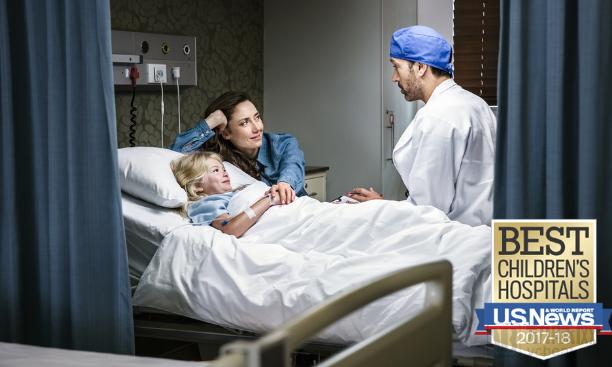
University of Iowa Stead Family Children's Hospital is one of the most renowned children's hospitals in the world. On June 27, 2017, U.S. News & World Report included the University of Iowa Stead Family Children's Hospital in its latest list of the 50 Best Children's Hospitals for 2017-2018.
Among them, the field of cancer ranked 34th, cardiology/heart surgery ranked 48th, neonatology ranked 20th, and pulmonology ranked 45th.
In terms of digitalization, gamification, and patient experience, the hospital has also undertaken some of the latest initiatives in the industry. VCBeat (WeChat: vcbeat) has provided a brief compilation and summary.
The University of Iowa Stead Family Children’s Hospital is one of the four members of the UI Health Care family. The other three members are the University of Iowa Hospitals and Clinics, the University of Iowa Roy J. and Lucille A. Carver College of Medicine, and UI Physicians.
The University of Iowa Children’s Hospital, established in 1919, is the only comprehensive children’s hospital in Iowa. Its services range from promoting basic health to managing general pediatric diseases, surgical procedures, traumatic injuries, and chronic conditions.Developmental Disordersand other fields.
Currently, the University of Iowa Children's Hospital hasMore than 170 pediatricians and over 700 trained pediatric nurses。
Data from last year shows that the hospital served patients from different states (covering nearly all U.S. states) and even different countries.71,754 patients received treatment. The hospital has 507,000 square feet of newly constructed building area and 56,250 square feet of renovated existing building area.
The University of Iowa Children’s Hospital features a Level IV Neonatal Intensive Care Unit (NICU), the highest level defined by the American Academy of Pediatrics. This designation signifies the hospital’s capacity to care for premature infants and critically ill newborns, with a NICU survival rate exceeding 95%.
At the laboratory level, the University of Iowa Stead Family Children’s Hospital houses an echocardiography laboratory accredited by the Intersocietal Accreditation Commission (IAC), making it the only IAC-accredited echocardiography laboratory in Iowa. The laboratory performs imaging, testing, and analysis for pediatric transthoracic, transesophageal, and fetal echocardiography. This accreditation was first obtained in 2004 and is valid for three years.
Our hospital philosophy is to center all treatment around the patient and their family. Children receiving care at the University of Iowa Stead Family Children's Hospital benefit from specialized pediatric healthcare that actively involves their families, recognizing that parents and other family members are the ultimate experts on their child. Physicians integrate family insights to deliver the most appropriate, individualized treatment for each child.
In addition to treatment, the University of Iowa Stead Family Children's Hospital advocates for communicating with children and their families and sharing objective, useful information, thereby engaging families in the child’s care so that, through collaborative efforts, the most appropriate medical decisions can be made for the child.
A major backdrop is that, on the basis of meeting basic medical capabilities,Inpatient service facilities and environments are receiving increasing attention.
For patients confined to their beds, who previously had access only to nurse call buttons and television remote controls, the University of Iowa Stead Family Children’s Hospital has adopted “bedside technology” (such as touchscreen interfaces) provided by Oneview Healthcare.
This technology enables patients to easily control their room environment from bed—not only the television or bedside devices, but also lighting, communication with nurses, curtains, and even meal selection. The Oneview tool allows them to choose recipes from a digital menu, much like ordering at a restaurant.
Nursing Informatics Specialist Pamela Kunert explains, “In the past, patients would press the call button, but nurses had no way of knowing what the patient needed. This required a nursing assistant to first enter the room to assess the situation and then report back to the nurse. This process was not only inefficient and wasteful of medical resources, but it could also delay optimal treatment. Now, when patients at Iowa Children’s Hospital experience pain, they can directly press the pain button, which sends an alert to the nurse’s mobile phone for prompt response.”
Digital System
The new indoor system configured with this technology can alsoElectronic Organization of Hospital Health Records, significantly reducing the workload of nurses and hospital staff, allowing them to focus on more critical tasks.
An increasing number of hospitals are investing in advanced systems that enable access to relevant healthcare information, online rehabilitation goal-setting tools, and even Skype videoCommunication has become easier.。
Over the past year since this technology was put into use,The hospital's patient experience rating has increased from 40% to 89%., this new in-room system provides patients with a simpler and faster way to improve their hospital stay environment, earning widespread acclaim from patients and their families.
According to Maia Hightower, Chief Executive Officer of University of Iowa Health Care, from the outset of the decision to establish the children’s hospital, the organization set as its institutional goal the creation of a healthcare system that provides a positive experience for patients and their families.
In addition to entertainment and convenience, another objective is to create a highly distinctive experience for patients.
For a hospital that started from the grassroots level, there is the greatest opportunity to break conventions and make bold decisions, creating the most perfect medical environment for patients based on their needs.
Most hospitals suffer from two common design flaws: excessive noise, such as constant beeping and alarms, and overly harsh lighting.
At the University of Iowa Children's Hospital, the number of alarms has been significantly reduced because the hospital adopted Type IV pump monitors, which alert nurses or medical assistants rather than patients.
Every hospital ward is equipped with““Drew’s Light” (named after a cancer patient named Drew) allows patients to adjust the light, which is mounted on the television, via a bedside remote control, selecting from 11 colors, various patterns, and different brightness levels.
Another function of this indoor system is to maintain good order for patients and their families. A single ward may see 20–40 people entering and exiting throughout the day, yet patients are often unaware of who these individuals are.
Therefore, a Real-Time Location System (RTLS)-based positioning device in the patient room is integrated with the Oneview visualization platform. When physicians, nurses, or housekeeping staff enter the room, their photographs, names, and roles are displayed to the patient.
For parents who are unable to care for their children in the room due to work or long commuting distances,The indoor system also offers Skype functionality., children can have voice or video chats with their parents.
However, the most significant patient experience feature at the University of Iowa Children’s Hospital has nothing to do with technology. The hospital is located next to Kinnick Stadium in Iowa, and its floor-to-ceiling windows on the 12th floor offer a direct view of the stadium below.

The 12th Floor Viewing Area of the Hospital
After every home game at the University of Iowa, everyone in the stadium—including 70,500 spectators, players, and staff from both teams—waves to the children watching from the 12th floor, a gesture that serves to inspire the young patients in some measure. “The kids look forward to game day every single day,” said Hightower.
It is reported that Hightower and Kunert will present specific case studies at the Experience Summit in Las Vegas on March 5, demonstrating how scientific and technological advancements can enhance user experience and hospital environments.
Reference Link:
http://www.mobihealthnews.com/content/university-iowa-childrens-hospital-puts-patient-experience-first
http://www.healthcareitnews.com/news/university-iowa-childrens-hospital-puts-patient-experience-first
https://health.usnews.com/health-news/best-childrens-hospitals/articles/best-childrens-hospitals-honor-roll-and-overview