

LLVision Unveils Next-Gen AR Glasses and Human-Machine Collaboration Platform Targeting Industrial, Medical, and Security Applications
VCBeat has learned that Liangliang Shijie recently unveiled its next-generation AR glasses and human-machine collaboration platform at MeePark in Beijing.
GLXSS ME (Multi-Edition) AR glasses are designed for industrial AI scenarios, aiming to achieve multi-dimensional connectivity, cognition, and collaboration through first-person perspective interaction.
Equipped with the Movidius® Myriad vision processor and a proprietary neural network inference framework, the product enables seamless deployment of various algorithmic models and delivers robust AI cognitive capabilities.
The GLXSS ME weighs only 33.4g, connects directly to mainstream smartphones and professional terminals, is plug-and-play, and can meet the needs of various industries.
GLXSS Live Human-Machine Collaboration Platform: Delving into the Core of Industrial Business to Serve People.
Put on the GLXSS ME to access the platform, enabling real-time interaction between people and data, as well as multi-dimensional collaboration among people, devices, and business operations.
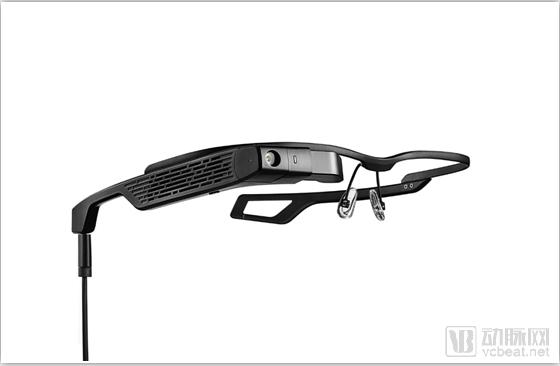
GLXSS ME
First-Person Perspective Interaction—The Breakthrough Point for AR Glasses
Wu Fei, CEO of Liangliang Shijie, believes that competition in the AR glasses industry has always followed two paths: international giants prioritize “comprehensive ecosystems,” while innovative enterprises emphasize “specialized expertise.”
Following continuous and in-depth requirements research, LLVision has summarized the three essential conditions that AR glasses must meet:
First, to ensure wearability, the device must be lightweight;
Second, core interactive technologies must be standardized;
Third, a comprehensive application service system must be in place to provide support.
GLXSS ME weighs 33.4
Based on LLVision’s “Anthropometric Knowledge System for Smart Glasses,” the team rigorously considered head and eye dimensions, movement, and cognitive data to ensure comfortable wear and accommodate the interpupillary distance of 95% of Asians.
33.4g GLXSS ME, a masterpiece of structural and hardware design.
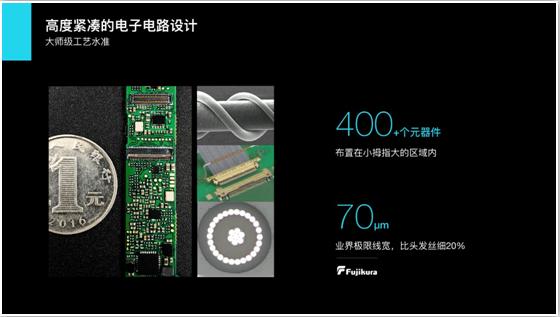
The smart glasses consist of only a dozen components, with core parts featuring multifunctional integrated applications. On a circuit board no larger than a little finger, nearly 400 electronic components are arranged, and the trace width reaches the industry’s extreme limit of 70 micrometers—20% thinner than a human hair.
"Following on-site user testing, the GLXSS ME offers a wearing experience indistinguishable from that of ordinary eyeglasses, ensuring comfortable all-day wear throughout an eight-hour workday."
The Arduous Standardization of Core Technologies
The essence of AR lies in the integration of data with reality, and the ability to interpret reality is one of the most core technologies.
Liangliang Vision believes that as the most important visual interface among the three major sensory aids for humans—“vision, hearing, and speech”—its cognitive capabilities must be as real-time and precise as the human eye.
The value of first-person interaction lies in the cognitive interface that synchronizes with humans in real time.
Driven by this original intention, LLVision has dedicated itself to in-depth research and proactive strategic planning, becoming the first to integrate the AI-capable Movidius Myriad 2 chip into smart glasses such as the GLXSS ME.
This VPU, measuring only 9.5mm x 8mm, boasts an ultra-high performance-per-watt ratio; compared to traditional architectures, it delivers a 10-fold increase in computational performance while consuming only one-fifth of the power.
It is well known in the industry that development based on Movidius is highly challenging, as it requires comprehensive expertise in AI, computer vision, and embedded systems development.
To ensure the smooth deployment of algorithmic models, the team first developed a neural network inference framework compatible with mainstream training frameworks, thereby resolving deployment challenges and achieving an additional 2.25x speedup beyond the chip’s original computational performance.
Empowered by on-device AI, the GLXSS ME is capable of performing numerous high-precision edge data acquisition and recognition tasks, including the capture and identification of facial features and objects. Taking facial recognition as an example: face detection achieves an accuracy of 92.8% at 100 false positives on the FDDB benchmark, while face recognition attains an accuracy of 99.4% on the LFW dataset.
Building a First-Person Interactive Platform for Industry, Healthcare, and Security
Hardware companies have long faced a common challenge: customers need solutions, not just hardware.
Liangliang Vision recognized the importance and necessity of addressing the “last mile” early on. Over the past several years, it has consistently conducted frontline user research, continuously developed applications, and actively pursued ecosystem partnerships.
Liangliang Vision has developed dedicated first-person interaction platforms tailored for the industrial, medical, and security sectors, such as an integrated synthetic operations platform based on first-person perspective. These solutions ensure that first-person interaction achieves seamless integration from hardware to business applications.
Interestingly, new technological breakthroughs are often discovered in the process of exploring commercial applications.
When developing the enterprise application platform at Liangliang Vision, one of the most critical technical challenges stemmed from first-person perspective remote transmission, as there was no protocol architecture suitable for AR transmission prior to this.
To this end, LLVision has invested in the development of protocols capable of transmitting AR Streaming, upgrading the underlying streaming media platform architecture of GLXSS Live to a dual-stream architecture for AR Streaming. Building on existing video streams, and leveraging AI and Computer Vision (CV) technologies, LLVision has decoupled feature streams from video streams, establishing a new closed-loop data transmission system to enable bidirectional AR interaction.
This move redefines the relationship between streaming media, time, and space:
Traditional video data: static, frame-based.
AR Streaming Data: Object-centric, with each object being independent and interactive.
Liangliang Shijie defines it as: AR Flow.
Ultimately, streaming has been elevated to a new dimension through first-person perspective interaction, truly enabling AR interaction to become intelligent.
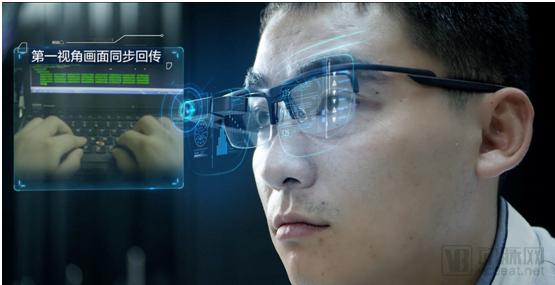
Human-Machine Collaboration Platform Connects Industrial AI, Driving Intelligent Upgrades
Currently, LLVision has served leading enterprises in industries such as communications, manufacturing, healthcare, engineering, and transportation:
1. In 2017, the company's sales revenue increased tenfold compared to the previous year, with an average of 1.2 new client partnerships secured per day. Fortune 500 companies accounted for 58% of the total client base.
2. Significant growth in cross-border business, with clients spanning China, the United States, Russia, Germany, France, the Netherlands, Poland, Romania, North Africa, Japan, South Korea, Singapore, the United Arab Emirates, Thailand, Bangladesh, Indonesia, and other countries and regions.
3. Deepening customer collaboration to drive the exploration of new business models.
Liangliang Shijie partnered with Bureau Veritas to develop a remote collaborative inspection platform, connecting over 60,000 employees worldwide with backend experts. The collaboration introduced innovative models by establishing multi-point cross-border joint inspections. In 2018, the platform was further integrated into Bureau Veritas’ digital asset management system, enabling real-time monitoring and optimization, and advancing toward predictive maintenance.
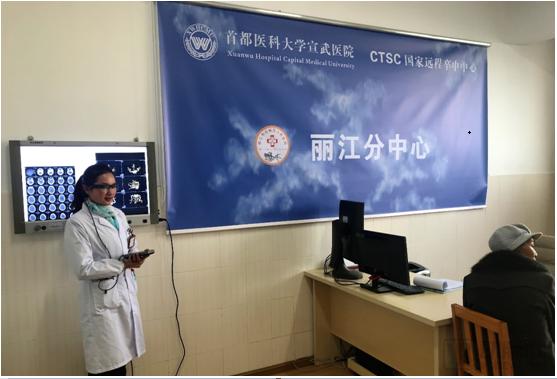
In the healthcare sector, in collaboration with Xuanwu Hospital, we have integrated into the Lijiang Base of the National Engineering Laboratory for Internet-based Medical Diagnosis and Treatment Technologies, connecting Beijing-based specialists, primary care physicians in Lijiang, and residents of the Ancient Town to support remote consultation and emergency telemedicine scenarios within the tiered diagnosis and treatment system.
In the field of smart cities, LLVision has jointly developed an integrated synthetic command system with its partners, integrating solutions such as facial recognition and license plate recognition, playing a pivotal role in the management systems of large-scale transportation hubs like Shanghai Pudong International Airport.
In analyzing the industry market, Wu Fei, CEO of LLVision, believes that customers evaluate whether to adopt a new technology based on two key factors:
First, compare the historical costs of labor and errors with the costs of new technologies;
Second, assess whether new technologies can deliver new capabilities to address problems on a broader scale.
Taking the remote guidance services on the GLXSS Live platform as an example, according to incomplete statistics:
In 2017, LLVision served more than 100 large and medium-sized enterprises, with a domestic-to-international business ratio of approximately 2:1. Its clients conducted a total of 180,000 remote guidance sessions throughout the year, saving RMB 8.4 billion in costs.
In 2018, LLVision projected that its enterprise client base among large and medium-sized businesses would expand to over 500 companies. The value delivered to customers would evolve from cost savings to enhanced efficiency and business model innovation, resulting in an exponential increase in customer value.
In 2018, the GLXSS Live human-machine collaboration platform underwent a comprehensive upgrade. Centered on a human-centric approach and leveraging first-person interaction via AR glasses, it deeply integrated into customer business processes and industrial AI architectures, enabling multi-dimensional connectivity, cognition, and collaboration:
1. People to People: Establish connections and enhance remote collaboration capabilities through rich media interactions.
2. Human-Machine Interaction: Real-time identification and reading of IoT sensor data, integration with edge intelligence, and realization of human-machine collaboration.
3. People and Data: Establish an AR knowledge base through standardized business process mapping and intelligent analysis-matching, enabling predictive analytics.
4. People and Business: Integrate with the enterprise’s business systems and resource management platforms to optimize decision-making processes and achieve managerial synergy.