

Impossible Foods Files IPO Prospectus: Pioneering Plant-Based Meat to Disrupt Global Food Industry
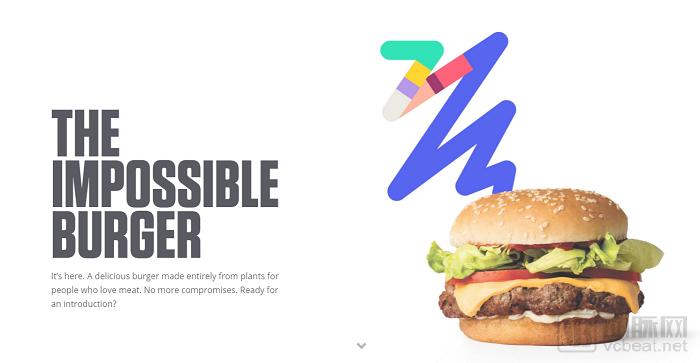
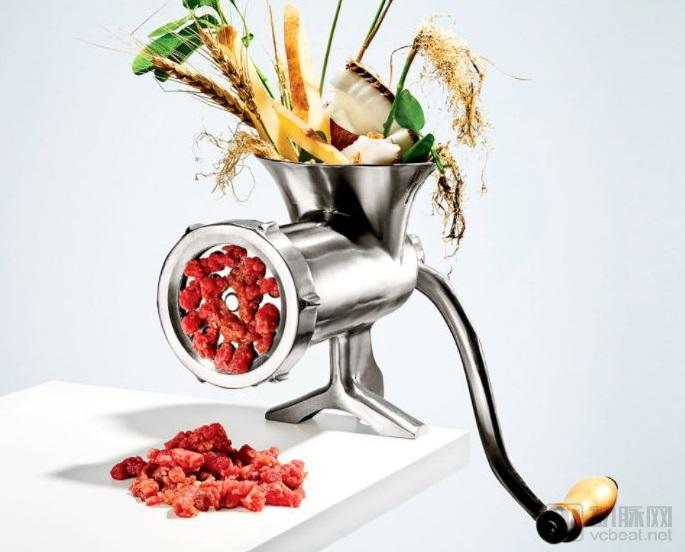
Impossible Foods is a food company based in the United States, with its headquarters in Redwood City, California. To some extent, it is also a biotechnology company. The company can produce "meat" and dairy products from plant-based ingredients such as soybean roots, wheat, and coconut oil, without using any animal-derived products in the production process. Its products are indistinguishable from real beef in terms of appearance, taste, and even cooking methods.
Impossible Foods has redefined vegetarianism, aiming to encourage people to abandon animal meat and thereby reduce the environmental impact of livestock farming.
In August 2017, the Bill & Melinda Gates Foundation added an additional $75 million to its existing investment. Since its inception, the company has completed seven rounds of financing, raising a total of more than $270 million. In addition to the Bill & Melinda Gates Foundation, Impossible Foods’ investor roster includes globally renowned venture capital firms such as Google Ventures, Khosla Ventures, Viking Global Investors, UBS, and Temasek Holdings, as well as Horizons Ventures, the fund established by Chinese tycoon Li Ka-shing.
As early as 2015, the fourth year after Impossible Foods was founded, Google proposed to acquire it for a high price of $200 million to $300 million, but was rejected by Impossible Foods.
Medical Doctor Entrepreneurship
Patrick O. Brown, the founder of Impossible Foods, has a strong academic background; he is a professor in the Department of Biochemistry at Stanford University and the inventor of DNA microarray technology.

Patrick O. Brown, Founder of Impossible Foods
Brown earned his M.D. and Ph.D. from the University of Chicago. During his postdoctoral fellowship, he worked with J. Michael Bishop and Harold Varmus (recipients of the 1989 Nobel Prize in Physiology or Medicine and former director of the U.S. National Institutes of Health) to discover the mechanism of retroviruses.
In 2001, Brown, together with Varmus, David J. Lipman (former Director of the National Center for Biotechnology Information), Michael Eisen (a scientist at Lawrence Berkeley National Laboratory), and others, founded the Public Library of Science, aiming to address the imbalance in access to scientific research information through the Internet.
The following year, Brown was named one of the “2,000 Most Influential Scientists in America” by the U.S. National Academy of Sciences.
In 2009, Brown took an extended leave. He spent 18 months reflecting on his career. He came to realize that environmental issues are among the greatest challenges facing humanity today, and he identified livestock farming as a major source of pollution.
In 2010, with the assistance of other scholars, Brown organized a conference in Washington to raise awareness of this issue. However, Brown’s views were not endorsed by the National Research Council (NRC), whose workshop concluded that “the environmental impact of livestock production is negligible throughout the 21st century.”
Brown was not deterred by the NRC’s opposition; he came up with a good idea—launching meat-alternative products on the market to reduce the environmental impact of livestock farming.
After the holiday, Brown immediately put his ideas into action. He recruited a small team of scientists, aiming to find a way to artificially produce plant-based meat that is indistinguishable from real meat in both taste and appearance.
Unveiling the True Essence of Meat: Heme
To create “fake meat” that is indistinguishable from real beef in texture, it is first necessary to understand what differentiates the mouthfeel of meat from that of vegetables. Scientists at Impossible Foods discovered that heme is a crucial component in meat. Heme is the substance in blood responsible for transporting oxygen molecules, and it gives blood its vibrant red color.
This substance is abundant in muscle tissue and is present in all living animals. In addition to animals, certain nitrogen-fixing plants (such as legumes) are also rich in heme. Scientists have found that this heme is identical to that found in animals.
Brown suspected that the unique flavor of meat must be linked to its abundant heme. He drew inspiration while tasting alfalfa roots: if plant-derived heme could be produced at scale, it might be possible to replicate the taste of meat.
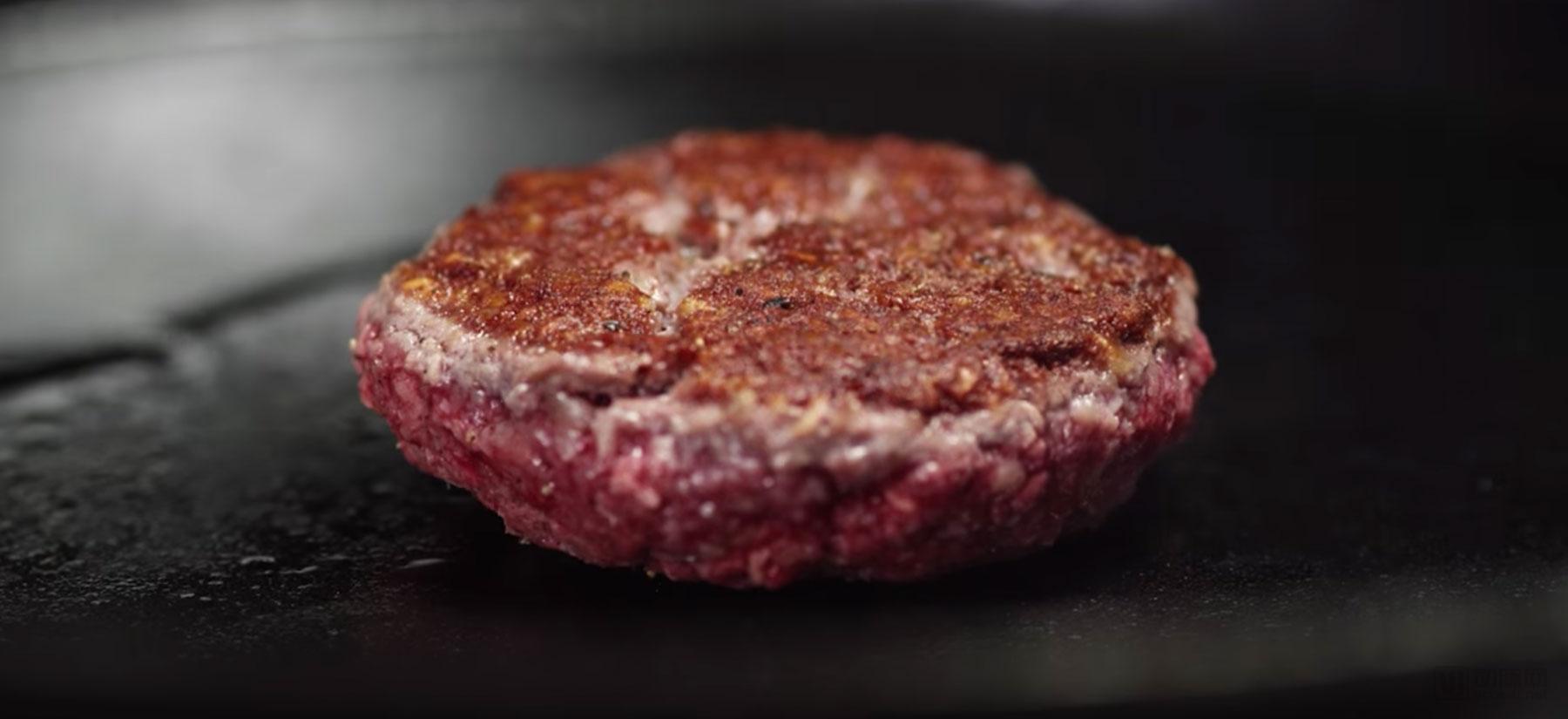
Beef Patties Made with Plant-Based Meat
“I wanted to see what could be extracted by mixing these things together,” Brown mentioned in an interview with The Times. “I was just experimenting casually and didn’t have much data, but I need to talk to the venture capitalists.”
Brown founded Impossible Foods in July 2011, subsequently securing $9 million in Series A funding from Khosla Ventures.
Indistinguishable from the Real: The Marvel of Chemical Reactions
To imbue plant-based meat with the taste of real meat, Impossible Foods uses soybean roots rich in heme as its raw material.
Scientists first genetically engineered a strain of yeast and then used it to ferment soybean-derived heme. Following a chemical reaction akin to beer fermentation, scientists at Impossible Foods successfully produced large quantities of plant-based heme.
In 2014, an independent panel of the Food Safety Expert Group conducted a review of the safety and allergenicity of soybean root hemoglobin. The expert group ultimately reached a consensus that this ingredient is safe and complies with the Generally Recognized As Safe (GRAS) standard; furthermore, it is structurally and functionally indistinguishable from other safe animal-derived heme proteins.
In July 2017, the United States Patent and Trademark Office granted Impossible Foods a product patent (No. 9,700,067). Meanwhile, the Trademark Office also approved the company’s use of this heme in the production of beef-like products.
Beyond taste, to create “fake meat” that is indistinguishable from the real thing, scientists at Impossible Foods have also replicated key features found in animal muscle—namely, fat and connective tissue.
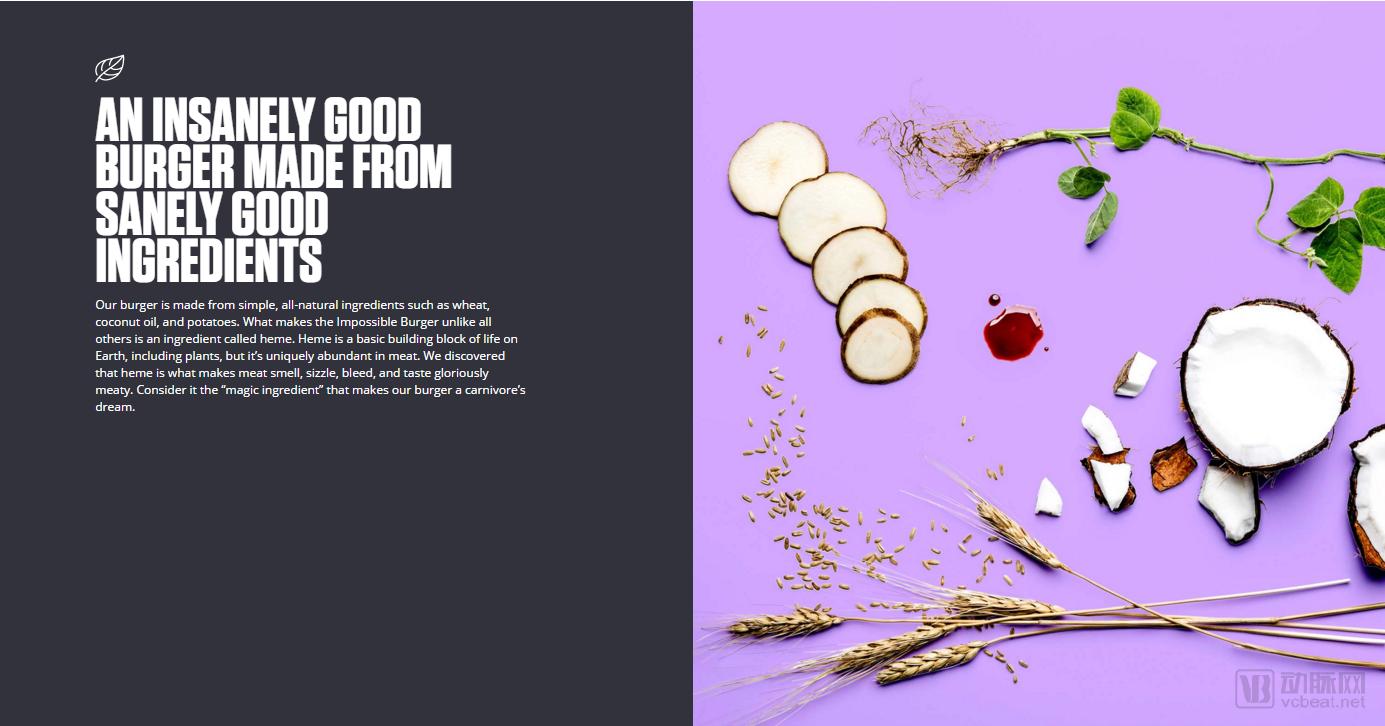
Impossible Foods mimics animal fat by blending coconut oil with wheat and potato. When plant-based meat is heated, the potato forms a firm matrix that keeps the coconut oil solid at higher temperatures. As the temperature rises further, the coconut oil seeps out from the potato matrix, creating an appearance similar to melting beef fat.
Covering over 800 restaurants
After investing $80 million and undergoing five years of research and development, Impossible Foods finally launched its first plant-based meat product, the Impossible Burger, in 2016.
Momofuku Nishi in New York was among the first to offer this product. The restaurant began selling the Impossible Burger in July 2016, and by August, it had become the establishment’s signature dish.
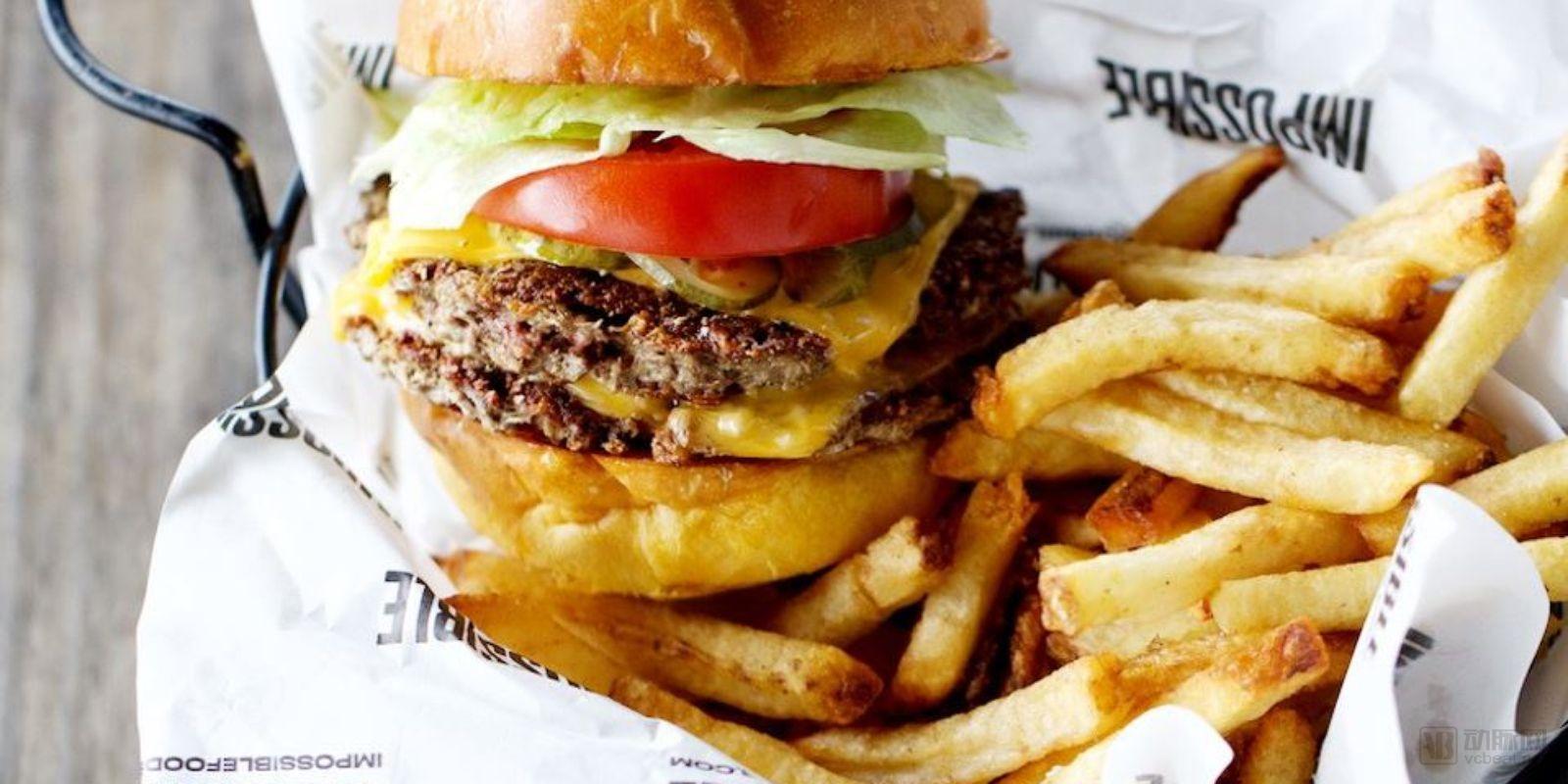
Impossible Burger
Compared with traditional burgers, vegetarian burgers contain no animal fats or dairy products at all. While ensuring adequate energy intake, this product can reduce the body’s intake of fat and cholesterol. Moreover, since vegetarian burgers do not contain real animal meat, there are no antibiotic residues in the food.
“From the patty to the sauces, the Impossible Burger contains no animal-derived ingredients. Each burger reduces land use by 95% and water consumption by 74% compared to traditional meat burgers, while also cutting greenhouse gas emissions by 87%,” the company added.
After its initial success, Impossible Foods rapidly expanded into select restaurants in California. In the first half of 2017, Impossible Foods granted exclusive rights to several restaurants, including Bareburger in New York, Umami Burger in California, Hopdoddy in Texas, and the Michelin-starred restaurant PUBLIC.
As of the end of 2017, Impossible Foods’ products were available in 800 restaurants, spanning from Hawaii to Maine.
Expand Production Capacity
Between 2016 and 2017, Impossible Foods only supplied its products on a small scale in California and New Jersey, and did not supply to retail stores.
After a successful pilot run, they decided to expand their production capacity.In March 2017, Impossible Foods announced that it would build its first large-scale factory in Oakland, California, with a production capacity of 1 million pounds per month upon completion. In August of the same year, the company secured a new round of financing led by Temasek Holdings; in September, the factory officially commenced production.
As production capacity increased, the company began to expand its distribution channels. The first step Impossible Foods took was to bring in senior executives with extensive experience in marketing and sales.
In December 2017, Impossible Foods announced that Stephanie Lind had officially joined the company as Vice President of Sales. Previously, Ms. Lind served as CEO of Elohi Strategic Advisors, a U.S.-based marketing agency.
Not only that, Lind also served as Vice President of North American Sales at Kerry Group, and previously held sales leadership positions at Sysco, PepsiCo, McDonald’s, HAVI Logistics, and Campbell Soup Company, bringing with him his own network of supply chain partners and years of marketing and sales experience.
In the same month, Impossible Foods announced a distribution partnership with DOT Foods. As the largest food distributor in the United States, DOT Foods operates nine distribution centers covering all 50 states. Through this collaboration, Impossible Foods was able to establish a nationwide sales network, reaching a broader range of restaurants.
Brainwashing-style propaganda
Impossible Foods’ success is by no means accidental. As a consumer-facing product, marketing plays a crucial role, and Impossible Foods has mastered this art.
After completing product development, Impossible Foods made substantial investments in advertising to prepare for its product launch.
A Google search for Impossible Foods yields a flood of articles. These pieces rarely mention corporate-level information about Impossible Foods; instead, nearly all of them serve as promotions for Impossible Foods’ plant-based meat products or the Impossible Burger.
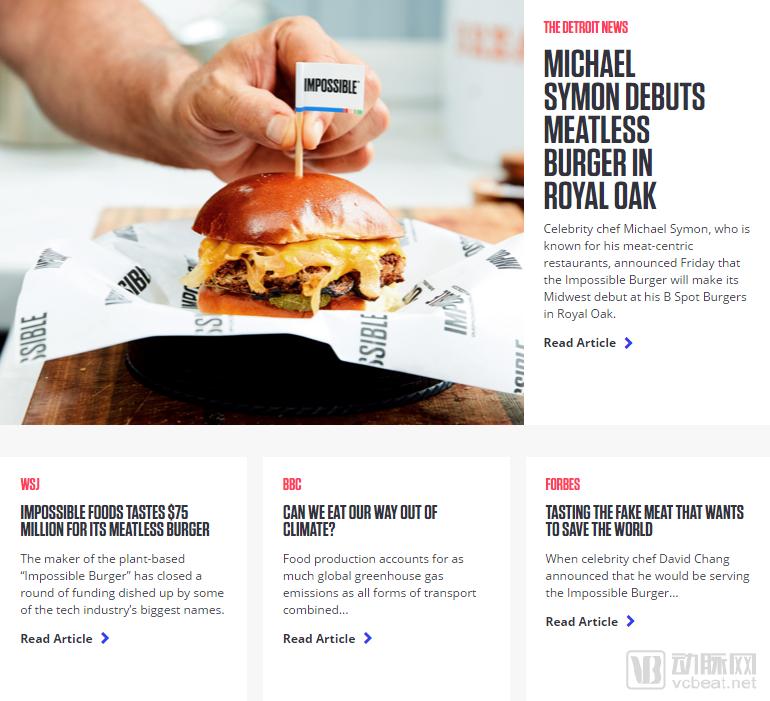
In addition to venture capital media such as Business Wire and TechCrunch, it also includes internationally renowned media outlets like the BBC, The Times, Forbes News, and The New York Times, as well as some food blogs.
Impossible Foods also places great emphasis on brand building. Just as the phrase “pizza and more” immediately brings Pizza Hut to mind, Impossible Foods is deliberately crafting its own distinctive identity. Whether in corporate news or product coverage, the company consistently describes its products with a unified message: made from plant-based ingredients, they look, taste, and cook just like real meat.
This kind of brainwashing-style promotion not only simply and effectively explains the product's features, but also forms a conditioned reflex-like memory in consumers' minds, so that they will automatically associate Impossible Foods with plant-based meat whenever they see it.
It is important to recognize that environmentally friendly technologies represent the future trend, and Impossible Foods is not the only company developing meat alternatives. In addition to Impossible Foods, the Bill & Melinda Gates Foundation has also invested in another company. Through such promotional efforts, Impossible Foods aims to imprint its brand in consumers’ minds, aspiring to become a “time-honored brand” akin to China’s prestigious legacy brands.
Impossible Foods also periodically releases restaurant operational data. For instance, the company once revealed that after a restaurant introduced its products, foot traffic increased by approximately 13%, annual sales rose by 30%, and the repeat customer rate reached around 30%. These figures serve as living advertisements for Impossible Foods, encouraging more restaurants to join its ranks.
Betting on the Right Trends to Capitalize on Genuine Concepts
Building on the previous discussion, as awareness of the harms of environmental pollution has grown, eco-friendly technologies have gained significant traction. Impossible Foods’ plant-based meat, derived from plants, saves substantial amounts of land and water resources and reduces greenhouse gas emissions compared to conventional meat produced through livestock farming.
In addition to environmental concerns, people have also become aware of the harms caused by excessive fat intake and overnutrition. A survey by Impossible Foods showed that 40% of Americans prefer vegetarian options when dining out.
By firmly securing these two points, Impossible Foods has clearly bet on the right trend.
Cost Will Be the Greatest Challenge
But will Impossible Foods’ success continue indefinitely? Not necessarily. Each Impossible Burger is priced at around $12, positioning it as a premium product. This is also evident from the current list of restaurants carrying Impossible Foods’ products, which are predominantly high-end establishments.
Currently, the price of Impossible Foods’ beef is on par with that of organic beef, which falls far short of what is needed to achieve Brown’s 2035 goal of completely replacing conventional meat. For some consumers, curiosity may drive them to try plant-based meat alternatives; however, once this curiosity is satisfied, the Impossible Burger could face a significant risk of losing customers.
Brown fully understands the rationale, stating that the company will continue to make technological improvements to rapidly reduce costs.
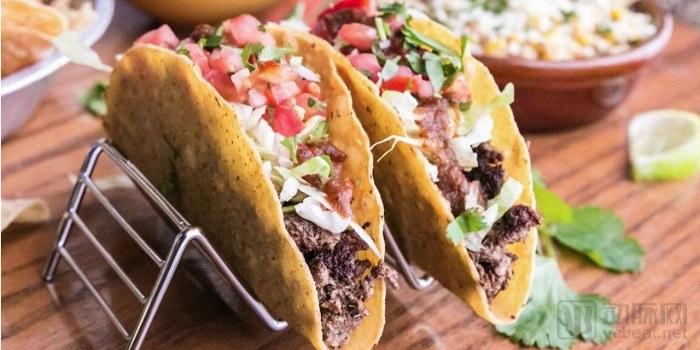
Tacos Made with Plant-Based Meat
Furthermore, the company is also pursuing product diversification. On January 5, 2018, Impossible Foods partnered with the Chicago restaurant Tallboy Taco to launch a taco made with plant-based meat. This marked the company’s first use of its plant-based meat in products other than burgers, signaling the beginning of expansion into other commercial channels.
However, Brown stated that the product diversification they hope for is not merely reflected in processing methods.
“Impossible Foods positions itself not as a food company, but as a technology company,” Brown added. “In addition to beef, the company is also attempting to produce other plant-based meats, such as chicken and fish.” However, since the heme content in chicken and fish is far lower than that in red meat, they need to reformulate their products accordingly.
It is understood that the company will launch its second product in December 2018.