

Tapping into the Post-Radiotherapy Market: How TianTian Linglan Monetizes Follow-up Care
“Having worked in the healthcare industry for many years, I have witnessed a myriad of complex phenomena and come to appreciate the immense challenges faced by medical practitioners in a country with such a large population. Throughout this journey, I have remained driven by a deep-seated commitment: to leverage limited technological resources to create infinite possibilities for both physicians and patients,” reflected Ding Yi, General Manager of Tiantian Linglan.
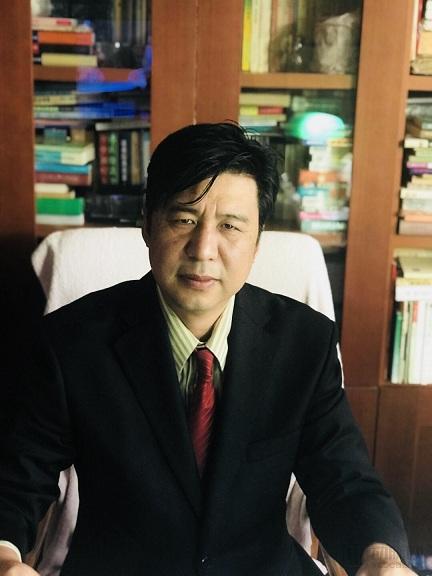
Ding Yi, General Manager of Tiantian Linglan
Ding Yi has previously served at the Naval Equipment Demonstration and Research Center, the State Administration of State-owned Assets, and as General Manager of Dongfang Xinzi Asset Appraisal Co., Ltd. In recent years, he has jointly invested in and managed a domestic high-end radiotherapy equipment company, demonstrating profound expertise in the field of radiotherapy.
In the radiotherapy equipment project, Ding Yi discovered an interesting phenomenon: many patients find it difficult to establish contact with specialists after completing radiotherapy.
Following his research, Ding Yi learned that radiotherapy in hospitals does not constitute a complete treatment process. This is because no biochemical reactions occur immediately after radiotherapy; various complications may only emerge sequentially once the patient returns home. This delayed effect is related to tumor staging and cellular sensitivity. Furthermore, physicians can only determine the therapeutic efficacy after assessing the patient’s response.
This logic dictates that during the interval between radiotherapy and the onset of adverse reactions, patients can only have their treatment efficacy assessed by physicians through hospital follow-up visits. However, after discharge, the majority of patients lose contact with their attending physicians. Consequently, post-discharge follow-up for oncology patients has long remained a significant weakness in China.
Radiotherapy Follow-Up Can Improve Patients' 5-Year Survival Rate
According to the "2017 China Cancer Report" released by the National Cancer Center, there are 4.2 million new cancer cases in China each year, with more than 10,000 people diagnosed with cancer every day, averaging 8 diagnoses per minute. Compared with 2012, the number of new cancer cases in China continues to rise. Nearly 50% of patients require or participate in radiotherapy, yet matching patients with specialist resources remains highly challenging.
According to international data, for equipment of the same type (grade), the five-year survival rate of radiotherapy patients in China is only 38%, while abroad it can reach 68%. A significant portion of this disparity is attributed to patients losing contact with specialists after discharge and lacking professional post-discharge guidance.
In this context, “Linglan Suizhen” was launched in 2017.
Led by Ding Yi, the management team and a panel of industry-leading experts have spent over six months on project initiation, research, preparation, and refinement—covering everything from details to strategy, and from R&D to application...
In June 2017, a professional management platform for post-discharge doctor-patient-hospital interactions was launched online, filling a gap in China’s healthcare system. The platform is part of the public welfare initiatives under Datang Telecom Group and is operated and strategically planned for data management by Tiantian Linglan (Beijing) Network Technology Co., Ltd., the fourth enterprise in the “Tiantian Series” strategic layout of Datang Network.
Formation of a Complete Medical Data Chain
There are numerous internet-based medical services, particularly those offering lightweight consultations. However, once detached from physical hospital settings, there are few medical scenarios in which doctors’ online consulting services can achieve therapeutic outcomes; radiotherapy follow-up is one such exception.
“The follow-up interval is too long, making it difficult to continuously and comprehensively monitor patients’ conditions during the recovery period. What Tian Tian Linglan does is simple and straightforward: ensuring that after discharge, patients receive ongoing disease monitoring and rehabilitation guidance from their radiation oncologists,” said Ding Yi.
Hospital data is often fragmented, with gaps not only in in-hospital records but also in post-discharge follow-up data. Tiantian Linglan provides physicians with tools for long-term patient monitoring, enabling the creation of comprehensive, end-to-end medical data and establishing personalized private clouds for individual doctors. This is one of the key reasons why “Linglan” has gained such high acceptance among physicians.
Currently, the platform has onboarded more than 300 of the most distinguished oncology experts from major Grade A tertiary hospitals in China, and has provided post-discharge expert consultation services to over 10,000 patients.
Established Payment Models
Tiantian Linglan has a well-established, systematic fee structure:
Depending on the specialist’s rank, the treatment equipment used, and the duration of care, patients may select from various service packages—such as single-session, three-month, six-month, or one-year plans—and pay the corresponding fees through the platform. Typically, a single session costs around RMB 300, while an annual package ranges from RMB 2,000 to RMB 3,500.
Patients choose Tiantian Linglan primarily based on three key needs:
1. Symptoms following radiotherapy are mostly acute, resulting in strong short-term demand and facilitating timely intervention within the therapeutic window.
2. Since radiation oncologists in China are primarily concentrated in Beijing, approximately 80% of patients seek medical care outside their local regions. These patients reside at least 150 kilometers away from the hospitals, and coupled with the difficulty in securing appointments with specialists, it is challenging for them to frequently visit the hospitals for in-person consultations and follow-up examinations.
3. Establish and utilize a personal electronic medical record vault to monitor health status at any time.
Ding Yi stated, “The uniqueness of radiotherapy lies in the fact that its dosage, equipment, and staging are all integral components of the treatment modality; therefore, only the physicians who have completed the patient’s treatment are best suited to provide follow-up care.” The greatest challenge for internet healthcare is achieving financial self-sustainability. Tiantian Linglan has initially realized revenue generation from individual consumers and established a smooth business model.
“Who is serving me?” Is it the doctor or an assistant? How can patients’ concerns be alleviated? In fact, the consulting physician for a patient is their attending physician throughout the treatment period. The doctor establishes face-to-face contact with the patient via the platform, truly achieving integration of online and offline services. Therefore, this service is built upon a “familiar” doctor–patient relationship, which constitutes one of the core elements of “Linglan.”
To date, the Tiantian Linglan team comprises over 40 members, including developers, operations staff, back-office personnel, and medical assistants. The company has secured several million RMB in angel-round financing from investors such as Datang Huijin, Zhongtou Guangsheng, Jinke Venture Capital, Shanghai Texi, and Hongtian Growth. It is currently seeking RMB 20 million in Pre-A round financing.