

Mooring Sleep Tech Files for IPO: How an AI-Driven B2B Sleep Solutions Provider Achieved 80% Revenue from Enterprise Clients
At the CES exhibition held at the beginning of the year, the Sleep Technology zone showcased a wave of new products. Nokia, which acquired the French smart health product manufacturer Withings, unveiled a brand-new smart health device—Nokia Sleep—while Philips also launched its “SmartSleep” headband at CES 2018.
Among the Chinese sleep companies attending the conference, Sleepace, Snail Sleep, and Binghan Technology are known to have participated. Some of them launched wearable devices, while others introduced solutions for smart bedrooms and sleep management systems. Sleep health continues to receive significant attention.
Among the hardware categorized as consumer electronics, sleep-aid products such as functional pillows and sleep glasses come in a wide variety, occupying shelves in trendy retail stores. Although the sleep industry is vast, the sleep technology community is actually quite small. So, what strategies do startups in this sector employ? Amidst a landscape of homogeneous products, how can companies identify business models that suit them? To address these questions, VCBeat conducted an exclusive interview with Fu Rong, CEO of Mianmian (Shanghai) Intelligent Technology Co., Ltd. (hereinafter referred to as “Mianmian”), to explore how she and her team create value within this niche.
The “Iron Triangle” Team Composed of Operations, Algorithms, and Product Divisions
Fu Rong holds a master’s degree in mathematics from the University of Oxford. With a background in venture capital investment, he later transitioned into operations. In 2015, he joined forces with three other technology experts to form an entrepreneurial team dedicated to hardware research and development in the sleep sector. He currently serves as CEO of Mianmian.
Zhang Boning, the company’s CTO, holds a Ph.D. in Computer Science from the Chinese Academy of Sciences. A serial tech entrepreneur, he is proficient in both software and hardware development, and his research solutions have been acquired by multinational technology companies.
Design Director Qian Dingzhe, an Industrial Design graduate from the Academy of Arts & Design at Tsinghua University, has received widespread acclaim for his design works at CES, and his developed app was featured on the Apple App Store’s front page.
Product Manager Mi Wenfei, also a graduate of the Industrial Design program at the Academy of Arts & Design, Tsinghua University, brings experience in the home furnishings and digital consumer electronics industries and has received prestigious international design awards.
There is no shortage of entrepreneurs who have shifted from investing to founding startups. Their shared trait is a deep understanding of market dynamics. Fu Rong, now overseeing operations at the Mianmian team, believes that for a technology company producing consumer electronics, the four founders perfectly form an “iron triangle” of operations, algorithms, and product design:
Fu Rong told reporters that his team considers smart hardware to be a sector with significant entry barriers, one that can indeed address issues unresolved by traditional bedding. “While latex or memory foam pillows can aid sleep to some extent, improving sleep quality—such as mitigating snoring—requires developing genuine solutions based on human physiological data.” Currently, the Mianmian team has expanded to 30 members.
Where There Is Demand, There Is a Market
According to the "2013-2017 Xilinmen China Sleep Index," individuals with mild sleep difficulties accounted for 50.3% of the total surveyed population, indicating that the situation regarding sleep problems remains severe. Among various sleep issues, excessive dreaming, difficulty falling asleep, and post-sleep fatigue have become the primary manifestations among those struggling with sleep.
From 2015 to 2016, the per capita disposable income of urban residents in China increased from RMB 10,493 per year to RMB 33,616 per year; the consumption level of urban residents also rose from RMB 9,832 per year in 2005 to RMB 27,088 per year in 2015. With the rapid development of the national economy and the significant, sustained increase in residents' income, consumer spending patterns have continued to upgrade, gradually shifting from purchasing products to purchasing services, and from mass-market goods to high-end commodities.
Mianmian’s establishment was largely driven by its recognition of the market’s vast capacity.
Fu Rong believes that with the year-on-year increase in disposable income, the consumer demographic has shifted, with individuals born in the 1980s and 1990s now constituting the primary consumer base. This group demonstrates growing concern for health, spanning dietary wellness, physical fitness, and sleep health. Sleep health occupies a niche between chronic disease management and daily well-being; while consumers prioritize it, there is a lack of high-quality products on the market to meet their needs.
There is a significant gap in the market, which is the first reason why Mianmian has entered the sleep market. The second reason is that sleep status is closely related to people’s daily routines and activities. Therefore, Mianmian aims to help users improve their sleep quality through its products.
Sleep Improvement Products Enter the Market via Distribution Channels
According to Fu Rong, Mianmian’s products are divided into two lines: ToC and ToB.
Mianmian’s B2C offerings are end-user products centered on the “Mirahome” brand, with a product portfolio that includes smart anti-snoring pillows, smart mattresses, and smart sleep blankets; its SKU lineup is currently expanding.
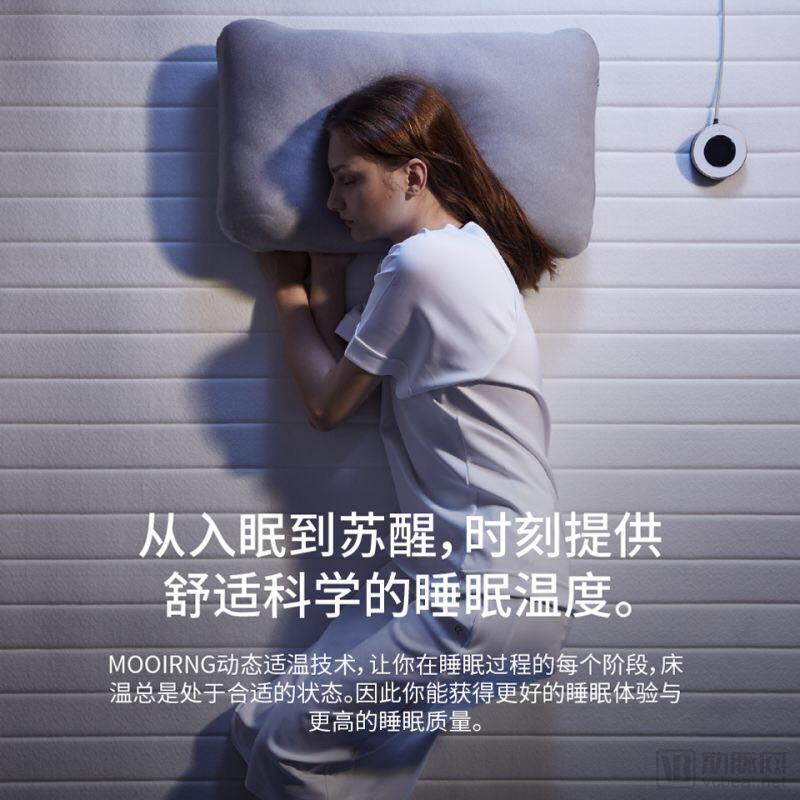
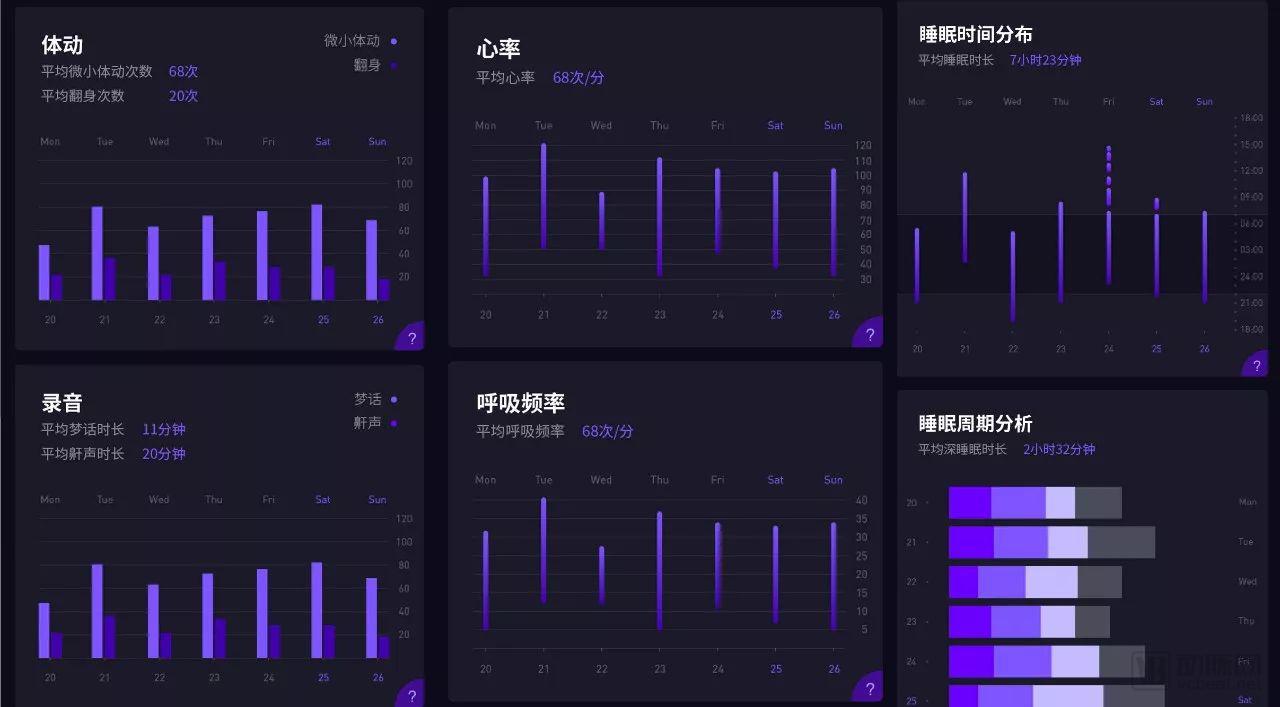
Among its offerings, the smart sleep blanket named “Mooring” is the sole product featured on its official website. This product utilizes thin-film sensors to monitor the user’s heart rate, respiration, body movements, in-bed temperature, and ambient room temperature, transmitting the data to the cloud via Wi-Fi. After algorithmic analysis, the system adjusts the ambient temperature in real time based on the user’s sleep stages. Users can also manually adjust settings using a bedside controller. By opening the companion mobile app the next day, users can view their physical sleep report from the previous night.
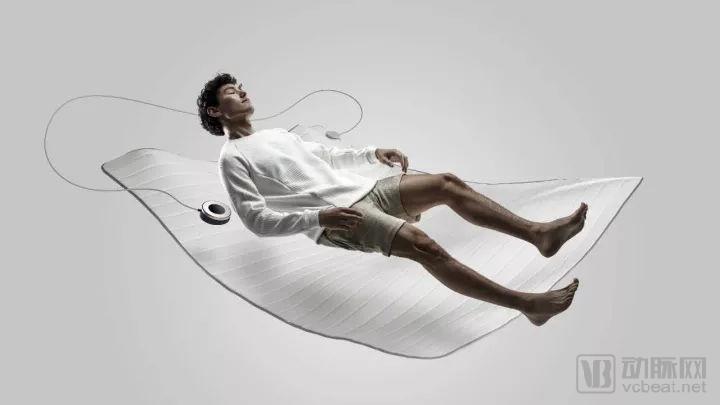
Mooring Smart Sleep Blanket
Another product, the smart anti-snoring pillow, features built-in respiration and snore sensors. Its intelligent chip leverages a proprietary multi-dimensional monitoring algorithm to precisely identify snoring events during sleep based on sensor data. It then activates a specialized vibration module with multi-level interventions; upon feeling the vibrations, the user adjusts their sleeping position by turning their head to the side, thereby widening the upper airway and reducing snoring. This non-invasive solution requires no medication or prescription, enabling smoother breathing and increased blood oxygen saturation, thus effectively alleviating snoring.
Products designed to improve sleep by adjusting sleeping positions also include smart adjustable pillows, whose algorithms were co-developed with scholars from Chiba University. By studying data such as electromyography (EMG), subjective perceptions, and spinal curvature of test subjects using headrests of varying temperatures and shapes, a specialized algorithm was developed. Built-in sensors in the pillow can detect sleeping positions and adjust the pillow’s shape in real time according to the algorithm, providing support for the head and neck. The headrest dynamically changes its form based on each user’s individual conditions, allowing users to relax their muscles and fall asleep peacefully at any time.
Mianmian’s smart mattress monitors users’ sleep by tracking indicators such as heart rate variability, respiratory rate, body movement frequency, and pressure distribution. After using the mattress, users receive accurate sleep monitoring reports. Additionally, Mianmian has partnered with Chunyu Doctor to integrate a third-party remote consultation portal into the Mooring APP, leveraging users’ accumulated historical data to connect them with professional health services.
All of its products enter the market exclusively through distribution channels. Although this approach yields lower profit margins compared to direct sales, Fu Rong believes that, beyond “visible costs,” the market also entails “invisible costs” such as time costs. “Compared with direct sales, the advantage of the distribution model lies in its high expansion efficiency; within the same timeframe, products can rapidly reach a broader range of channels.”
80% of revenue comes from B-side clients, providing sleep solutions for traditional enterprises
So, in the field of sleep health, is “selling products” the only way? Perhaps not necessarily. Beyond retail shelf placement, health sleep companies can also explore B2B channels. For Mianmian, which focuses on the research and development of products to improve sleep, 80% of its revenue comes from the B2B sector.
According to Fu Rong, Mianmian’s B2B services fall into two categories: one is providing customized solutions for intelligent product upgrades to enterprise users, covering both hardware and software—from sensors to dedicated apps. The partners in this segment are primarily large-scale home furnishing and textile enterprises, such as Mianmian’s investor, Mengbaihe Home Technology Co., Ltd. (“Mengbaihe”).
Second, it provides sleep systems for vertical industries such as elderly care institutions, high-end hotels, aerospace, and public transportation, including caregiver monitoring systems and comprehensive management solutions for elderly care facilities, to enhance operational efficiency.
In November 2016, Mlily Home Furnishings Technology Co., Ltd. completed its investment in Mianmian Technology. Through strategic cooperation with Mianmian Technology in smart home technologies, the company integrated resources across smart home channels, design, and supply chain finance, while engaging in joint product development. This synergy between its traditional business and Mianmian’s sleep products has enhanced the company’s core competitiveness.
Fu Rong candidly stated that his persistence in building the “Mirahome” brand stems not only from its focus on C-end consumers, but also from the fact that an independent brand serves as the most effective platform for showcasing product categories and new technologies to B-end clients. Therefore, pursuing both C-end and B-end markets is not merely about boosting sales; rather, it aims to expand into a broader market while minimizing promotional costs.
Traditional Home Furnishing Companies Rush to Enter the Smart Home Market
According to Statista survey data, the global smart home market reached $56.5 billion in 2016, a year-on-year increase of 16.49%. The U.S. smart home market, valued at $14.649 billion, was the largest globally, while China’s market size ranked second at $2.075 billion. However, in terms of growth in smart home penetration rates, the United States led with 32.5%, whereas China stood at only 2.6%. Smart homes offer numerous advantages, including integrated IoT modules, personalized design, and health-conscious, eco-friendly features.
Fu Rong believes that the concept of smart homes has long existed, with convenient life services for users built upon a system, the most fundamental element being the underlying architecture. “The first wave of smart home manufacturers focused on building this underlying architecture, namely PaaS systems, such as Unisplendour IoT. To enhance the competitiveness of their products, real estate developers are increasingly embracing smart technologies. Following the recent surge in underlying architectures, home products such as smart door locks and mattresses are poised for successive growth.”
In response to the severe homogenization prevalent in the industry, strengthening R&D capabilities and enhancing brand image have become a consensus for transformation among home textile and home furnishing enterprises. A-share listed companies, including Mengjie and Mlily, have begun to venture into sleep technology, focusing on healthy sleep experiences. This trend also paves a “broad avenue” for numerous tech entrepreneurs in the sleep sector.
Amid the trend toward smart homes, traditional enterprises that take the lead in intelligent R&D will gain a competitive edge, as exemplified by the collaboration between Mlily and Mianmian.
Small startups and well-established traditional home textile companies naturally complement each other: one brings technology, while the other offers market access. Fu Rong believes that leveraging the distribution channels of large enterprises can help broaden product coverage. Meanwhile, traditional companies can achieve transformation and establish differentiated competition in the market by partnering with innovative sleep technology firms.
How Can Similar Products Carve Out a Path of Differentiation?
In the global sleep medicine industry, sleep products account for 88% of the overall market. According to data from China Industry Information Network, in 2015, the market size of the subsector focused on sleep-improvement products reached RMB 211.4 billion, of which sleep devices and supplies amounted to RMB 188 billion. Among startups in the healthy sleep sector, business models centered on smart hardware are prevalent.
So, how can product homogenization be avoided when functionalities are similar and forms are alike? This is a question entrepreneurs need to ponder. Since most companies in this field position themselves as technology firms, investing in algorithm development is one of the choices for achieving differentiated growth. "Frankly speaking, our product is the most complex among our peers," said Fu Rong.
Compared with similar products on the market, Mianmian is characterized by the following three features:
Self-developed sensors: Utilizing piezoelectric sensors independently researched and manufactured by the company, modules can be supplied to other smart home products, offering superior performance and supply chain advantages.
Machine Learning Algorithm R&D: A comprehensive improvement plan is in place to provide machine learning algorithms that integrate real-time user data for dynamic user-specific adjustments, establishing a feedback system to achieve truly intelligent adaptation.
Product Feature Design: Design products based on user pain points, market demands, and user aesthetics.
“Clad” in the garb of technology, a company’s core naturally lies in its R&D capabilities; however, Furong has emphasized the health attributes of Mianmian. “We aim to promote Mianmian’s products to a broader user base. Our ultimate goal is to collect as much user data as possible, as leveraging this data will enable us to better iterate our algorithms and enhance the product’s effectiveness in improving users’ sleep.”
It is reported that Mianmian’s smart anti-snoring pillows and other devices will apply for certification from the China Food and Drug Administration (CFDA) to enter sales channels such as pharmacies, becoming trusted medical products for improving sleep.