

Huiying Medical and Tsinghua Strait Research Institute Establish AI Joint Laboratory to Empower Cross-Strait Industrial Upgrading
In 2017, big data had already disrupted the traditional healthcare industry, and informatization reforms were rapidly advancing within medical institutions. Meanwhile, artificial intelligence ushered in an even more profound wave of transformation in healthcare. Medical Imaging (MI) has emerged as the most promising area of AI research in the medical field.
On March 5, 2017, “artificial intelligence” was included in the Government Work Report for the first time, elevating it to a national strategy.
On July 20, 2017, the State Council issued the Development Plan for New-Generation Artificial Intelligence, proposing that by 2020, the scale of the core artificial intelligence industry would exceed RMB 150 billion, driving the scale of related industries to surpass RMB 1 trillion.
On November 15, 2017, the Launch Conference for China’s New Generation Artificial Intelligence Development Plan and Major Science and Technology Projects announced the first batch of four national-level AI open innovation platforms, further underscoring the disruptive potential of artificial intelligence technologies in industrial upgrading.
On December 13, 2017, the Ministry of Industry and Information Technology (MIIT) released its Three-Year Action Plan for Artificial Intelligence. The Plan specifies that the objectives for AI-assisted medical imaging diagnostic systems are to promote the standardization of AI medical imaging data acquisition, support research and development in typical disease areas, and accelerate the productization and clinical application of AI-based medical imaging solutions.
Bolstered by supportive policies, major technology companies have also raced to announce their artificial intelligence development strategies. As a pioneer in the AI+MI (Artificial Intelligence + Medical Imaging) sector, Huiyi Huiying has been deployed in over 700 hospitals since 2017, completed the development and launch of multiple product lines, and secured hundreds of millions of yuan in Series B financing by late October 2017. In 2018, Huiyi Huiying fired the opening shot in China’s AI sector: on January 8, it publicly announced that it had secured a new round of financing from CDH Investments. Reportedly, this was the first investment deal in the AI field in 2018.
Recently, Huiyi Huiying has once again taken center stage in the AI arena: On January 19, Huiyi Huiying jointly established an Artificial Intelligence Joint Laboratory with the Tsinghua Strait Research Institute in Xiamen, where a stimulating seminar and unveiling ceremony were held.
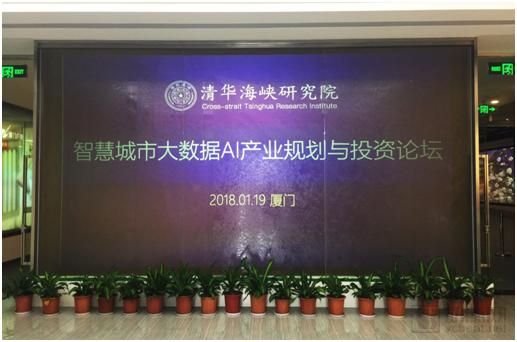
At the “ held on January 19Smart City Big Data & AI Industry Planning and Investment Forum” At the event, Huiyi Huiying and Tsinghua Strait Research Institute announced the establishment of a joint laboratory.
At the joint laboratory, Huiyi Huiying and Tsinghua Strait Research Institute mainly collaborate in the following four areas:
First, during the deep learning modeling process, leveraging the high-performance computing platform of the Tsinghua Strait Research Institute can significantly accelerate modeling speed.
Second, Huiyi Huiying collaborates with the Haixia Research Institute to jointly realize the scenario-based implementation and application of AI in healthcare.
Third, Huiyi Huiying conducts targeted joint training of interdisciplinary and cross-sector medical AI talents.
Fourth, Huiyi Huiying complements the strengths of other companies on the platform to form a comprehensive, hospital-scenario-based AI application solution, jointly enhancing medical services and establishing a complete ecosystem.
。
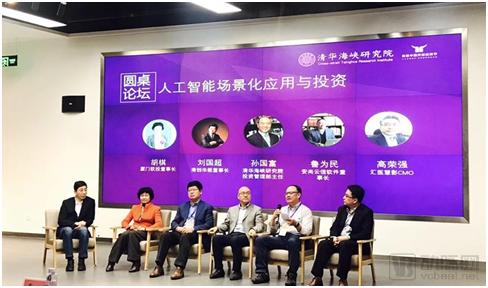
According to Wang Xi, Director of the Big Data Center at Tsinghua Strait Research Institute, AI + Healthcare will be the most valuable direction for innovation in the future. Artificial intelligence technologies, such as image recognition and deep learning, are bringing new opportunities to clinical practice, and AI-assisted diagnosis has already entered clinical application.
As an innovation-driven integrated industry-academia-research data platform, the Tsinghua Strait Research Institute can fully leverage the talent and technological advantages of Tsinghua University on both sides of the strait, Xiamen, and Huiyi Huiying, among others, to connect and integrate industrial, financial, technological, educational, and cultural resources across the Taiwan Strait.
It is reported that the institute was officially established in Xiamen on November 20, 2014. It was jointly prepared and founded by three parties: the Xiamen Municipal Government, Tsinghua University in Beijing, and the Alumni Association of National Tsing Hua University in Hsinchu, Taiwan. It is also the fifth local research institute co-established by Tsinghua University in Beijing with a local government.
From the perspective of Gao Rongqiang, CMO of Huiyi Huiying, as a medical imaging artificial intelligence company, Huiyi Huiying needs to utilize terabyte-level imaging data and its self-developed AI algorithms for modeling. Benefiting from the AI platform of the Tsinghua Strait Research Institute, Huiyi Huiying can rapidly build and iterate models. Meanwhile, the intellectual property protection provided by the Strait Research Institute’s AI ecosystem platform for its partners has also instilled great confidence in Huiyi Huiying.
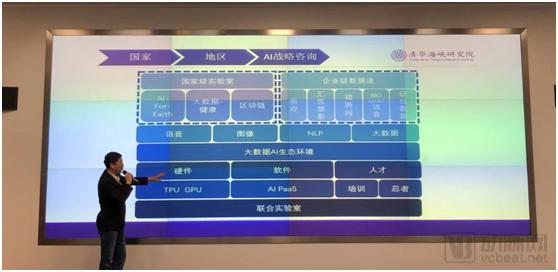
As can be seen, leveraging national-level laboratories and enterprise-grade data flows, adhering to the principle of complementary advantages, and centering on the integration of industry, academia, research, and medicine, the Huiyi Huiying–Tsinghua Strait Research Institute Joint Artificial Intelligence Laboratory aims to cultivate more top-tier AI talents. It will deliver more comprehensive medical AI solutions to the industry, foster a more favorable development environment, build a richer AI industrial ecosystem, and empower industrial upgrading across both sides of the Taiwan Strait.