

JianYiBao: Pioneering the Integration of Health Insurance and Pharmaceutical Services to Unlock a Trillion-Yuan Market
According to data from the China Insurance Regulatory Commission (CIRC), the compound annual growth rate (CAGR) of the health insurance market size was 42% between 2011 and 2016. In 2017, as of November, the gross written premiums for health insurance business reached RMB 410.554 billion, a year-on-year increase of 6.87%. The health insurance market size is projected to reach one trillion yuan by 2020.
The rapid expansion of the health insurance market is primarily driven by rising household incomes, which have boosted demand for medical coverage, as well as by the diversification of insurance products and supportive policy incentives.
During the development of health insurance, various innovative models have emerged, such as Accountable Care Organizations (ACOs), “insurance + health management” solutions, and high-limit medical insurance plans. The integration between insurance and healthcare and pharmaceutical services has become increasingly deep.
Jianyibao is one of the many “Insurance+” innovative enterprises, offering a new model of “Insurance + Pharmaceuticals.”
Recently, VCBeat (WeChat ID: vcbeat) interviewed Zhang Shengming, founder of Jianyibao, who provided a detailed account of Jianyibao’s business model and development plans.
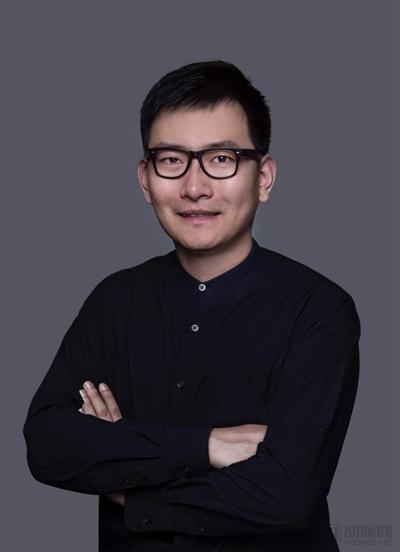
Zhang Shengming, Founder of Jianyibao
How Can Health Insurance Integrate with Pharmaceutical Retail?
Health insurance and pharmaceutical retail may seem like worlds apart. How did Jianyibao find the intersection between these two sectors?
Zhang Shengming has held marketing and sales roles at multinational pharmaceutical companies and also has experience in the insurance industry, where he participated in and led the development and operation of numerous insurance products tailored for patients with chronic diseases. To foster more effective innovative integration between insurance and pharmaceuticals, Zhang conceived the idea of starting a business and founded Jianyibao in late 2016.
Zhang Shengming stated that this direction was chosen for four reasons:
First, his professional experience has shown that insurance and pharmaceutical retail exhibit strong synergies, with the experiences of overseas companies such as CVS and ESI offering valuable insights. CVS is the largest pharmaceutical retailer and Pharmacy Benefit Manager (PBM) in the United States, operating more than 9,700 pharmacies and serving nearly 90 million PBM members. In 2016, its total revenue reached $177.526 billion, of which $119.963 billion came from its pharmacy benefit management business. Express Scripts Inc. (ESI) is the most well-known PBM provider in the United States, covering over 80 million insured individuals and processing 1.4 billion prescriptions annually, with a 2016 revenue of $100.29 billion. The experiences of CVS and ESI demonstrate that health insurance and pharmaceutical retail will be closely integrated.
Second, patients exhibit similar consumer psychology when purchasing health insurance and medications. Both are acquired for preventive purposes: consistent medication adherence can significantly reduce the incidence of critical illnesses among patients, while insurance effectively enhances their ability to cover medical expenses, thereby creating a strong synergy between the two.
Third, favorable policies and market conditions. Since 2015, pilot programs for individually tax-advantaged health insurance have been launched, encouraging commercial insurers to allow individuals with pre-existing conditions to obtain coverage. Meanwhile, four internet-based insurance companies have been established in the market, significantly improving the efficiency of insurance promotion and underwriting. Additionally, frequent policy changes in the pharmaceutical industry have placed pressure on pharmaceutical sales to undergo transformation.
Fourth, the depth of medical insurance coverage is insufficient. The hallmark of China’s universal health insurance system is “broad coverage with basic benefit levels.” While it currently covers over 95% of the population, high out-of-pocket expenses remain a significant issue, with individual spending accounting for nearly 40% of total healthcare expenditures. Commercial health insurance will serve as a vital supplement to the public medical insurance system.
With mature experience in Europe and the United States to draw upon, favorable policies and market conditions, as well as his own expertise in developing related products, Zhang Shengming quickly turned his vision into reality and assembled a founding team. The team members came from pharmaceutical companies, the mobile health industry, insurance firms, and the Chinese Academy of Sciences, among others.
Medication Coverage & Worry-Free Medication: Two Major Products
Zhang Shengming introduced that Jianyibao currently offers two main products: Medication Coverage and Worry-Free Medication.
Medication access programs target patient populations. Through a collaboration among Jianyibao, pharmaceutical companies, and insurance providers, insurance products tailored to specific drug indications have been developed. “This model does not impose additional costs on patients; rather, it enhances medication adherence, reduces the risk of disease progression, and ultimately lowers overall healthcare expenditures. In the event of complications, partner insurers provide prompt compensation, thereby alleviating the financial burden on patients and preventing poverty caused or exacerbated by illness, in alignment with national policy objectives,” stated Zhang Shengming.
"Worry-Free Medication" primarily targets pharmaceutical retail channels, including chain pharmacies, pharmaceutical e-commerce platforms, and pharmaceutical O2O enterprises. In the event of serious adverse reactions to drugs sold through these channels, corresponding compensation will be provided by insurance companies.
The background behind the launch of “Worry-Free Medication” is that a large number of adverse drug reactions (ADRs) occur annually across China. According to data from the China Food and Drug Administration’s (CFDA) National Annual Report on Adverse Drug Reaction Monitoring (2016), 1.43 million ADR reports were received nationwide in that year, representing a 2.3% increase compared with 2015. From 1999 to 2016, nearly 10.75 million ADR reports were cumulatively received nationwide.
The Worry-Free Medication Project can effectively alleviate doctor-patient conflicts and provide timely and effective assistance to patients.
Jianyibao will participate in the design of coverage subjects, insurance liabilities, and actuarial premium rates for the aforementioned insurance types, collaborating with insurance companies to develop related insurance products. The insurance companies also authorize Jianyibao to assist in handling claim appeals for certain insurance types.
Currently, Jianyibao has established an in-depth partnership with Anxin Insurance and entered into a strategic collaboration with Fosun Group covering insurance product development, policy services, medical data, and health management services. It serves over a dozen key clients, including pharmaceutical companies, online pharmacy platforms, and retail pharmacies.
Zhang Shengming shared with VCBeat data on a medication coverage product co-developed by Jianyibao and a globally renowned pharmaceutical company. The project was officially launched in July 2017. As of December 31, 2017, more than 10,000 patients across China had enrolled in the coverage program, receiving over 50,000 insurance policies.
Seizing the Opportunity of a Trillion-Dollar Market
As previously mentioned, health insurance is the fastest-growing segment of the insurance industry, with its market size projected to reach RMB 1 trillion by 2020. Zhang Shengming also shared his insights on the health insurance industry.
He stated that 2015 could be regarded as the inaugural year of the health insurance boom. At that time, major insurance companies began to prioritize their health insurance operations, establishing dedicated teams to expand into the health insurance market. They developed a variety of specialized, niche health insurance products and started exploring the integration of health insurance with medical services and health management.
From a market perspective, the rapid development of health insurance is directly related to domestic policy support and rising income levels. “Health insurance has developed rapidly in Europe and the United States, primarily due to their large middle-class populations, which possess both the purchasing power and the desire to buy health insurance. As China’s economic level grows, its demographic structure is shifting from a previous pyramid shape to a spindle shape, with an expanding middle class that has greater disposable income and a stronger willingness to purchase health insurance.”
The most notable phenomenon is the popularity of “million-yuan medical insurance” products—such as CPIC’s Tai Xiang e-Bao, Ping An Insurance’s Ping An e-Sheng Bao, and ZhongAn Insurance’s Zun Xiang e-Sheng. These short-term health insurance plans, with premiums around RMB 300, feature low enrollment thresholds and coverage limits reaching the million-yuan level, making them a preferred choice for some health insurance buyers due to their superior cost-effectiveness.
A minority of health insurers have also engaged in health intervention and management, gradually establishing health management systems that encompass data collection, analysis, evaluation and feedback, and intervention, thereby creating a closed-loop model of “health insurance + health management.” In terms of data collection methods, innovative medical devices, wearable devices, the Internet of Things (IoT), and internet technologies are being applied.
At the industry level, the “insurance + healthcare” model also warrants attention. Insurance companies have entered the healthcare services sector through investments, acquisitions, and greenfield projects, thereby accumulating experience in exploring managed care health insurance.
Of course, certain challenges have arisen during the implementation of health insurance. Zhang Shengming believes that the root cause lies in the unfavorable “impression” previously left on consumers by the insurance industry. To achieve full consumer acceptance, sustained user education is still required. Efforts should focus on simplifying policy terms, highlighting claims settlement models, streamlining the claims process, and introducing internet-based tools.
“During our product promotion, we have not encountered any significant challenges, as our primary objective is to alleviate the financial burden on patients and prevent poverty caused or exacerbated by illness. Improved medication adherence among patients leads to a reduced incidence of disease, which helps maintain their health status and lowers overall healthcare expenditures. For pharmaceutical companies, this approach offers a high return on investment and facilitates patient retention and market data monitoring.” Zhang Shengming believes that the product’s value proposition benefits all stakeholders, which is the main reason Jianyibao has faced no major obstacles in its market acquisition efforts.
Regarding competition among peers, Zhang Shengming stated, “The market size of each company is currently very small, so direct competition is not yet a factor. Jianyibao is happy to share its experience, as only through continuous mutual exchange can the overall industry development be promoted.”
Jianyibao is currently undergoing its first round of financing. Its development plan for 2018 is to establish a synergistic online and offline presence, deepen the cultivation of its two core products—Medication Coverage and Worry-Free Medication—develop additional chronic disease insurance products, explore further collaborations with distribution channels, and accelerate market expansion.