

How 5G Is Transforming Healthcare and How IoMT Companies Can Partner with Telecom Operators

In October 2017, Qualcomm announced the launch of its 5G modem chipset for mobile terminals and completed the first-ever test of 5G connectivity on a mobile device. Following this announcement, Ericsson and Orange, as well as Sprint and T-Mobile, also released similar information.
In late January 2018, Qualcomm held its 2018 Qualcomm China Technology and Cooperation Summit in Beijing under the theme “Joining Hands in the New Era to Create a Win-Win Future.”
At the conference, Xiaomi, OPPO, vivo, and Lenovo signed a memorandum of understanding (MOU) with Qualcomm for the procurement of radio frequency (RF) front-end solutions, indicating their intention to purchase RF front-end components from Qualcomm worth no less than $2 billion over the next three years.
Qualcomm President Cristiano Amon stated that the 5G economy will become one of the largest economies in the coming years. It is not only a new generation of mobile technology but also an entirely new network capable of effectively supporting and promoting the global development of the artificial intelligence industry.
It is evident that the industry is steadily advancing the transition from 4G to 5G. Qualcomm’s new roadmap indicates an aggressive push for 5G development. Once these network platforms are deployed, they will provide essential infrastructure support for the Internet of Medical Things (IoMT) and medical devices.
What Makes 5G Superior?
5G is not merely an extension of 3G and 4G networks; rather, it is a network that integrates 4G, Wi-Fi, wireless access technologies, and millimeter wave communications. Additionally, it leverages technologies such as cloud infrastructure, edge intelligence services, and virtualized network cores.
To some extent, 5G will be a truly converged network. It provides high-speed, secure, and seamless connectivity among people, between people and things, and among things themselves, based on unified convergence standards.
Darrell West, Founding Director of the Brookings Institution, noted in a report: “What distinguishes 5G from its predecessors is its ability to connect devices, provide fast and intelligent networks, deliver backend services, and achieve ultra-low latency. These characteristics make a fully interconnected world possible.”
The report found that by 2020, 5G networks would support more than 20 billion connected devices and 21.2 billion connected sensors, enabling access to 44 zettabytes of data collected from a wide range of devices, from smartphones to remote monitoring equipment.
Furthermore, researchers estimate that this ecosystem will make true big data a reality.
5G Is Suitable for the Healthcare Industry
In the report, West also wrote: “Cellular, Wi-Fi, and Bluetooth enable the Internet of Things to be used across platforms, while 5G serves as the link that connects them all.”“IoT devices have diverse functionalities and data requirements, all of which can be fully supported by 5G networks.”
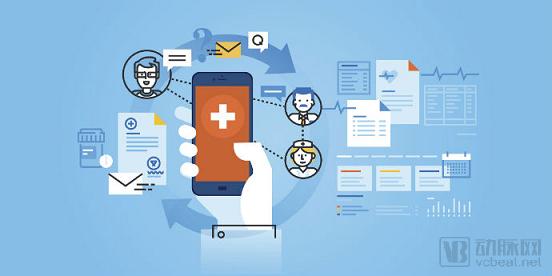
(Cellular networks enable devices to maintain consistent connectivity across different locations without the need to disconnect and reconnect to various wireless networks. Cellular networks also alleviate the burden on internal network deployments by handling the majority of IoT traffic during peak hours.)
West stated, “Through the Internet of Things, we will see devices that require only minimal data usage and long battery life while supporting rapid connectivity.”
A recent report from the Haas School of Business in the United States points out: “What best reflects the impact of 5G in the healthcare sector is ‘Personalized Medicine’. IoT devices canContinuously collecting patients’ specific data, rapidly processing, analyzing, and returning information, and recommending appropriate treatment plans to patients will empower them with greater self-management capabilities.
For example, the report indicates that 5G can better support continuous monitoring and sensory processing devices, enabling sustained patient monitoring. This technology will significantly enhance the effectiveness of preventive care.
The Impact of 5G on Patients
The development of 5G wireless networks will improve by providing faster connectivity and higher bandwidth.TelemedicineandRemote Care。
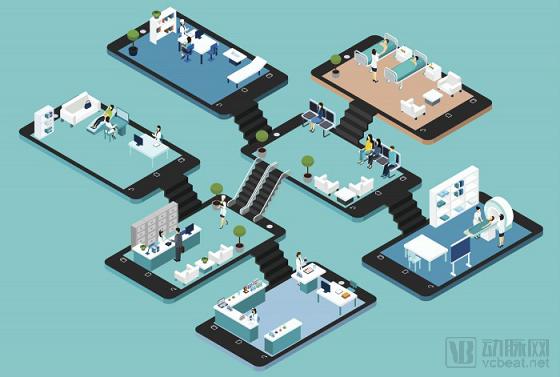
Imagine a patient wearing telemedicine sensors in the comfort of their home, with their vital signs being transmitted in real time to their health manager. These data enable doctors and caregivers to dynamically manage the patient’s treatment plan. Additionally, healthcare professionals can conduct consultations or interventions via webcams.
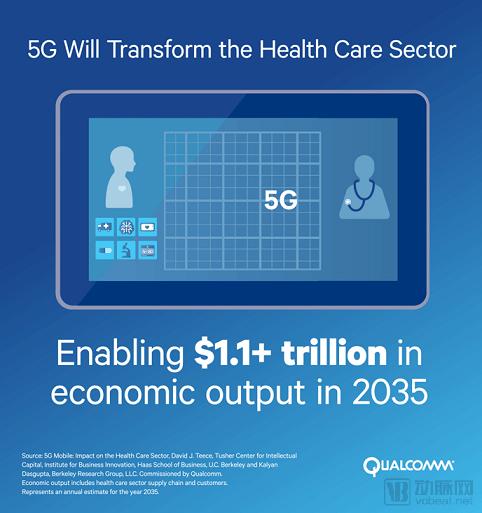
The advent of 5G networks will elevate healthcare delivery to new heights and generate significant economic benefits for the medical community. According to IHS Markit, 5G will deliver over $1 trillion worth of products and services to the global healthcare sector.
5G represents a brand-new digital healthcare network and is highly likely to enhance patients’ medical experience. It can help users maintain their health through three core capabilities:Internet of Medical Things (IoMT),Enhanced Mobile Broadband (eMBB)andMission-Critical Services. When these three elements converge, they enable the provision of comprehensive, personalized services to users anytime and anywhere.
The Massive 5G IoT Can Help Users Stay Healthy
Massive IoT involves the Internet of Medical Things (IoMT) ecosystem, which will encompass millions or even billions of low-power, low-bit-rate medical health monitoring devices, clinical wearables, and remote sensors.
Relying on these instruments, physicians can continuously collect patients’ medical data, such as vital signs and physical activity.These data will be received in real time by healthcare providers, enabling them to effectively manage or adjust treatment plans.
Furthermore, these data support predictive analytics, enabling physicians to more rapidly detect health patterns in the individuals being measured, thereby improving diagnostic accuracy. It is projected that by 2025,Global Medical Internet of ThingsRevenue can reach $27 billion.
In 2017, a medical Internet of Things (IoT) product won the grand prize in the Qualcomm Tricorder XPRIZE for medical devices. Reportedly, the product is capable of diagnosing and interpreting 13 health conditions.
The product’s data collector is a palm-sized sensor that, much like a smartphone, enables patients to easily monitor their health at home.
This represents a significant advancement, but a single sensor is far from sufficient. The combination of IoMT devices and sensors can help physicians provide patients with comprehensive health reports, thereby facilitating the development of personalized treatment plans.
Additionally, healthy individuals can also leverage IoMT devices to help monitor their dietary and fitness status, thereby enhancing their lifestyleHealthier。
5G eMBB Can Reduce the Number of Patient Visits to Doctors
With the advent of the 5G era, physicians can simultaneously study and analyze large volumes of patient medical data to provide personalized treatment.
eMBB can support personalized medical applications and deliver immersive experiences, such as virtual reality (VR) and online video. These tools enable hospital physicians to provide remote virtual care to patients via ultra-high-definition video.
This service aims to eliminate time and spatial barriers for patients in remote areas, enabling them to receive better care even without specialized medical knowledge.
Not only for health management, 5G can also be used in medical education.
Qualcomm Technologies, Inc. (QTI) is conducting a medical virtual reality study to help train medical students in stroke diagnosis, using VR technology to teach them how to perform stroke assessments. By leveraging 5G, similar medical training tools can be developed in the future.
How 5G Saves Patients' Lives?
The new 5G radio unified interface is designed to provide deep, redundant coverage and high system availability for connecting medical sensors across multiple network nodes. This enhances reliability, minimizes latency (as low as 1 millisecond), and ensures that critical transmissions, such as those for medical emergencies, are prioritized over other traffic.
For example, 5G IoMT sensors worn by a cardiac patient can rapidly transmit distress signals and vital signs to nearby hospitals via the network, thereby enhancing the speed and efficiency of medical treatment. However, such scenarios demand absolute reliability, as any loss of connectivity could lead to severe medical consequences.
Furthermore, the 5G ecosystem also provides robust security solutions, such as the seamless and secure sharing of biometric data, to ensure that patients' sensitive data is protected from exposure and threats.
5G-Enabled Healthcare Services
Qualcomm Life, Inc. has launched a 5G-based medical Internet of Things (IoT) platform named2net,It connects patients and healthcare providers with next-generation mobile health solutions.
The 2net platform, 2net Hub, and 2net Mobile software modules deliver smart care by providing wireless connectivity and enhanced interoperability, thereby enabling the reliable sharing and management of data from various medical devices, including healthcare-focused wearables. This ensures that biometric sensor data is accurately captured and seamlessly transmitted to the cloud for integration with other systems, applications, or portals, facilitating continuous monitoring anytime, anywhere.
2net enables hospitals, physicians, and patients to seamlessly connect sensors and devices for real-time data acquisition in the home setting, facilitating personalized care. Patients favor 2net for its comfort, convenience, and affordability.
Opportunities 5G Brings to Telecom Operators
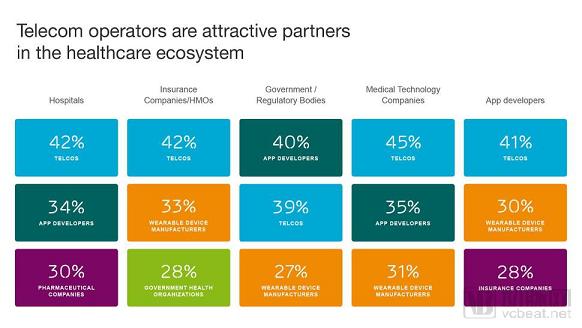
Technological upgrades in the healthcare industry have created substantial opportunities for telecom operators to penetrate new value chains, thereby fostering collaboration across the entire Internet of Things (IoT) ecosystem.
By 2026, operators with an annual revenue of $76 billion are expected to transition toward 5G-enabled healthcare. Collaboration among various participants across the industry chain will be crucial for a successful transformation.
Ericsson ConsumerLab’s report, “From Hospital to Home Care,” points out that 86% of cross-industry decision-makers believe that, in addition to serving as network providers, telecom operators can also provide system integration as well as application and service development.
HospitalPutBecoming a Data Center
To enable a shift in how patient applications are managed, patient data must be stored centrally, ultimately transforming hospitals into data centers and physicians into healthcare data experts.As a result, patients can access medical databases online, helping them easily manage the quality and efficiency of their care.
45% of cross-industry experts believe this will be a revolutionary breakthrough in healthcare services, while 47% of telecom decision-makers consider secure access to be a key challenge.
An expert stated, “Through these monitoring technologies, 5G will undoubtedly enable doctors to stay connected with patients, whether outside the ambulance or in the patient’s home.”
5G Construction Efforts Still Require Diligent Progress
At present, 5G technology is not yet mature. However, by 2019, the first batch of suppliers plan to unlock its full potential.
IHS’s market report indicates that by 2035, sales of 5G technology will reach $1.1 trillion, accounting for more than 9% of the global 5G economy, which is projected to be $12.3 trillion. This impact is roughly equivalent to expanding India’s economic size to match the current global economy.
Furthermore, the 5G-related value chain is projected to generate $3.5 trillion in output and create 22 million new jobs worldwide. Achieving this goal will require more than just the full utilization of technology.
The industry has begun shifting toward an outcomes-based model, and government policy changes will help accelerate this transition by incentivizing suppliers through tax breaks and other policy measures. Policies must provide safeguards for innovation and intellectual property to ensure that 5G developers receive appropriate compensation.
The report recommends that 5G should be embedded into standards, without competing and mutually incompatible technical versions.
A recent study by Ericsson shows that collaboration is the final component needed to ensure 5G reaches its full potential, a finding that extends beyond the healthcare sector.
Healthcare providers can enhance their connectivity by collaborating with medical device manufacturers to develop connected technologies that do not rely on patients’ smartphones.
References
1、https://www.ericsson.com/en/networks/insights/5g-healthcare
2、http://www.healthcareitnews.com/news/5g-coming-2019-heres-what-hospitals-should-know-about-it
3、https://hitinfrastructure.com/news/5g-network-infrastructure-improves-telemedicine-remote-care
4、https://hitinfrastructure.com/news/healthcare-internet-of-things-seeks-advanced-5g-wireless
5、https://www.qualcomm.com/news/onq/2017/10/30/previewing-5gs-effect-health-care-industry