

Maximizing Clinical Research Efficiency in Internationally Aligned Oncology Centers: A Model of Integrated Management and Digital Empowerment
The Burden of Clinical Work Is Continuously Eroding the Research Enthusiasm of Healthcare Professionals. When research becomes the sole pathway for career advancement, outsourcing papers at great risk has become all too common. Faced with the embarrassment of frequent retractions by prestigious journals, most people blame systemic flaws. Of course, a small number of hospitals and enterprises have chosen to reform their management processes and improve efficiency.
When You Cannot Change the Environment, Choose a Better Way to Adapt to It.
No industry is ever short of innovators. VCBeat has had the privilege of engaging with two physicians working within the public healthcare system. Their endeavors may offer valuable insights for driving transformation in medical research.
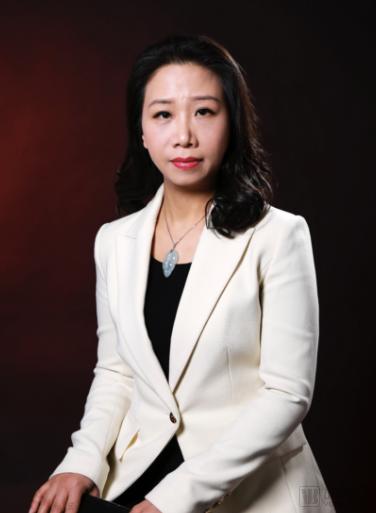
Lu Mengying, Vice Chair of the Molecular Diagnostics Medicine Professional Committee of the Chinese Research Hospital Association; Director of the Liver Tumor Diagnosis and Treatment Research Center, the 302nd Hospital of the People's Liberation Army
The Liver Tumor Diagnosis, Treatment and Research Center of the 302nd Hospital of the Chinese People's Liberation Army (hereinafter referred to as the “Center”) focuses primarily on comprehensive treatment strategies for liver tumors, such as local minimally invasive ablation combined with targeted therapy and immunotherapy. Each year, the Center publishes 6 to 10 SCI-indexed papers, encompassing both clinical and basic scientific research.
Research Management Model Aligned with International Standards
“All of our scientific research follows a ‘bed-to-bench’ model that integrates clinical practice with laboratory work. Physicians do not typically conduct experiments directly in the laboratory; however, they collaborate with laboratory personnel on aspects involving clinical content,” introduced Director Lu.All research projects at the Center are completed through coordinated planning and collaborative division of labor.. Physicians are responsible for clinical aspects, such as designing clinical strategies, managing patients, and collecting clinical data. Laboratory personnel are responsible for basic scientific research, including analysis of clinical samples, cellular/animal experiments, and studies on molecular mechanisms. The preparation of certain bioimmunotherapy products, such as CAR-T cells and CIK cells, is also carried out by the laboratory team.
For example, a clinician seeking to understand the impact of a specific treatment regimen on patients must first identify the eligible patient population for that therapy and define the parameters to be monitored during treatment, while also overseeing the collection of continuous clinical data. Once the protocol is designed, the clinician submits it to the relevant personnel at the central laboratory. Following communication, the central laboratory determines the appropriate testing methods and equipment to generate the results. Throughout this process, the Principal Investigator (PI) oversees overall coordination, conducting weekly or monthly analyses and discussions to monitor experimental progress and address any issues encountered. Specific tasks such as statistical calculations and clinical trial design are completed with the assistance of the Department of Medical Statistics and the laboratory.
“Let professionals handle professional tasks! In the past, we always believed that physicians engaged in scientific research should be well-versed in every aspect and manage the entire process from start to finish. However, it is currently nearly impossible for clinicians alone to produce high-quality SCI papers. First, physicians are heavily occupied with clinical duties, leaving them insufficient time and energy. Second, the research perspectives of clinicians often fall short of the standards required for high-quality clinical studies. Under pressure for career advancement, the buying and selling of academic papers has become commonplace.”
Director Lu stated that physicians at the liver tumor center who are capable of publishing SCI papers are generally associate chief physicians or higher. These doctors have undergone extensive training in both clinical practice and basic scientific research, equipping them with the necessary qualifications for conducting research. Furthermore, senior-ranking physicians are largely relieved from routine and cumbersome clinical tasks, thereby having additional time and energy to dedicate to corresponding research endeavors—conditions that attending physicians and resident physicians do not possess.
In this context, team collaboration has emerged as a viable and effective model. Each research group first designates the Principal Investigator (PI, corresponding author), the first author, and the second and third authors. Team members determine their authorship order based on their respective contributions and workload.。
Currently, the core laboratory has more than ten full-time staff members, including principal investigators (PIs), technicians, and students, with numerous high-tech companies providing related technical and platform support.
It is not easy to truly launch a clinical research project. The research approval process at the center is as follows: The principal investigator first prepares the project plan, specifying the rationale, types, and intended uses of the data to be collected. After review and approval by the hospital’s research management department, the project must undergo review by the Ethics Committee, and finally be registered with the hospital.
In response, Director Lu stated, “Clinical research processes must align with international standards; if proper procedures are not followed, the resulting scientific publications will be essentially unusable. The Liver Tumor Diagnosis and Treatment Research Center at the 302 Hospital is among the most advanced medical laboratories in China, and its management model is fully aligned with international practices. To achieve this, department heads must engage in top-level design for scientific research, possess forward-thinking awareness, and anticipate the direction of disciplinary development over the next decade. They must combine clinical reasoning with strategic thinking and also have a solid understanding of basic scientific research, so as to effectively lead the discipline.”
How to Leverage New Technologies to Empower Scientific Research?
In fact, in addition to innovating its management processes, the Center has also adopted new research tools, thereby aligning with international standards in both management and technology.
In 2015, driven by the research needs of a tumor database focused on central liver cancer and cholangiocarcinoma, Director Lu came into contact with Boshi Medical Cloud and established a long-term collaboration with it.Boshi Medical Cloud is China's leading electronic medical record and research platform for specialized diseases.The two parties spent one year jointly building a big data platform for cholangiocarcinoma. This platform achieves comprehensive integration of patient diagnosis and treatment information, imaging data, pathological diagnoses, metabolomics, and genetic testing data.
According to Director Lu, China sees approximately 300,000 new cases of liver cancer annually, with cholangiocarcinoma accounting for only 5%–8% of these cases. As cholangiocarcinoma is a rare disease, many hospitals report single-digit case numbers per year. In contrast, Hospital 302 manages approximately 200 such cases annually.Currently, the 302 Hospital Cholangiocarcinoma Big Data Platform has accumulated structured medical records and omics data from over 1,000 cholangiocarcinoma patients.。
Building on this foundation and integrating clinical practice guidelines and research findings from both domestic and international sources, the Center has successfully developed a novel mathematical model for “Estimating Disease Risk and One-Year Survival Rate in Cholangiocarcinoma” by leveraging its independently developed intelligent analysis and mining system based on Boshi Medical Cloud, augmented with machine learning and deep learning techniques. This model provides a data-driven basis and clinical foundation for treatment evaluation and prognostic risk prediction in patients with cholangiocarcinoma.
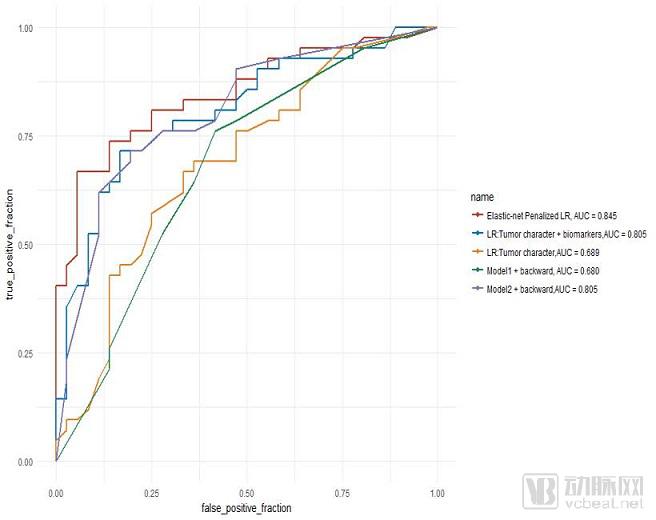
EN's AUC peak is optimal.
For example, by inputting key patient information—including tumor characteristics, demographic data, laboratory results, and diagnostic test metrics—into this product, clinicians can obtain recommended diagnostic staging, along with insights into appropriate treatment options, potential clinical outcomes, and the one-year survival rate.
From the perspective of clinicians, these research findings can help establish patient risk assessment criteria, and are therefore expected to be incorporated into China’s clinical practice guidelines for the diagnosis and treatment of cholangiocarcinoma. Furthermore, as the center is also responsible for training hepatobiliary oncologists nationwide, it may become feasible in the future to leverage this product to train and support physicians at primary care hospitals, thereby truly achieving high-quality tiered diagnosis and treatment.
“After clinical adoption, we further validated its effectiveness and ultimately transformed it into a commercialized product to assist physicians in primary-care hospitals, thereby generating value. Our collaboration has been continuously refined and deepened, yielding new achievements along the way—a dynamic and positive process,” Director Lu told VCBeat.
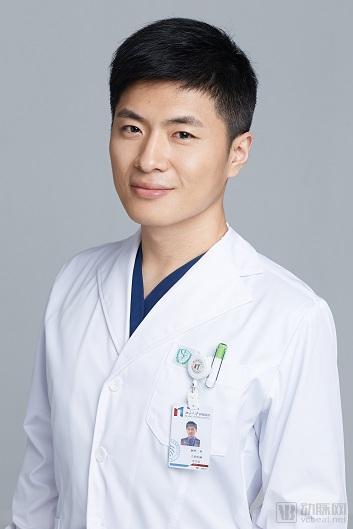
Li Shaolei, Attending Physician, Department of Thoracic Surgery II, Peking University Cancer Hospital
As a thoracic surgeon, Li Shaolei primarily focuses on translational medicine in lung cancer. His work encompasses the entire spectrum of the disease, from pathogenesis and treatment to prognosis.
While research typically accounts for about 30% of a general physician’s time, Li Shaolei dedicates more than 40% to it. To avoid compromising his clinical duties, he conducts research during evenings and weekends, often staying up late, which leaves him with only five to six hours of sleep each day.
In 2014, entrusted by the department director, Li Shaolei assumed the responsibility of managing the hospital’s clinical database for thoracic surgery. This allowed him to devote more time to scientific research.
In the same year, Peking University Cancer Hospital came into contact with Boshi Medical Cloud. Li Shaolei, the head of the database department, decided to give it a try on a trial basis, only to be pleasantly surprised by its performance. Since then, the Department of Thoracic Surgery has begun designing its own forms based on the specific needs of the department.
Streamline the Most Time-Consuming Queries and Follow-ups
In 2015, the Department of Thoracic Surgery at Peking University Cancer Hospital began exploring the application of structured databases in scientific research.
In previous research processes, data organization and follow-up were the two most time-consuming steps. According to Li Shaolei, nearly 80% of studies conducted by physicians in China are retrospective studies. This type of research not only demands high-quality data collection but also places significant importance on the follow-up process.
In the past, physicians had to visit the medical records department to consult paper-based medical records. Later, these paper records were replaced by scanned text documents; however, retrieving them on computers remained time-consuming and labor-intensive. Occasionally, data retrieved from the Information Technology Department suffered from irregular formatting, necessitating re-verification and resulting in duplicate queries.
Furthermore, different physicians often need to access the same categories of data; however, due to the lack of information sharing among them, redundant tasks frequently occur. Since adopting the Boshi Medical Cloud, the Department of Thoracic Surgery has significantly improved its research efficiency.
After proposing a research idea, physicians can instantly access information and analyze the feasibility of the project. With the structured database already established, they no longer need to query unstructured text data; instead, they can quickly retrieve the desired information directly through the Boshi Medical Cloud.
Additionally, Boshi Medical Cloud assigns dedicated follow-up specialists to each department. These specialists collect and enter data on patients’ recovery status via telephone follow-ups.
“We specify our requirements, and they design the forms accordingly. The information gathered through follow-up visits meets all our needs. Currently, our department produces approximately 20 scientific papers annually, including retrospective studies, translational research articles, and prospective studies. The data compilation for the majority of these publications is sourced from Boshi Medical Cloud,” said Li Shaolei.
Clinical Multicenter Studies and MDT: Higher Dimensions of Research Data
To conduct scientific research, it is essential to implement multicenter studies and multidisciplinary team (MDT) approaches.。
According to Li Shaolei, given that current cancer treatment involves a multidisciplinary approach, data from single-center studies have inherent limitations. Compared with routine clinical data, evidence derived from multi-center research laboratories is of a higher level. Integrating similar medical records from multiple hospitals into a dataset would yield scientific findings with greater credibility and value.
Furthermore, single-department publications are similarly limited in value; therefore, incorporating data from multidisciplinary team (MDT) collaborations across multiple departments would further elevate the level of evidence.
Based on this concept, in 2014, Peking University Cancer Hospital jointly established a multi-center research laboratory with multiple hospitals in Beijing.
In terms of MDT, Peking University Cancer Hospital has developed an MDT component tool tailored for multidisciplinary discussions, leveraging the underlying technology of Boshi Medical Cloud and drawing on years of practical experience in multidisciplinary team practices.
With this tool, after a physician has determined their research topic, physicians from other departments can individually grant that physician access permissions to medical records via the Boshi Medical Cloud. Different types of content within the medical records (images, text, videos) can be authorized separately.
“If we view multicenter studies as a horizontal enhancement of data, then multidisciplinary teams (MDT) represent a vertical enhancement; one emphasizes quantity, while the other emphasizes dimensionality,” said Li Shaolei.
Currently, leveraging its support for disease-specific specialization, Boshi Medical Cloud enables multidisciplinary team (MDT) consultations across dozens of hospitals, involving hundreds of physicians and thousands of medical records. Cross-validation and complementarity among different departments, physicians, and medical record forms maximize the value of MDT from multiple dimensions.
Transforming the Current State of Scientific Research Under Existing Conditions
From the cases of the two medical professionals above, it is evident that time and energy remain the most significant obstacles to clinical research for physicians at this stage. Under the current system, doctors can only choose to improve their research efficiency by enhancing both management practices and technical skills.
Based on the foregoing, VCBeat has summarized several currently viable specific approaches:
1. Break down the research process into distinct stages and allocate personnel appropriately, ensuring that specialized tasks are handled by professionals with relevant expertise;
2. Leverage structured tools such as Boshi Medical Cloud to enhance the efficiency of querying and organizing medical record data;
3. Leverage professional third-party follow-up teams to enhance the efficiency and quality of follow-up data required for scientific research;
4. Leverage clinical multicenter MDT technology to enhance the volume and dimensionality of research data.
Of course, no matter how advanced the management processes or how cutting-edge the technology may be, they cannot compare to the attitude and passion that doctors hold for scientific research. As Director Lu stated, there are no shortcuts for doctors seeking promotion within the hospital. Military hospitals have an annual elimination rate of 20%; if a doctor consistently ranks at the bottom, they will have no choice but to leave. Therefore, you must work harder and achieve greater results than your peers.
In the final analysis, one thing is clear: hard work is the foundation!