

Sophia Genetics: The AI-Powered Genomics Pioneer Behind the 2017 MIT Top 50 Smartest Companies List
In the latest issue of MIT Technology Review’s list of the 50 Smartest Companies of 2017, in addition to well-known giants such as Google, Apple, Amazon, and Alibaba, as well as star companies like NVIDIA, Tesla, and SpaceX, one seemingly unremarkable company caught our attention—Sophia Genetics.
This is a biopharmaceutical company headquartered in Lausanne, Switzerland. Founded in 2011, its core business is helping healthcare institutions establish genetic analysis systems and assisting them in leveraging machine learning technologies to analyze patient genomic data and provide diagnostic and treatment recommendations. In September 2017, the company secured $30 million in Series D funding from Balderton Capital, a prominent European venture capital firm.
Over the past two years, amid the frenzy surrounding AI and genomics, this narrative has hardly been novel worldwide. So why was Sophia Genetics singled out?
Intelligence, Platforms, and Privacy
Once sequencing of a given sample is completed, genetic sequencing diagnostic analysis generally involves three steps:Sequence Alignment — Variant Calling — Diagnostic Prediction。
Each segment has its corresponding general-purpose algorithms. However, due to the vast diversity of gene types, the performance of these generic algorithms is less than satisfactory.
Sophia Genetics thus seized this opportunity and developed three AI-based patented technologies for genomic analysis: PEPPER™, MUSKAT™, and MOKA™, designed respectively to identify single nucleotide polymorphisms and insertions/deletions (SNP and INDEL), detect copy number variations (CNV), and assess the severity of genetic variants.
(Editor's Note: Single nucleotide polymorphisms, base deletions, and copy number variations are all types of genetic mutations. Genetic analysis largely involves identifying these mutant genes and assessing the potential risks they pose.)
As the author was unable to locate its patent data online, further analysis could not be conducted; however, according to the official website, these technologies can achieve an accuracy rate of over 99%.
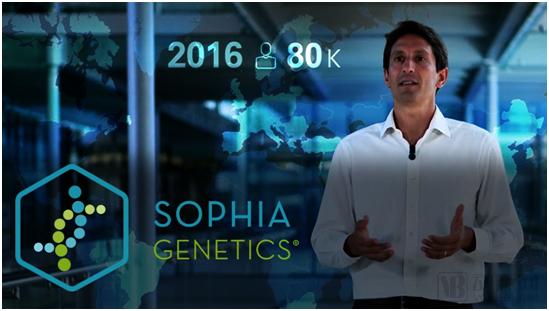
Sophia Genetics CEO Dr. Jurgi Camblong
In an interview, Dr. Jurgi Camblong, Co-founder and current CEO of SOPHiA GENETICS, stated that intelligent algorithms serve as the company’s core technology, into which they have invested substantial R&D efforts. To develop algorithms with broader applicability, they spent several years mobilizing experts to annotate nearly 50,000 genetic data entries from 10,000 patients, designing the algorithms from the ground up to ensure a thorough understanding of every detail.
The efforts have paid off: SophiA’s intelligent algorithms have improved the accuracy of gene variant classification from 85% to 99%. In an interview with the media, Jurgi stated, “It is this technical persistence—building models step by step from the ground up, integrating domain expertise, and striving to understand every detail—that sets us apart from other companies in the field.”
James Wise, a partner at Balderton Capital, also told the media that what attracted them most to Sophia Genetics was its algorithm’s ability to process genomic data from various sequencers, with predictive accuracy already reaching a level suitable for clinical use.
Currently, Sophia Genetics focuses on gene-assisted diagnosis and intelligent prediction in five major categories: oncology, hereditary cancers, cardiovascular diseases, metabolic disorders, and pediatric diseases.。

Disease Diagnostic Categories Involved (Source: Sophia Genetics Official Website)
If a steadfast commitment to technology is the foundation and capital that enable Sophia Genetics to stand out, then accurately understanding hospital needs and establishing a shared platform represent its vision and investment in the future.
Sophia DDM is a platform launched by the company. DDM stands for Data-Driven for Medicine, reflecting the company’s vision.
The aforementioned intelligent algorithms are all integrated into this platform. Sophia Genetics targets healthcare institutions on the B2B side, with its core business focused on enabling those facilities equipped with sequencing capabilities to connect to the Sophia DDM platform, thereby allowing medical professionals to perform rapid and accurate genomic analysis.
While uploading genetic data, physicians also contribute a new genetic data entry and are highly likely to provide their own diagnostic findings.
As the number of users leveraging the DDM platform for analysis continues to grow, the volume of annotated data accumulated in the backend increases accordingly. Benefiting from this high-quality data, the underlying intelligent algorithms demonstrate progressively improved performance, thereby establishing a virtuous cycle.
When asked why he was so determined to advance the platform and provide software services, Camblong stated that as sequencing costs continue to decline, it is becoming increasingly easier for individuals to access their own genetic information. This implies that there will inevitably be substantial market demand for rapid and accurate genetic analysis algorithms.
Robust gene analysis algorithms rely on specialized expertise and high-quality data. Therefore, establishing strong partnerships with hospitals to help them build systems for analyzing patient genetic data offers dual benefits: it provides access to patient data while leveraging physicians’ professional knowledge for gene annotation. The more hospitals connected to the platform, the greater the volume of stored genetic data and accumulated professional expertise, resulting in smarter algorithms that can attract even more hospitals. This creates a self-reinforcing cycle.
Of course, Camblong admits that the process was not easy. It is a classic chicken-and-egg dilemma—namely, how to establish strong relationships with hospitals when the diagnostic algorithm’s performance is not yet outstanding? Camblong’s answer is to identify the biggest problem hospitals were facing in genetic analysis at the time and address this pain point first!
In 2011, the pain point they identified was that the genomic data collected in hospitals had low accuracy and high noise levels. Therefore, the team specifically designed algorithms in the early stages to improve the accuracy of genomic data collection. This early assistance earned them long-term trust and support from hospitals.
The company was founded in 2011. Since launching its platform in early 2014, it had onboarded 50 hospitals by the end of that year. Currently, this number has risen to 400. These 400 hospitals are distributed across 55 countries worldwide. As of press time, the official website shows that 167,000 patients have received diagnoses through the DDM platform.。
Sophia Genetics claims to be advancing the “decentralization” of genomic sequencing analysis, aiming to build the world’s largest clinical genomics community so that genetic code truly serves clinical diagnosis and helps more patients overcome disease at an earlier stage. For a company still in its Series D financing round, this vision is highly ambitious; nevertheless, we can indeed observe Sophia Genetics steadily expanding its platform empire.
Sharing genetic data on platforms is an enticing idea. However, the most significant challenge it brings is the issue of privacy and security concerning genetic data.
Since genetic analysis entered the public eye, discussions surrounding the privacy, security, and ethical implications of genetic data have been incessant. Sophia Genetics has also recognized this critical issue, making data privacy and security its third key competitive advantage. The following provides a brief overview of Sophia Genetics’ approach to safeguarding user data privacy.
Sophia Genetics’ Information Security Management System Has Obtained ISO 27001 International CertificationMeanwhile, it is collaborating with information security experts from the École Polytechnique Fédérale de Lausanne (EPFL) and biomedical experts from Stanford University to jointly develop an information security technology capable of safeguarding genetic data stored on and accessed from a global platform. (Note: SECRAM, Selective Retrieval on Encrypted and Compressed Reference-oriented Alignment Map; patent pending.)
The company commits that all sensitive information will be stored in private data centers for a minimum of five years, with strictly controlled access. No patient’s personal information will be disclosed in any form.
Camblong noted that some companies in the industry have set poor precedents by failing to adequately protect patient data, prompting his company to place significant emphasis on privacy issues. Sophia Genetics will never consider targeting individual consumers (B2C); instead, it firmly believes that large healthcare institutions are better positioned to attract a broader client base, and collaborating with these major institutions ensures more robust information security protocols.
Epilogue
When asked about the company’s future development plans, Camblong stated that, while advancing the DDM platform, the aim is to strengthen capabilities in processing multi-level medical data. Specifically, the goal is to integrate medical imaging data with genomic data, thereby providing multidimensional reference and decision-support information for clinical practice. For instance, by leveraging imaging and genomic information, physicians can predict tumor growth over a certain period and determine whether immediate surgical intervention is warranted. This represents a typical application scenario of precision medicine.
In Greek, Sophia means wisdom. We sincerely hope that, as Jurgi Camblong envisions, there will come a day when we can fully decipher all the information encoded in our genes, thereby better combating disease and facing the future.
Reference Information:
https://techcrunch.com/2017/09/13/balderton-joins-30m-series-d-for-big-data-biotech-platform-play-sophia-genetics/
http://www.sophiagenetics.com/