Blockchain Technology Keyword Interpretation: 'Block' and 'Chain' – Prospectus Filing
For centuries, commercial activities in human society have primarily relied on three pillars: items of equivalent value exchanged, trust between the transacting parties, and verified identities. In simple terms: What is being exchanged, and who is verifying it? Trust relationships in the business realm typically depend on upright and honest individuals, intermediary institutions, or other organizations to be established.
However, commercial activities that once involved direct, face-to-face transactions have largely migrated online. Consequently, there is a growing need for third-party institutions—such as banks, governments, or other central authorities—to verify the identities of all parties and establish the necessary trust among them. Blockchain is a new technology that supports online transactions and streamlines business processes by fostering the trust, accountability, and transparency essential to modern commerce.
In 1993, The New Yorker published a cartoon by Peter Stein that summarized the inherent trust limitations in online commerce: “On the Internet, nobody knows you’re a dog.” Moreover, the involvement of third-party institutions often leads to inefficiencies, such as reduced speed, increased costs, and occasionally even fraud. At the same time, the security of these third parties and user privacy are compromised, as their centralized data storage is vulnerable to attacks. Twenty-five years later, the world is still striving to develop commercial and technological models that can verify the identities of both parties and establish trust in transactions without relying on third-party intermediaries.

Now, we are ushering in blockchain technology.
The current internet is built upon a multitude of protocols, such as the TCP/IP protocol for computer network communication, the HTTP protocol for web content, the SMTP protocol for email, and the FTP protocol for file transfer. Blockchain has the potential to become another protocol that fosters trust and verifies identities, thereby enhancing the security of information on the internet. By establishing the trust, accountability, and transparency that are crucial to modern commerce, blockchain technology can support a new generation of transactional applications and streamline business processes.
The essence of blockchain technology, like the TCP/IP, HTTP, and SMTP protocols, is also an internet security protocol.
Imagine that if we now want to establish a globally universal database without a central server in the internet world, we will definitely face the following three urgent security issues.
Question 1: How can this database store massive amounts of information completely while ensuring data integrity in a decentralized system?
Question 2: How should the database be stored and recorded to ensure that the entire database system continues to operate normally and maintains data integrity, even if the participating data storage nodes fail?
Question 3: How can we make this fully stored database trustworthy, enabling us to successfully prevent fraud in the context of internet anonymity?
To address these three core issues, blockchain has established a comprehensive and coherent set of database technologies to achieve its objectives. The technologies that resolve these three problems have become the three most core technologies of blockchain. They are “block + chain,” distributed storage, and asymmetric encryption algorithms. Furthermore, to ensure the evolvability and scalability of blockchain technology, system designers have introduced the concept of “scripts” to enable programmability of the database. We believe that these four technologies constitute the core technologies of blockchain.
Blockchain is a complex technology, and its fame stems not from the technology itself but from the associated cryptocurrencies. Beyond transactional and financial data storage, niche sectors across other industries also require blockchain to ensure the security of data storage. Ensuring data security and liquidity has become a major pain point for nearly all industries, and the emergence of blockchain technology has provided a viable solution to this widespread problem.
Data security and circulation in the healthcare sector have long been persistent challenges that remain inadequately addressed. With the large-scale adoption of electronic medical records, wearable devices, sensors, and the Internet of Things (IoT), data volume has surged dramatically in recent years, raising critical questions about how to achieve effective recording, tracking, and management of data information.
Therefore, even though stakeholders in the healthcare sector have gained a clear understanding of what blockchain is, they are more eager to know how blockchain should be practically implemented in the healthcare and medical field. What are the modes of participation in each niche market? What benefits can it bring us? To address these questions, VCBeat (WeChat ID: vcbeat) has curated a series of articles on blockchain and case studies from the healthcare and medical industry.
In the coming period, VCBeat’s editorial planning in the blockchain sector is as follows: In addition to continuously monitoring the development of blockchain technology in the healthcare field, we have established a blockchain discussion group. To join, add VCBeat Membership Assistant on WeChat (WeChat ID: vcbeat_m; please note “blockchain” in the friend request) to access more blockchain resources, corporate information, project whitepapers, offline event updates, and more.
VCBeat Blockchain Report Series I: Decoding Key Blockchain Terms
VCBeat Blockchain Report Series II: Interpreting Blockchain Application Scenarios in Healthcare
VCBeat Blockchain Report Series III: Case Studies of Blockchain Healthcare Enterprises in China and Abroad
What Is Blockchain?
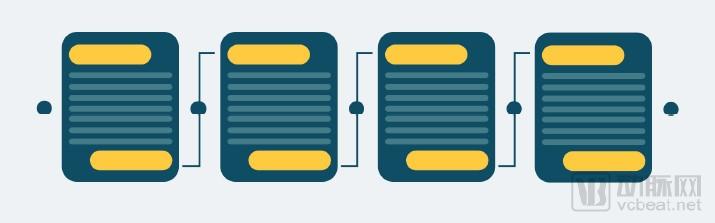
Blockchain is, in essence, a decentralized distributed database that enables the distributed recording and storage of data. It is a data structure that links blocks together in a chain. By leveraging cryptographic techniques, blockchain technology creates a tamper-proof and trustworthy database that records events in chronological order. This database is stored in a decentralized manner, ensuring effective data security and enabling participants to reach consensus on the chronological order of transactions and the current state of the network.
Since 2017, the concept of blockchain has gained immense popularity, although its underlying technology remains relatively nascent and complex. Many media outlets have used easy-to-understand comics to help the public grasp what blockchain is all about. In simple terms, blockchain has shifted the accounting model from a single entity keeping records to a collaborative approach where everyone participates in record-keeping, thereby enhancing the security of accounts and transactions. This is known as distributed data storage.
In fact, beyond distributed storage, blockchain-related technical terms also encompass concepts such as decentralization, smart contracts, and cryptographic algorithms. What exactly can these technologies transform? What changes will they bring to the healthcare sector? We will explore these questions together in the following discussion.
Keyword Interpretation (I): “Block” and “Chain”
To understand the basic principles of blockchain technology, one must first clarify what a “block” is, how blocks are “chained” together, and what information is recorded within each block.
BlockchainThe term “blockchain” consists of two root words: “block” and “chain,” which describe the technology from the perspective of data structure. Blockchain technology divides the data to be stored in a database into distinct blocks, with each block linked to the preceding one through specific information, thereby connecting them chronologically to present a complete dataset. Essentially, each blockchain database is a chain of events serialized in chronological order, authenticated via cryptographic mechanisms defined by protocols to ensure immutability and prevent forgery.
Block Structure
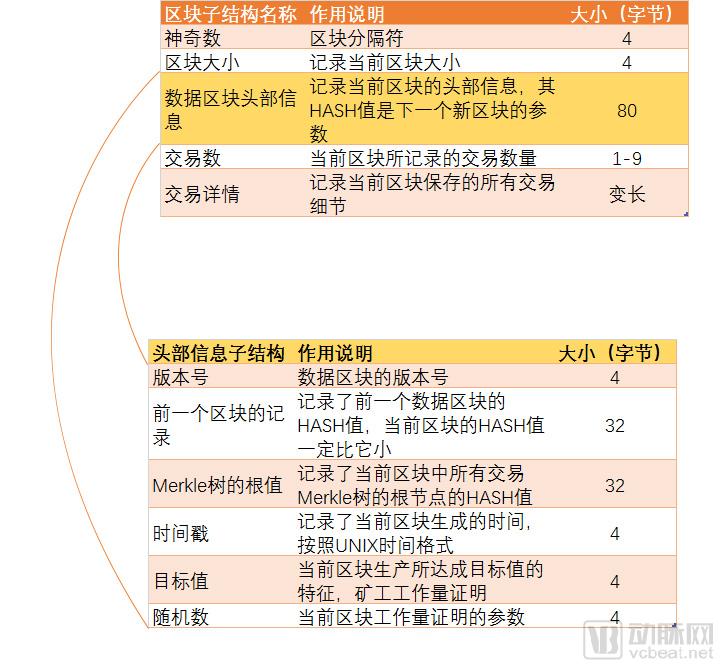
A block is a data unit generated through cryptographic methods, in which data is permanently stored as electronic records. The file storing these electronic records is referred to as a “block.” Taking Bitcoin’s blockchain as an example, it completely records every historical transaction on the network, functioning like a bank ledger. Each block contains the following elements: magic number, block size, block header information, transaction count, and transaction details.
Blockchain Structure
Each block consists of a block header and a block body. The block header is used to link to the address of the previous block and ensures the integrity of the blockchain database. The block body contains verified transaction details or other data records generated during the block creation process.
Blockchain’s data storage mechanism ensures the integrity and rigor of the database through two approaches. First, each block records all value-exchange transactions that occurred after the formation of the previous block and before the creation of the current block, a feature that guarantees database integrity. Second, in the vast majority of cases, once a new block is completed and appended to the end of the blockchain, its data records can no longer be altered or deleted. This characteristic ensures the rigor of the database, meaning it is tamper-proof.
Chain Structure
How Are Blocks "Chained" Together?Blocks are primarily linked through the header information of each data block. The header records the hash value of the previous block (a hash generated via a cryptographic hash function) as well as the hash value of the current block. The hash of the current block is then recorded in the next new block, thereby establishing an informational chain across all blocks.
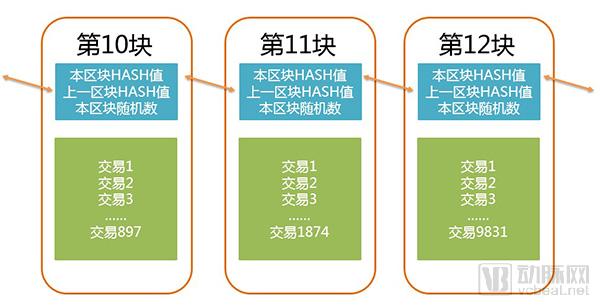
Meanwhile, the inclusion of timestamps imbues the blockchain with temporal sequencing. The older a block is, the more subsequent blocks are linked to it, thereby increasing the cost required to alter that block. Blockchain employs cryptographic protocols to enable a network of computers (nodes) to jointly maintain a shared, distributed ledger without requiring complete trust among the nodes.
This mechanism ensures that, as long as the majority of the network validates blocks published to the ledger (i.e., the chain) in accordance with the stated governance rules, the information stored on the blockchain can be trusted as reliable. This guarantees that transaction data is consistently replicated across the entire network. The effect of the distributed storage mechanism typically means that all nodes in the network retain a copy of all information stored on the blockchain. To use a vivid analogy, the blockchain is akin to the Earth’s crust: the deeper the layer, the older it is, and the more stable and unchangeable it becomes.
Since blockchain records all transactions in plaintext within blocks from the genesis block onward, and the resulting data records are immutable, any value exchange between transacting parties can be traced and queried. This fully transparent data management system is not only legally robust but also provides a trusted shortcut for tracking in existing applications such as logistics tracing, operational log recording, and audit accounting.
When adding new blocks, the blockchain has a very small probability of experiencing a “fork,” where two valid blocks are generated simultaneously. The solution to such forks is to wait for the next block to be generated and then extend the longest branch, appending it to the main chain. The probability of a fork is minimal, and the likelihood of multiple consecutive forks is negligible. A fork represents only a transient state; ultimately, the blockchain converges to a single, deterministic longest chain.
From a regulatory and audit perspective, entries can be added to a distributed ledger but cannot be deleted from it. A network of communication nodes running proprietary software replicates the ledger among participants in a peer-to-peer manner, performing the maintenance and verification of the distributed ledger. All information shared on the blockchain has an auditable trail, meaning it possesses a traceable digital “fingerprint.” The information on the ledger is ubiquitous and persistent, creating a reliable “transaction cloud” that ensures data is not lost. Consequently, this technology fundamentally eliminates the risk of single points of failure and discrepancies due to data fragmentation between counterparties.
In summary, the main features of blockchain are as follows:
1) A distributed linked ledger, where each ledger is a “block”;
2) Determine the bookkeeper based on a distributed consensus algorithm;
3) Transactions within the ledger are secured against tampering by cryptographic signatures and hash algorithms;
4) The ledgers are linked in chronological order of creation, with the current ledger containing the hash value of the previous one; this linkage between ledgers ensures tamper resistance.
5) All transactions are traceable in the ledger.
Healthcare Information Storable in a Block
Blockchain was originally the foundation of the cryptocurrency Bitcoin. "Transactions" on the Bitcoin blockchain represent financial transactions: records of transferring a specific amount of Bitcoin from one account to another. Anyone can verify which account owns a particular Bitcoin by examining transactions on the public blockchain using appropriate software tools.
In the healthcare sector, what information can be stored on blockchain to ensure security? The “transactional” component of healthcare encompasses records of specific events related to medical services provided. This includes patient medical records, as well as internal hospital data, equipment exchange information, pharmaceutical supply chain data, and health insurance contract details. All such information is critical, requiring robust security measures and immutability. Healthcare institutions currently face challenges in securely sharing data across different platforms. Establishing effective data collaboration among healthcare providers can help further improve diagnostic accuracy, enhance treatment outcomes, and reduce medical costs. Leveraging blockchain technology, participants across the healthcare industry chain can share network access permissions without compromising data security or integrity.
Electronic Health Record (EHR)
Typical Blockchain Healthcare Applications
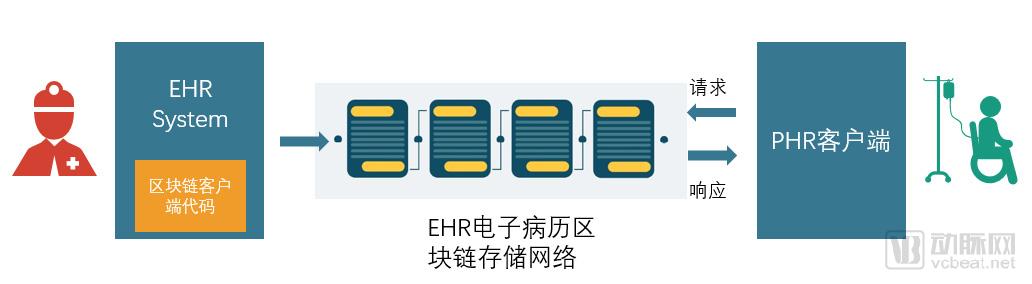
In the healthcare sector, the primary application of blockchain is the preservation of personal medical records, which can be understood as electronic health records (EHRs) stored on a blockchain. If medical records are envisioned as a ledger, they were traditionally held by individual hospitals rather than by patients themselves. Consequently, patients lacked access to their own medical records and historical health data, causing significant difficulties in seeking medical care, as physicians were unable to obtain a comprehensive understanding of their medical history.
However, if blockchain technology can now be used to store health records and test data, a historical database of personal medical records will be established. Blockchain applications allow individuals and patients to retain control over their own information. Diagnostic assessments by physicians, medical imaging, electrocardiograms (ECGs), sleep patterns, blood glucose levels, and other test data can all be retrieved and recorded on the blockchain. Whether for clinical consultations or personal health planning, this historical data becomes available for use, with true ownership residing in the hands of the patients themselves, rather than any specific hospital or third-party institution.
Drug Anti-Counterfeiting
Given the unique nature of pharmaceutical manufacturing, blockchain technology can be initially applied to the production, sales, and distribution stages, integrating drug traceability and authentication into market supervision. When purchasing medications, consumers can share and upload personal data to make the transaction process transparent, cross-referencing this information with the blockchain to verify the legitimacy of the drugs while meeting regulatory requirements.
Insurance Claim
Currently, claims for small-amount medical insurance typically require policyholders to first pay medical expenses to hospitals and then obtain the relevant expense documentation. Subsequently, policyholders submit these documents to the insurer to file a claim and receive reimbursement. This time-consuming process exists because insurers are unable to access medical data immediately due to concerns over data leakage. An immutable blockchain platform can provide better and more secure data services.
Blockchain technology distributes data records across the blockchain, ensuring the integrity and immutability of insurance data, thereby preventing contractual disputes. The process continues automatically even without a payment request from the policyholder. Since hospital medical expense details and insurance contracts are verified automatically, claim payments are executed in the same automated manner.
The blockchain platform established between insurance companies and hospitals will enhance process efficiency and reduce payment processing time. Hospital staff can verify policyholders’ insurance information through a shared ledger with insurers. Insurance companies receive relevant documents automatically transmitted by hospitals and disburse claims to policyholders.
Surgical Medical Record
Medical records documenting surgical procedures are of critical importance. However, in certain medical malpractice cases, surgical records may be tampered with, leading to frequent difficulties in burden of proof and liability determination, even in civil litigation. Blockchain technology can capture complete surgical records, and its immutability helps healthcare institutions identify specific liable parties based on these records in the aftermath of medical malpractice incidents.
Through this article, we have gained an understanding of the concepts of “blocks” and “chains,” as well as the types of information that blockchain can record in the healthcare sector. In the next article, we will provide an interpretation of “distributed data storage.”
To join the blockchain discussion group, please scan the QR code to add the VCBeat Membership Assistant on WeChat (WeChat ID: vcbeat_m; please note “Blockchain”).. Companies involved in medical blockchain businesses may also contact Liu Zongyu of VCBeat (WeChat ID: q19930797) for media coverage.