

Community Healthcare with a Local Touch: Wei Ai Kang Unveils Grounded Models in New IPO Filing
Nowadays, we can deposit and withdraw money, pay utility bills, and handle other banking tasks remotely using just a smartphone, without needing to visit a bank. In the past, medical consultations always involved face-to-face interactions between doctors and patients; in the future, thanks to smart terminals, healthcare services can also be delivered remotely.
On January 31, the “2018 Community Healthcare ‘New Force’ Summit,” hosted by Weiai Kang Medical Group and organized by Beijing Weiai Kang Institute of New Medicine, was held in Zhengzhou. In the current era of pilot implementation of new healthcare reform policies, pressing issues include exploring pathways for new models of community healthcare, aligning primary care hospitals with new healthcare reform policies, genuinely facilitating the downward flow of high-quality medical resources, and integrating “Internet Plus” into residents’ healthcare-seeking processes to benefit the general public. At this summit, experts jointly discussed China’s healthcare “new force”—community healthcare—under the Healthy China Strategy, focusing on topics such as new models of community healthcare, the current status and future of “Internet Plus”-enabled tiered diagnosis and treatment, and how to leverage “Internet Plus” to promote the downward flow of high-quality medical resources, thereby working together to realize the Chinese Dream of Health.
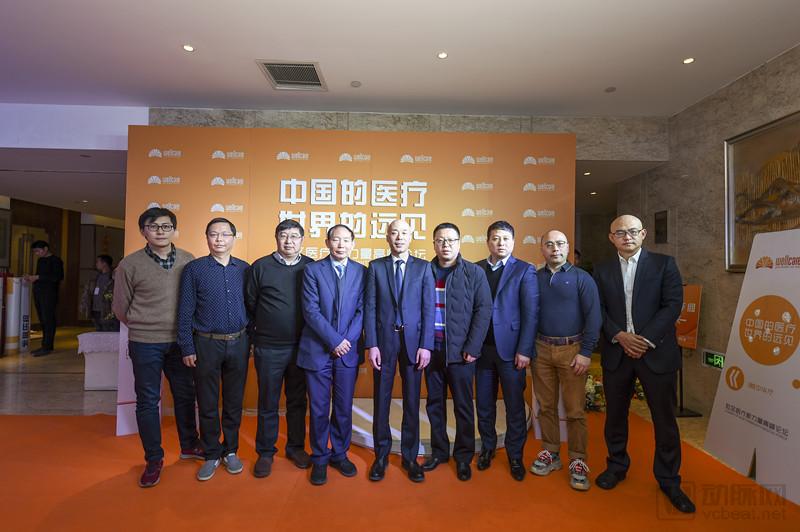
The forum attracted more than 400 participants, including research experts from the medical industry both in China and abroad, leading figures from the provincial healthcare sector, university scholars, business leaders, and media journalists. Distinguished guests included Professor Pan Xilong, MD, from Peking University Health Science Center; Yang Hong, Senior Vice President of Huimei Healthcare; Yang Hongxia, Vice President of Elephant Doctor; Dr. Ning Haomin from Weiai Kang New Medical Research Institute; Liu Baoqin, President of Zhengzhou Traditional Chinese Medicine Hospital; Li Anzhou, President of Zhengzhou No. 3 People’s Hospital; Zhang Shuanglin, President of the First Affiliated Hospital of Henan University; Zhao Min, Vice President of the First Affiliated Hospital of Henan University of Chinese Medicine; and Zhu Jixian, President of Xinxiang No. 1 People’s Hospital.
The forum focused on in-depth discussions of topics such as an analysis of the current state of the health industry, policy interpretation, tracking of hot issues, the architecture and empowerment of new community healthcare models, and the application of “Internet Plus Healthcare.” Professor Pan Xilong, a medical doctor from Peking University Health Science Center, stated at the forum that future development in the medical field must be closely integrated with the internet era. Driven by today’s broader healthcare environment and technological advancements, “telemedicine” is gradually gaining momentum. By integrating traditional medical service scenarios into high-tech healthcare environments, patients and doctors can engage in disease diagnosis, treatment, and health consultations through remote communication channels. This approach not only facilitates access to care for residents but also improves physicians’ work efficiency. Combining telemedicine with tiered diagnosis and treatment policies is both a result of technological progress and an inevitable requirement for safeguarding patient rights. He noted that, indeed, telemedicine is increasingly becoming mainstream under the current healthcare landscape and technological support. For instance, at Kaiser Permanente in the United States, 52% of over 100 million patient visits last year were conducted via telemedicine, demonstrating its safety and professional reliability.
In recent years, tiered diagnosis and treatment has become the “main theme” of China’s healthcare service system during its transitional period. As national policies have been relaxed to encourage foreign investment in healthcare, the world-renowned Mayo Clinic from the United States has begun to seize opportunities in the Chinese medical market. On January 21, 2015, the Mayo Clinic announced the establishment of a joint venture with Hillhouse Capital in China, named “Huimei Healthcare Management Co., Ltd.” This entity marks the clinic’s formal entry into the Chinese market. The joint venture aims to introduce Mayo’s medical technologies, management expertise, and training systems across China, while accelerating their localization in the country.
Yang Hong, Vice President of Huimei Medical, stated that Huimei Medical aims to establish a deep partnership with Wei Ai Kang Medical Group, thereby leveraging the Mayo Clinic’s strengths in primary care, top-tier specialty care, and overseas medical services. These advantages will be integrated into Wei Ai Kang’s chain medical platform, enabling residents of Zhengzhou and even the entire Henan Province to access the highest quality international medical services.
Currently, the most critical factor in implementing tiered diagnosis and treatment is the rational allocation of resources, and internet-based healthcare can comprehensively support the development of China’s tiered diagnosis and treatment system. By leveraging internet technologies, communication between hospitals and patients becomes more convenient and seamless, fully aligning with the core principles of the national tiered diagnosis and treatment policy: “strengthening primary care, managing chronic diseases, and connecting hospitals.”
“New community healthcare can integrate internet-based smart medical models into various hospital facilities, breaking through geographical and temporal constraints to allow patients to fully enjoy safe, convenient, and high-quality medical services,” said Yang Hongxia, Vice President of Daxiang Doctor. Following the signing of an agreement between Weiaikang Medical Group and Daxiang Doctor, residents receiving care at Weiaikang community hospitals can access nationwide physicians through the Daxiang Doctor internet medical platform. This enables online consultations, electronic medical record sharing, remote consultations, online medical advice, e-prescriptions, and online follow-up visits, fundamentally transforming traditional healthcare models and demonstrating the deep integration of medicine and the internet to provide patients with more precise and professional services.
Promoting tiered diagnosis and treatment and facilitating the downward allocation of medical resources are critical steps in the effective implementation of tiered diagnosis and treatment policies. Currently, community healthcare remains confined to the stage of "community treatment services," failing to meet the government’s overall service demands for community healthcare. The Weiaikang Medical Health Service System will create a new model of chain-based community healthcare, represented by Weiaikang Chain Community Hospitals. This model centers on meeting consumer needs, defines its service scope within the "15-minute convenient living circle," relies on standardized chain operations, and leverages multi-party project collaborations. It provides comprehensive services encompassing front-end prevention, intervention, and management; mid-end diagnosis, treatment, and referral; and back-end rehabilitation, care, and maintenance.
“Weiai Kang Medical Group, in accordance with urban planning for newly developed districts, is actively collaborating with local governments to establish branded, standardized, and chain-operated community hospitals through self-construction or the public-private partnership model of ‘publicly built, privately operated.’ In older urban areas, the group will screen qualified primary-level hospitals for acquisition, trusteeship, and licensed partnerships. By implementing branded, standardized, and chain-based operations for existing hospitals, Weiai Kang aims to empower community hospitals to enhance their service levels.” According to Dr. Ning Haomin from the Weiai Kang Institute of New Medicine, in 2018, Weiai Kang Medical Group will use Zhengdong New Area as its base and Zhengzhou as its core, extending its reach to surrounding cities such as Xinxiang, Xuchang, Luoyang, and Jiaozuo. By 2020, the group plans to expand into other provinces including Hebei, Hubei, and Anhui, aiming to add 78 new publicly built, privately operated chain community medical institutions, and complete the chain transformation of 21 traditional medical institutions in Zhengzhou and surrounding areas through acquisitions, trusteeships, and licensing agreements, thereby entering the national healthcare market.
It is understood that Weiai Kang Medical Group is a company specializing in community healthcare operations and health management services. It aims to build a comprehensive health service platform covering the entire population across the full life cycle, using primary healthcare services as a link to establish a connection between preventive medicine and rehabilitation medicine, thereby forming a complete closed-loop health service system. Integrating businesses such as basic medical care, specialized medical services, chronic disease management, sports rehabilitation, health examinations, and daytime elderly care, the group leverages multi-tiered medical resources at the provincial, national, and international levels. It provides integrated medical and health services—including prevention, medical treatment, rehabilitation and healthcare, and health education—to 80,000–100,000 residents within a 3–5 kilometer radius of each community medical institution.
China’s Healthcare, Global Vision. At 4:00 PM, following the conclusion of the forum’s keynote speeches, Wei Ai Kang Medical Group signed cooperation agreements with Zaishui Yifang Technology, Daxiang Doctor, Xinxiang No. 1 People’s Hospital, Tsinghua Straits Research Institute, and Qingsong Chou, witnessed by the attending guests. This signing ceremony marks that in 2018, Wei Ai Kang Medical Group will gather broader and more robust medical resources to jointly explore the development path of community healthcare in China, effectively implement the tiered diagnosis and treatment policy, and make steady progress toward achieving the “Healthy China” goal.